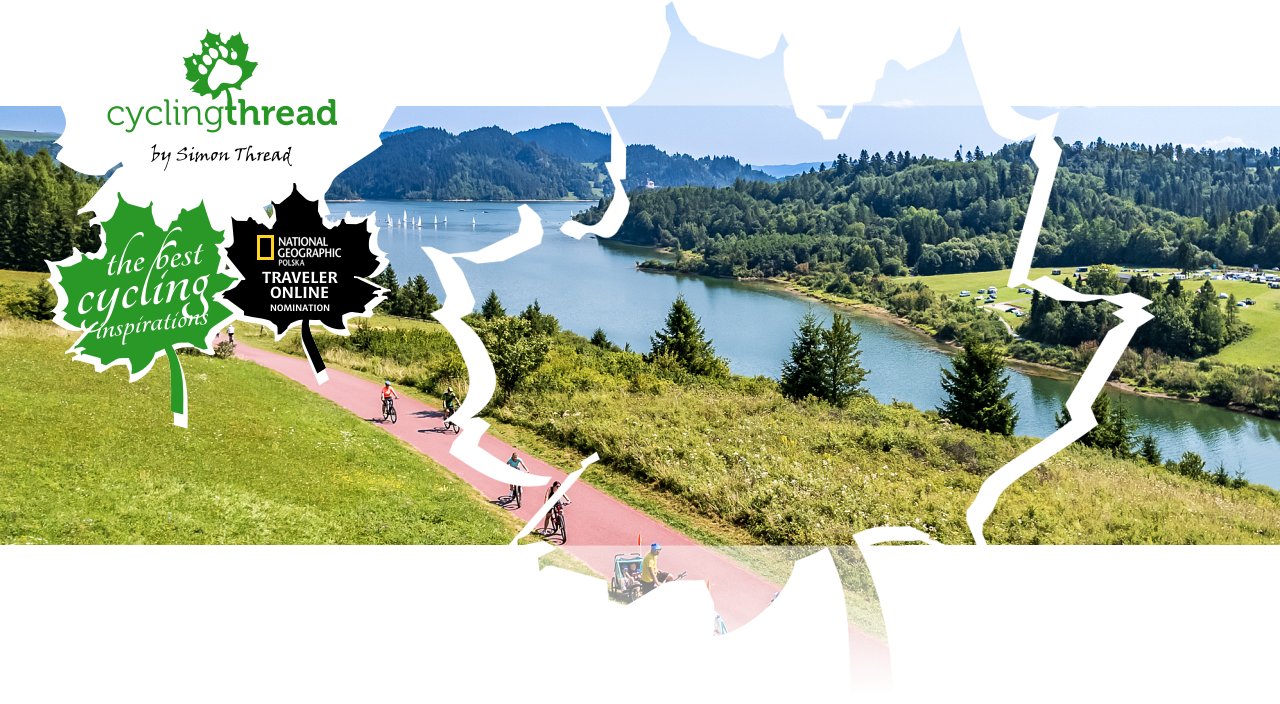
VeloDunajec in Małopolska - the most beautiful cycle route in Poland
A few years ago, I wrote that VeloDunajec is the most beautiful cycling route in Poland. With every new season and every new completed section, this sentence feels more and more true to me. Małopolska is steadily filling in the missing stretches of cycle paths and bridges along the Dunajec, and thanks to the loop around Lake Czorsztyn, the connections with the Cycle Route Around the Tatra Mountains, and the link with the Vistula Cycle Route at the end, VeloDunajec has also become a great starting point for planning cycling trips across the region.
Join us on our new 🟢 Komoot account!
Cycling Partners



Route on the map
GPX file (GPS track): cyclingthread.com-dunajec-2025.gpx
VeloDunajec in Małopolska - table of contents
- VeloMałopolska, a coherent system of cycling routes
- High-quality cycle routes for everyone
- Basic information about VeloDunajec
- VeloDunajec starts in Zakopane
- Zakopane style as a guide to the town
- You can start cycling on Gubałówka
- The first kilometres on public roads
- The advantages of riverside cycling routes
- VeloDunajec meets the route around the Tatras
- Cyclist-friendly places in Małopolska
- This is what cycling tourism should look like
- Interesting sights of the small village of Łopuszna
- The eerie apple ermine moth along the route
- A wooden church on the UNESCO list
- Frydman - wine cellars and an unusual dam crossing
- One of the most remarkable cycling investments
- VeloCzorsztyn - another cycling highlight of Małopolska
- Niedzica Castle - the most famous site on the route
- You can raft the Dunajec with your bike
- The most spectacular section of VeloDunajec
- A new cycle route between Szczawnica and Krościenko
- Cross to the left bank over the Broken Bridge
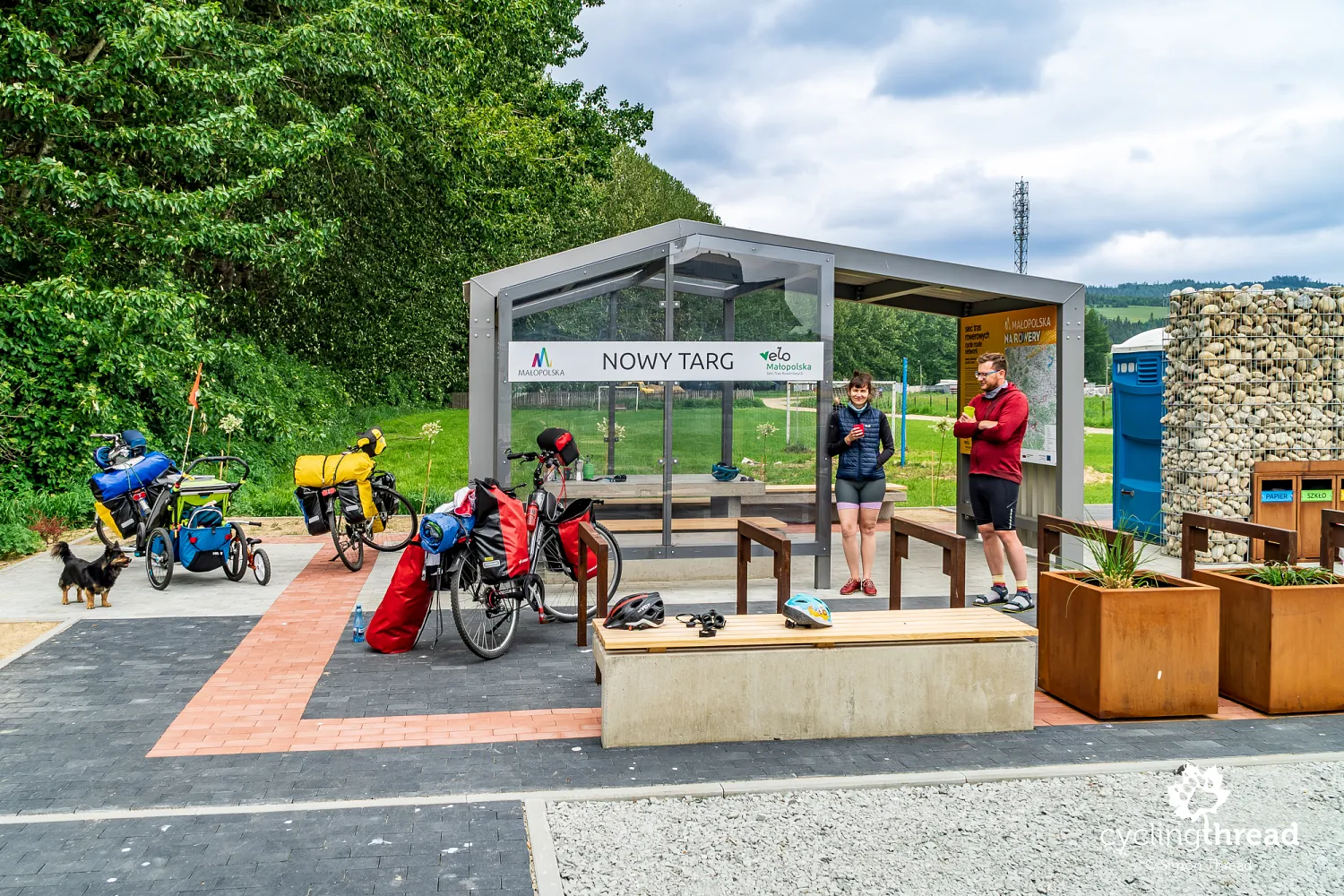
- Cyclist rest areas in Małopolska
- Unusual cycling bridges of Małopolska
- VeloDunajec also follows quiet local roads
- The longest cycling bridge in Małopolska
- Stary Sącz - one of the oldest towns in Poland
- Nowy Sącz - a beautiful stop on VeloDunajec
- The high-quality route ends in Nowy Sącz
- A demanding 25 kilometres with three climbs
- Gródek nad Dunajcem on an artificial reservoir
- Good cycle paths near Zakliczyn
- A free isotonic drink from a natural vinegar factory
- 10 kilometres to Tarnow, 120 km to Krakow
- Cyclist-friendly place at the end of the route
- The largest site of mass executions
- First the bimah, then the kirkut in Tarnow
- Cycling Dunajec with a cycling tour operator

VeloMałopolska, a coherent system of cycling routes
I have been writing about the routes built in Małopolska under the VeloMałopolska project from the very beginning, starting with the moment the Vistula Cycle Route was created. This popular route, together with the Cycle Route Around the Tatra Mountains built shortly before, showed in Poland how comfortable and safe long-distance cycling routes should look. Soon after, the construction of VeloDunajec began, quickly followed by VeloCzorsztyn - the spectacular loop around Lake Czorsztyn that became one of the flagships of the entire network. Today, VeloMałopolska is no longer just a collection of single sections, but an increasingly coherent cycling system that grows longer year by year. Among the latest news from the region are new cycle paths along the VeloSkawa route and plans to build a cycling loop around Lake Rożnowskie, which would also help to complete the missing sections of VeloDunajec.

High-quality cycle routes for everyone
What really sets the cycling routes of Małopolska apart is their very high quality, and with it, their excellent accessibility. The routes along the Dunajec, around Lake Czorsztyn, along the Vistula, as well as the Around the Tatra Mountains route, are in practice safe and comfortable corridors created through the construction of hundreds of kilometers of asphalt cycle paths. Most of them are led far from car traffic or along quiet local roads. The unique image of the VeloMałopolska project is also shaped by its dedicated pedestrian and cycling bridges. The green bridges along the Dunajec and Poprad rivers have become just as recognizable a symbol of cycling in Małopolska as the old railway bridges adapted for cyclists on the Around the Tatra Mountains route. In Europe, I have seen infrastructure built on a similar scale only in Italy, in the Trentino region. Cyclists in Małopolska are also supported by well-designed resting places for cyclists, among the most practical in Poland.
Basic information about VeloDunajec
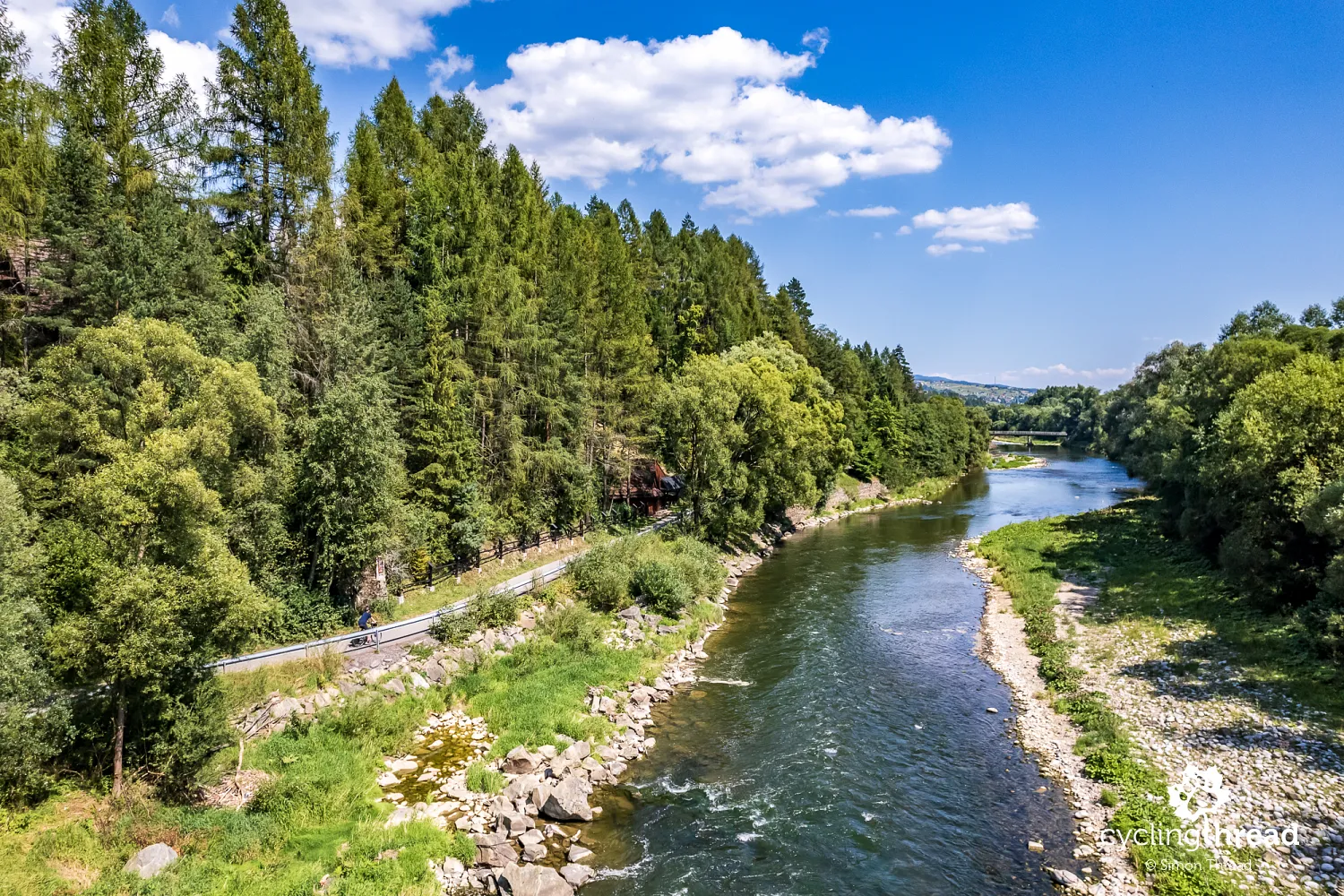
VeloDunajec is a long-distance cycle route of around 240 kilometres, running along the Dunajec river through a large part of Małopolska - from Zakopane at the foot of the Tatra Mountains to Wietrzychowice near Tarnow, where it connects with the Vistula Cycle Route. The route starts beneath the Tatras and then continues through successive mountain ranges - the Gorce, the Pieniny Mountains and the Beskid Sądecki - crosses the Rożnów Foothills, and gradually descends into the lower, more open landscapes of the river’s final section. For most of its length, it follows asphalt cycle paths and quiet local roads, often directly along the river, with numerous pedestrian and cycling bridges and clear signage. VeloDunajec can be ridden as a complete multi-day journey or divided into shorter, logical stages, many of which work very well as independent weekend rides.
VeloDunajec starts in Zakopane
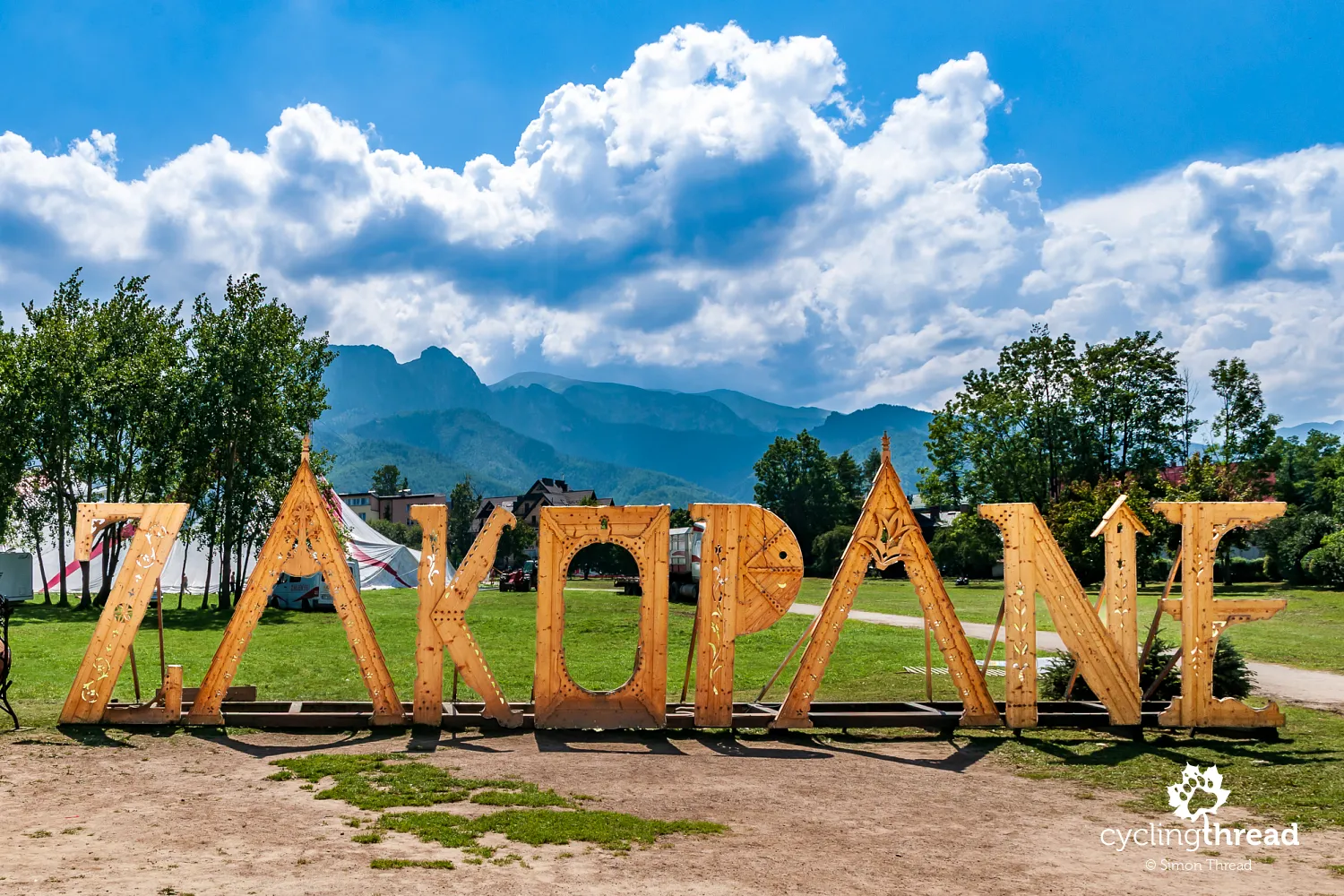
VeloDunajec starts in Zakopane. The next major town on the route, Nowy Targ, is only 30 kilometers away, which makes it a perfect distance for the second half of the day. The first part can easily be spent travelling to the region by train or by car. A train is always the more relaxed option, but if you arrive by car, it is best to leave it in Nowy Targ at the guesthouse or hotel where you will spend your first night. From there, you can reach the start of the route in Zakopane by the efficient local railway. In practice, this means saving time, avoiding stressful traffic, finding parking much more easily in Nowy Targ, and returning to your car quickly after finishing the VeloDunajec trip. For this first half-day on the bike, you do not even need to carry your luggage - it can safely wait for you at your accommodation in Nowy Targ.
Zakopane style as a guide to the town
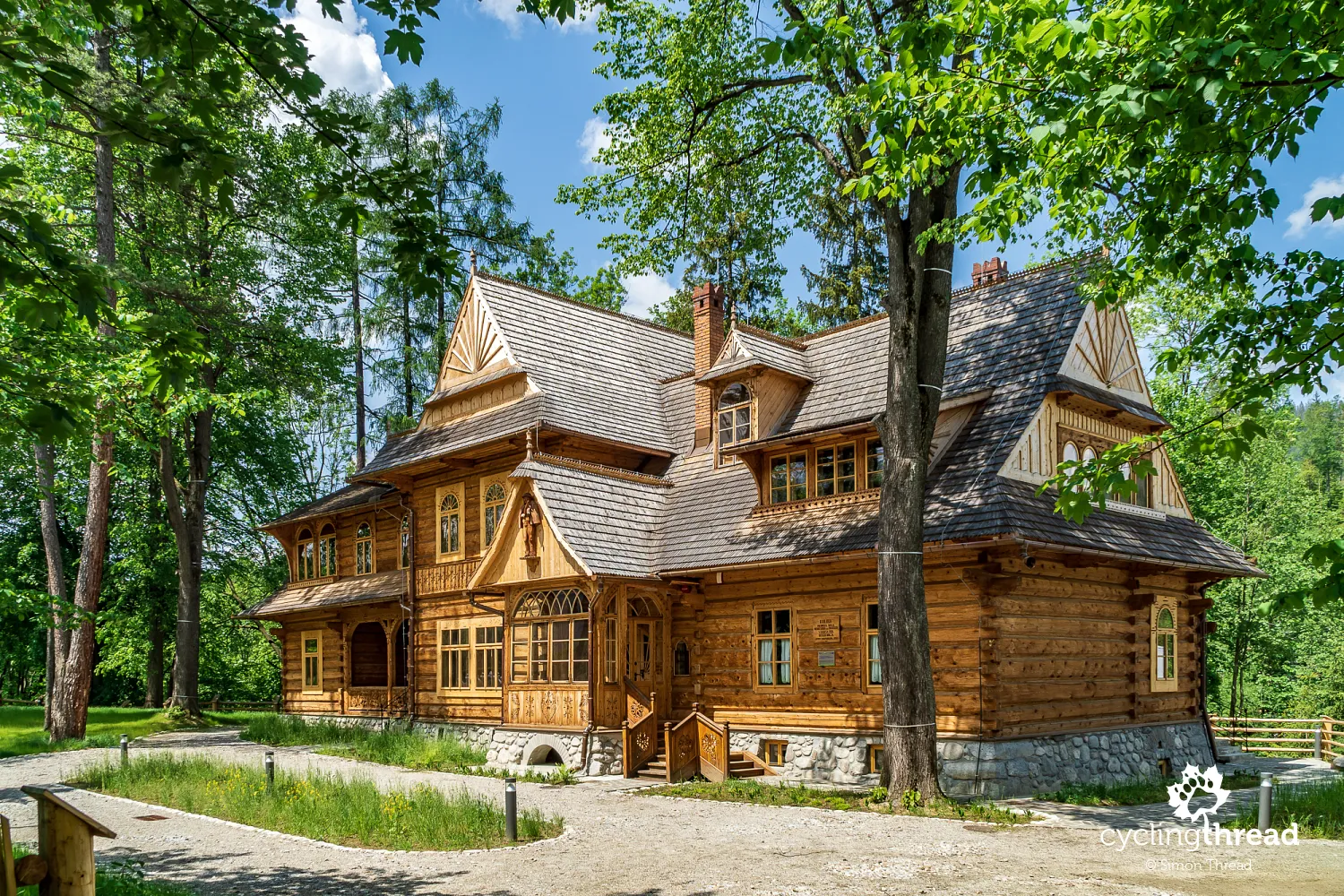
The start of the route in Zakopane is also a great opportunity for a short ride around the town. A good place to begin is Villa Koliba, the very first building created in the Zakopane style, designed by Stanislaw Witkiewicz in 1892 and today home to the Museum of the Zakopane Style. Nearby lies the Cemetery of the Distinguished at Peksowy Brzyzek, another important stop on any visit to the town. In fact, the entire Zakopane Style Route is an excellent reason to explore Zakopane by bike. It includes around 40 sites spread across different parts of the town, mostly villas and guesthouses from the early 20th century, all clearly marked and described online with maps and background information. Riding this route is not just about seeing individual buildings, but about following a coherent story of an architectural style that has permanently shaped the character and landscape of Zakopane.
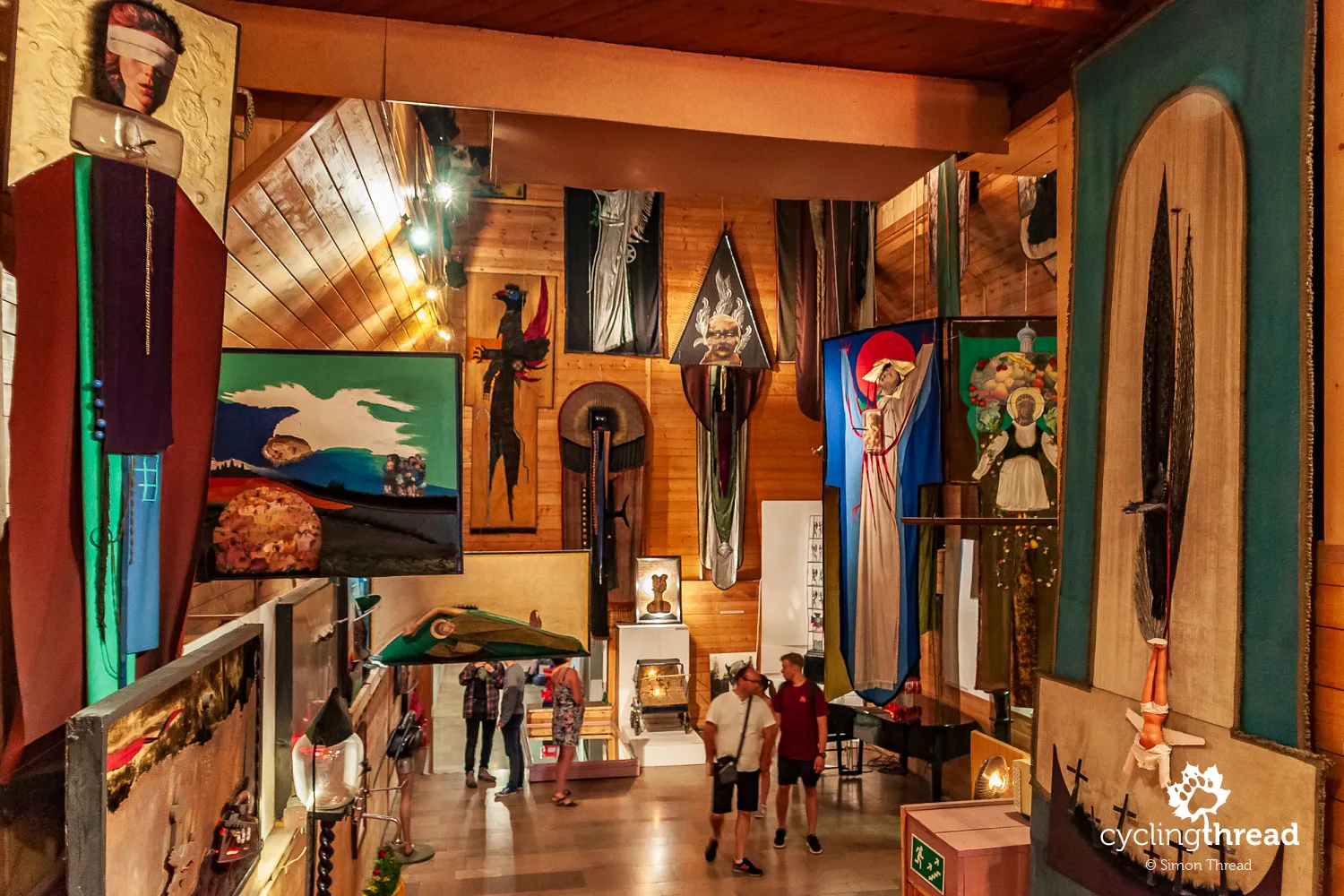
For me, however, the most interesting place in Zakopane is the Wladyslaw Hasior Gallery. It is located in the former rest building of a tuberculosis sanatorium. The gallery was created by the artist himself in 1984 and presents a selection of his extraordinary, often very expressive works. It only takes a step inside to enter a world completely different from the noise of Krupowki - the dim interior, filled with surreal installations and psychedelic music flowing from the speakers, makes a strong impression. And here Villa Koliba returns once again - it was Wladyslaw Hasior who was responsible for the interior design of the villa during its renovation in 1993.
You can start cycling on Gubałówka
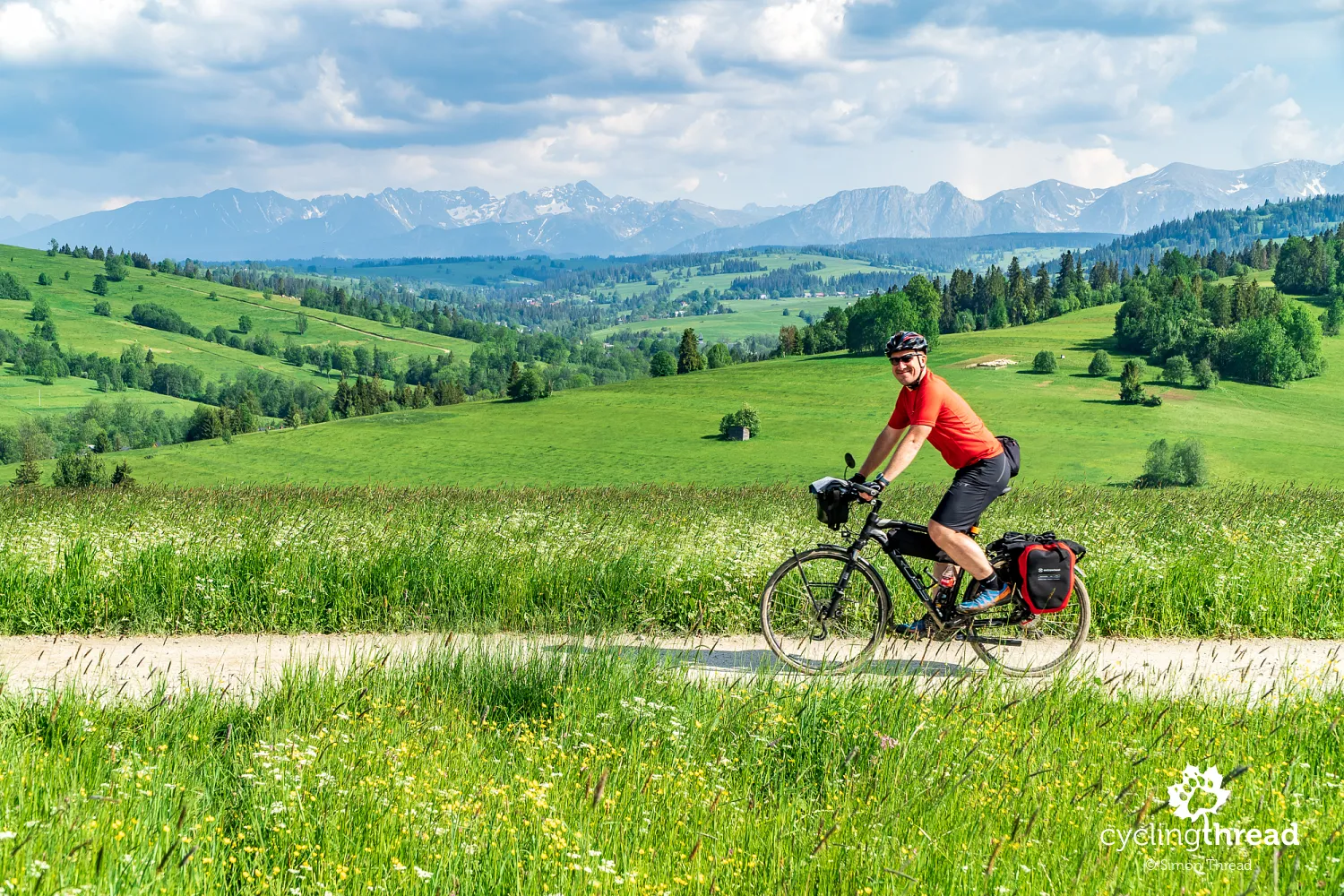
This article focuses on the VeloDunajec cycling route and its main course, so I will only briefly mention that the first kilometers of the ride can be modified by replacing the basic option along the Zakopianka road with a scenic descent from Gubalowka through Zoki, Ciche, and then one of the variants of the Around the Tatra Mountains route. You can reach the top of Gubalowka by the popular funicular railway, and a single car can take at least a few bikes. Unfortunately, a bike ticket still cannot be bought online, so a visit to the ticket office is unavoidable. Luckily, a separate gate for cyclists helps to avoid long queues for the ride up.
The first kilometres on public roads
The first signs of the main VeloDunajec route appear near the railway station in Zakopane. For about 30 kilometers, the route runs through Poronin, Bialy Dunajec and Szaflary to Nowy Targ, using local, fairly quiet public roads. This is a chance to see the area from a completely different perspective than most visitors to Zakopane, who usually know it only from the rather uninspiring view through a car window. Despite the short distance from the busy Zakopianka road, the parallel roads marked by the VeloDunajec signs offer a smooth and calm ride, while traffic on the main road at the same time often comes to a standstill in both directions.

The advantages of riverside cycling routes
The first roughly 140 kilometers of the route are largely a ride downhill - apart from a few short interruptions, including the well-known climb before Falsztyn. This is the nature of cycling along river routes, which for years have been building the popularity of cycling tourism in Europe. Among the most popular examples are the Loire route in France, the Elbe route in Germany, the route along the Drava in Austria and the Rhine cycle route in Switzerland. In the upper course of a river, usually at the beginning of the route, descents dominate. Farther on, the river flows more calmly, the route gradually flattens out and pedaling begins to require a bit more effort.
VeloDunajec meets the route around the Tatras
Before reaching Nowy Targ, the route runs close to Ludzmierz, the oldest village in Podhale, regarded as its spiritual center. It was here that an event remembered as prophetic took place - during a solemn mass attended by Cardinal Stefan Wyszynski, Karol Wojtyla, then a young bishop and the future Pope John Paul II, caught the falling scepter of the statue of Our Lady of Ludzmierz. Near Ludzmierz, VeloDunajec connects with the Cycle Route Around the Tatra Mountains and both routes run together along a former railway line through the Bor Kombinacki forest.

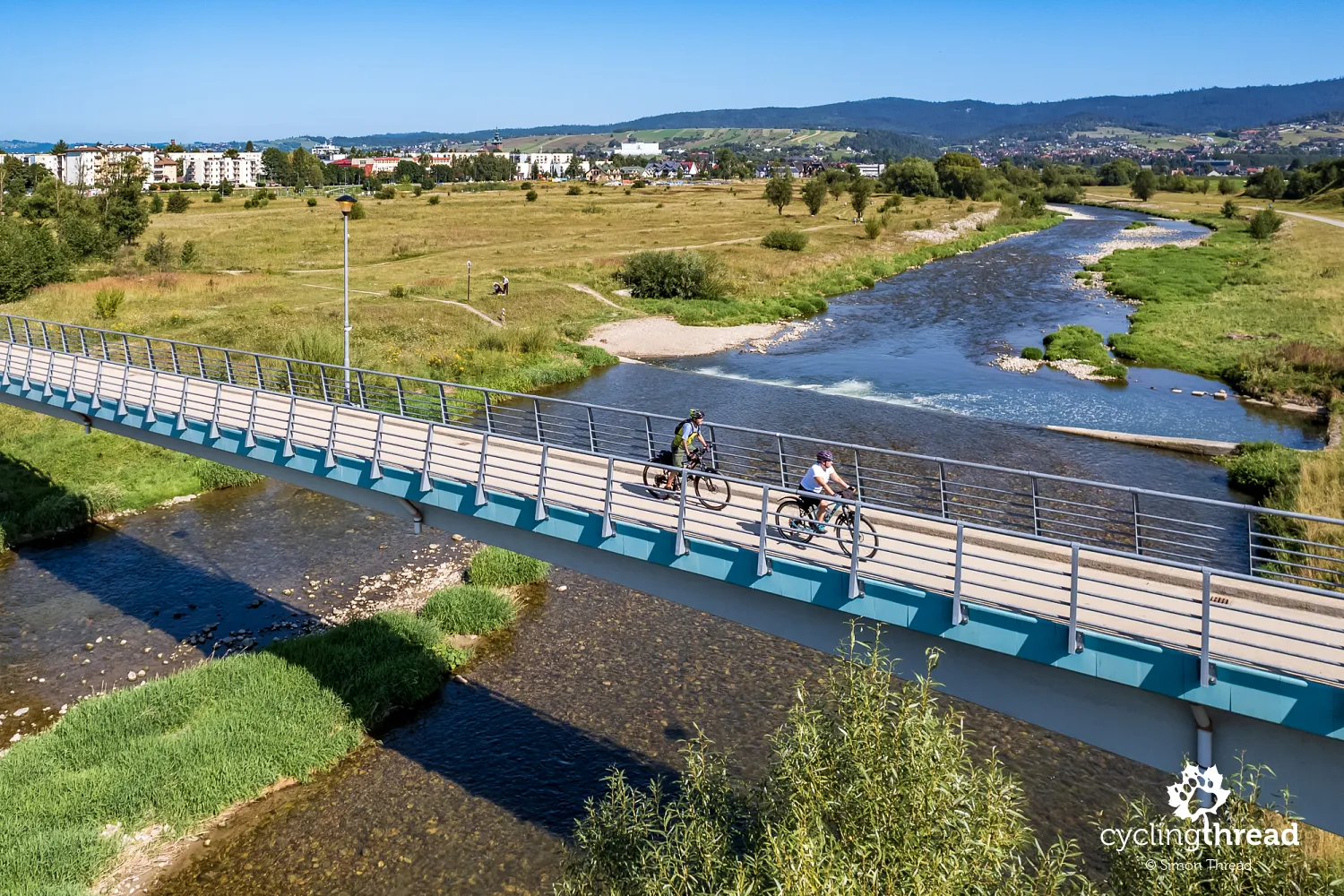
It is worth paying attention to the point where the Cycle Route Around the Tatra Mountains turns left - this option leads almost straight to the main square of Nowy Targ on excellent cycle paths along the Dunajec. If you continue instead along the main VeloDunajec line through the Bor Kombinacki forest, you will bypass the town center in a wide arc. First you ride along quiet town streets, then on a cycle path along the edge of the town, and finally cross a long bridge over the Bialy Dunajec towards the area of the local airfield. This is where what is best along the Dunajec really begins - long kilometers of tourist cycle paths, far away from car traffic.
Cyclist-friendly places in Małopolska
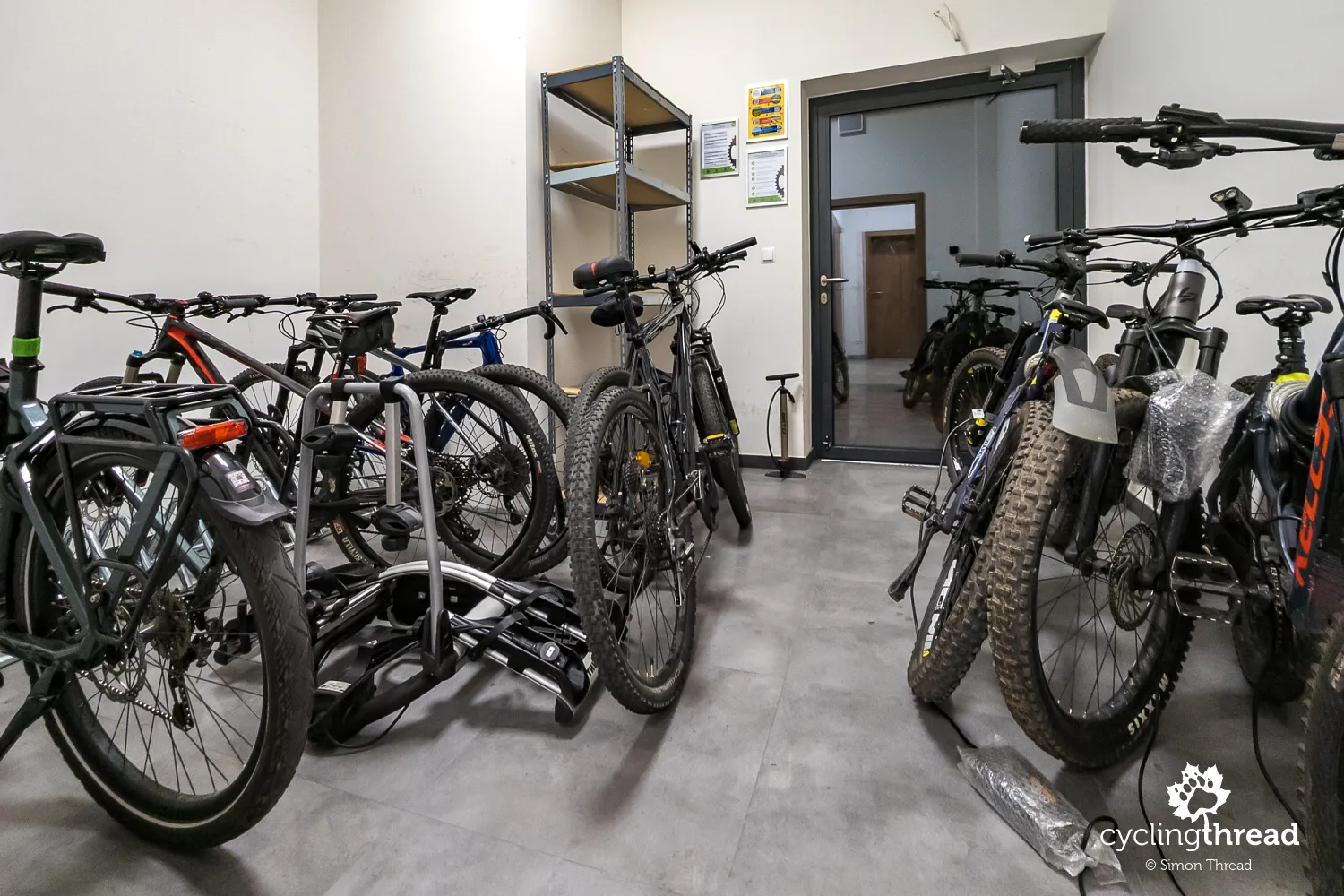
An overnight stay in Nowy Targ is the first opportunity to use the Małopolska network of Cyclist Friendly Places, which supports travelers riding the VeloMałopolska routes. The basic requirements for these places include accepting cyclists for just one night - which is a key principle of multi-day cycling tourism - and providing secure, locked storage for bikes. All Cyclist Friendly Places in Małopolska can be found on the project’s website, and in the field they are marked with a clearly visible sign featuring the distinctive logo.
This is what cycling tourism should look like
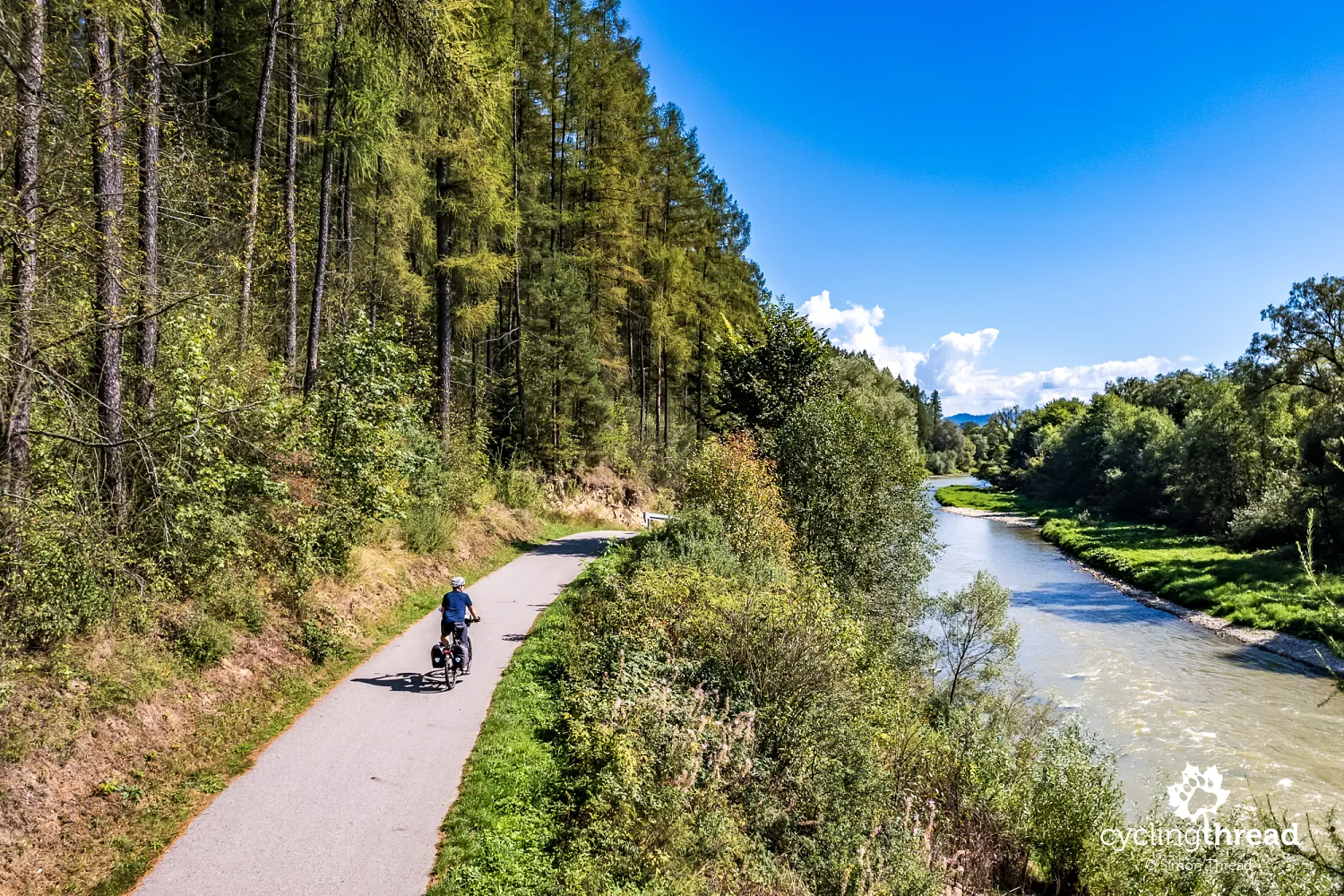
The section of VeloDunajec from Nowy Targ to Lake Czorsztyn was among the first parts of the route opened to cyclists as early as 2018. In the following years, the route was consistently expanded - new cycle paths appeared, among other places, on the previously missing stretch along the Dunajec on the way out of Nowy Targ and in the area of Debno, guiding cyclists right along the riverbank in a very scenic way. The bridge in Debno was also renovated, creating not only a comfortable crossing toward Niedzica, but also an important element of the VeloCzorsztyn loop. Today, this area is an almost model example of how conditions for safe and widely accessible cycling tourism can be created. It is genuinely hard not to admire the ride from Nowy Targ through Lopuszna and Harklowa to Debno, and then along Lake Czorsztyn - to Niedzica via VeloDunajec or to Czorsztyn via VeloCzorsztyn.
Interesting sights of the small village of Łopuszna
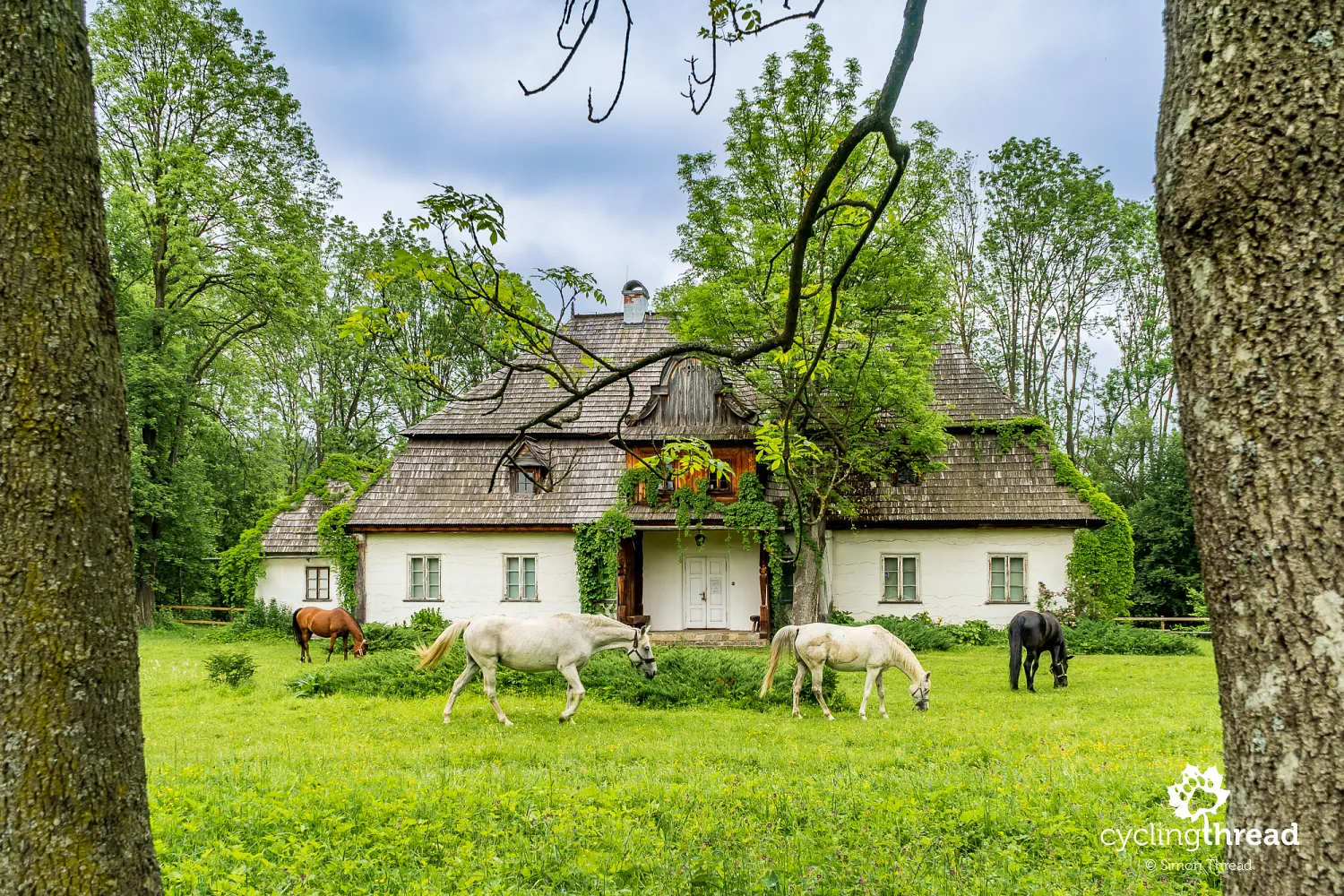
It is well worth stopping in Lopuszna. The village alone offers as many as five sites connected with the history of the region, all located no more than six hundred meters from the route. At the local cemetery lies Father Jozef Tischner - a well-known Polish philosopher, Catholic priest and public intellectual, widely respected for his writings on ethics, freedom and social dialogue - whose grave we visited during one of our first rides along VeloDunajec. Closer to the Dunajec stands the wooden Church of the Holy Trinity and St Anthony the Abbot from the 15th century. Nearby you will also find the Tetmajer Manor, charming with its traditional form and calm atmosphere - during my visit, horses were grazing in the enclosed yard in front of the building. Today the manor operates as a branch of the Tatra Museum, devoted to the Tetmajer family and the traditions of Podhale.
Those who like to discover local flavors during their cycling trips should stop at the restaurant of the Pstrag guesthouse in Lopuszna. Among the dishes prepared from fresh fish you will also find trout tartare, made from raw trout meat, which may become one of the more original memories from a ride through Małopolska. It is also worth remembering that outside weekends and the peak summer season, restaurants in this area often close quite early. Even in June, many places in Podhale shut their doors after 6 pm, so finding a hot meal later in the afternoon can be difficult.

The eerie apple ermine moth along the route
It is worth staying alert on the cycle path after Harklowa, still before Debno, especially in late June or early July. This is when you may notice large numbers of flying moths - the apple ermine moth. In mid-June, its characteristic cocoons, wrapped in delicate webs, covered several dozen trees along the route. Branches in this form created rather eerie associations, especially when it was possible to see that the clusters were filled with live larvae inside. Interestingly, such mass outbreaks occur roughly every ten years and can last for two or three consecutive seasons, creating an unexpected natural curiosity along the route.

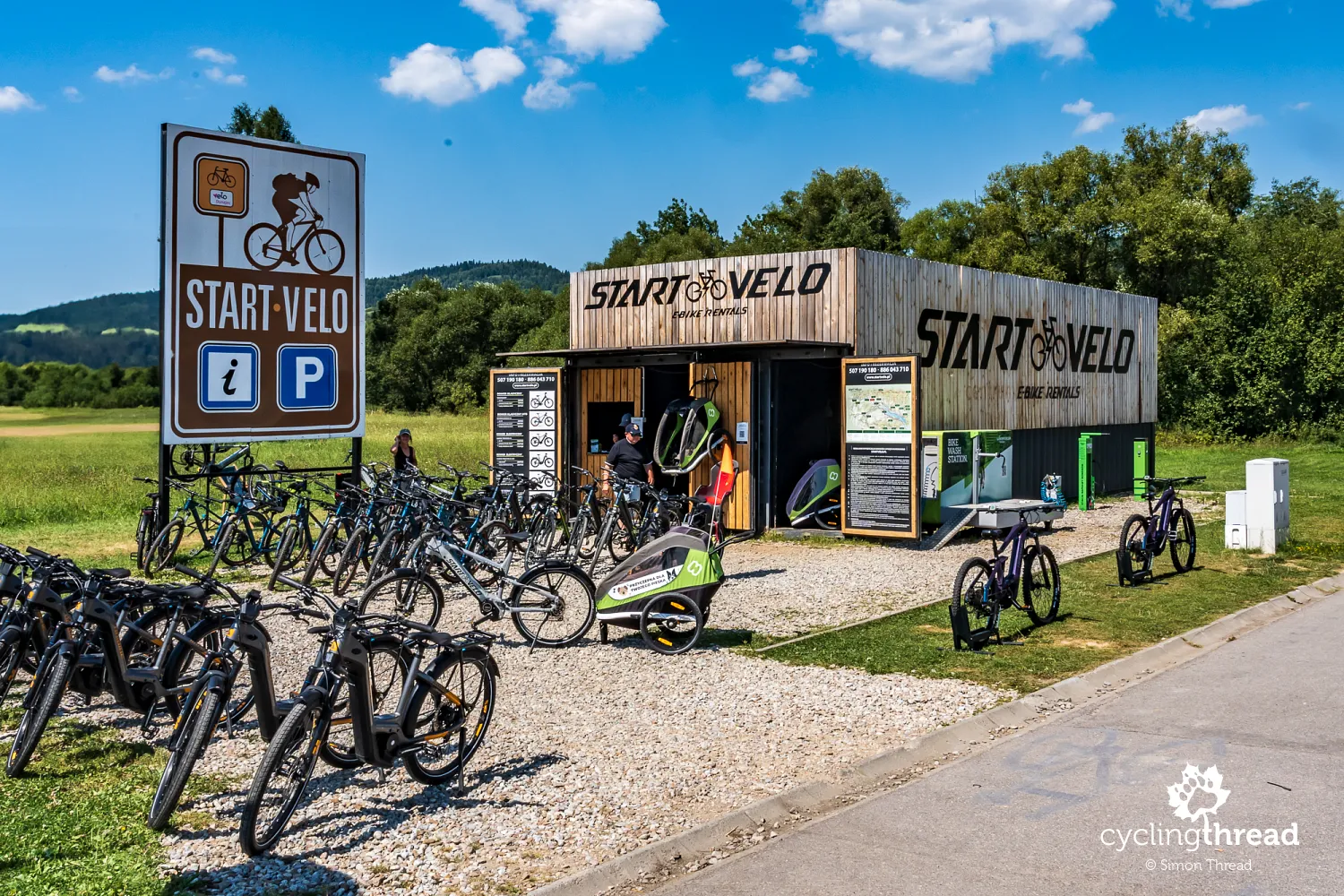
I came across the clusters of the apple ermine moth in a place that, thanks to a public parking lot by the road connecting Nowy Targ with Debno, has for years been one of the most popular starting points for one-day trips along the Dunajec. Right next to it, in a modern building, operates one of the many bike rental points in this area. It is a very clear example of how a well-designed cycling route can stimulate the development of local tourism and related services. Here you can rent both standard and electric bikes, as well as child bike trailers.
A wooden church on the UNESCO list
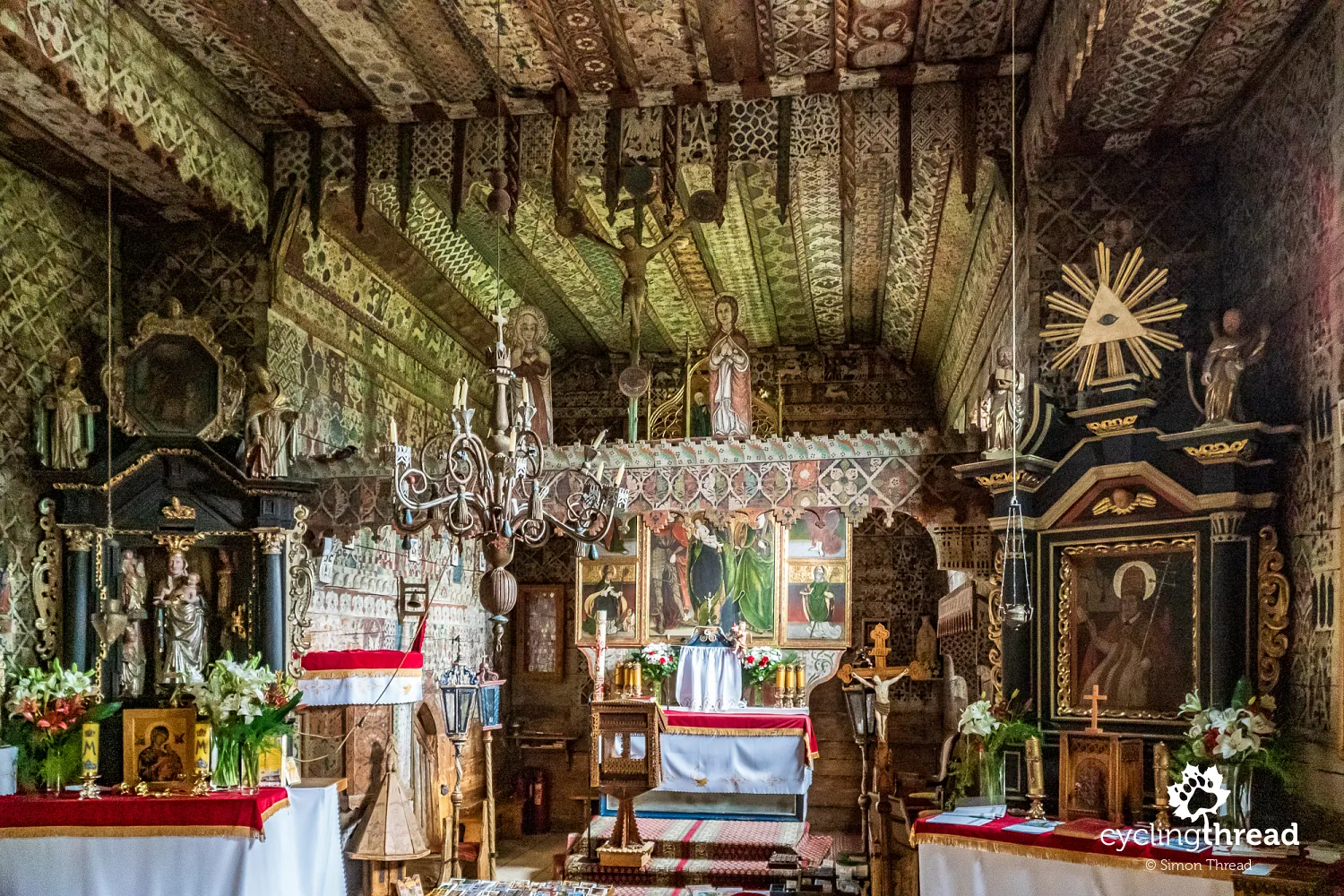
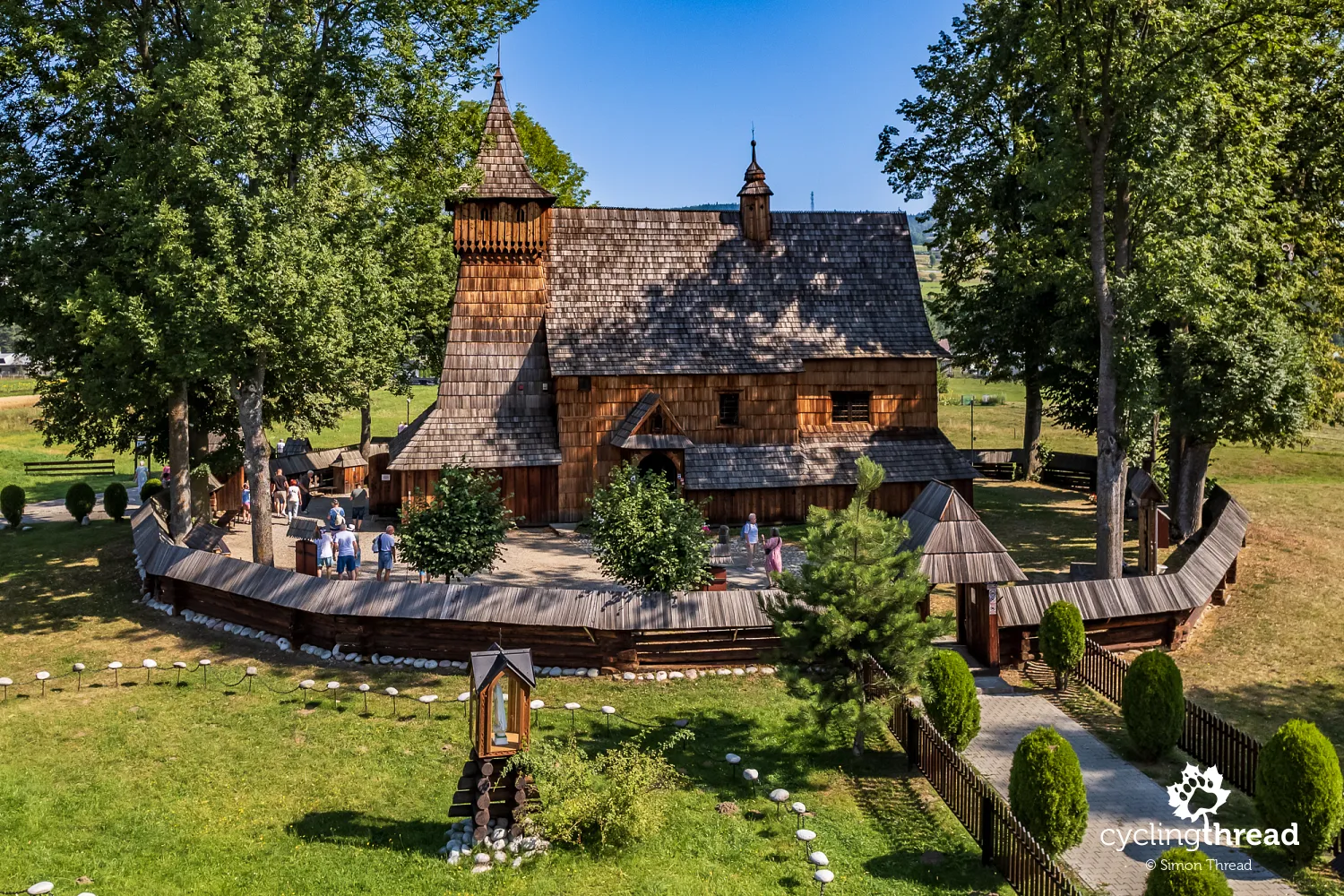
A must-see point on any sightseeing program along VeloDunajec is the Church of St Michael the Archangel in Debno - one of the most valuable wooden churches in Poland and in Europe, listed as a UNESCO World Heritage Site as part of the group "Wooden churches of southern Małopolska". Built in the 15th century, it has survived to this day in an almost unchanged form. The interior is famous for its original 15th-century polychrome paintings, considered the oldest fully preserved polychromy on wood in Europe. The oldest object inside is the crucifix hanging on the beam separating the nave from the chancel - it comes from the previous church that once stood here and is dated to the late 14th century. Just above it, you can spot the rare figure of a Jagiellonian eagle, emphasizing the historical importance of this place.
From the outside, the church in Debno brought to mind the wooden temples we saw during our cycling trip through the Norwegian fjords, as well as the slender Orthodox churches known from Maramures in Romania. To reach it, it is best to ride under the bridge over the Dunajec and continue along the flood embankment separating Debno from Lake Czorsztyn, then turn back toward the village center. After visiting the church, the route leads on toward Frydman along a several-hundred-meter-long, two-way cycle lane marked out on the road from Debno to Niedzica.
Frydman - wine cellars and an unusual dam crossing
An unusually original attraction of Frydman, a village separated from the waters of Lake Czorsztyn by a massive dam, is a group of six cellar tunnels, each about one hundred meters long, where wine imported from Hungary was stored as early as the 19th century. In the village center, next to the information board, you will find the address of the farm where a convenient entrance to the cellars is located, known locally as a chapel or burghaus. Today the cellars stand empty, their interiors rather austere, but they are certainly worth a short visit while passing through the village.

One of the stronger moments of the ride along VeloDunajec is the section running along the crown of the dam near Frydman. This stretch is nearly 2.5 kilometers long and already makes a strong impression simply through its scale. The dam was built as part of the flood protection system for Lake Czorsztyn and serves as a side dam protecting the lower-lying areas of Frydman. Construction took place in the second half of the 20th century and it was opened together with the filling of the lake in the 1990s. It is not as famous as the dam in Niedzica, but in terms of space and exposure it can be just as impressive, especially when you ride for several minutes along a narrow line between the waters of Lake Czorsztyn and the much lower-lying buildings of Frydman.

One of the most remarkable cycling investments
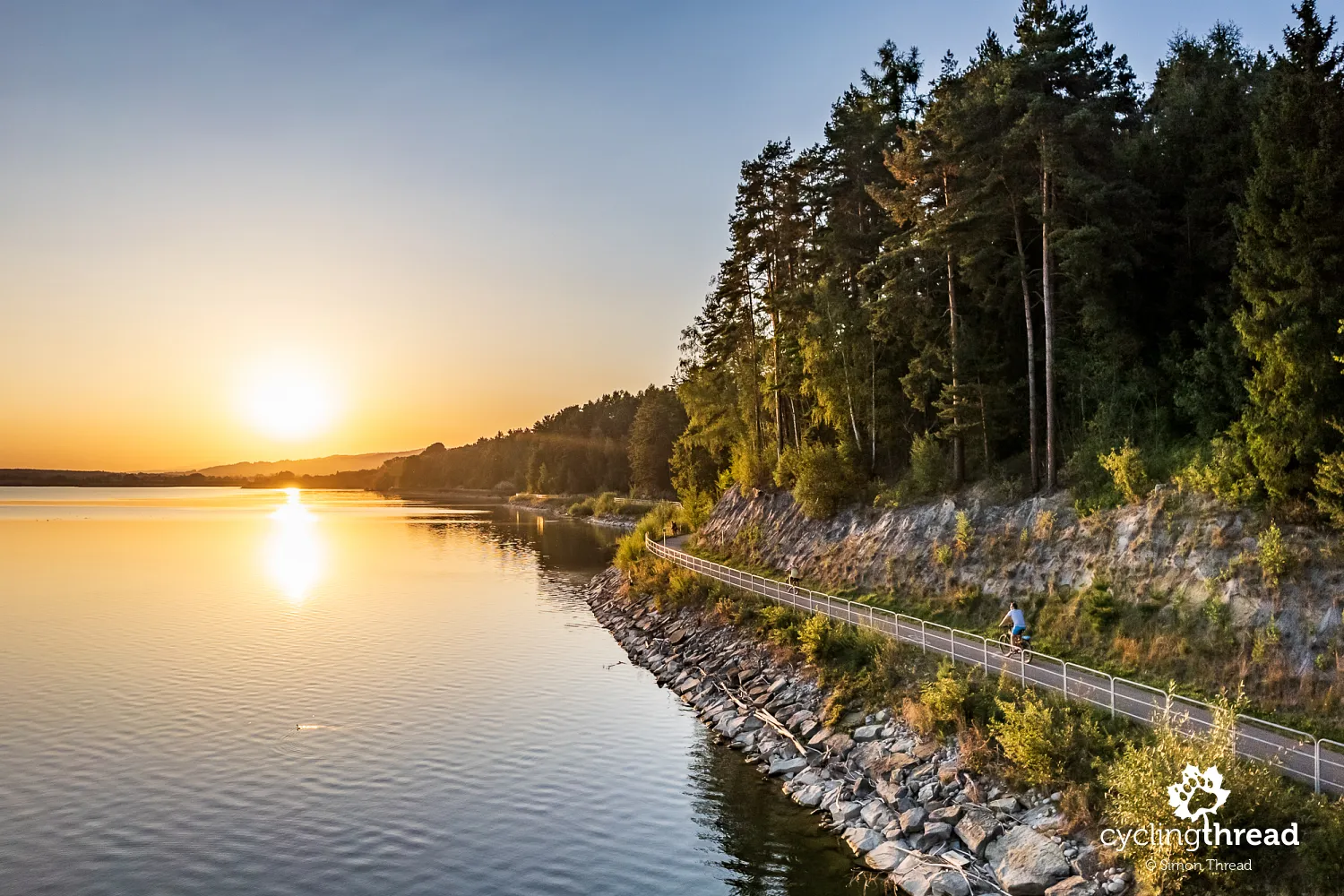
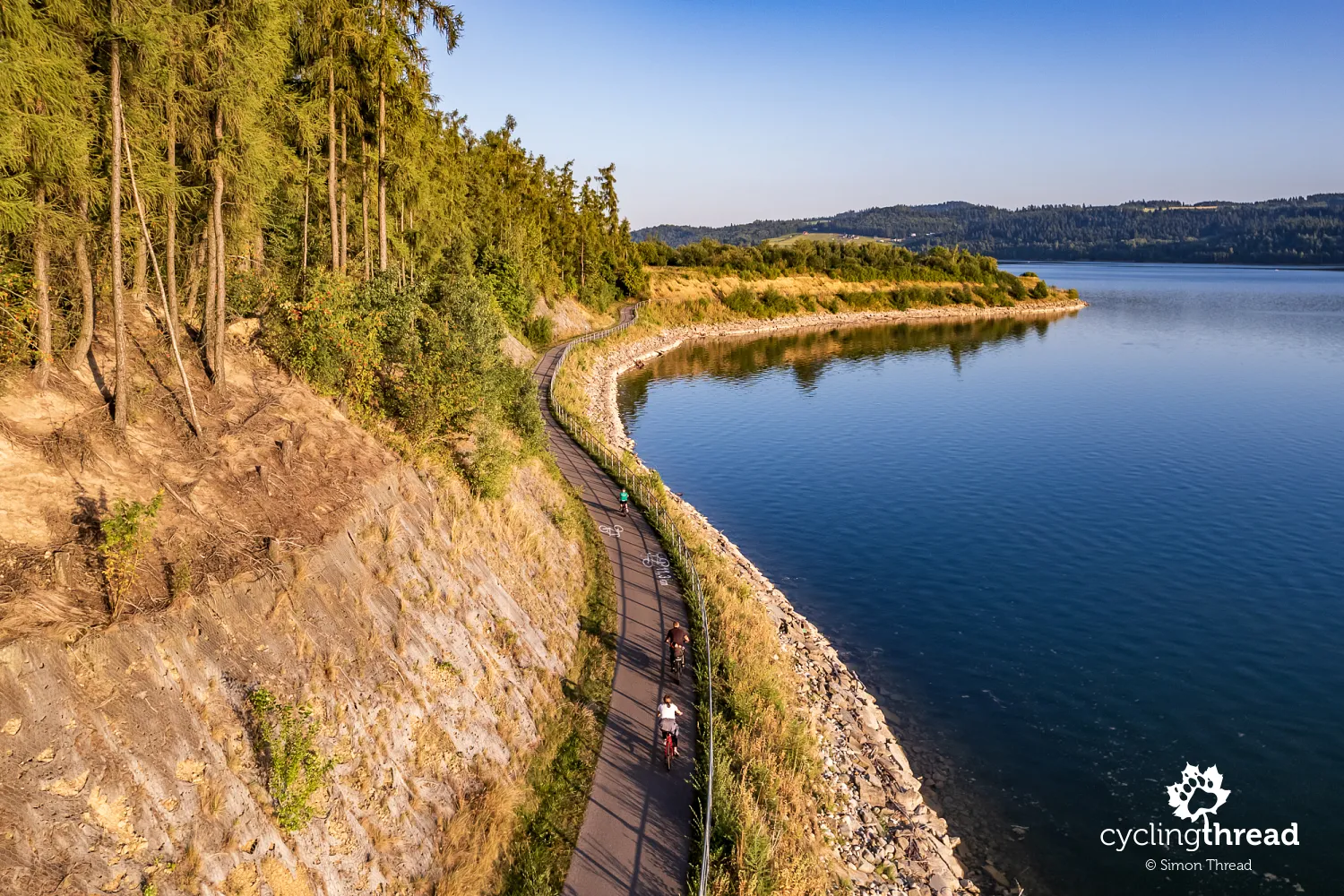
And just beyond Frydman… A few hundred meters from the campsite on Lake Czorsztyn begins one of the most spectacular cycling investments in Poland and easily also on a European scale. Laying out a cycle path along the southern shore of the lake required extensive construction and engineering work, including securing steep slopes against landslides. For me, it is also a unique example of the determination and courage shown by the designers of the VeloDunajec route and by the authorities of the Małopolska Region, responsible for the development of the entire VeloMałopolska network. I still dream that all Polish regions will one day be equally lucky to have cycling visionaries who can convince local governments to take bold decisions, and officials who have the competence and will to carry out such large projects.

VeloCzorsztyn - another cycling highlight of Małopolska
The section running along the southern shore of Lake Czorsztyn is perfectly matched by its counterpart on the northern shore - together they form the now famous and extremely popular loop around the lake, known as VeloCzorsztyn. Building the route there also required extensive earthworks on the steep slopes and, in selected places, additional protection of the cycling corridor against landslides from the forested hillsides. On this prepared base, an asphalt surface was laid and safety barriers were installed to prevent an uncontrolled finish in the waters of the lake. It is no surprise that every summer thousands of cyclists appear here, very often riding as families. VeloCzorsztyn works equally well as a one-day trip and as an attractive extension of the relatively short VeloDunajec route.
Niedzica Castle - the most famous site on the route
The village of Niedzica-Zamek is an important point on the route not only because of the picturesque silhouette of the castle rising above the waters of Lake Czorsztyn. It is also a good place for a two-night stop during a journey along the Dunajec - both here and in the neighboring Niedzica. An extra day can be used either for a ride along the nearby section of the Around the Tatra Mountains route or for a relaxed loop around Lake Czorsztyn on VeloCzorsztyn. Small gondolas carrying just a few people operate between Niedzica and Czorsztyn and are happy to transport tourists together with their bikes.
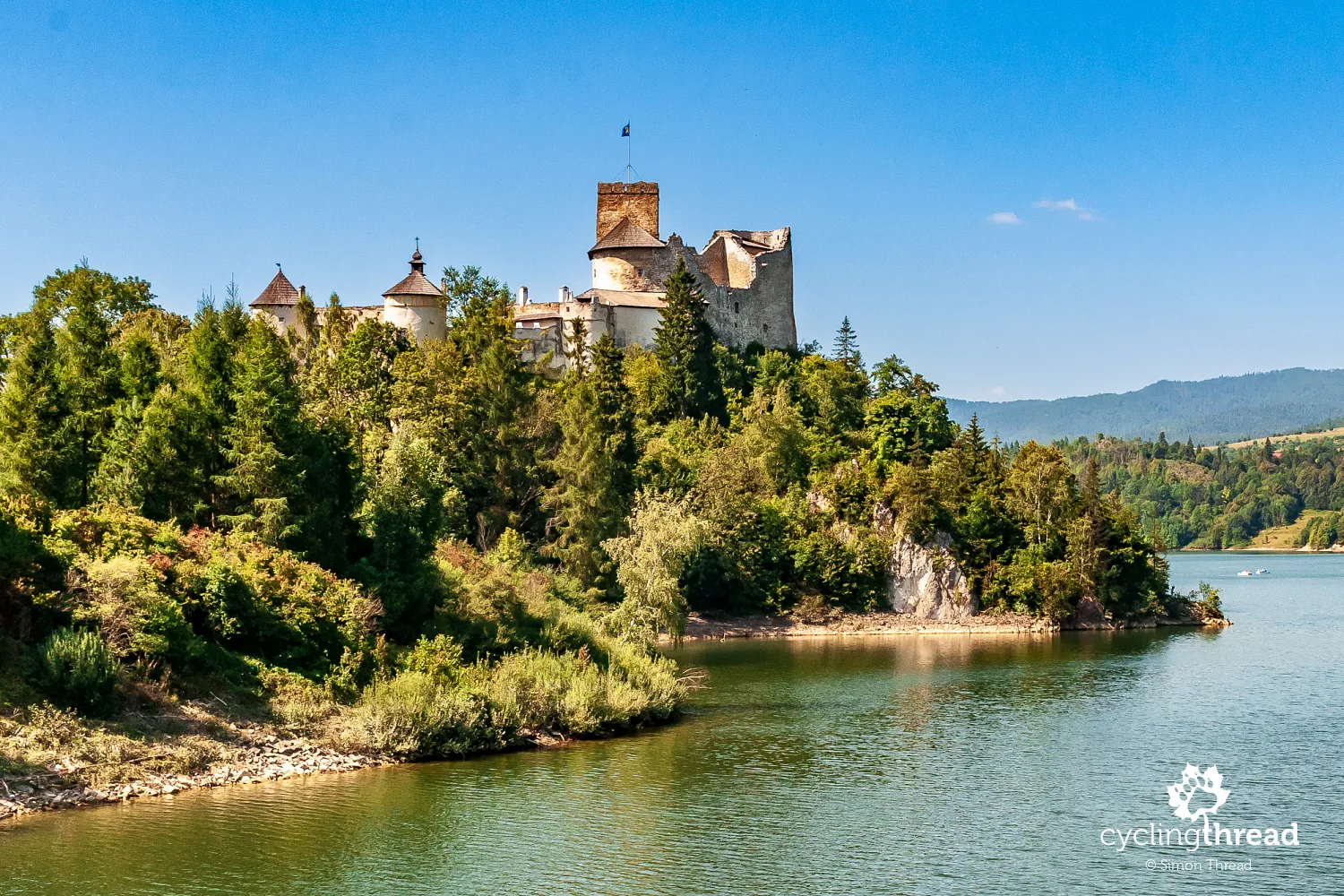
From the castle in Niedzica, the VeloDunajec route follows a cycle path toward the Dunajec Gorge in the Pieniny Mountains. Then another section of cycling infrastructure appears in Sromowce Wyzne, followed by a scenic ride on a public road through Sromowce Srednie. The route then reaches Sromowce Nizne, just below a beautiful wooden church that belongs to the Małopolska Wooden Architecture Route. Inside its historic interior there is an art gallery of local artists, run by a friendly host, where you can also buy original souvenirs from the Pieniny. The gallery inside the wooden church owes part of its popularity to the cross-border footbridge over the Dunajec, opened in 2006.
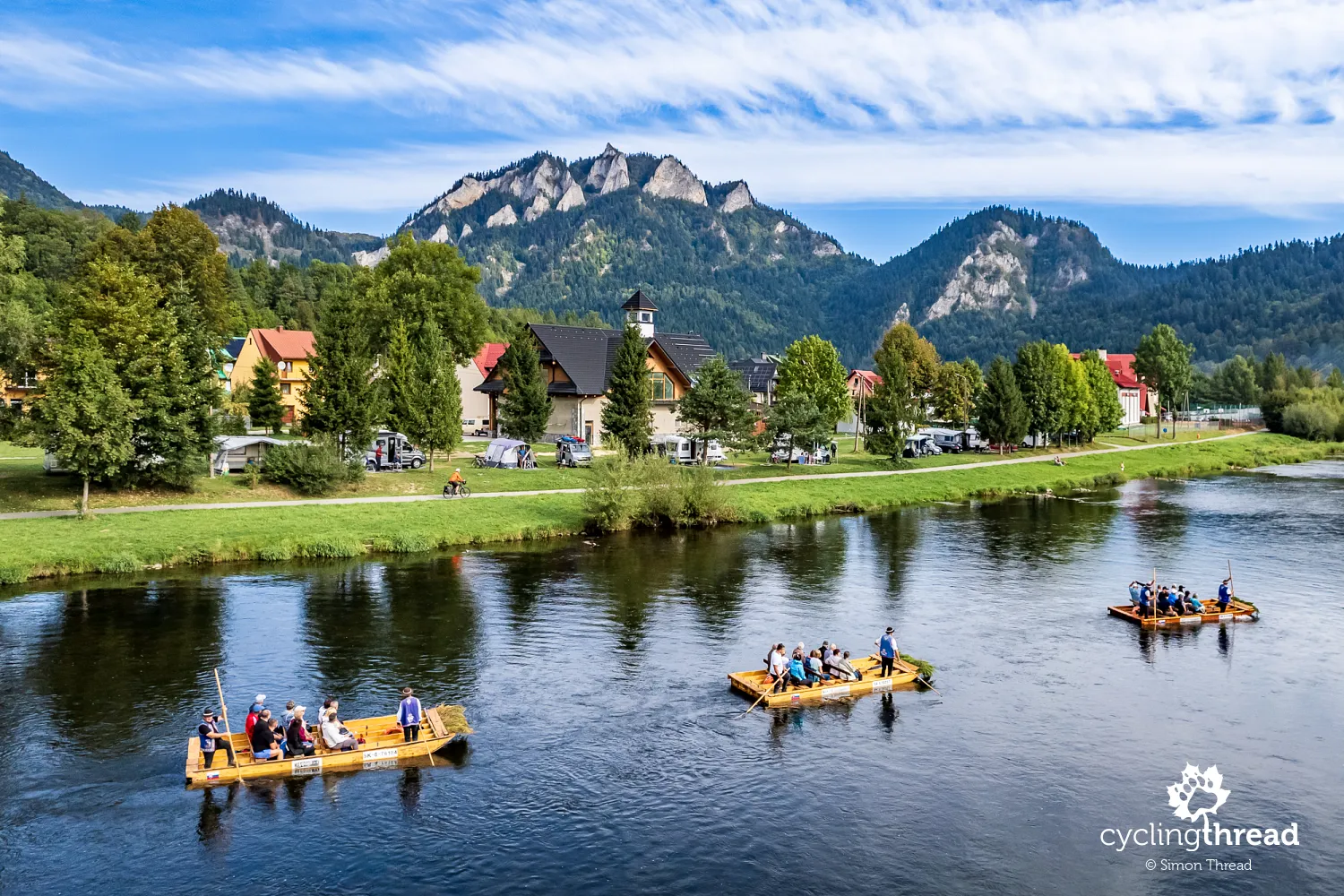
You can raft the Dunajec with your bike
Before you leave Sromowce Nizne and continue through the Dunajec Gorge in the Pieniny Mountains, it is worth considering an original alternative in the form of… a rafting trip with your bike. I completed one of my rides through the gorge exactly this way and remember it only positively. The cycle route here mostly runs through densely overgrown forest sections along the eastern bank of the river, often limiting the chances to admire the most spectacular views of this major natural attraction of Małopolska. A raft trip, on the other hand, allows for continuous observation of the Pieniny landscape, and the north-eastern course of the river means that already around midday the sun perfectly lights up the scenes unfolding in front of the raft. An extra attraction comes from the stories told by the raftsmen, who are happy to share local tales and anecdotes linked to the places you pass.

The most spectacular section of VeloDunajec
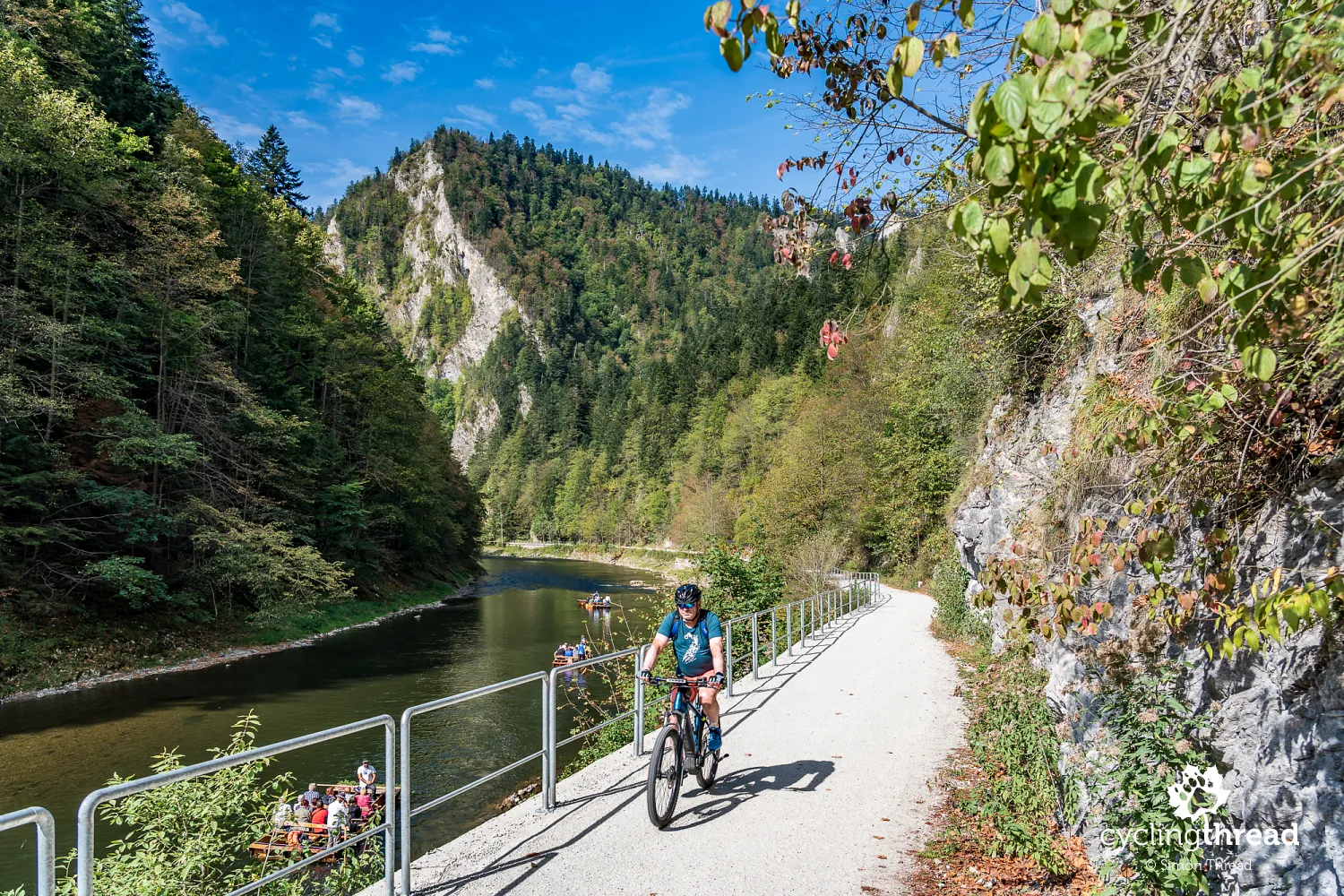
Even if a little less can be seen from the bike itself, the ride through the Dunajec Gorge remains one of the most spectacular sections of the entire route. The path often runs right above the river, squeezed between steep limestone walls of the gorge that in places rise almost vertically from the riverbed. At one moment the water takes on a calm, greenish color, and a moment later it speeds up in narrower constrictions, all set within the almost theatrical scenery of the Pieniny National Park. New perspectives open up constantly - sometimes of the river bends, sometimes of dramatic rock formations. This is exactly the section of VeloDunajec where the riding pace naturally slows down, because it is hard to resist stopping, even just for a moment.

This part of the route lies within the Slovak Pieniny National Park, and it was the Slovaks who recently carried out its renovation, building concrete supports for the shared walking and cycling path in several places. Both these interventions and the installation of safety railings caused quite a few voices of criticism in Poland - which, as the final result has shown, turned out not to be entirely justified. Strengthening the road through the gorge was necessary, just as securing several particularly dangerous sections was. In summer, this area experiences a real influx of visitors, mainly walkers arriving here from nearby Szczawnica.
A new cycle route between Szczawnica and Krościenko
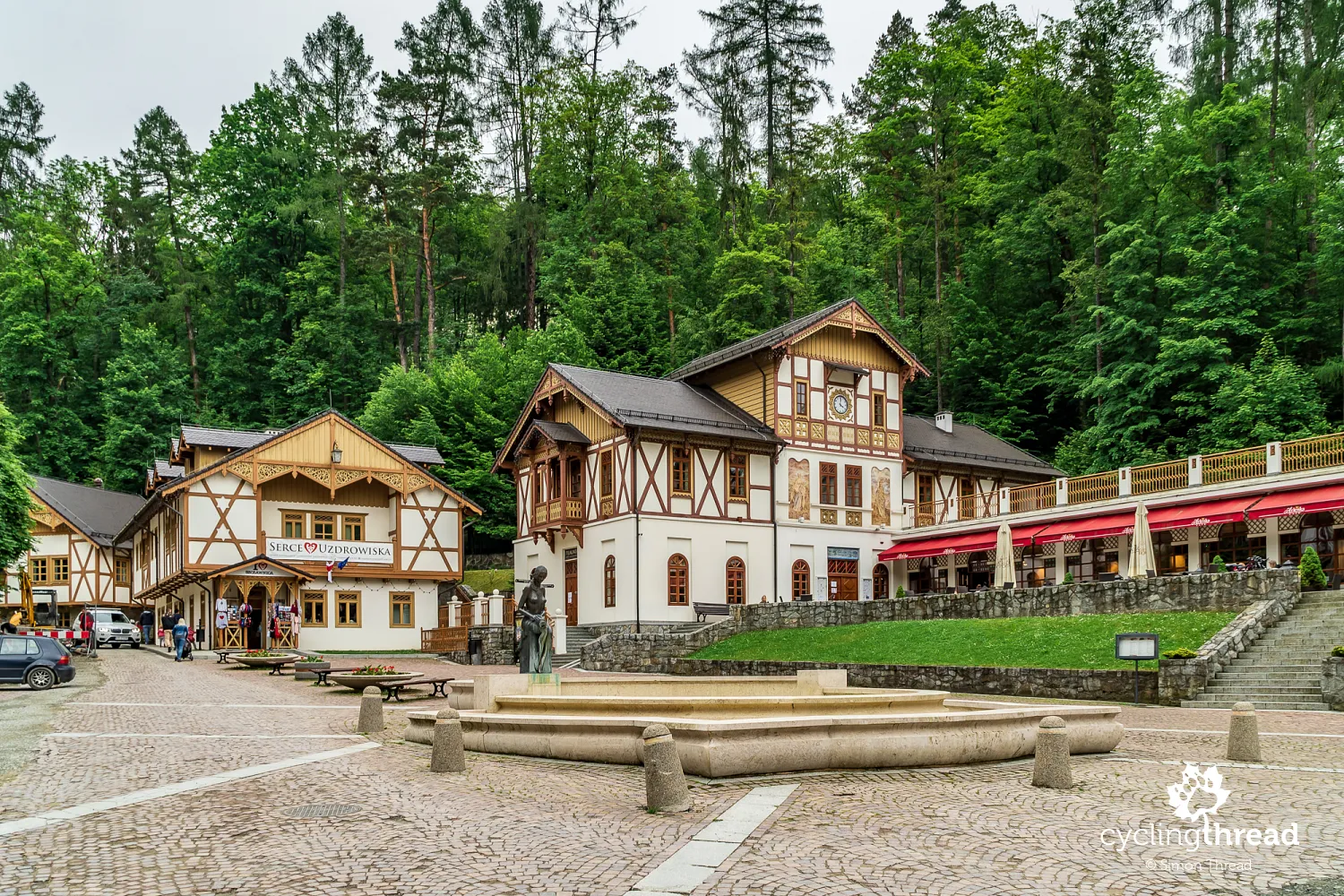
In Szczawnica, the route crosses the Grajcarek stream, along which a promenade runs with a somewhat aging cycle path. It is still perfectly sufficient, however, to ride smoothly up the Grajcarek and take at least a brief look at the historic center of the former spa town. From Szczawnica to the nearby Krościenko nad Dunajcem, just a dozen or so minutes away by bike, VeloDunajec already follows a newly built cycle path that has greatly improved both comfort and safety on this section. What is particularly telling is that the route was laid out in space previously occupied by cars, which clearly shows the scale of Małopolska’s commitment to developing cycling tourism.
Cross to the left bank over the Broken Bridge
In Krościenko, cyclists are welcomed by the so-called Broken Bridge, rebuilt in the form of the crossing that functioned here until 1934 and was destroyed during the largest flood in interwar Poland. It is worth changing to the left bank of the Dunajec at this point and entering the village that way - a quiet, green and very comfortable section of cycle path leads along this side. It is a pleasant alternative to the noise and exhaust fumes that accompany the main alignment of the route along the main road. Krościenko itself lies at the meeting point of the Pieniny, Gorce and Beskid Sądecki ranges, and its history of trade and settlement can still be seen in the historic houses clustered around the market square, the Gothic Church of All Saints, and the wayside shrines built into the facades of buildings.
Unusual cycling bridges of Małopolska
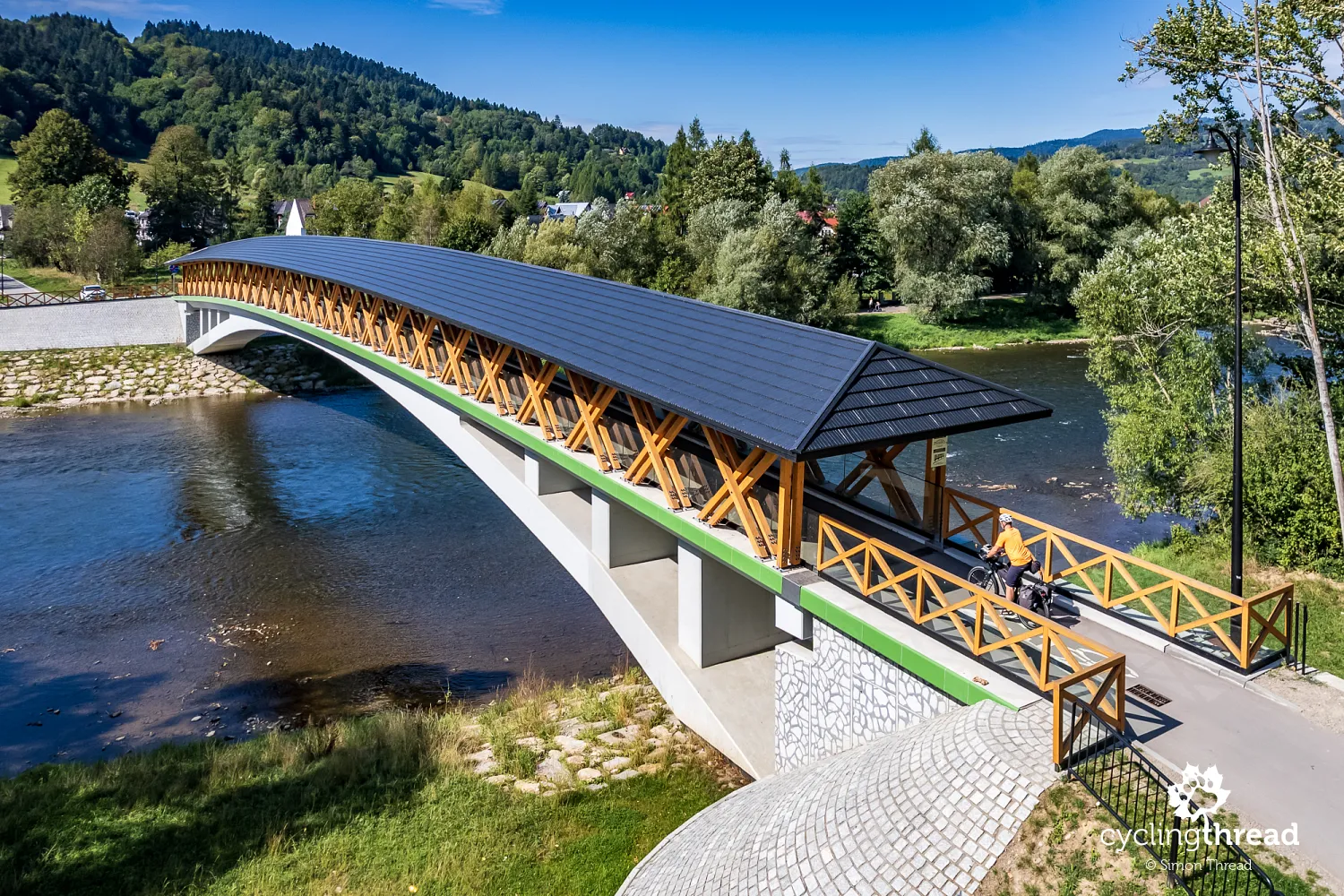
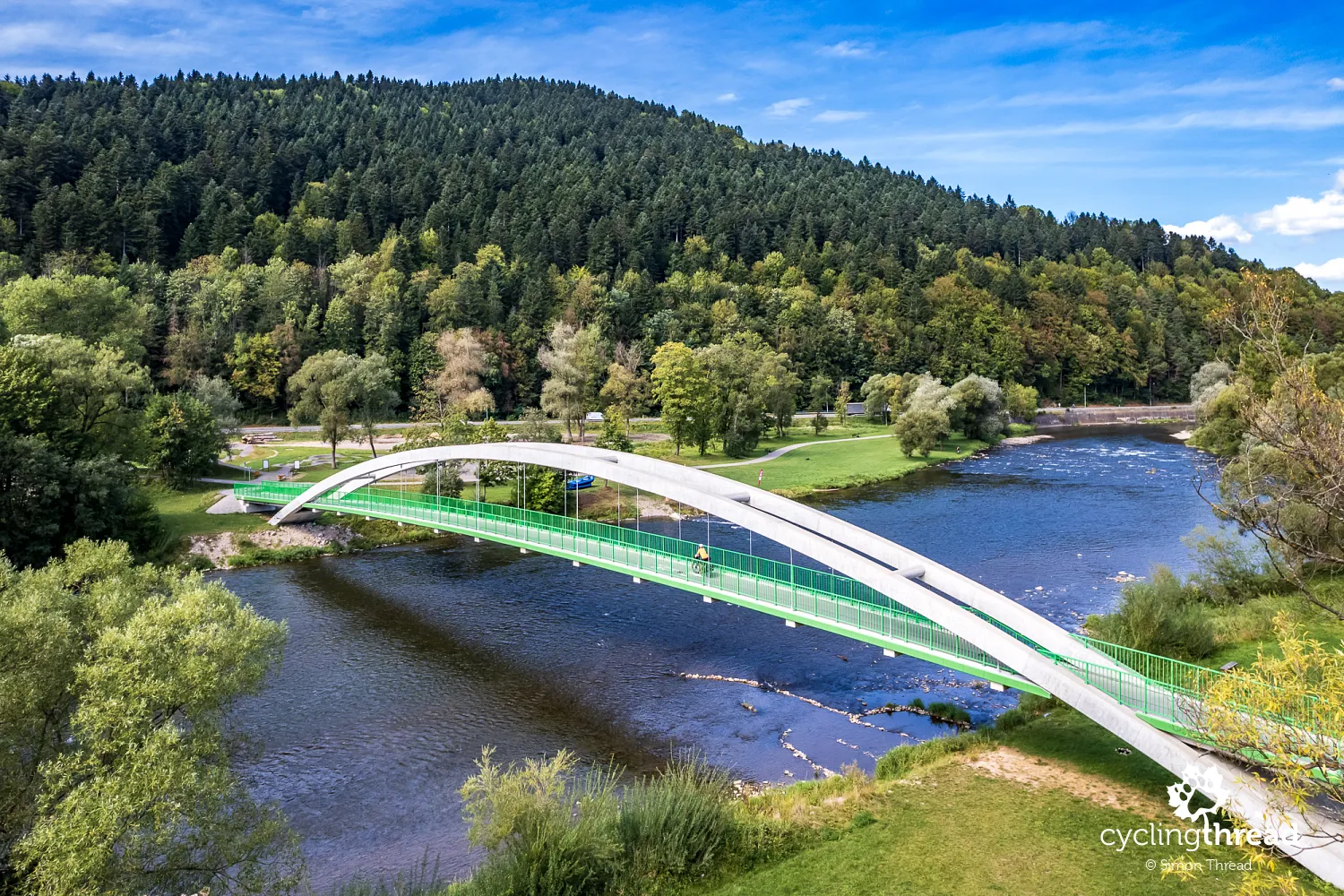
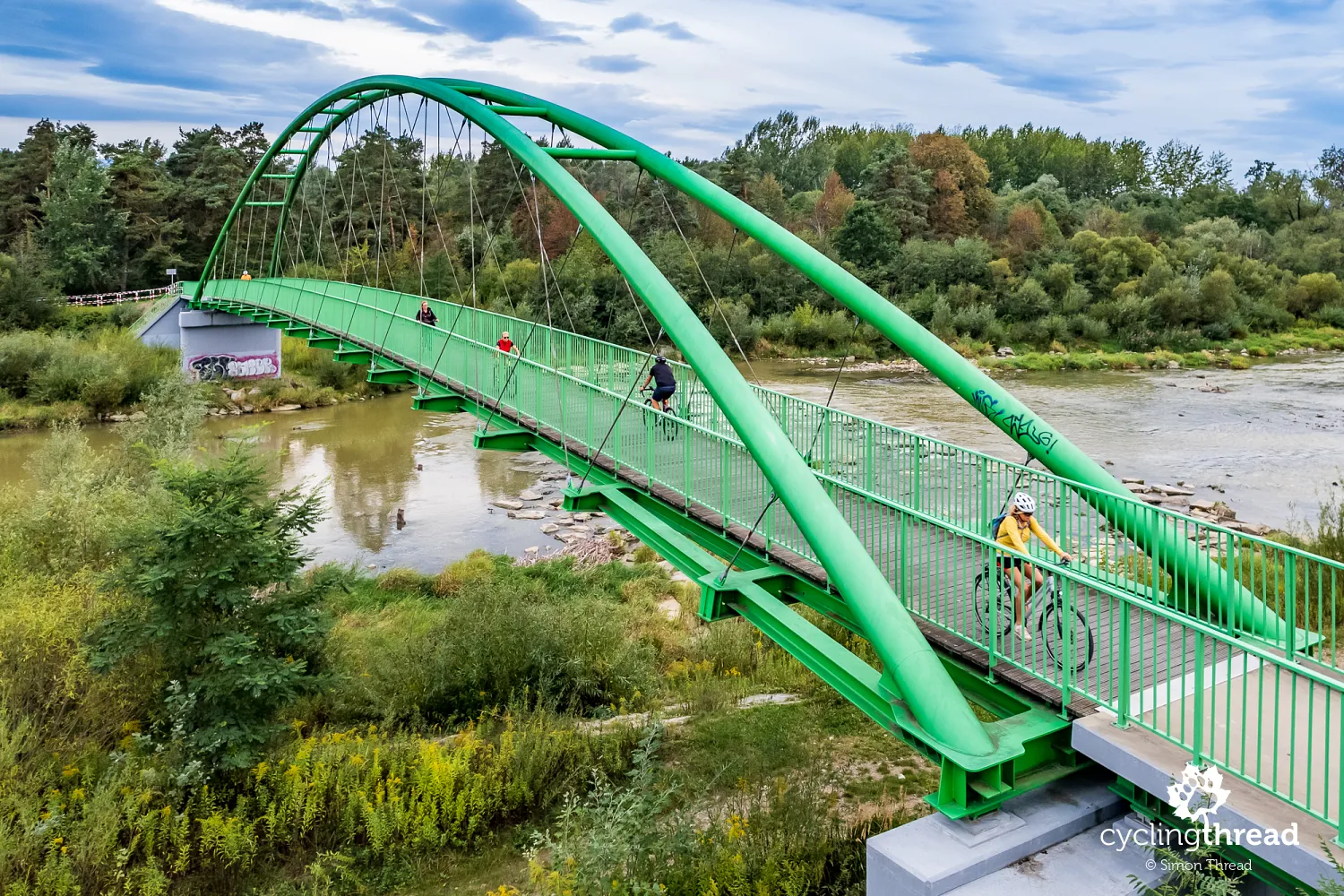
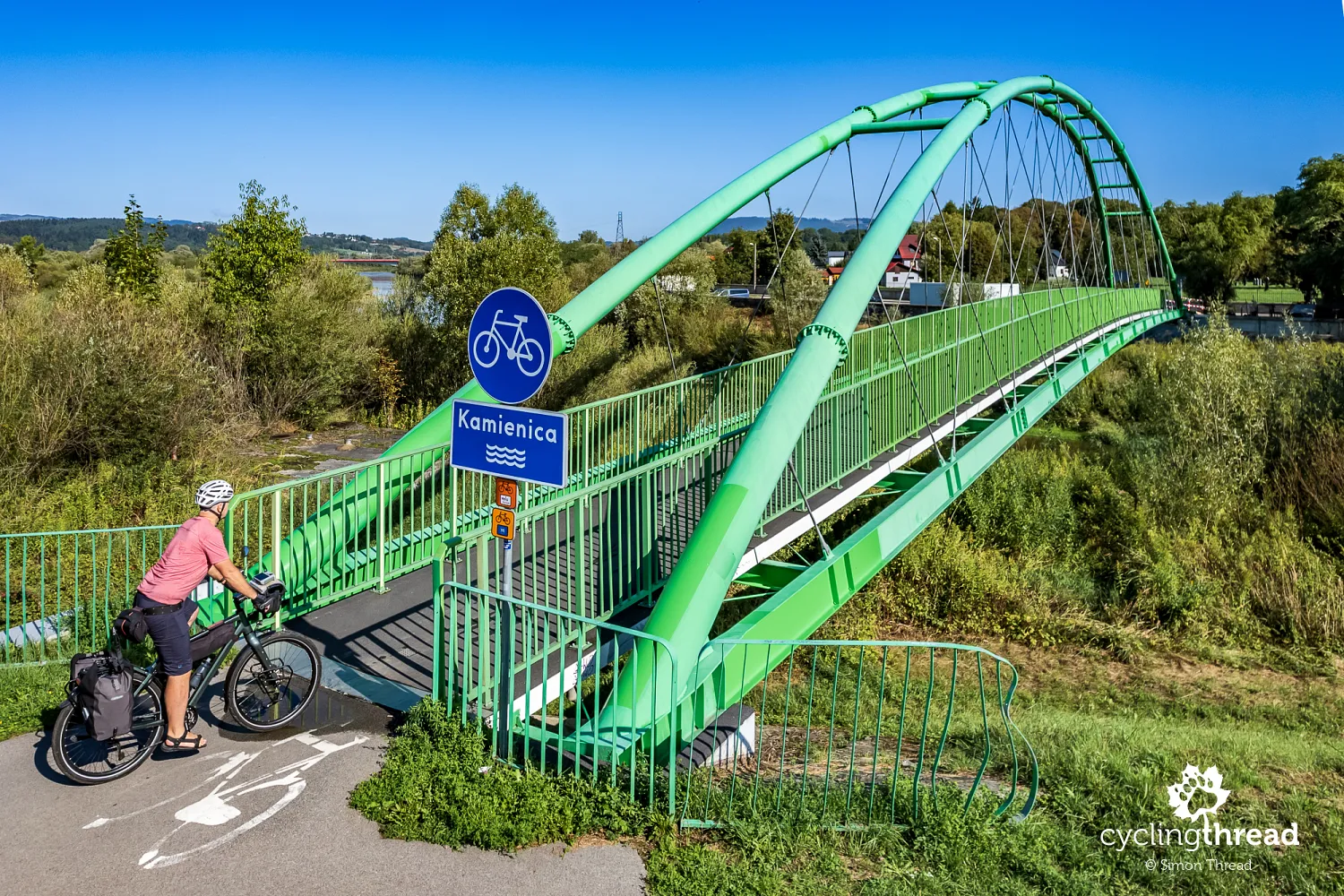
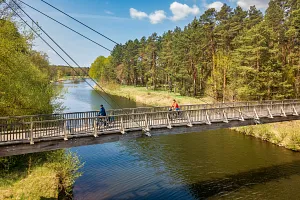
In Małopolska, the cycling "wow" effect is created not only by excellent cycle paths. A major role in shaping the region’s cycling image is also played by the distinctive green pedestrian and cycling bridges. To guide the route efficiently through the Dunajec valley, several crossings accessible only to cyclists and pedestrians had to be built. Along VeloDunajec, they connect the banks of the Dunajec, Poprad and Kamienica rivers - among others in Krościenko nad Dunajcem, Tylmanowa, Stary Sącz and Nowy Sącz. These bridges serve not only as convenient river crossings but also as outstanding viewpoints that allow you to fully feel the atmosphere of the valley. Importantly, they do not serve tourists alone - they have also clearly improved everyday mobility for local residents.
VeloDunajec also follows quiet local roads
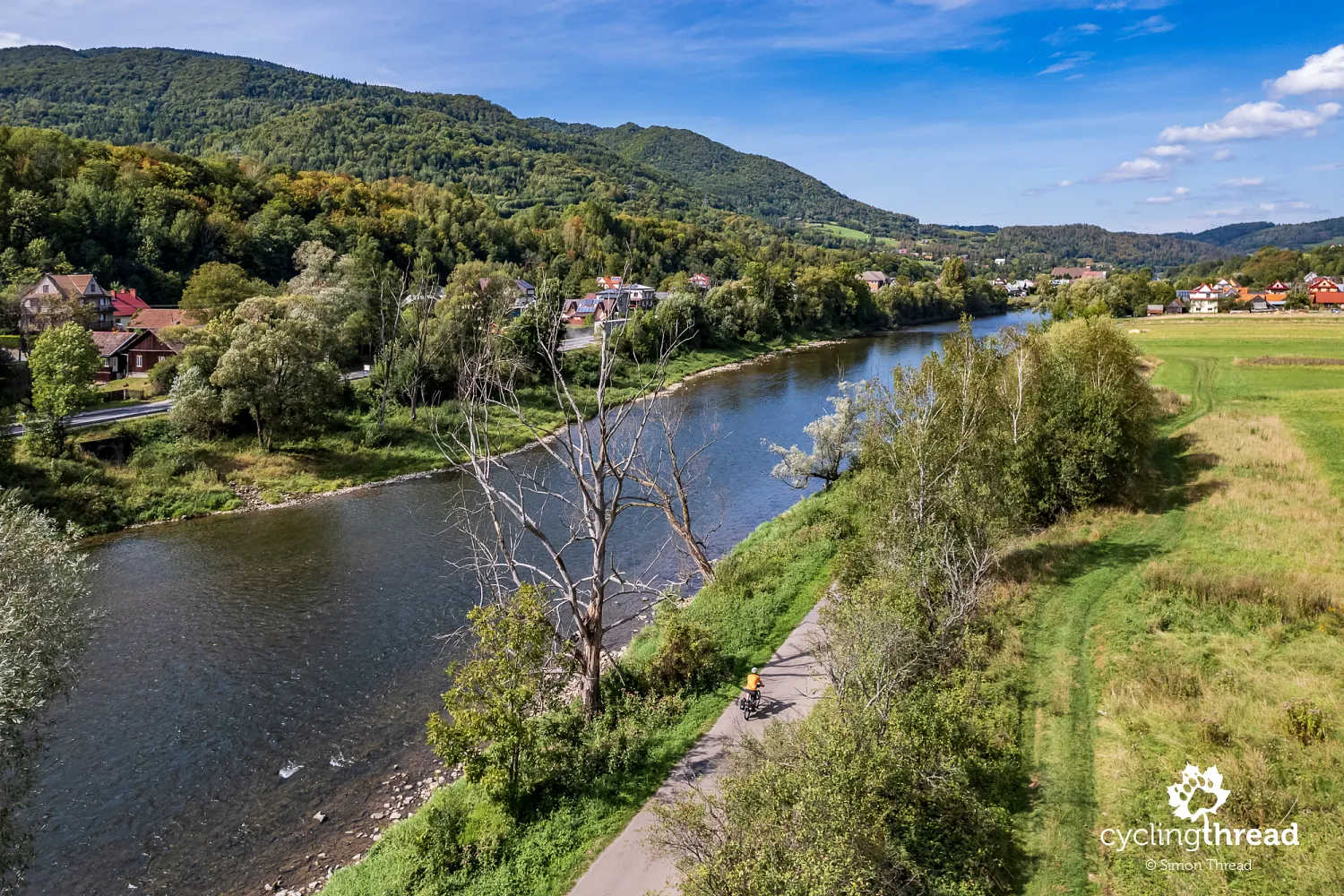
From Krościenko nad Dunajcem, VeloDunajec follows new cycle paths as well as quiet, narrow asphalt lanes of local access roads used almost exclusively by residents. Importantly, most of this section runs on the opposite side of the river from the busy provincial road no. 969, which makes it clearly safer and more peaceful. On the short stretches that use public roads, however, it is still worth staying alert and remembering about the possible presence of other users. Among the slow-moving local cars and agricultural machines, you will sometimes also meet couriers who are almost always in a hurry - and it is better to give them a bit of extra caution.
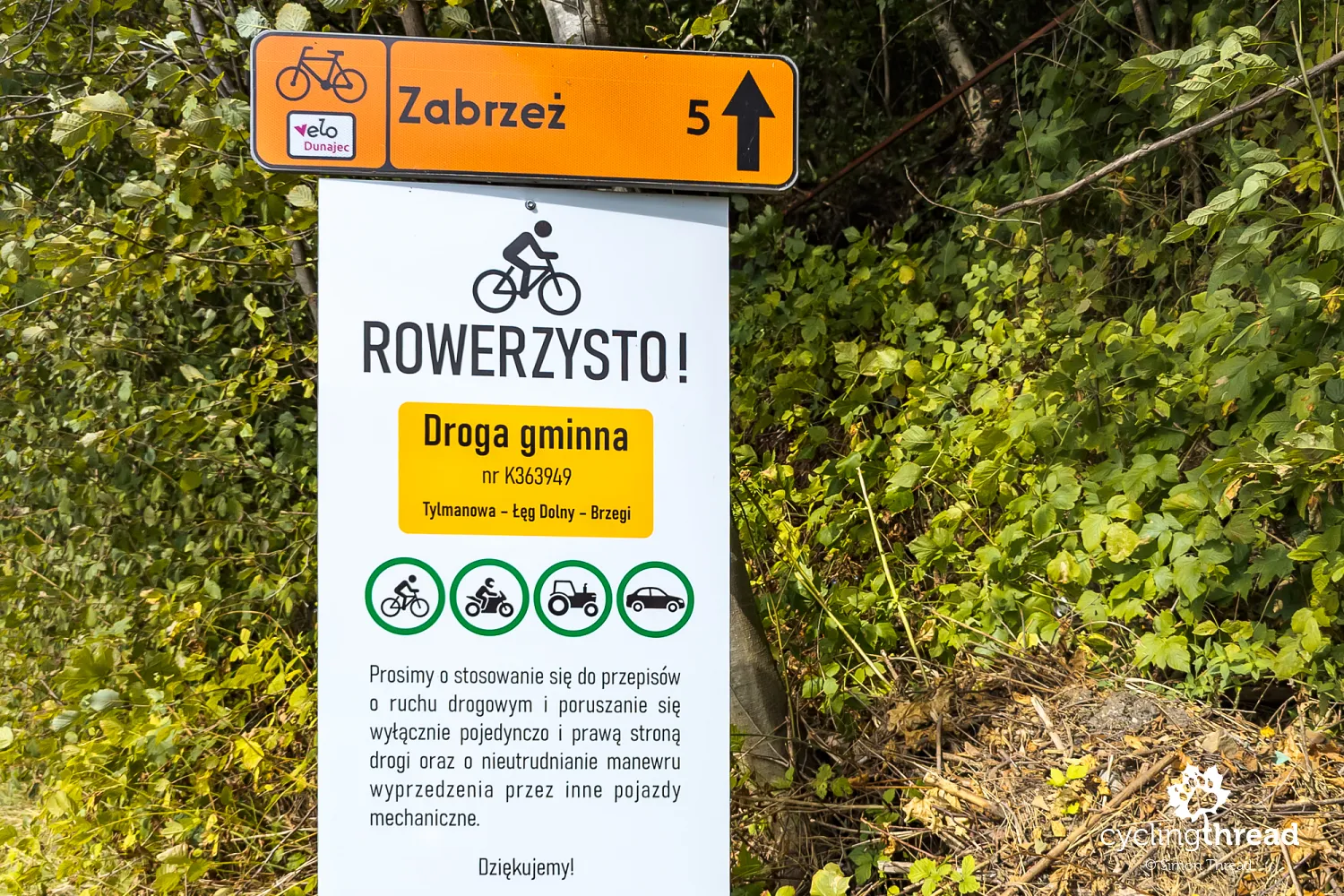
At this stage of the route, which follows local public roads, signs of various sizes and forms appear regularly, addressing cyclists and reminding them that the road is shared with cars. They are a fairly telling sign of the stage Małopolska finds itself in today. Cycling infrastructure is developing faster and more confidently than ever, yet cyclists still often ride on local and access roads that are not reserved exclusively for them - which requires an understanding of the rules, riding culture and mutual respect. These messages are not meant to restrict anyone, but to remind us that good infrastructure works best when all road users understand their role.
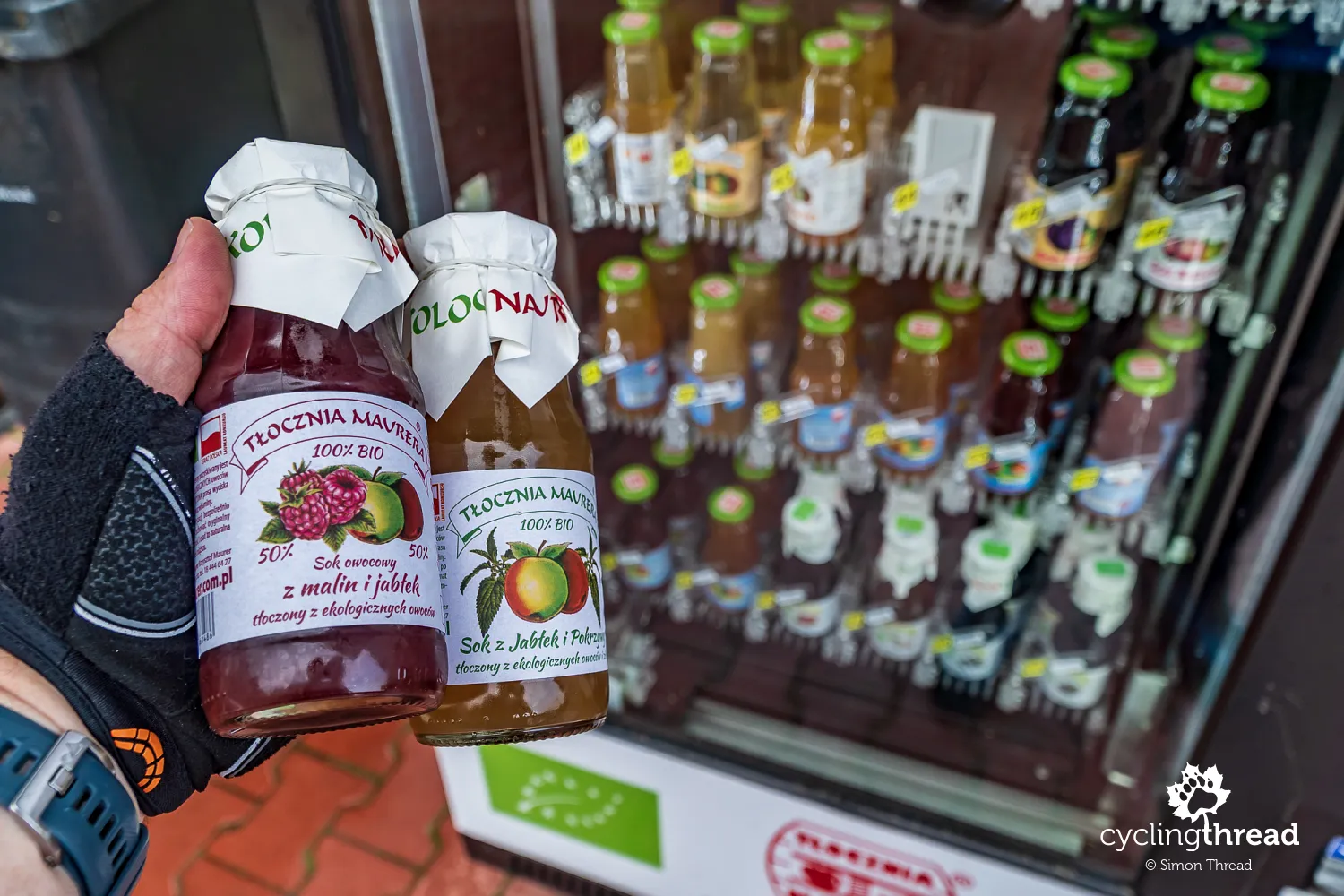
One of the local orchard owners responded brilliantly to the creation of VeloDunajec by installing a vending machine with natural juices next to his company headquarters in the village of Zabrzeż, right on the route just before Łącko. It immediately reminded me of South Tyrol in northern Italy and the apple and apple juice stands that appear in the Adige valley. There, you pour the drink from a simple container into a disposable cup and drop the exact amount of money into a nearby box. In Małopolska, cyclists are greeted by a modern vending machine that dispenses neatly packaged juices from Tłocznia Maurera. I even thought that if they were sold in a less elegant form, it might be possible to lower the price of this truly excellent drink. Still, I chose two - you already know my favorite flavors.
The longest cycling bridge in Małopolska
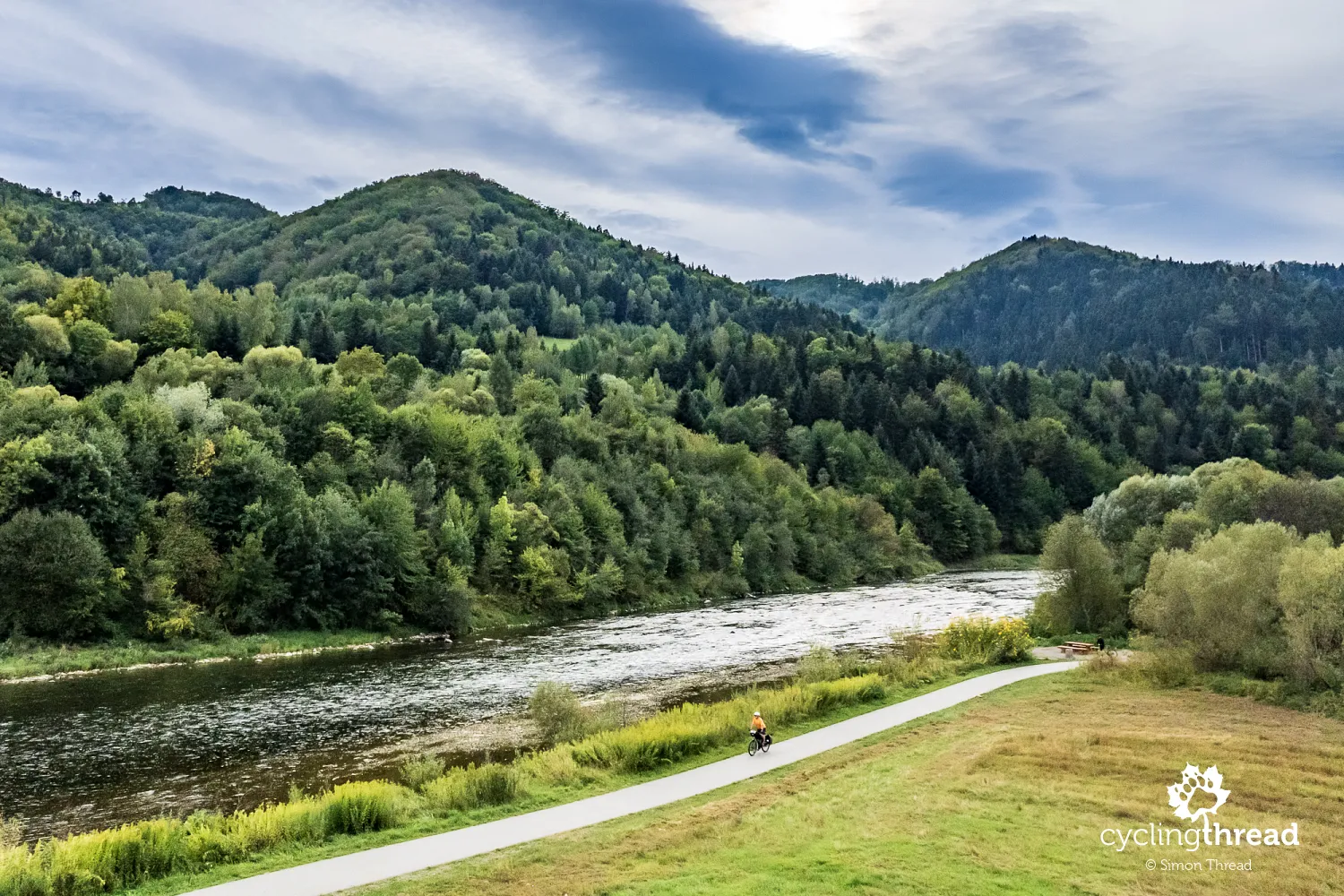
Just before Łącko, another Małopolska cycling bridge makes a strong impression - this time with an exceptionally long structure and an extended approach from the Zabrzeż side. The bed of the Dunajec is especially wide here, which further enhances the bridge’s role as a viewpoint. I still find it hard to believe that structures of this scale are being built in Małopolska with cyclists in mind - it is yet another reason for my admiration of the ambition behind these investments, which is already translating into the growing reputation of the region and large numbers of riders following the VeloDunajec signs.

Łącko, reached from the route by a short connector along a cycle path, is famous for its vast apple orchards and the fruit processing linked to them. Orchards are said to have appeared here as early as the 12th century, and a local anecdote claims that parish priests also contributed to their development by assigning tree planting as a form of penance and a kind of fee for wedding announcements. Besides apple trees, you will also find plums, pears and cherries in the area, as well as bushes of currants, gooseberries and raspberries. Strawberries and grapevines are present too. A little farther on, VeloDunajec passes one of the local vineyards, from which a wide view opens over the Dunajec valley.
Stary Sącz - one of the oldest towns in Poland
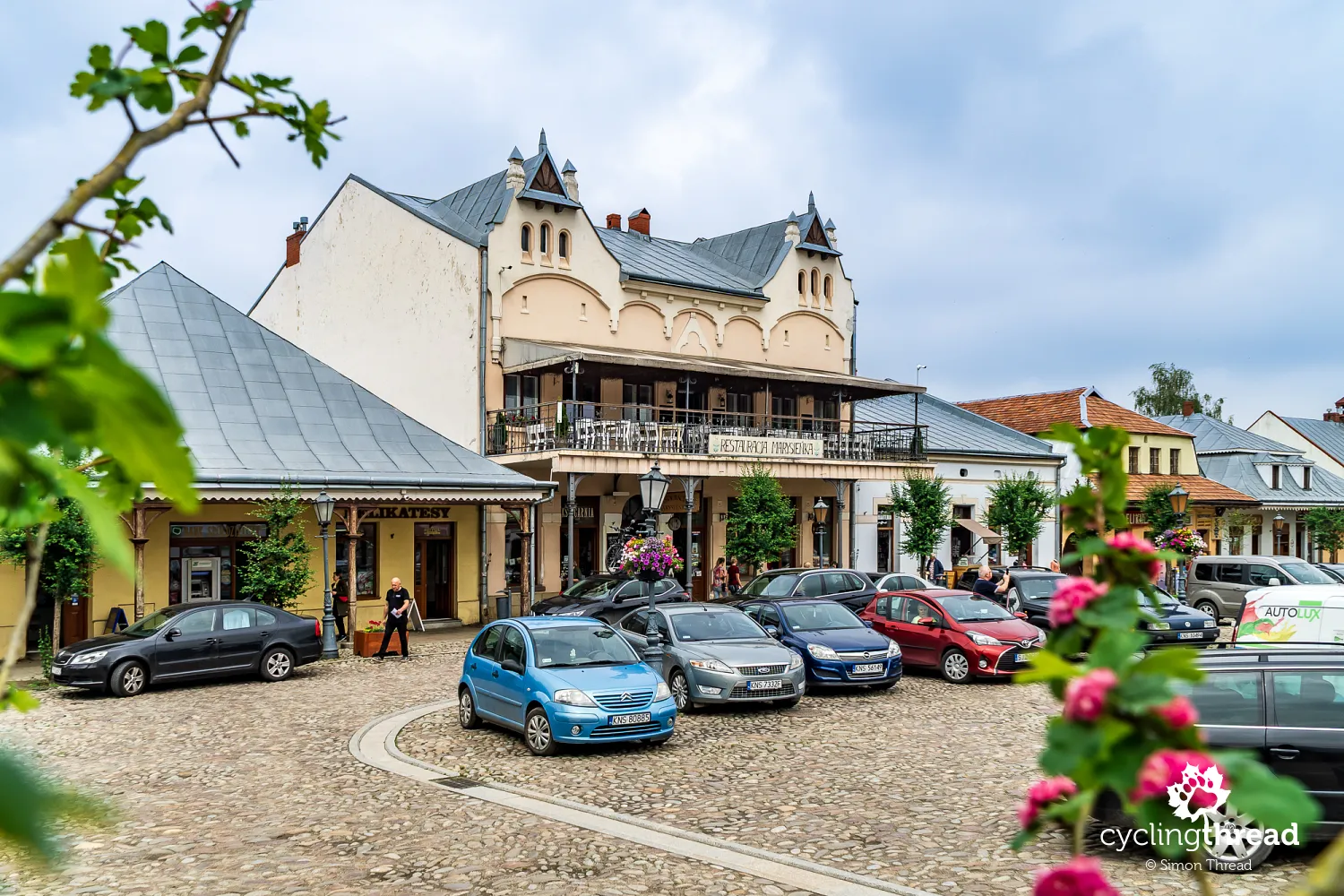
The cycling idyll along the middle course of the Dunajec is pleasantly interrupted by one of the oldest towns in Poland - Stary Sącz. As early as the 1950s, the town gained the status of an urban conservation area thanks to its preserved medieval layout. Cyclists may not be thrilled by the cobblestones on the lively market square - we have to accept that historians enjoy them more. Low, small-town tenement houses surround the square, but one thing is missing… the town hall. It burned down at the end of the 18th century and was never rebuilt. Or at least not in its original location - a replica of the Stary Sącz town hall can be found nearby in Nowy Sącz, in the Miasteczko Galicyjskie open-air museum, where it stands as the most recognizable and characteristic building.
Just beyond Stary Sącz, before the route reaches the bridge over the Poprad, it is worth paying attention to Bobrowisko - a small natural enclave created on the site of former aggregate extraction. The Dunajec flows on one side, the Poprad on the other, and between them stretch flooded excavation pits that over time have turned into a valuable wetland area. An approximately 400-meter-long nature trail runs through this area on wooden boardwalks. At its ends stand two birdwatching hides with imaginative shapes, equipped with resting spots, educational boards and telescopes for observing birds and beavers.
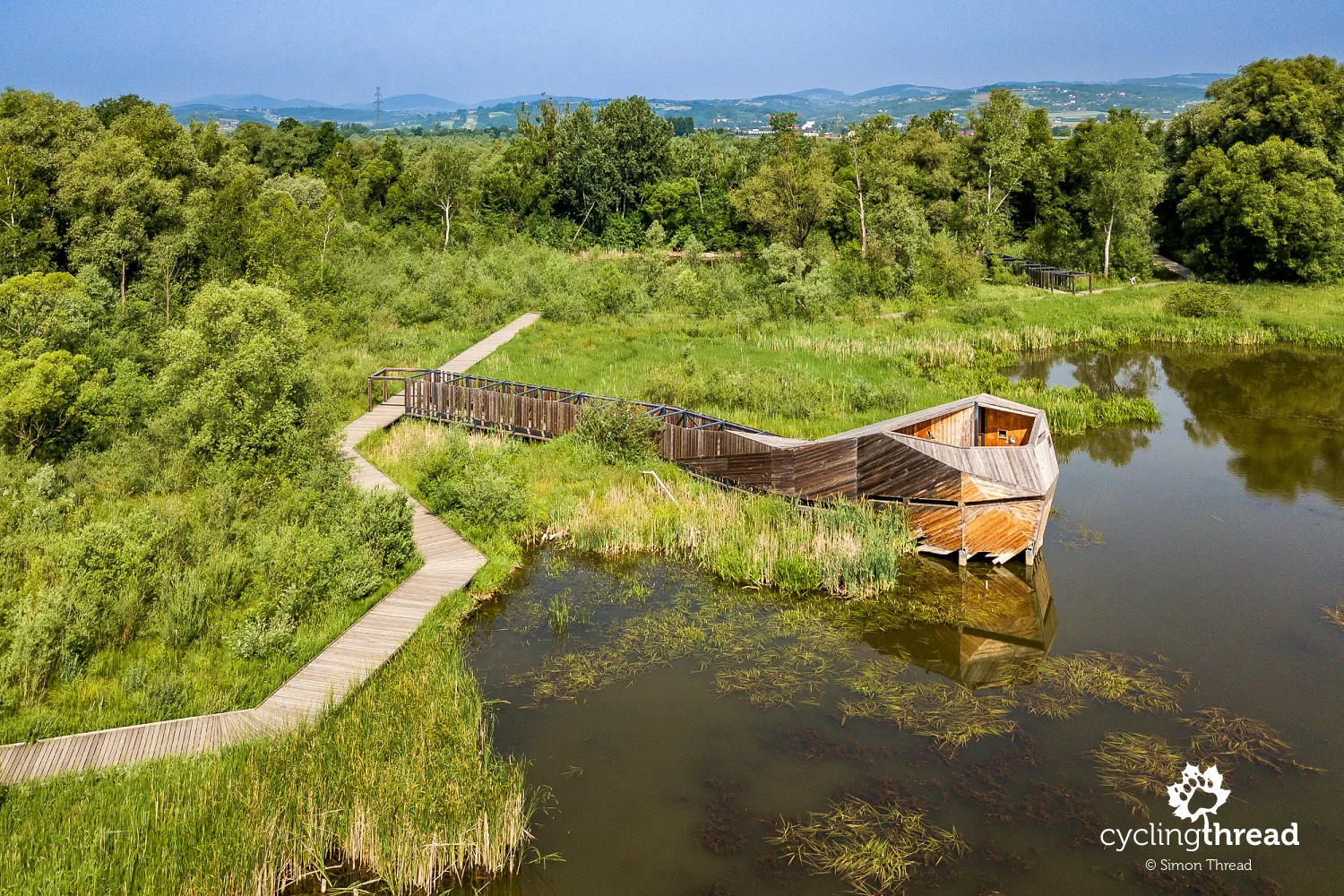
Farther on, VeloDunajec leads onto a long, roughly 7-kilometer cycle path built on the Dunajec flood embankment, linking Stary Sącz with Nowy Sącz. This section is eagerly used by both tourists and residents of the two towns. A distinctive feature of the route is the cycling bridge over the Poprad, the largest tributary of the Dunajec in this part of the region, located about one and a half kilometers from its mouth. The crossing has become an important element of the local route network and one of the most recognizable landmarks on this stretch of VeloDunajec.
Nowy Sącz - a beautiful stop on VeloDunajec
The VeloDunajec cycle path runs just a few dozen meters from the Old Town in Nowy Sącz. This is one of those places along the Dunajec where urban layout and architecture form an exceptionally coherent historic whole, so it is truly worth spending at least a few quiet minutes riding through the old part of the town. The central point of the large market square is occupied by a relatively young, just over one-hundred-year-old eclectic town hall, which clearly stands out among other Polish buildings of this type. Together with the surrounding townhouses, the street layout of the center, and the view toward the nearby Dunajec, it creates one of the strongest and most memorable images of this Małopolska route for me.
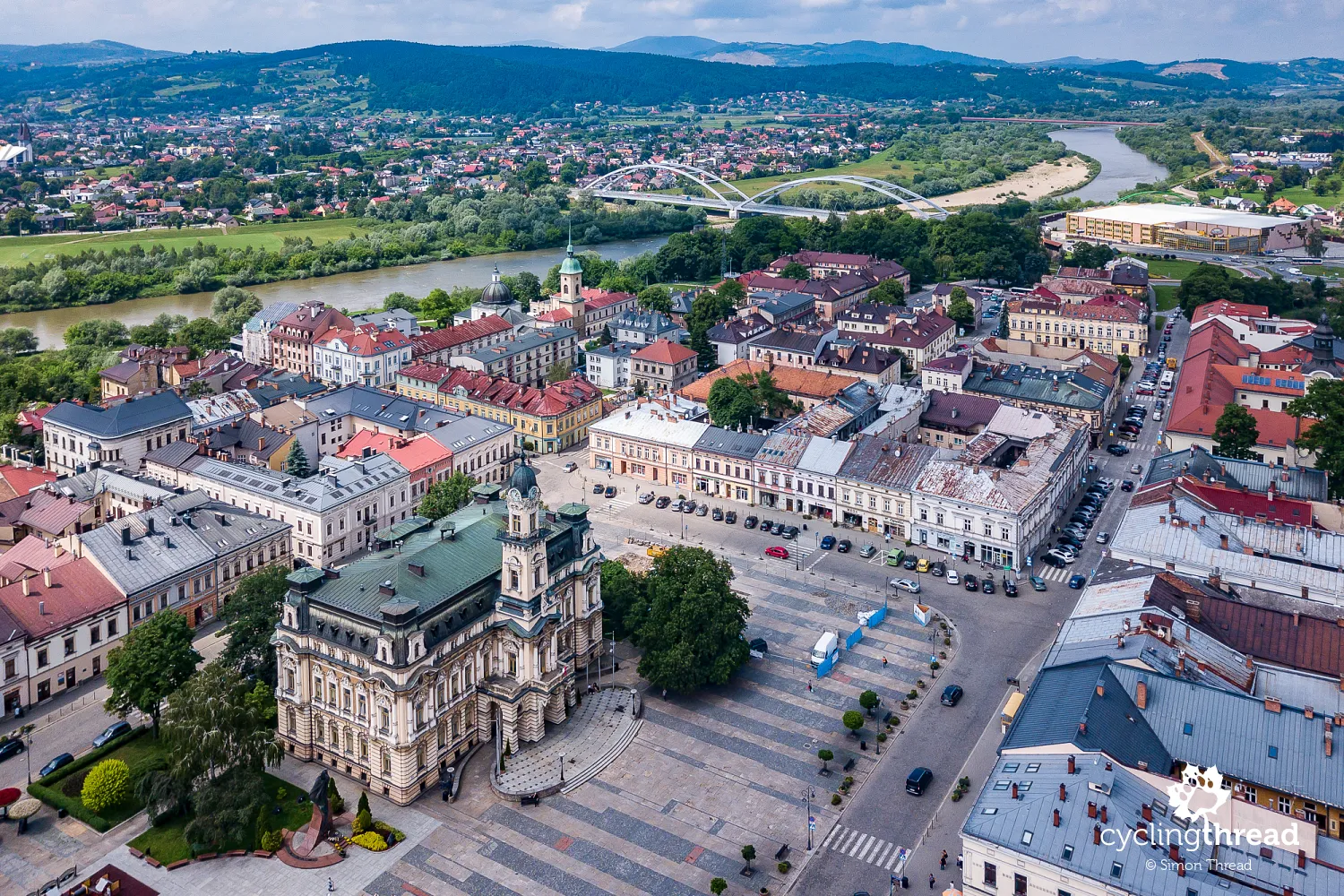
And if you do not visit Małopolska often, it is worth planning more than just a brief stop in Nowy Sącz. Apart from the town hall and the atmosphere of the Galician buildings around the market, you will also find, within a short distance, the ruins of a royal castle, the Basilica of St Margaret, a synagogue and the Gothic House. A particularly interesting and unique place on a national scale is the Galician Town - a reconstructed historic town center with a town hall, public buildings and houses, now operating as an original open-air museum. It is located on the outskirts of Nowy Sącz, but only about 3.5 kilometers by a straight road from the market square. For me, it once served as a convenient starting point for several days of riding in the Low Beskids, all the more so because right next to it lies the Sądecki Ethnographic Park - an open-air museum presenting, among other things, the architecture of the Lemko people.

The high-quality route ends in Nowy Sącz
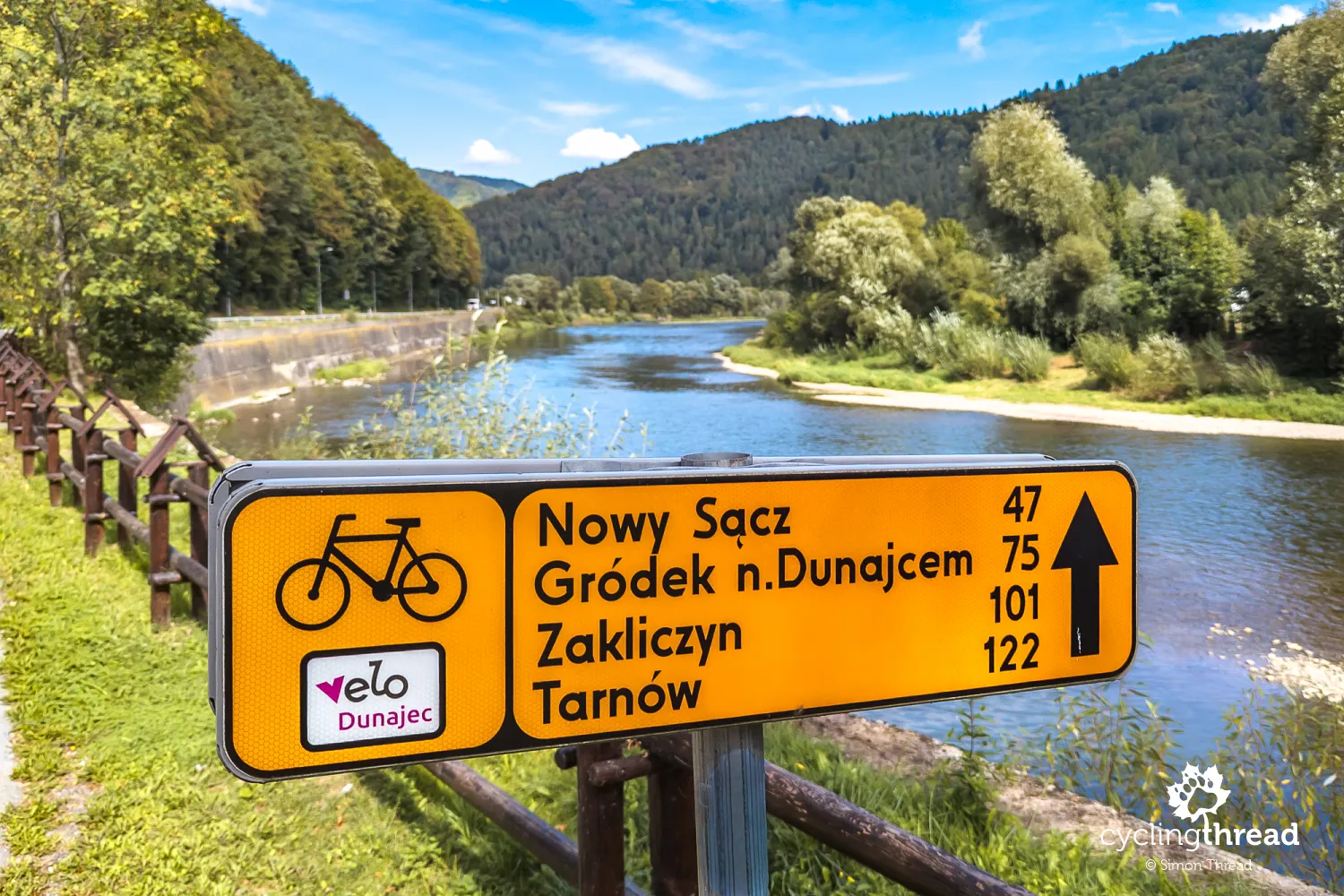
Just beyond Nowy Sącz, after another excellent stretch of cycle path and the next bridge - this time over the Kamienica - the most comfortable part of the route comes to an end. Today, continuous infrastructure leads only as far as Wielogłowy, near the facilities of Wiśniowski, a well-known manufacturer of gates, doors and windows. Here Małopolska presents you with a choice: either tackle the next 25 kilometers in more demanding conditions, or board a Małopolska Railways train and ride ahead to Tarnów. Fortunately, a light at the end of this cycling tunnel is already visible - plans to complete the missing section are being discussed more and more openly, and among the proposals are even ideas to build a route around Lake Rożnowskie, modeled on the one around Lake Czorsztyn. This could become another Małopolska hit.
A demanding 25 kilometres with three climbs
If you decide to ride the missing section of the route by bike, it is not a drama at all. There are about 25 kilometers to cover, mostly on public roads, with roughly one third running along a fairly busy and not very calm main road, plus three demanding climbs along the way. Riding in an adult group, on regular bikes and with some experience in traffic, these are in fact quite standard conditions by Polish standards. If, however, your group includes children on their own bikes or you are towing a trailer, it may turn out that this part of the route is more sensibly covered by train.
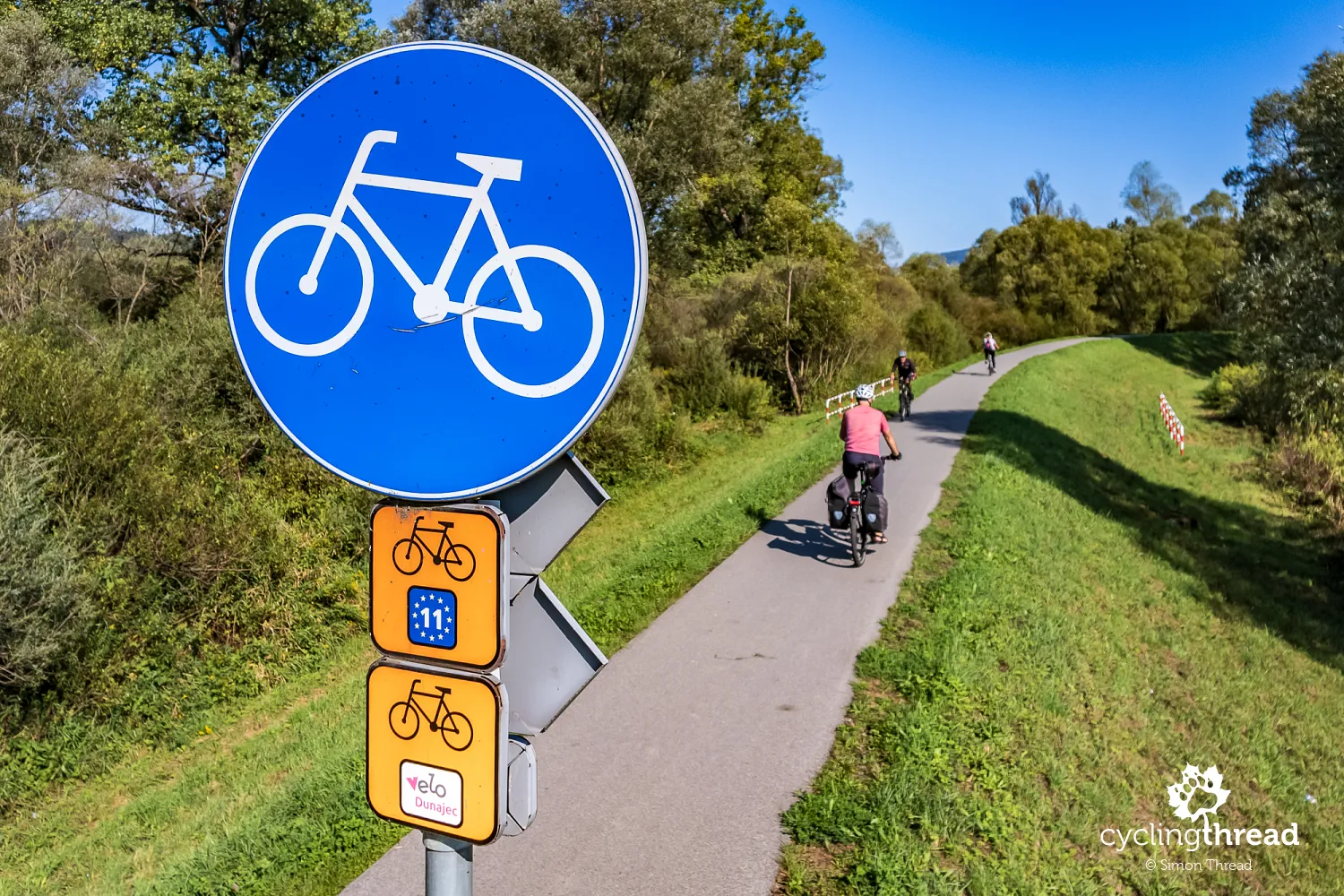
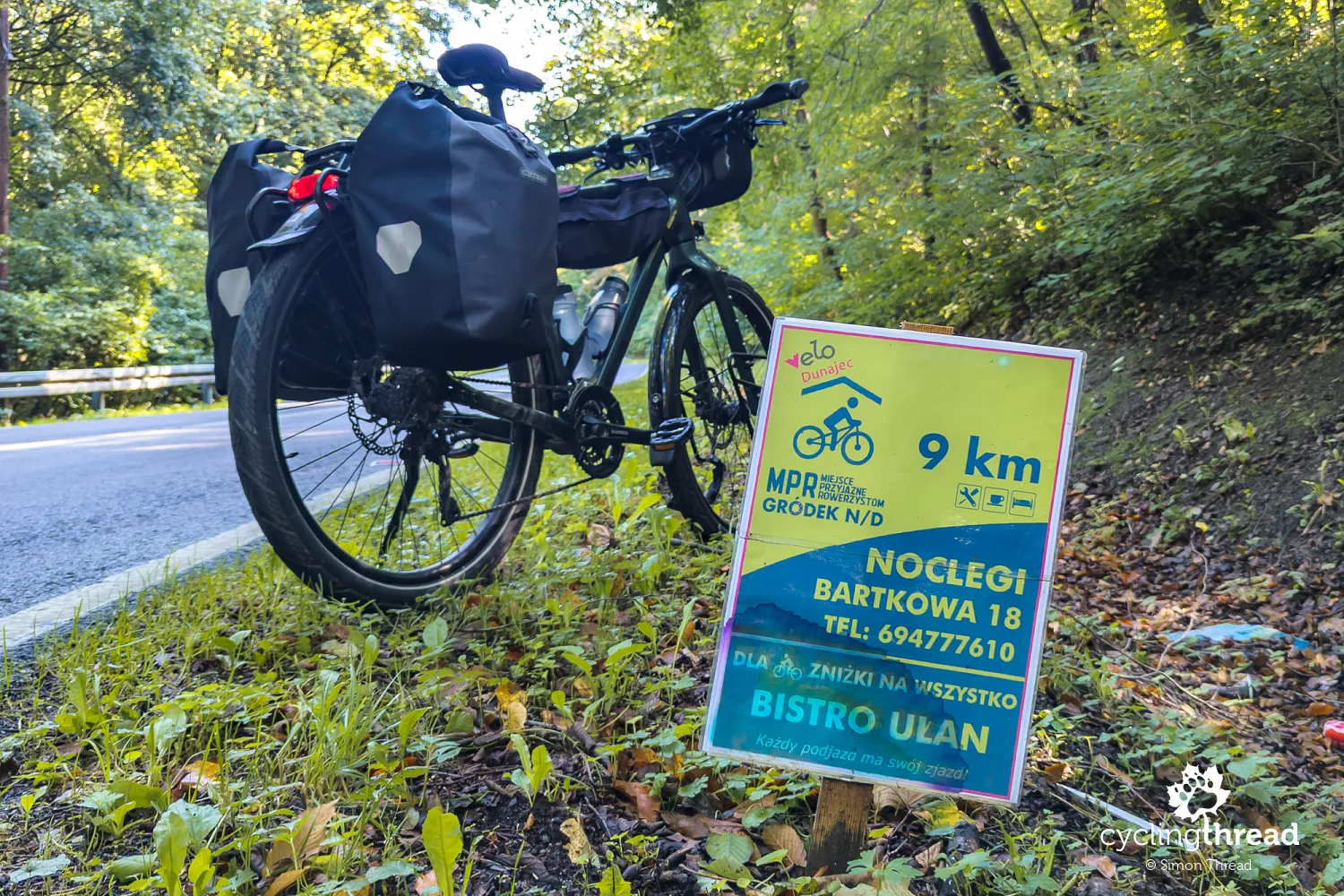
The first of the climbs - just beyond Wielogłowy - is a steep local serpentine between farm buildings. It is about one kilometer long, with almost no car traffic and a gradient reaching up to 13%. The second, near Łazy, is just under two kilometers long, with gradients up to 10%, and runs on a public road with car traffic. The third is of similar length but feels clearly the hardest - two kilometers up Habalina Hill, where on the first and steepest section the gradient also reaches nearly 13%, this time again without car traffic. None of these climbs should scare an average cyclist, although each of them - especially with panniers - will feel like a proper challenge. And as a piece of wild advertising for a Cyclist-Friendly Place stuck somewhere by the roadside says, "every climb has its descent". All three climbs are rewarded with fast downhills - and the most spectacular one is the first, opening wide panoramas over the Rożnów Foothills.
Gródek nad Dunajcem on an artificial reservoir
On this section of VeloDunajec, the route passes, among other places, through Gródek nad Dunajcem, which can be a pleasant spot for a short break. Stopping here for a moment, it is worth realizing that Lake Rożnowskie is an artificial reservoir which - just like Lake Czorsztyn - was created for flood protection and regulation of the Dunajec. Only a hundred years ago, the landscape here looked completely different. Even the castle on what is today the only visible Monkey Island in the lake could then be reached on dry land.
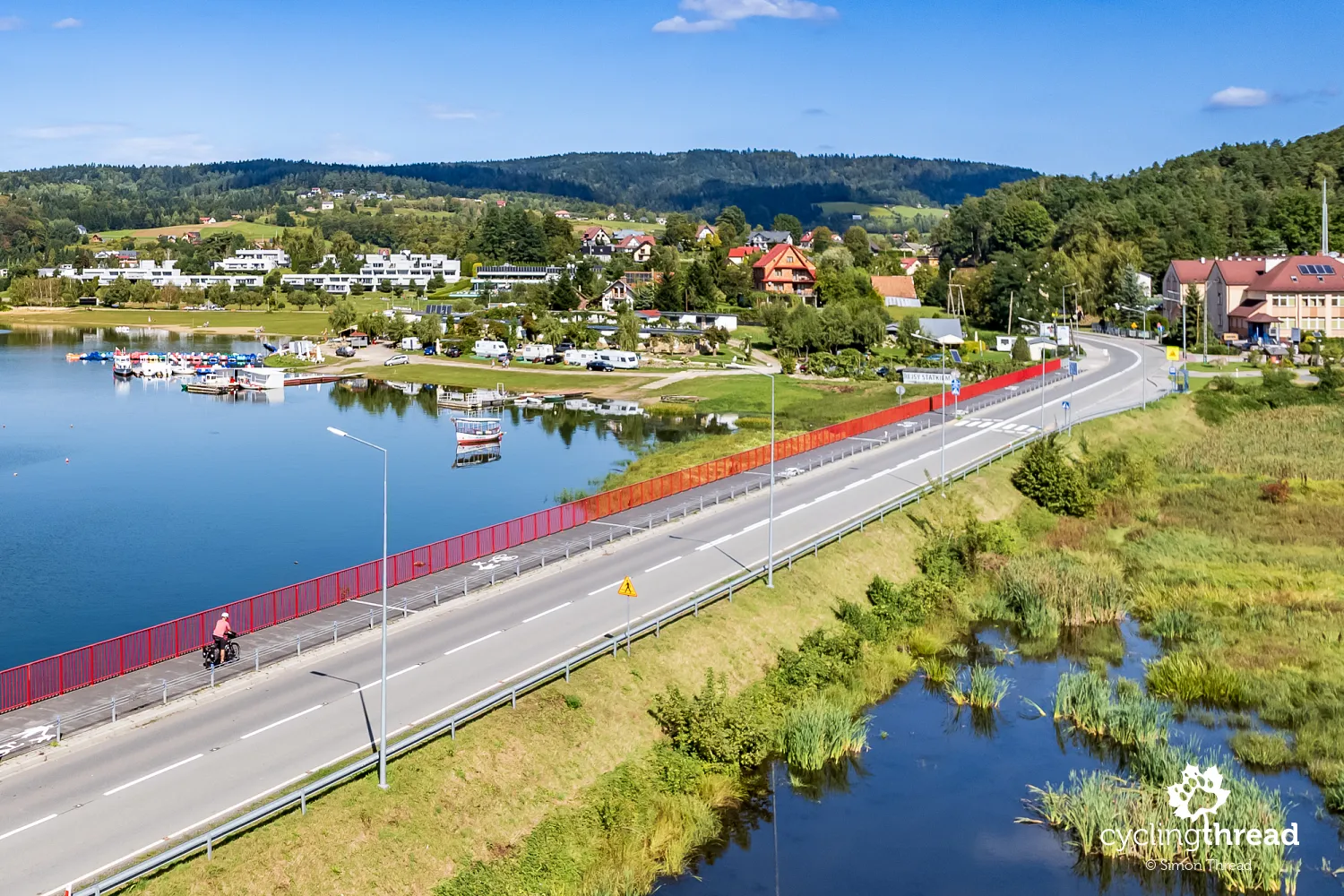
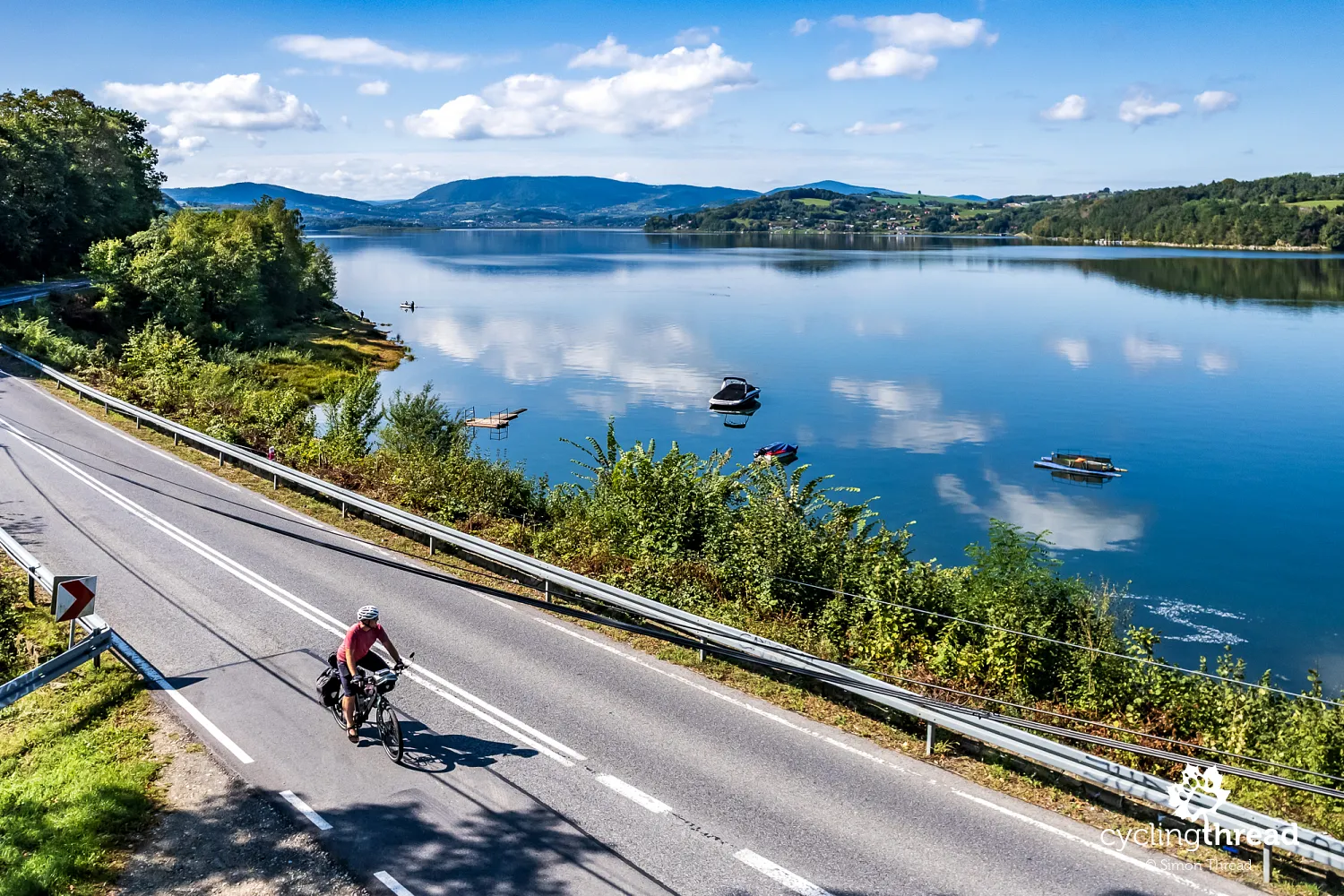
And just like around Niedzica Castle, it is also worth trying to look at the Dunajec valley here from a slightly different perspective. Riding along the shore of Lake Rożnowskie, it is easy to forget that less than 90 years ago there was no reservoir here at all, and the Dunajec flowed several meters below the present water level. Both artificial lakes - Rożnowskie and the smaller Czchowskie, visible on the descent from Habalina - were built in the late 1930s and early 1940s. Lake Czchowskie acts as a balancing reservoir for Lake Rożnowskie, just as Lake Sromowce does for Lake Czorsztyn. And just like there, everyday village life once unfolded on the land that is now covered by water.
Good cycle paths near Zakliczyn
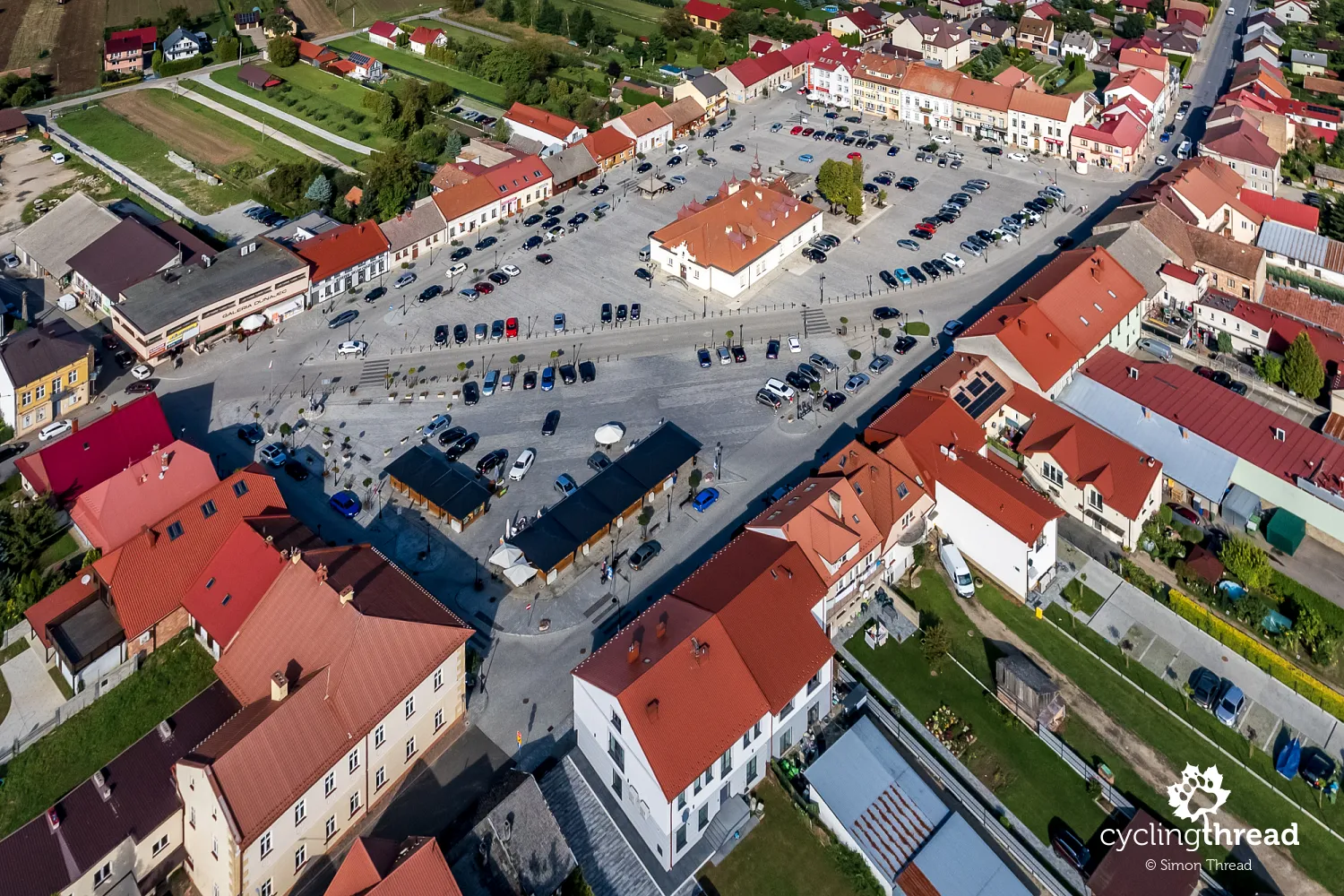
After the final descent, calm riding along the Dunajec returns. Following a short section on a public road, the smooth asphalt "carpets" of dedicated cycle paths appear once again. This is about twelve kilometers of finished route before and after Zakliczyn - the last of the small Galician towns on this stretch. In the past, a distinctive form of wooden houses built on external posts with arcades dominated here - their traces can still be found in side streets. In the very center of the market square stands a low, characteristic town hall. Zakliczyn is also home to one of the unique World War I war cemeteries on the Małopolska trail, entirely dedicated to soldiers of Jewish origin.
A free isotonic drink from a natural vinegar factory
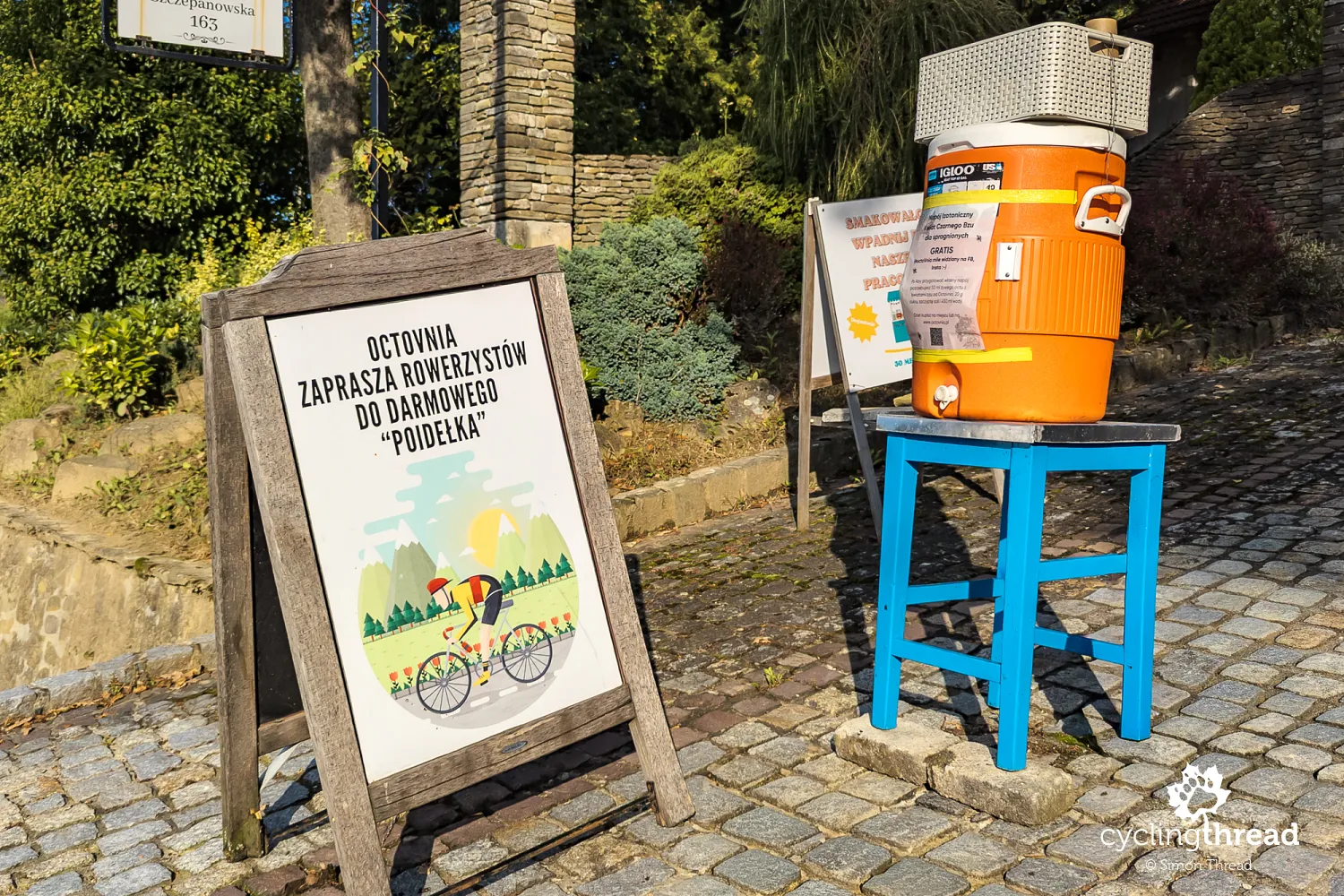
The next 15 kilometers beyond Zakliczyn, leading to the bridge over the Dunajec in Kępa, run once again along public roads. After a short and fairly busy section, however, it becomes quiet and peaceful, at times so local that the road begins to feel like a small cycle path. Somewhere along the way it is worth watching out for a large can placed on a climb with an invitation to take a break, addressed to cyclists. This marks Octovnia - a producer of natural vinegars that makes its presence in the Dunajec valley known through this friendly gesture and a free refreshment in the form of a drink made with vinegar. It is worth stopping by and leaving the welcoming Octovnia with a souvenir bottle of one of the local products.
10 kilometres to Tarnow, 120 km to Krakow
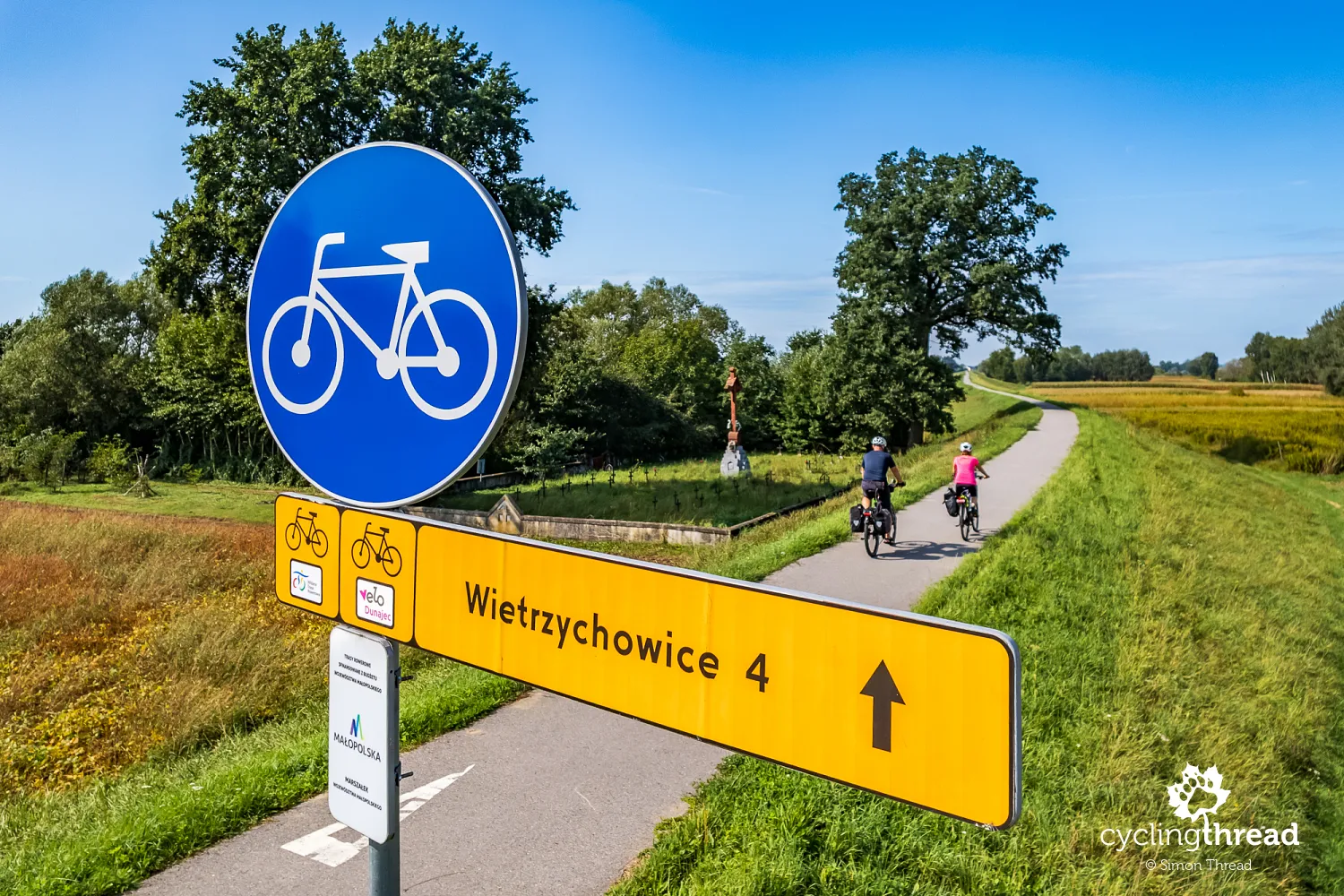
On the bridge in Kępa, beyond which new Małopolska cycle paths once again begin and lead all the way toward Krakow, it is worth thinking about the next stage of the trip. You can ride straight on - to the end of VeloDunajec and further toward Krakow - or turn right to the east, toward Tarnow, which is the most convenient transport hub in this area. To Wietrzychowice, where VeloDunajec connects with the Vistula Cycle Route, there are 32 kilometers of riding along flood embankments of the Dunajec. From there, about 90 kilometers remain to Krakow. Meanwhile, from the bridge in Ostrow to the railway station in Tarnow, it is just 7 kilometers.
Cyclist-friendly place at the end of the route
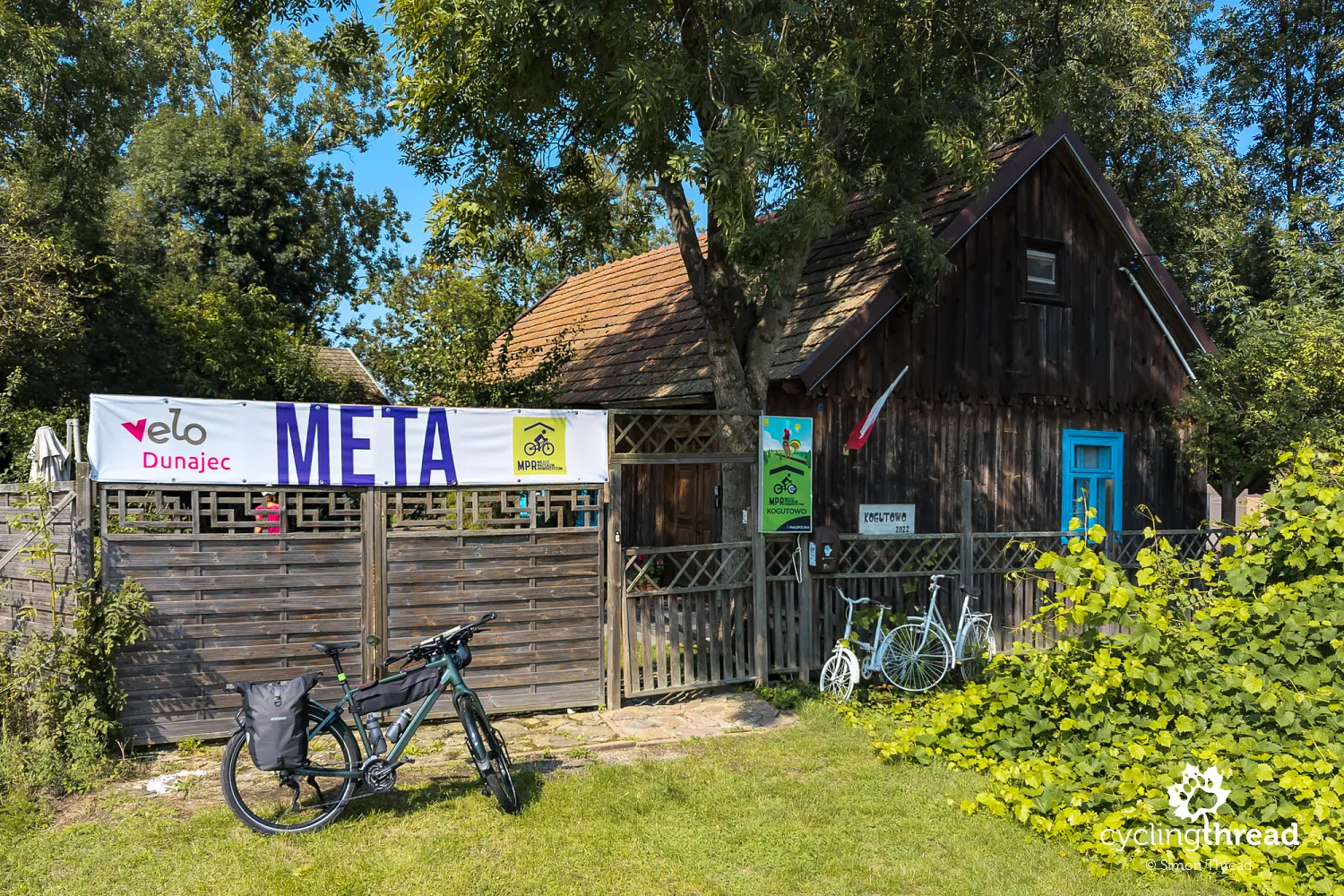
At the very end of the VeloDunajec route, close to where it connects with the Vistula Cycle Route, there is a symbolic "finish". This informal end point was placed, with a touch of humour, by the hosts of the rural guesthouse Kogutowo on their own property. Kogutowo is a former farmstead adapted into a modest place to stay, keeping its simple, rural character. You will not find luxury here, but cyclists can count on dry and warm shelter in authentic, historic interiors, as well as the possibility to store their bikes safely. It is also one of the officially designated Cyclist-friendly places, something the hosts proudly point out, among other ways, with a colourful neon sign.
The largest site of mass executions
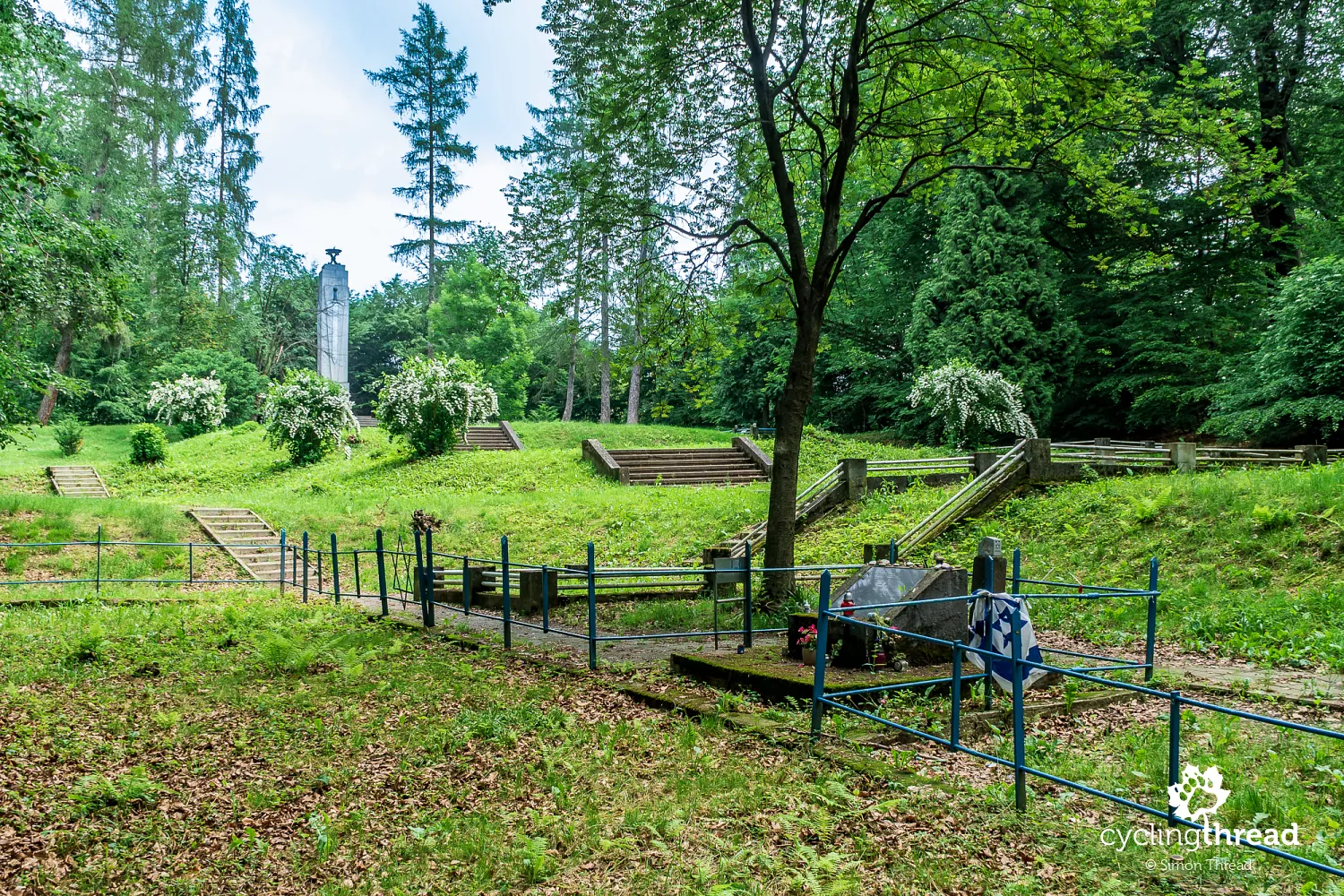
And when, near the end of the route, my thoughts were already on the beautiful market square in Tarnow, enjoying the feeling of having ridden such a fantastic route along the Dunajec, full of scenic impressions, Zbylitowska Gora unexpectedly stopped me. In the nearby forest lies the largest site of mass executions in Poland from World War II, dominated by a several-meter-high Monument to the Victims of Nazi Terror. It is believed that up to about 10,000 victims are buried here, the vast majority of them Jews from Tarnow and surrounding towns. The execution site was moved outside the city because Tarnow itself ran out of space for further burials of those murdered by the Nazis and laid to rest in mass graves. The outlines of these graves are still visible today across the forest cemetery. Israeli flags hang on the fences of some burial sites, left by Jewish visitors, including participants of the annual Galician Jewish Remembrance Days, which begin here each year.
First the bimah, then the kirkut in Tarnow
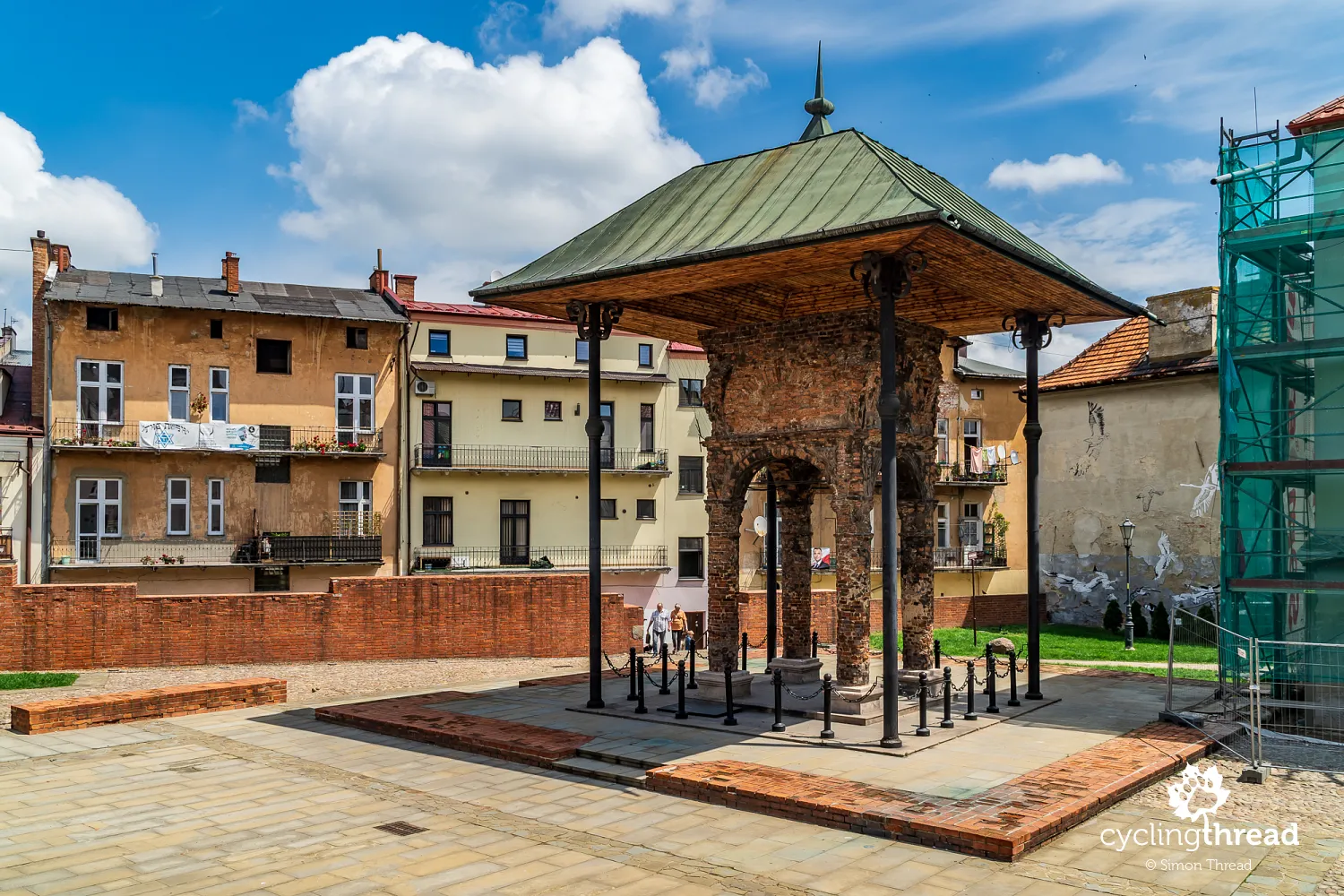
Zbylitowska Gora gave my visit to Tarnow a strong Jewish context. Less than an hour later I was already standing by the Tarnow bimah - the remnant of the Old Synagogue that was blown up, which always makes a powerful impression on me. A spontaneous question about the Hebrew inscription above the nearby information point led to a relaxed conversation with a friendly man in a hat. From one word to another it turned out to be Adam Bartosz - a person especially distinguished for preserving the memory of Tarnow's Jewish and Romani culture, the founder of the Galician Jewish Remembrance Days, and also the International Roma Memory Tabor, which we had read about during an earlier cycling visit to Tarnow. Thank you, kind fate, for placing such people on my path.
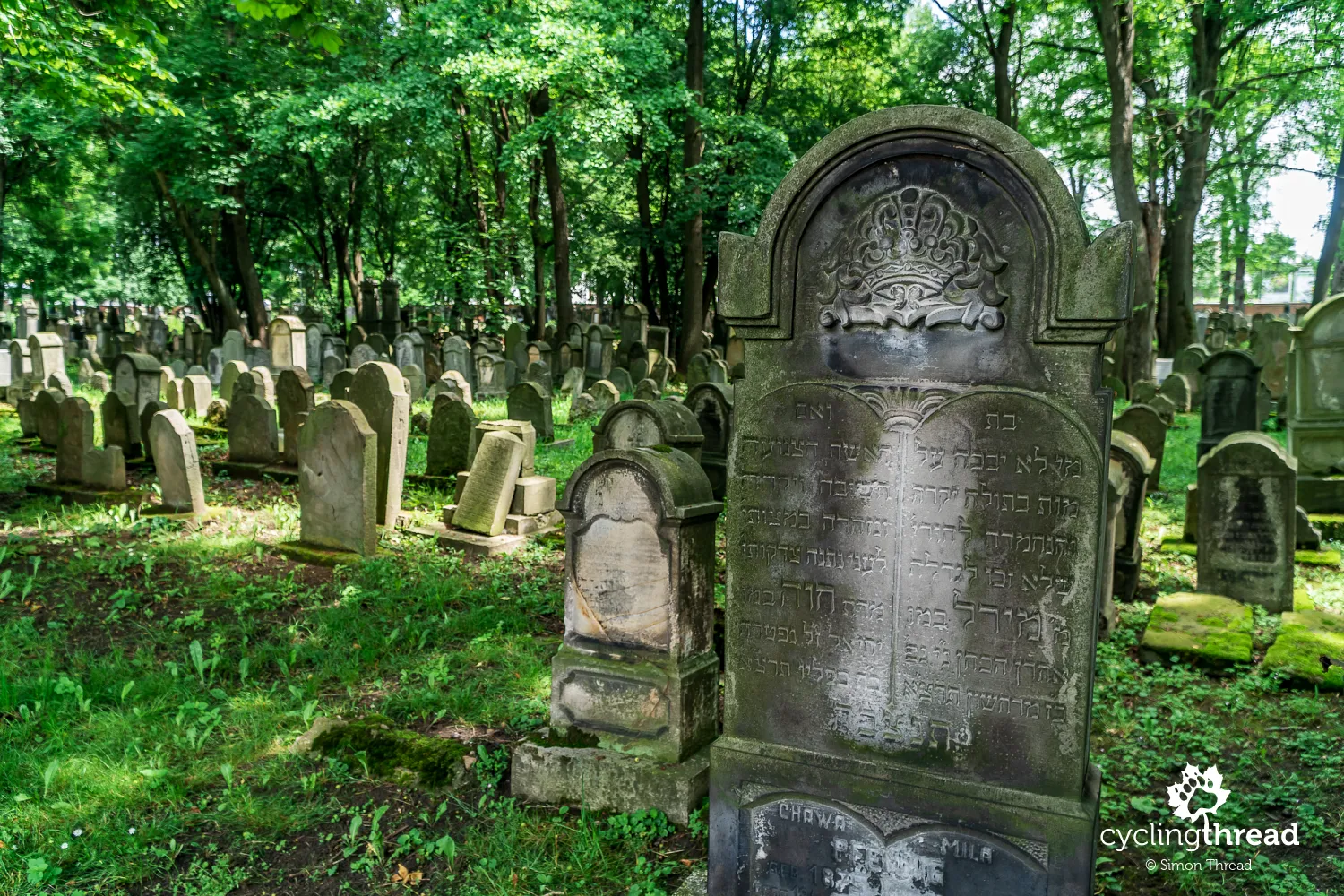
After my conversation with Mr Adam, I also visited the Jewish cemetery in Tarnow - one of the oldest Jewish cemeteries in southern Poland, where around 11,000 Jews from Tarnow and the surrounding area are buried. In the past two years, cleaning and conservation works have been carried out here: new paths, fencing and lighting were added, and several dozen selected matzevot were restored. Today, it is one of the best maintained Jewish cemeteries in Poland. Combined with the still unfamiliar atmosphere of a Jewish necropolis for many Polish visitors, this makes the site one of the most important places to see in Tarnow and along the entire VeloDunajec route. Spaces like this continue to remind us in a powerful way how culturally diverse Poland was not so long ago.
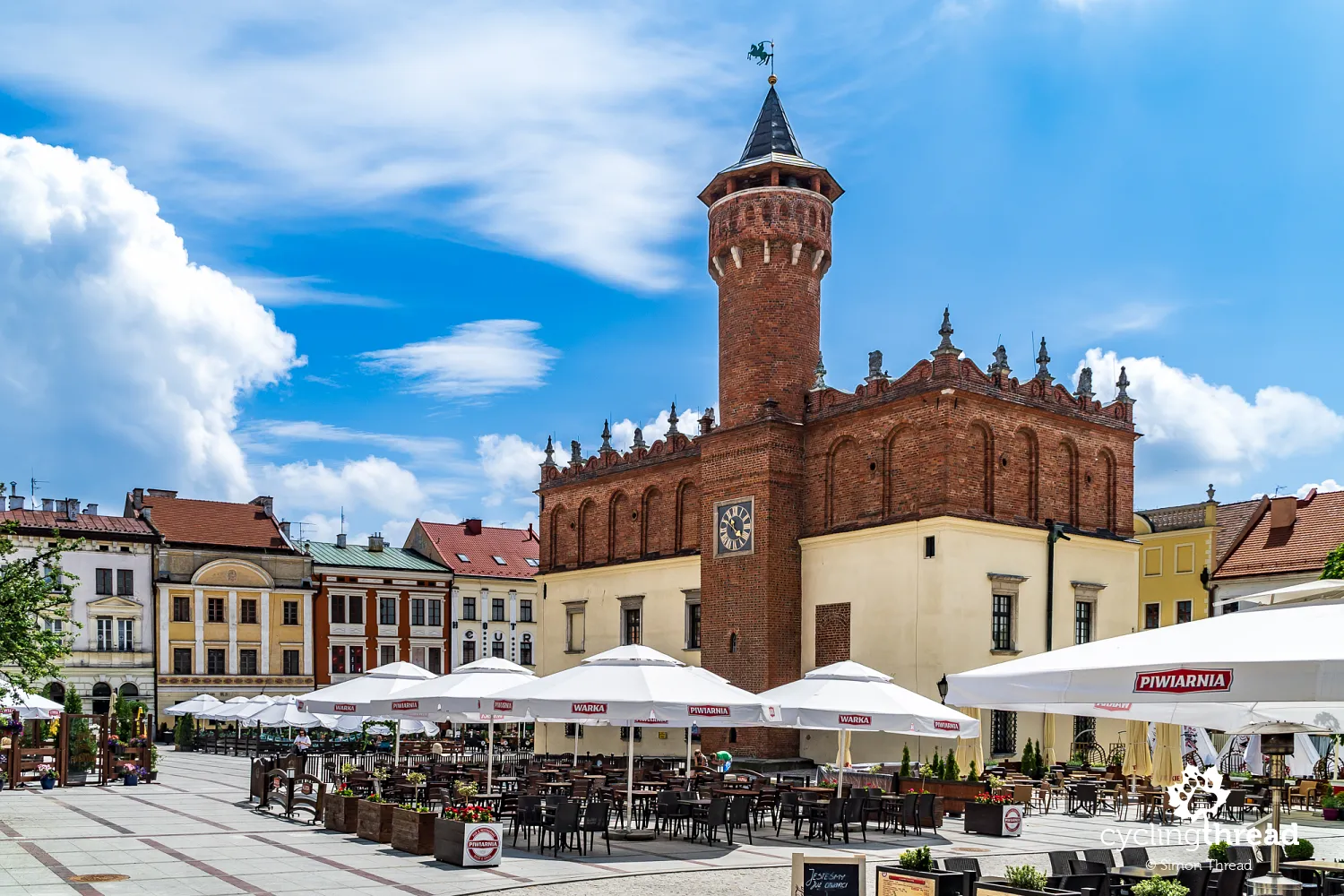
A walk through Tarnow's Old Town brought us into the atmosphere of one of the most beautiful Renaissance towns in Poland. The town hall standing in the center of the gently sloping market square glowed in the light of the setting sun, which also illuminated the tower with the oldest still working tower clock in Małopolska. The attic modeled on Krakow's Cloth Hall reveals the irregular shape of the roof hidden behind it only on closer inspection - also from the perspective of a drone. The arcades of the townhouses surrounding the market had already fallen into shade, while more and more residents were appearing on the square, searching for the last free tables under the bright umbrellas of the outdoor cafes.
Cycling Dunajec with a cycling tour operator
The Dunajec route has long been a popular choice in the offers of cycling tour operators. One of them is our partner, Bird Service, which proposes a more extended version of the journey along the Dunajec. In addition to the main route, it includes a start in Zab - the highest village in Poland - as well as a ride through Chocholow, Kacwin and Rytro. It sounds like a very appealing plan for cycling holidays, which can also be enriched with a mountain hike or a rafting trip. And for those who prefer to travel at their own pace, VeloDunajec remains one of those routes that you simply have to ride one day from start to finish. And then come back - already without any rush - to fully appreciate how well this route has been built and how important a role it plays today in the development of mature cycling tourism in Poland.
Back to topHave a safe ride! 💚
Simon Thread
(Szymon Nitka)
I'm a passionate cycling traveler and the voice behind Cycling Thread. I explore Europe on two wheels, documenting the most scenic routes, inspiring places, and cyclist-friendly practices. My writing blends personal experience with practical insights and a deep love of travel. I'm also a contributor to National Geographic Traveler magazine.
Nearby cycling routes
More cycle routes to explore

Routes you might like
Bicycle inspirations
Find us on Bikemap, Komoot, Outdooractive, Ride with GPS and Veloplanner!