Carinthian Lake Loop - cycling Carinthia with Velovista
Carinthia has a new cycle route - the Carinthian Lake Loop (Kärnten Seen-Schleife) is a 420-kilometre journey along rivers, past lakes and through the mountain landscapes of southern Austria. Designed to link many of the region's most scenic spots, it offers a mix of gentle sections and more challenging stretches that keep the ride varied and rewarding. You can ride it on your own as part of a multi-day trip, taking advantage of the region's excellent cycling infrastructure, or join the Velovista cycling event, held here every spring. After the Drava Cycle Route and the transalpine Alpe-Adria route, this is yet another great option for anyone planning a summer cycling holiday in Austria.
Join us on our new 🟢 Komoot account!
Cycling Partners



Route on the map
GPX file (GPS track): cyclingthread.com-carinthia-2025.gpx
Carinthian Lake Loop - table of contents
- Carinthia - Alps, lakes, rivers and cycling
- The cycle route's bow tied in Villach
- Cycle routes, public roads, forest paths and... waterways
- Fourth time on the loop, first time at Velovista
- Carinthian Lake Loop is still evolving
- Accommodation in hotels, guesthouses and campsites
- A beautiful castle and a thrilling bird of prey show
- Benedictine abbey with centuries of history
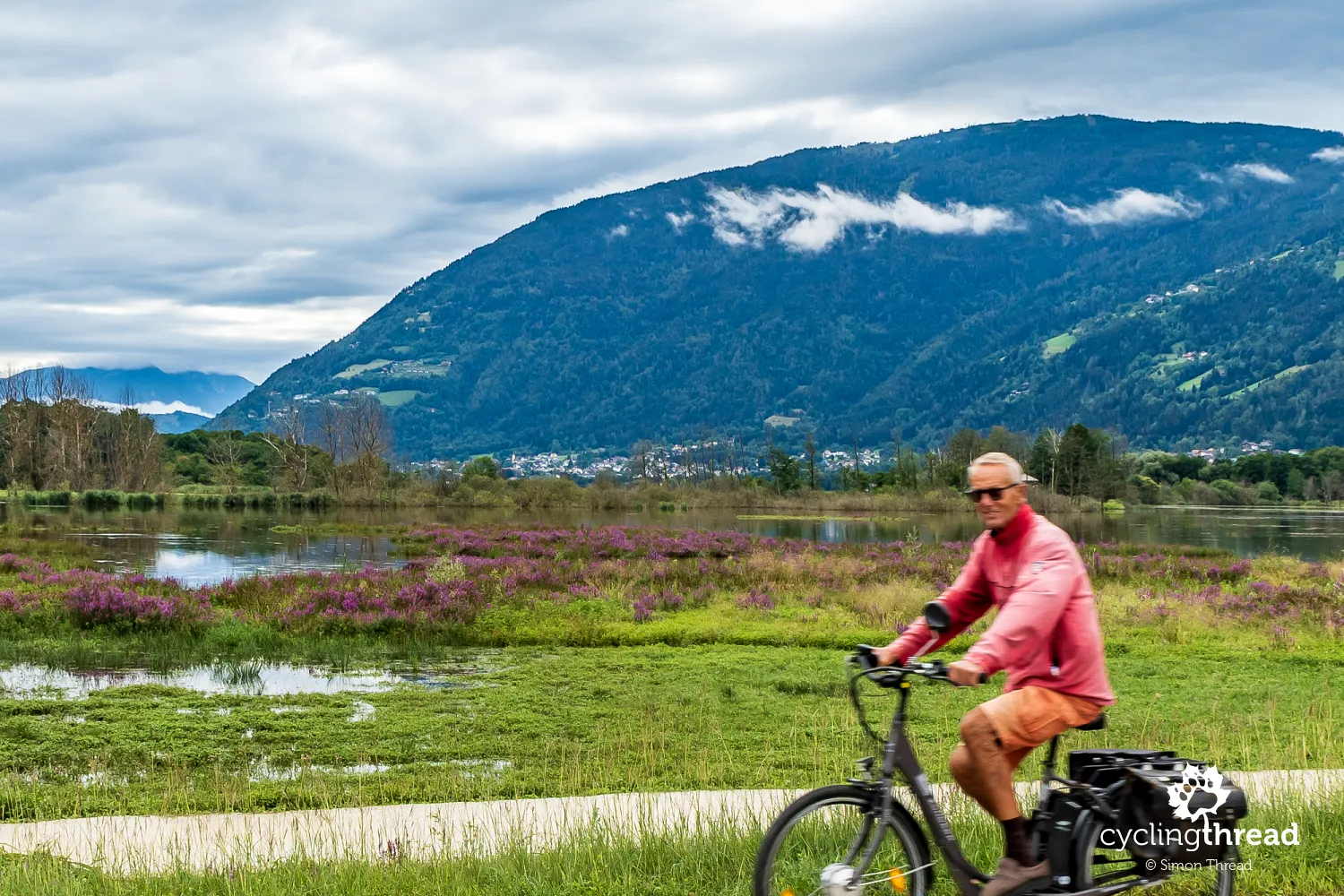
- At a slow pace through Carinthia's wetlands
- The oldest mountain railway to Gerlitzen Alpe
- Over 100 Carinthian attractions with the Kärnten Card
- The magical world of dolls and Carinthian traditions
- Watching Carinthian cheesemakers at Kaslabn
- Millstätter See - the jewel of Carinthia
- A memory from a ride through the Eastern Alps
- A cycle route running across... a lake
- A perfect spot for a family cycling holiday
- One more Kärnten Card attraction
- Riding through the picturesque Gail Valley
- Delicious slow food in Carinthia
- A pleasant break in the shadow of Mount Dobratsch
- From one side of the river to the other
- A beautiful memory from the Alpe-Adria
- Through Pressegger See to Faaker See
- A very pleasant 80 kilometres along Drava
- Original information boards on the cycle route
- Drava Cycle Route - five stars from the ADFC!
- Highly touristic scenery at Klopeiner See
- Charming Alpine-Adriatic vibes in Klagenfurt
- Over 150 miniature buildings from around the world
- Maria Saal, an important pilgrimage site
- Duke's Chair - symbolic landmark of Carinthia
- One of the most impressive fortresses
- Another beautiful sight in Carinthia
- Sankt Veit an der Glan as a turning point
- Wörthersee - a surprisingly less enjoyable ride
- Welcoming Villach ends the cycling journey
- A farewell view over favourite Carinthia
- High service standards and environmental responsibility
- Carinthia - top European cycling region
Carinthia - Alps, lakes, rivers and cycling
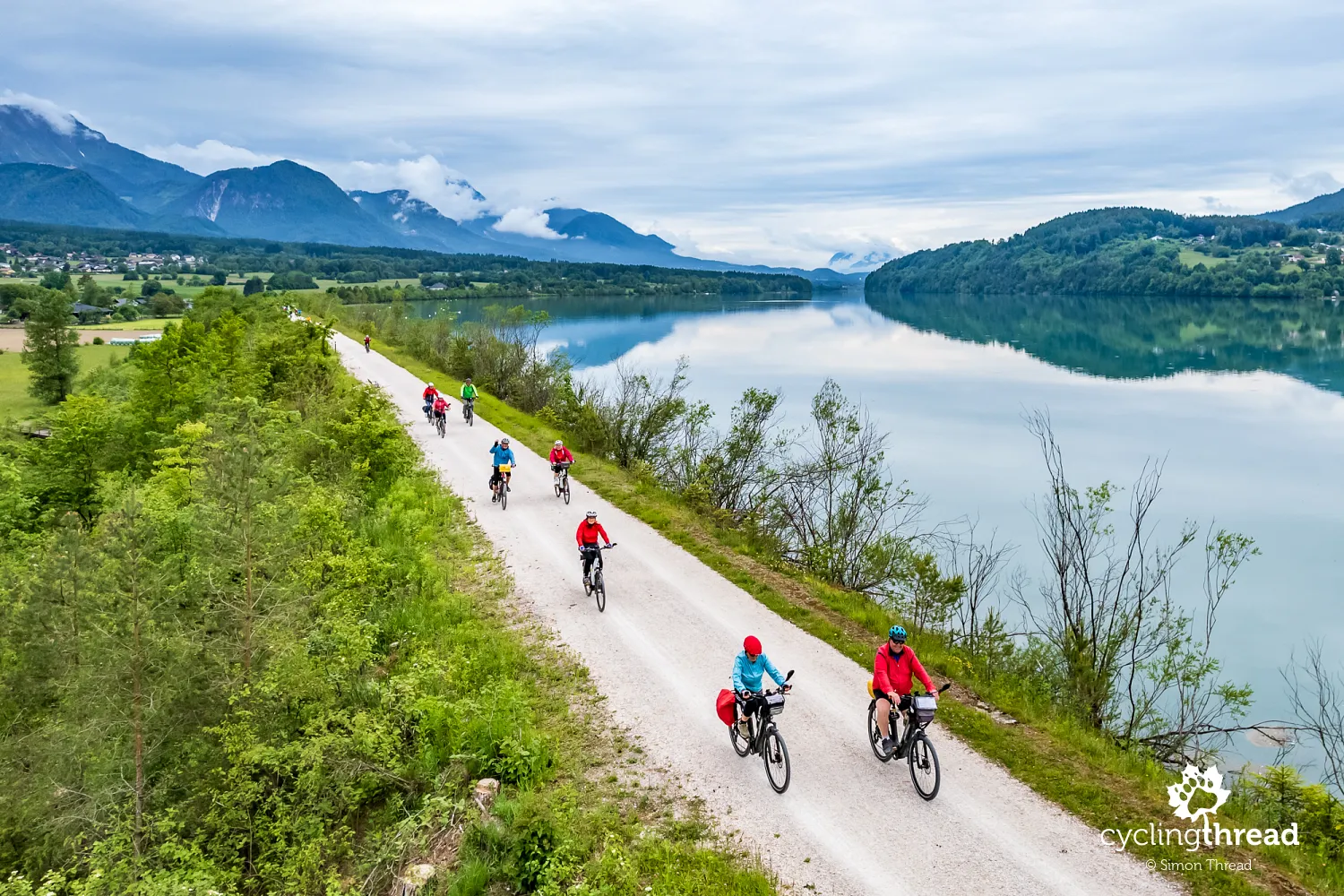
Carinthia is the southernmost of Austria's nine federal states - and the one with the lowest population density, just 60 people per square kilometre. It offers perfect conditions for peaceful, nature-focused cycling, far from the crowds and surrounded by mountains, lakes and greenery. Although Carinthia, like other Alpine cycling regions, lies within the Eastern Alps, it stands out with its distinctive terrain: the central part is taken up by the broad, gently rolling Klagenfurt Basin. This area, framed by low mountain ranges and intersected by valleys, feels more open and accessible than classic high mountain regions. Running through the middle is the Drava - one of Austria's largest rivers - forming a natural axis for transport and settlement. It is in these valleys, where the land flattens out, that you will find numerous lakes, home to Carinthia's main tourist centres. Linking them is the scenic Carinthian Lake Loop cycle route, taking riders through some of the most picturesque corners of southern Austria.
The cycle route's bow tied in Villach
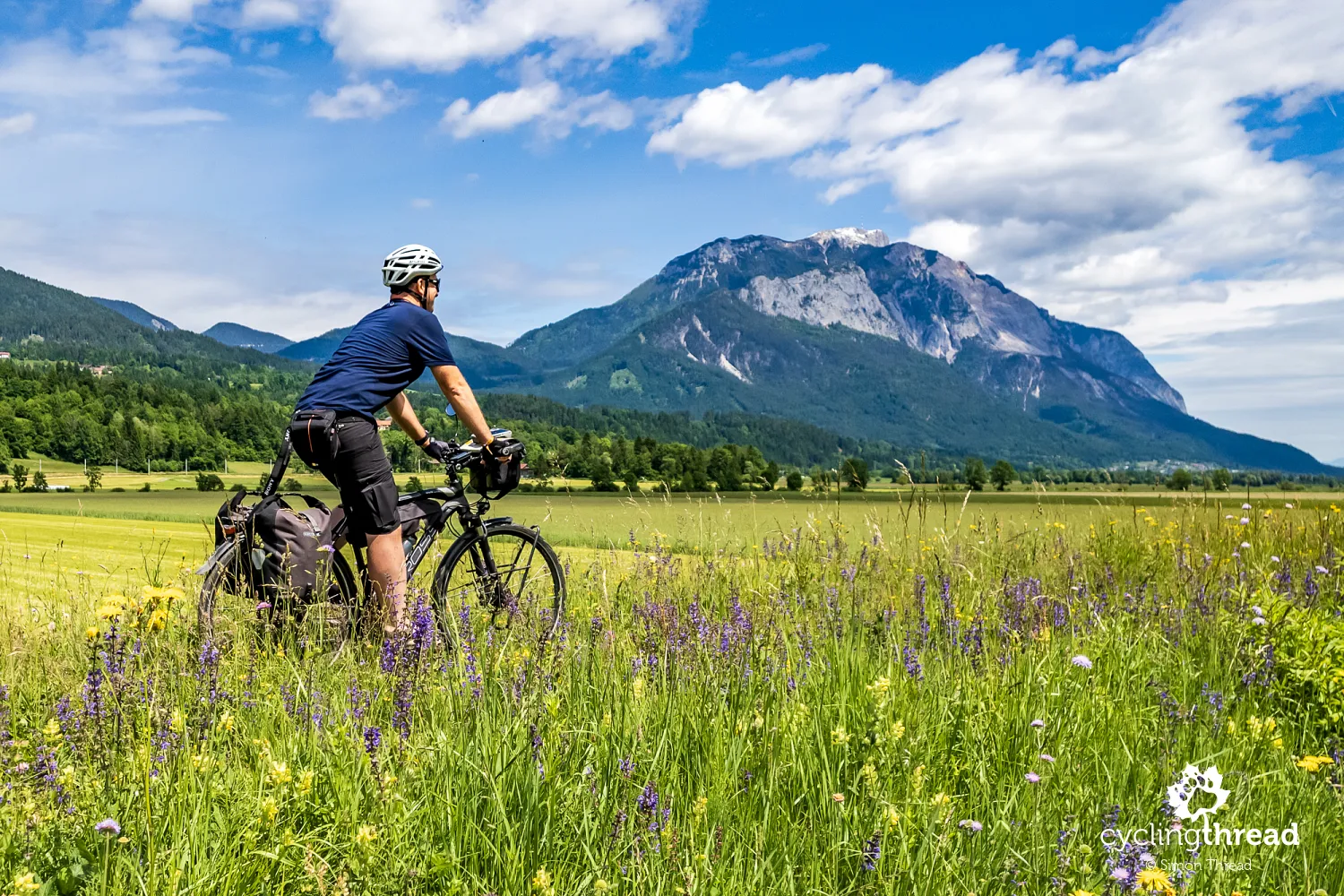
The official name of the new cycle route - Kärnten Seen-Schleife - has been translated by its creators into other languages as the Carinthian Lake Loop, although the German word "schleife" also means a bow. And indeed, the route's shape resembles a bow, with its two smaller loops meeting in Villach. Both parts - the western and the eastern - are of similar length, each about 210 kilometres. The western loop is more demanding, with two longer alpine climbs leading to higher-lying lakes along the route. The eastern loop has a gentler elevation profile, following the attractive Drava Cycle Route for much of the way, complemented by a new, scenic section in the Glan Valley. Altogether, at around 420 kilometres, it is a varied, landscape-rich route - ideal for a multi-day cycling trip that, taken at a leisurely pace, can easily fill a week.
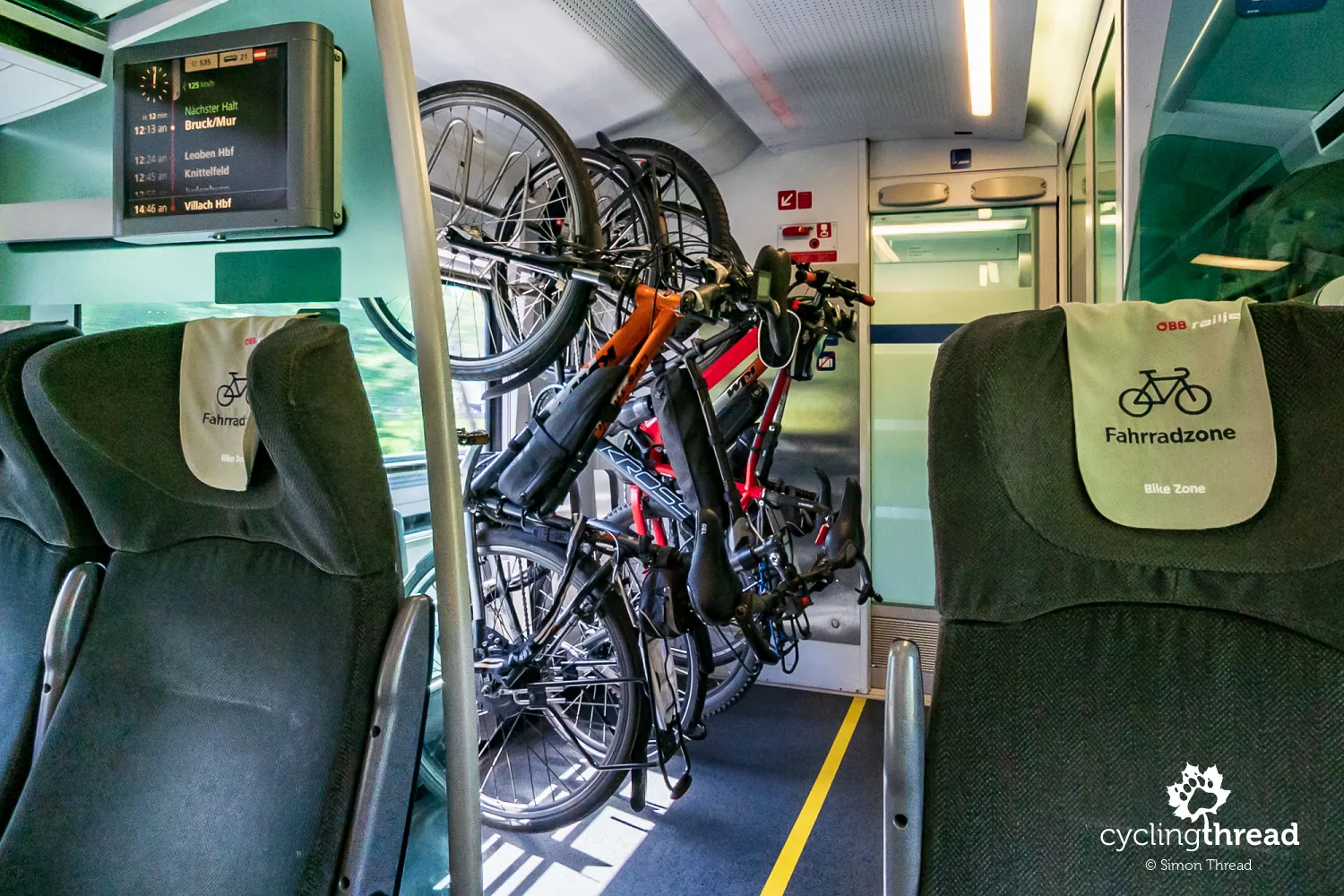
Villach can serve both as a base for exploring Carinthia by bike and as the start and finish point for a multi-day cycling trip. The city is easy to reach by car, and you can leave it for a few days - for example at the free Willroider car park in the centre, prepared with tourists in mind, or at one of the many campsites nearby, such as the one by Lake Faaker See. Villach also offers convenient train connections to other cities in the region, including Klagenfurt, Salzburg, Lienz and the Italian town of Udine. Several long-distance cyclist-friendly trains from Vienna arrive here every day, each with designated spaces for bicycles. With such a wide range of transport options, planning a cycling trip to Carinthia is easy and comfortable.
Cycle routes, public roads, forest paths and... waterways
The Carinthian Lake Loop is a cycle route largely running along comfortable and safe cycle paths, often separated from motor traffic. However, in some sections the route also follows public roads with varying levels of traffic. According to data from Komoot, about 120 kilometres are dedicated cycle paths, while roughly 180 kilometres run on public roads. This includes many quiet local roads as well as a few, usually short, busier stretches. The rest is made up of forest gravel tracks, occasional narrow singletrack paths, and even - once - a six-kilometre section covered by boat. Thanks to this variety, the route is interesting and accessible to most cyclists, although in a few spots extra care is needed, especially when riding with children.
Fourth time on the loop, first time at Velovista
We have already ridden the Carinthian Lake Loop four times. Our first visit was in 2020, shortly after its official opening. I remember that trip as a wonderful mix of mountain scenery and the region's summer atmosphere. Later, we returned twice to ride parts of the loop during longer trips along the Drava Cycle Route and the Alpe-Adria Cycle Route, both of which cross Carinthia. My fourth time on the Carinthian Lake Loop was for the launch of the Velovista cycling event, whose first edition took place in May 2025. I joined over 400 participants - mostly from Austria and Germany, but also from Italy, Slovenia, Switzerland, Hungary, the Czech Republic and Poland. The event was entirely based on the Carinthian Lake Loop and offered a great opportunity for interesting encounters and sharing experiences in an international group.
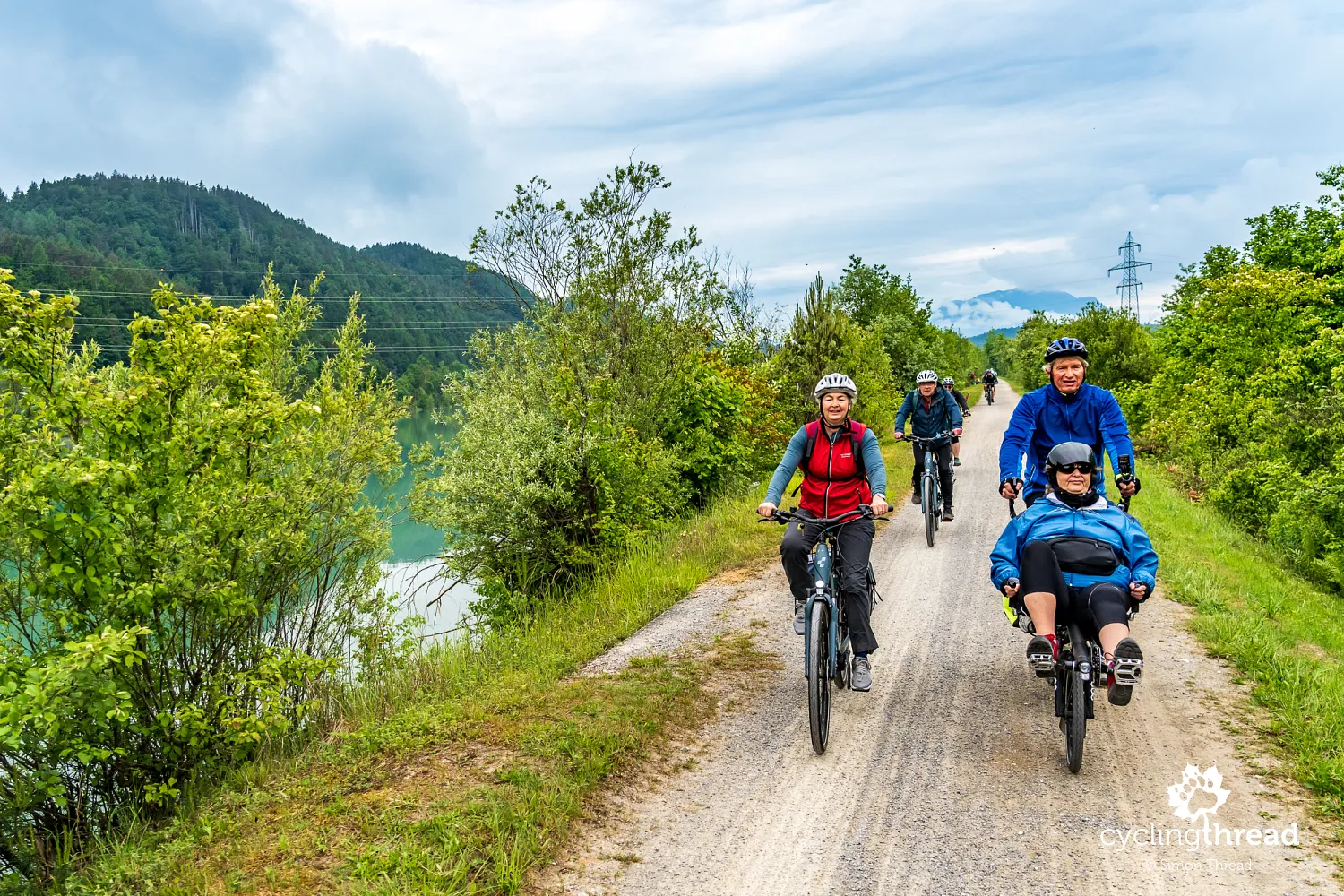
Velovista 2025 lasted five days, with four devoted to cycling stages ranging from 40 to 80 kilometres per day. The ride started and finished in Villach, with overnight stops in Sankt Kanzian and Klagenfurt. The participant package included accommodation and full board, based entirely on Carinthia's regional cuisine. The organisers also provided luggage transport between overnight stays, which most participants used, although some opted for the classic pannier touring style. The programme was complemented by concerts and artistic events with a distinctly local Carinthian flavour, adding a strong regional touch to the whole experience. Most participants brought their own bikes, but there was also an option to rent one on site.
Carinthian Lake Loop is still evolving
A photo from the small village of Vorderberg is a good reminder that the Carinthian Lake Loop is still shaping its route. Riding this route through Carinthia, you can expect that the waymarked course may sometimes differ slightly from the official one - or even from the track I'm sharing here based on our ride. On the official GPX of the Carinthian Lake Loop in Outdooractive, linked from the Carinthian Lake Loop's own website, there are a few places where the route has been adjusted. In such cases, it's worth checking the map and following the local waymarking on the ground. Just like in Vorderberg, where the actual course of the route differs from the official one - it briefly leaves the Gail River to cross a bridge in the village.
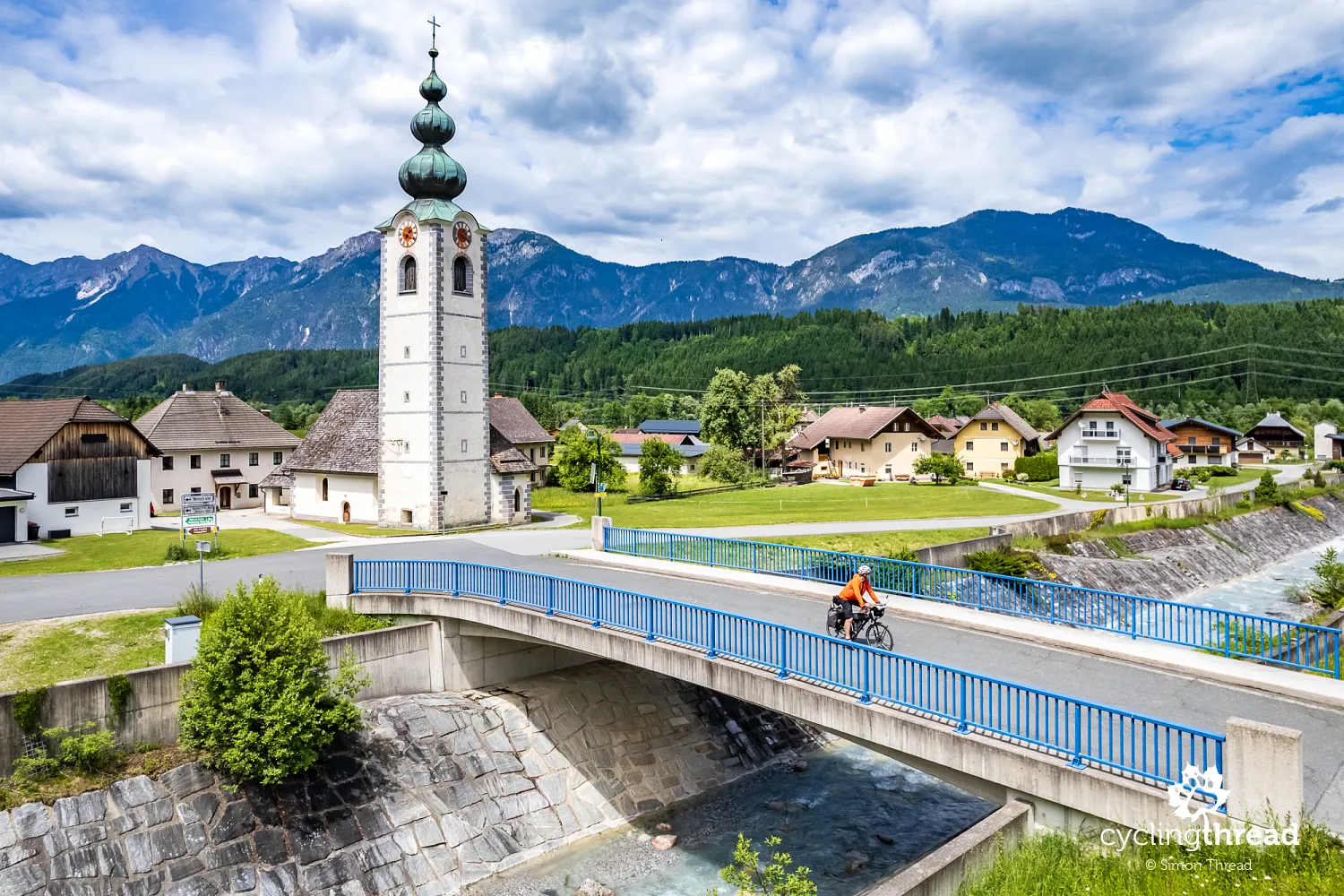
A similar situation can be found near the wonderful Weissensee Lake. When we first rode the Carinthian Lake Loop, the main route suggested climbing to the lake from the east and then taking a boat ride. Today, the official track approaches Weissensee from the west. Still, in my article I show the eastern route and strongly recommend reaching Weissensee this way and then crossing this section of the route by boat. It’s a fantastic addition to a cycling trip - I write more about it later in the text.
Accommodation in hotels, guesthouses and campsites
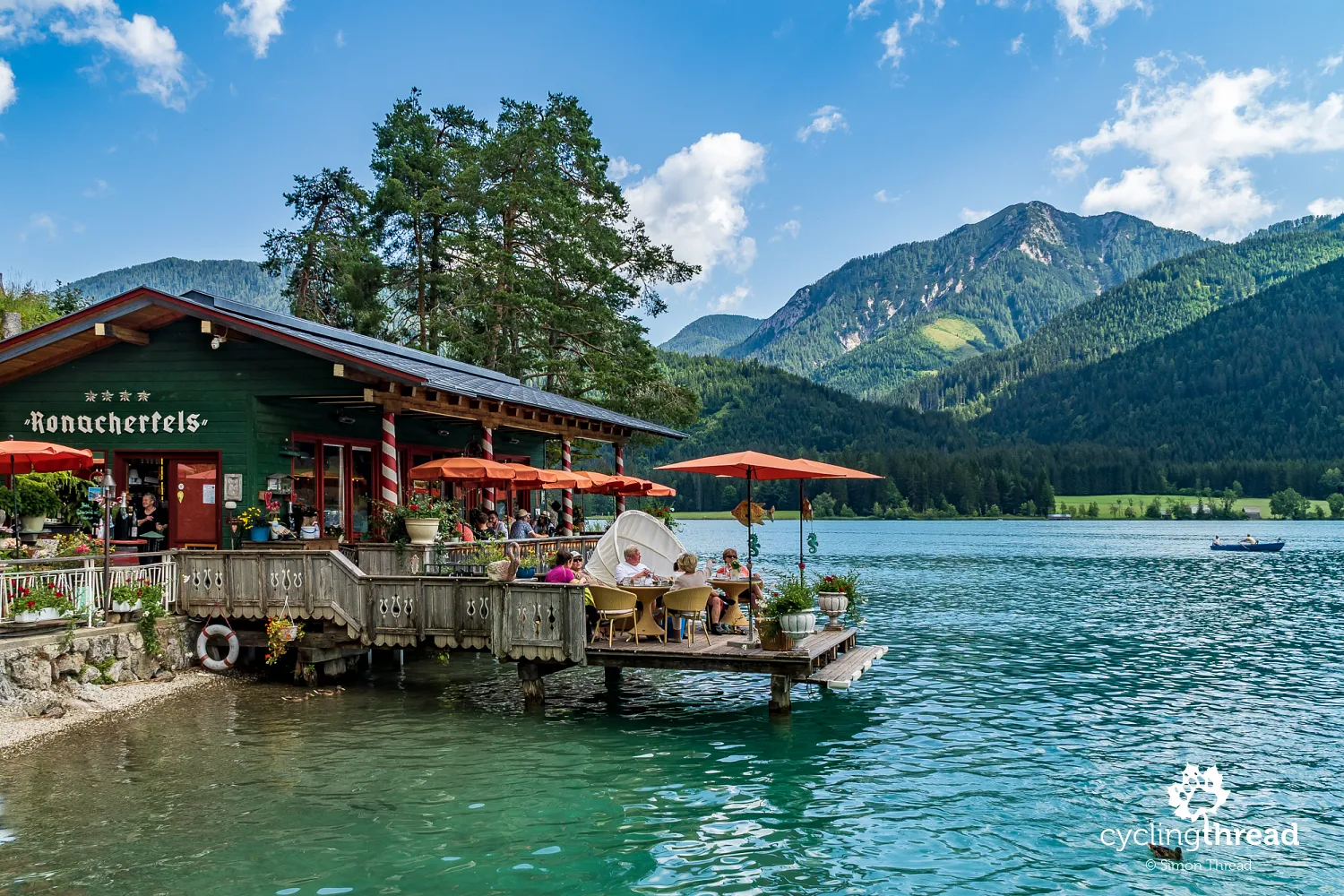
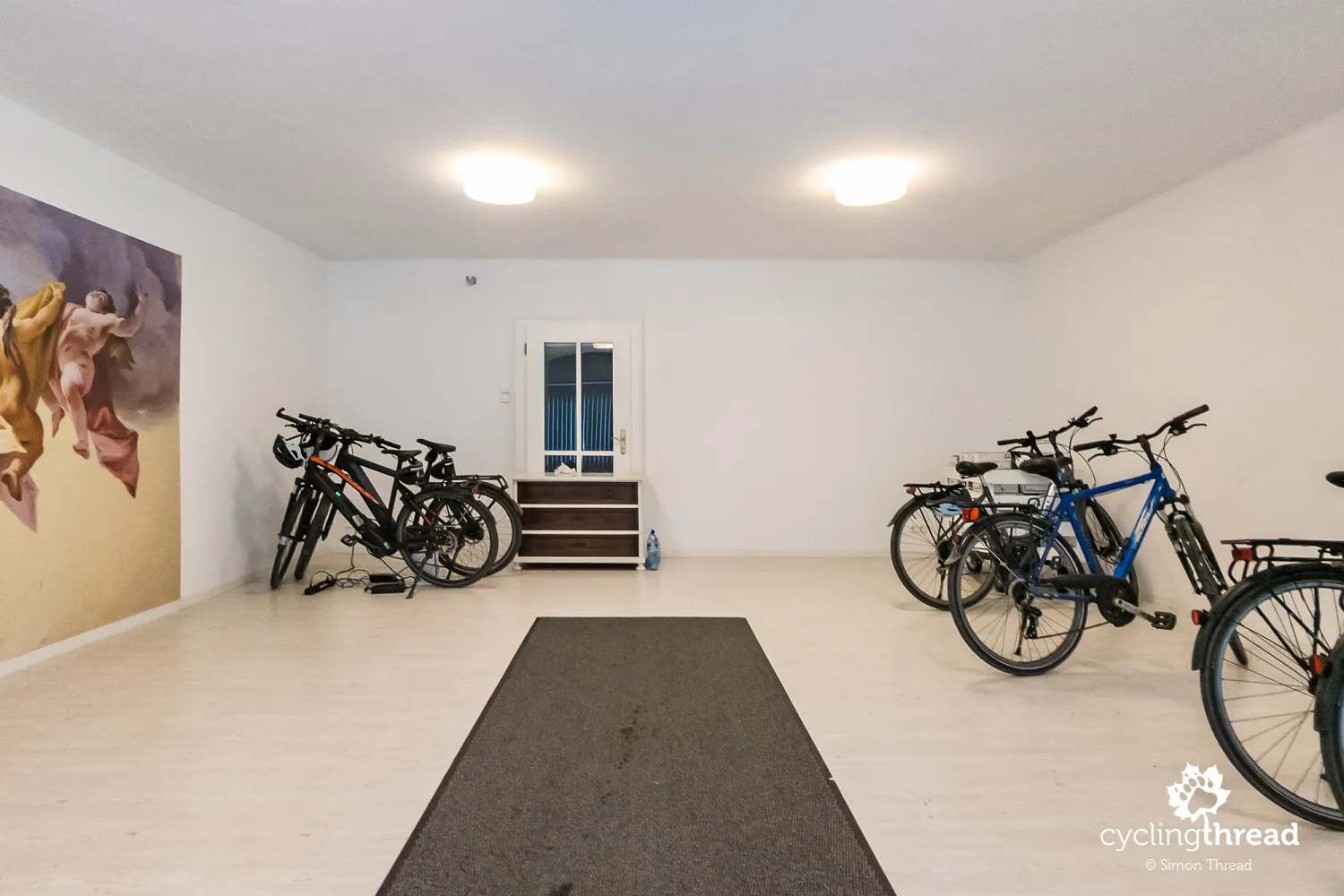
Whether you're joining the organised Velovista ride or planning your own cycling holiday, you can choose from a wide range of accommodation - varying in both standard and price. We have stayed in guesthouses, hotels and campsites, booking through a popular reservation service. On the very first day of this year's trip, during an overnight stay in Villach, I was reminded how welcome cyclists are in Carinthia. The hotel where I stayed offered not only an open parking space for bikes in its service area but also a special locked room for cyclists, located on a nearby street in a former shop rented specifically for this purpose.
A beautiful castle and a thrilling bird of prey show
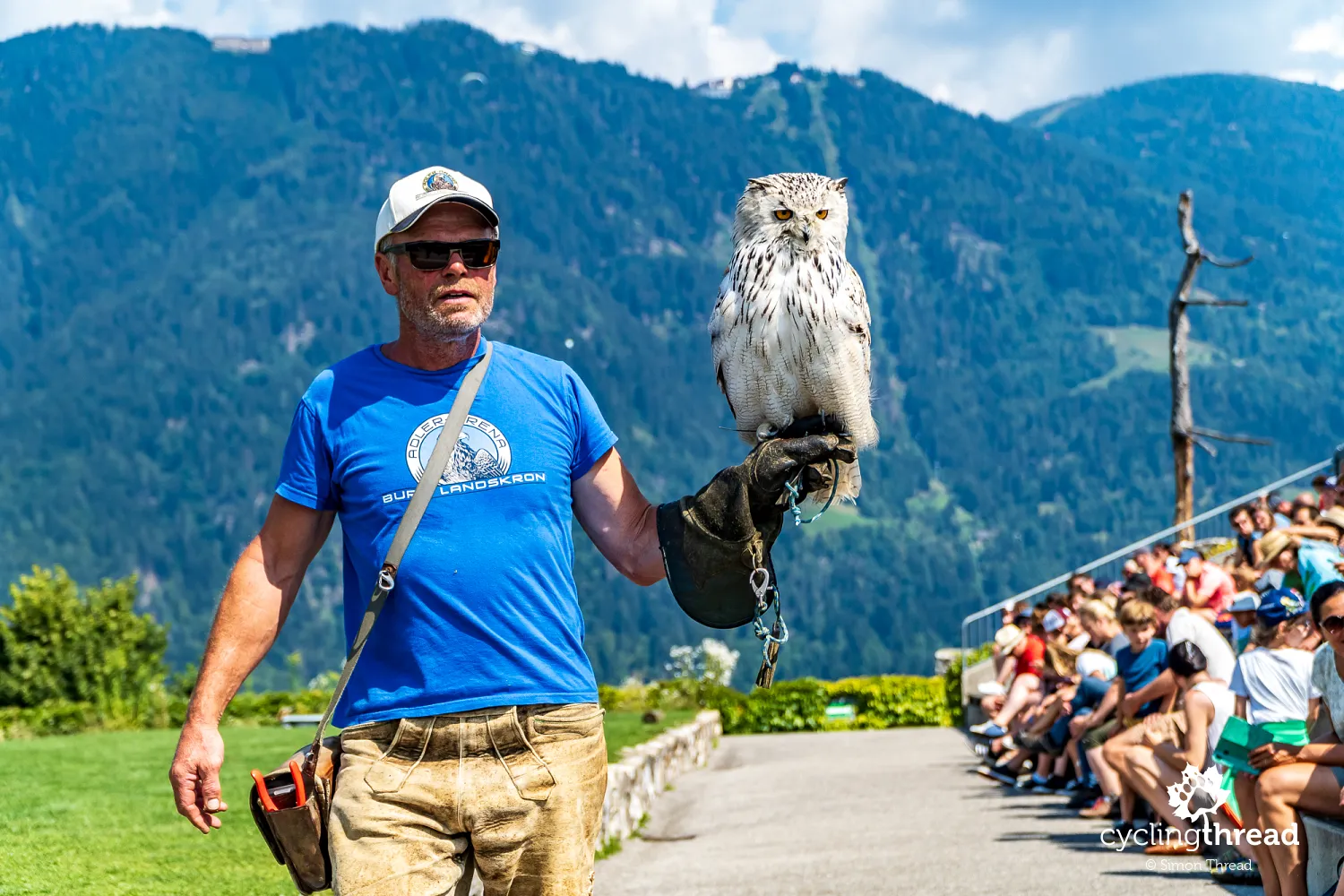
One of the first sights to catch your eye on the Carinthian Lake Loop is the ruin of Landskron Castle, perched on a high rocky hill near Villach. Built in the 14th century, it served for centuries as an important administrative and military centre in the region until a fire in the 19th century left it in picturesque ruin. Today, the castle is best known for the Adler Arena - a centre hosting spectacular shows with birds of prey such as eagles, vultures, owls and other species. The birds fly just above the spectators' heads, completely free and without barriers, while the whole show is guided by an experienced falconer. The performance is one of the attractions available free of charge with the Kärnten Card. Keep in mind, however, that the road leading to the castle is very steep, with gradients of up to 15%. Reaching the gate by bike can be a challenge even for the strongest riders.
Benedictine abbey with centuries of history
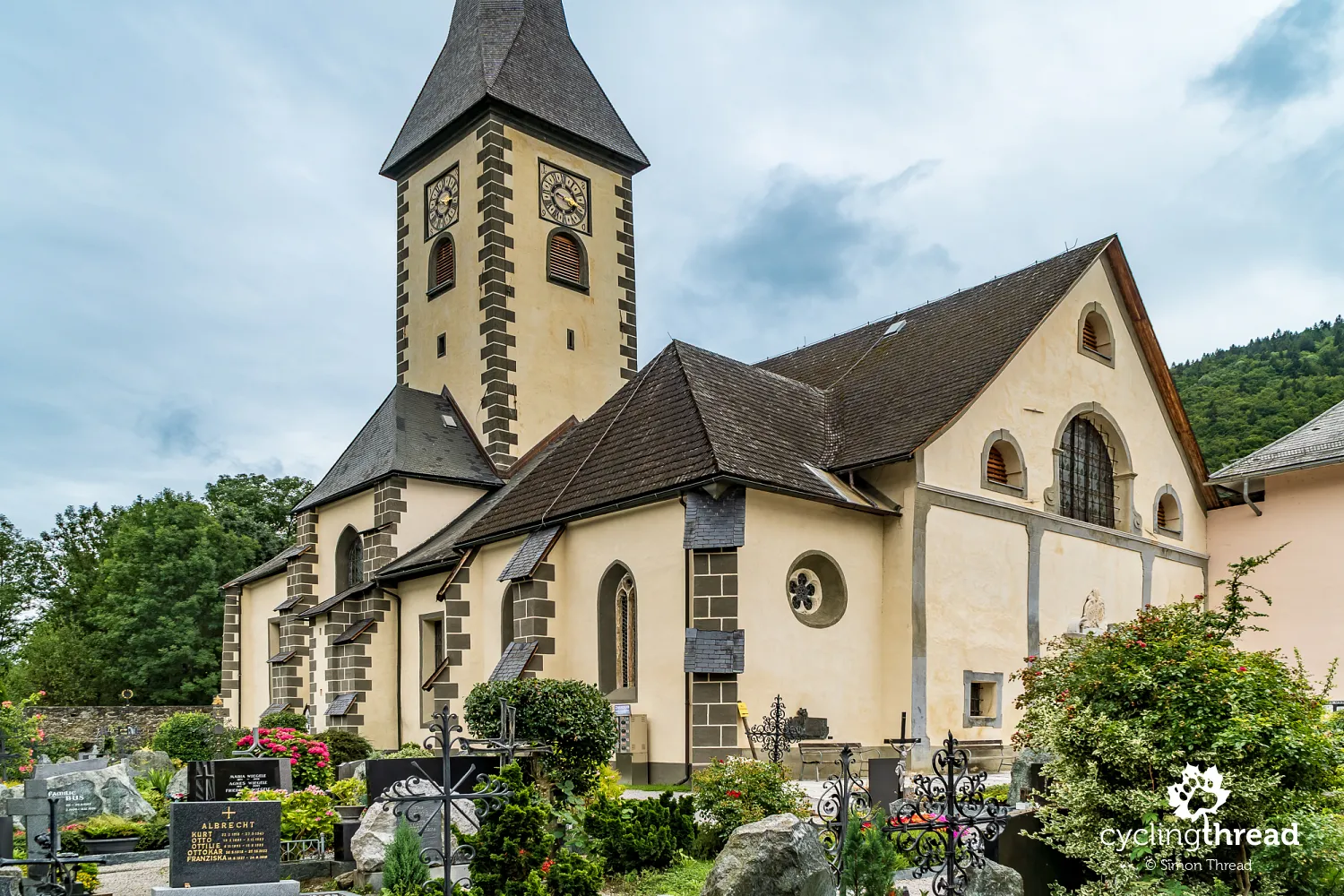
The first lake on the Carinthian Lake Loop is Ossiacher See - a beautifully located lake, mostly encircled by an asphalt cycle path running right alongside the road. On its eastern shore lies the village of Ossiach, best known for its impressive Benedictine abbey whose origins date back to the 11th century. Over the centuries, the abbey played a central role in the spiritual, cultural and economic life of the region, serving as a place of worship, a centre of learning and a hub for local communities. Its church, with striking architectural details, reflects a blend of styles that evolved through various periods of reconstruction and renovation, offering a tangible timeline of Carinthia’s history. The peaceful grounds, framed by the lake on one side and Alpine slopes on the other, invite visitors to pause and take in the atmosphere of a site that has witnessed almost a thousand years of change.
At a slow pace through Carinthia's wetlands
As we circle the northern shore of the lake, we see more and more walkers heading towards the protected wetland area of Bleistätter Moor. This is where one of the seven walking routes belonging to the Slow Trails network begins - 'slow paths' inviting you to discover Carinthia's most precious spots at a relaxed, unhurried pace. It's an interesting initiative that encourages mindful contact with nature, though unfortunately it is not accessible to cyclists. From a distance, we can only admire the vast wetlands and the distinctive observation tower standing right on the shore of Ossiacher See.
The oldest mountain railway to Gerlitzen Alpe
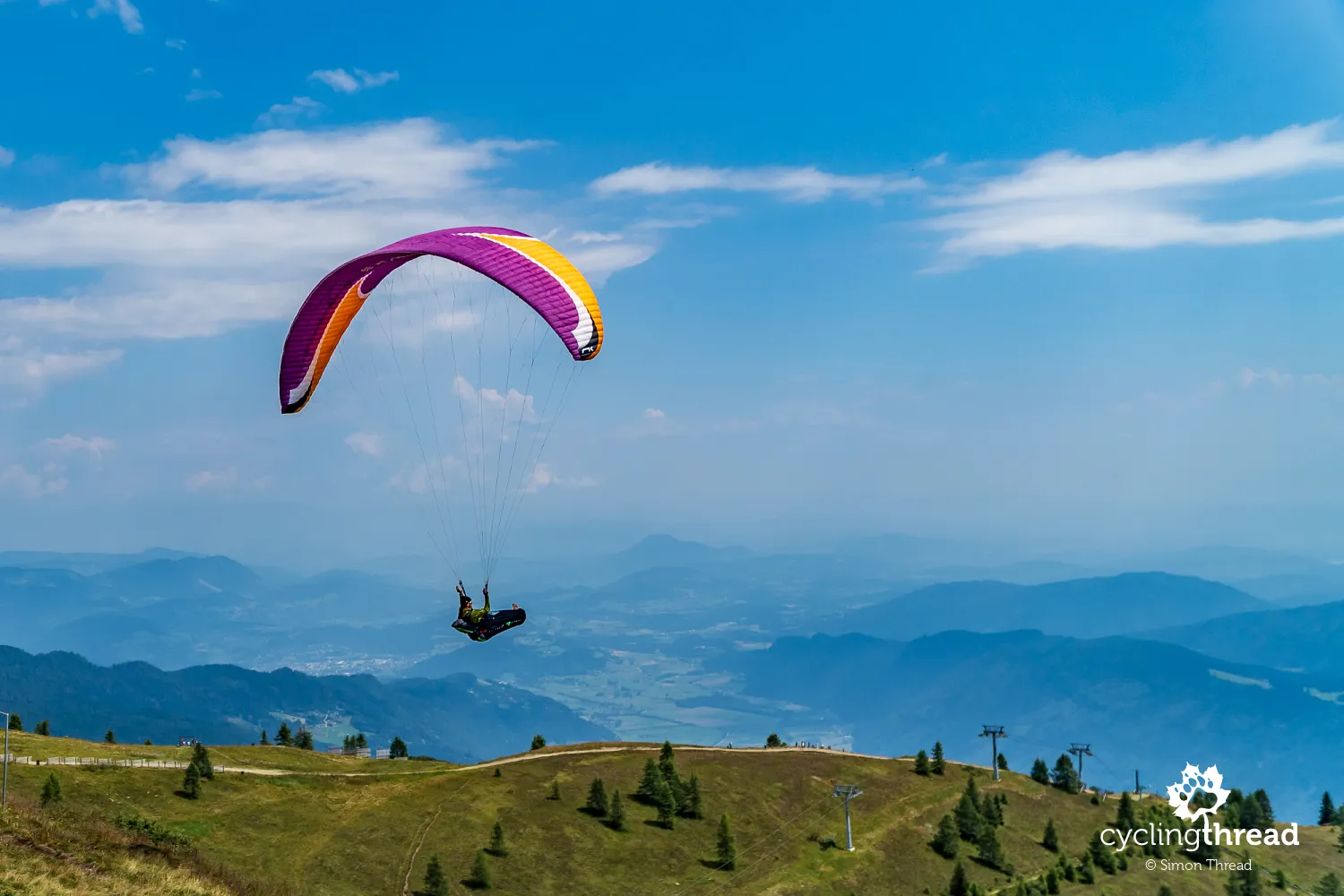
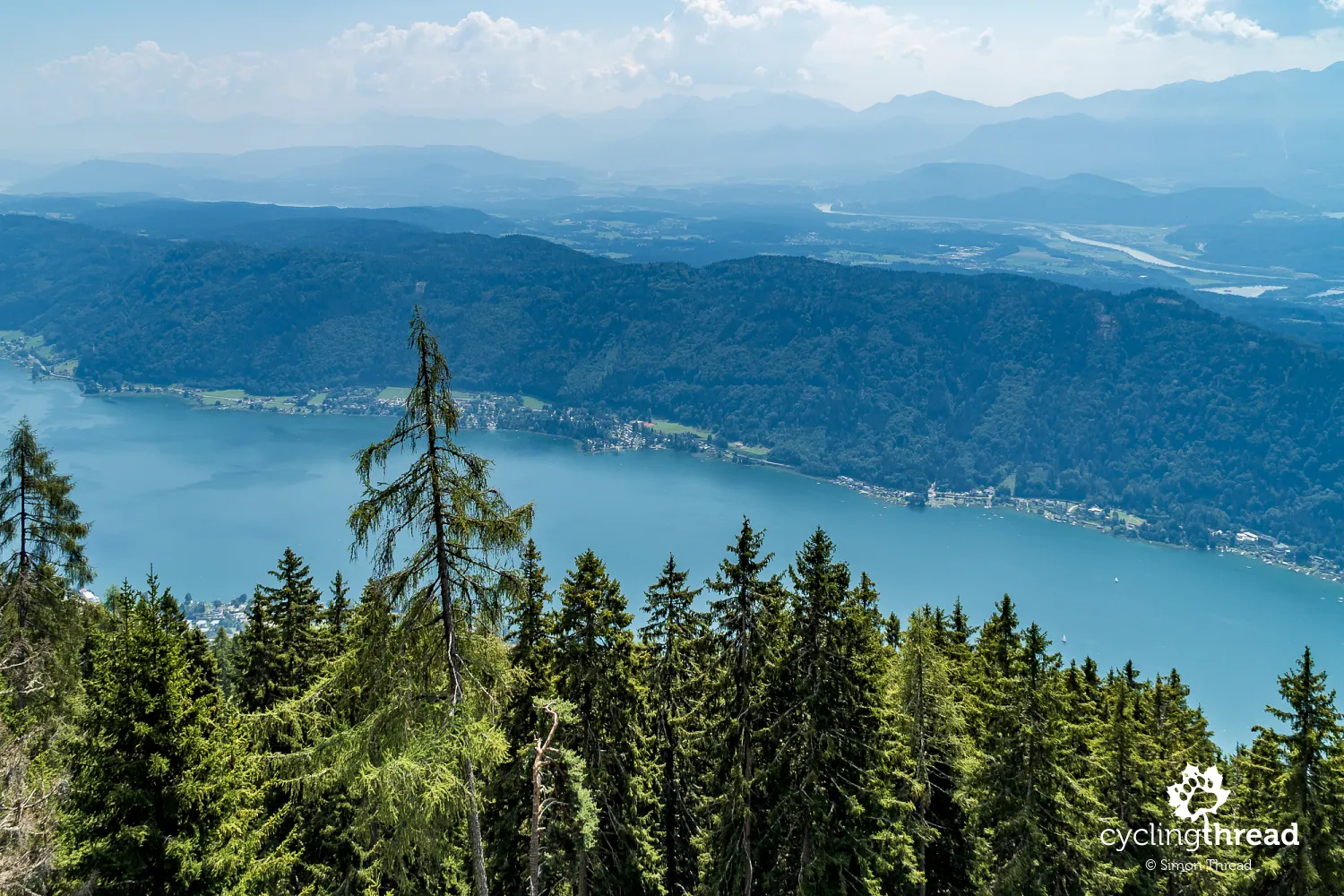
Just before leaving the section of the route around Ossiacher See, we stop at the parking hall in Annenheim. We leave our bikes under the watch of the attendant and soon step into the Kanzelbahn gondola, which takes us up to Gerlitzen Alpe. This is Austria's oldest mountain railway, originally built in 1928, though the current version dates back to 1987. After changing to a chairlift for a short second stage, we reach the summit of Gerlitzen Alpe at 1,909 metres above sea level. From here, the views over the Gurktal Alps are spectacular, and the sight of paragliders launching from this very spot to soar over Carinthia adds to the experience. The summit offers a perfect view of Lake Ossiach, making it a truly exceptional viewpoint. In summer, there is also a mountain restaurant and a terrace where you can relax before heading back down.
Over 100 Carinthian attractions with the Kärnten Card
The idea to ride up to Gerlitzen Alpe - and many other attractions in Carinthia - came from the Kärnten Card. This regional discount card offers free admission to more than a hundred sites across the region. These include museums, swimming pools, amusement parks, mountain railways, observation towers and mountain routes. The card is valid throughout the summer season, with the price depending on the length of stay and the user's age. Importantly, many attractions included allow multiple entries, giving you great flexibility in planning your day. You can find the full list of attractions on the Kärnten Card website or in the handy mobile app. If you're spending a few days in Carinthia and want to explore interesting places, buying the card is definitely worth it. With the interactive map on the website, you can plan your route more easily and check what is nearby.
The magical world of dolls and Carinthian traditions
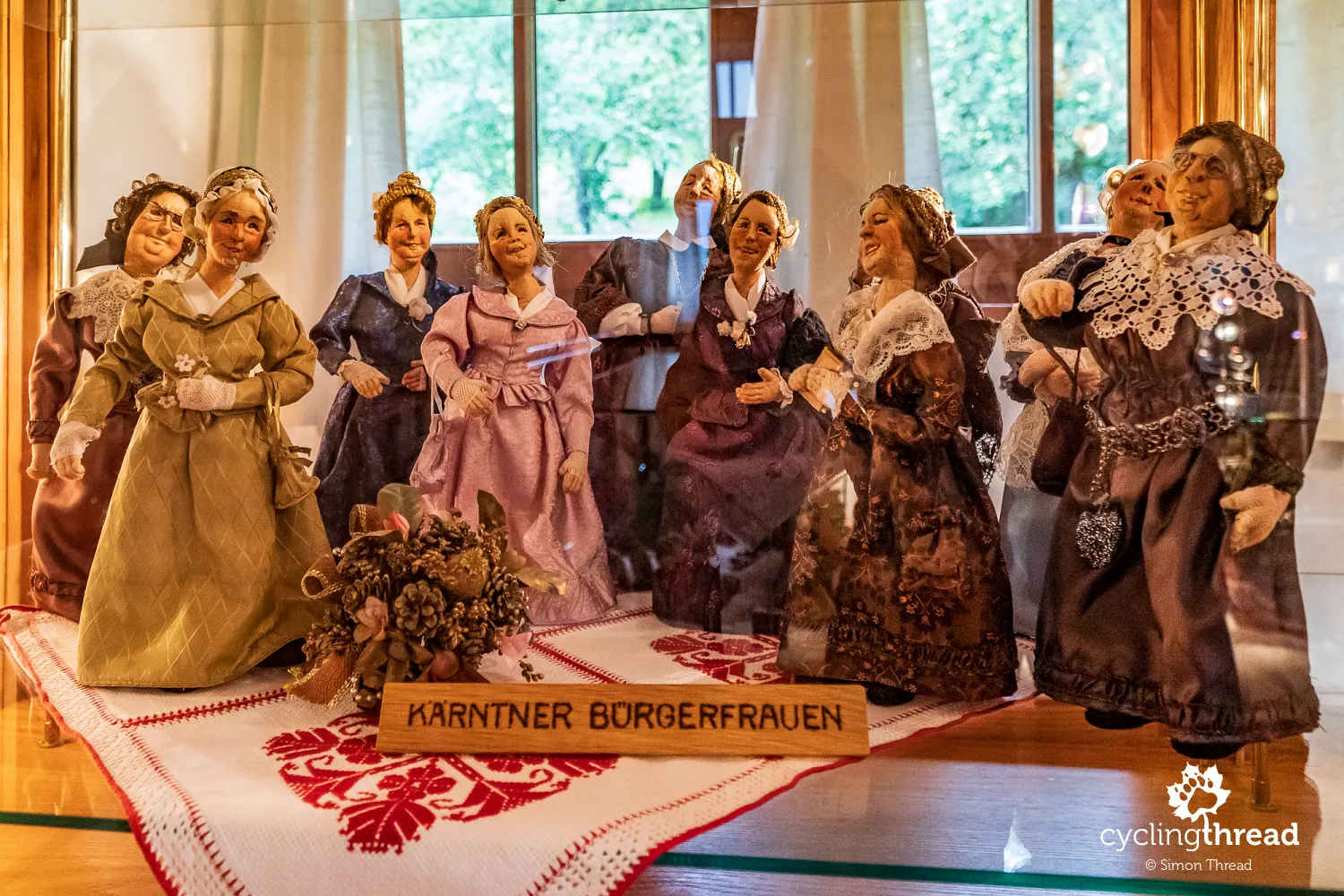
After Ossiacher See comes the first more serious climb - nearly 300 metres of elevation gain towards the next lake on the route, Millstätter See. Before we get there, we stop in the charming village of Einöde bei Villach, home to the Elli Riehl Puppenwelt - Elli Riehl's World of Dolls. In a beautiful Alpine wooden house you will find an extraordinary collection of 700 handmade dolls, created by the artist over several decades. Elli Riehl (1902–1977) portrayed in her work the everyday life and customs of Carinthian rural communities in the 20th century. An intriguing detail from the history of this place is that during World War II, Riehl was so well known that a wedding procession of dolls she made was presented as a gift to Adolf Hitler. This spot is worth a visit, as is the nearby Mushroom Museum - although unfortunately it was closed during our visit. Both attractions are included free of charge with the Kärnten Card.
Watching Carinthian cheesemakers at Kaslabn
Passing two picturesque lakes - Afritzersee and Feldsee - we arrive in Radenthein, a small town just before Millstätter See. It's worth stopping here, even briefly, at the Kaslabn cheese dairy, which stands out with its modern wooden architecture. The ground floor houses a shop selling cheeses and organic dairy products, but the real magic happens one floor below. A short walk down an unassuming staircase brings you to a glass wall where you can watch the cheesemakers at work - and at certain times you can join a short demonstration for visitors. Behind another glass wall, local cheeses are maturing, slowly developing their flavour and character. It's a great example of how in Austria an everyday, traditional activity can be turned into a modern, eco-friendly business with strong tourism appeal.

Millstätter See - the jewel of Carinthia
We quickly start to regret choosing Spittal an der Drau, some 15 kilometres away, for our overnight stay - we would have loved to linger longer in the atmosphere around Millstätter See. This is the second major lake on our route, and seen from the high shore in Millstatt am See, it is truly impressive. Known as the jewel of Carinthia, Millstätter See stretches for 12 kilometres and reaches depths of up to 140 metres. Guidebooks recommend hiking in the surrounding Alpine peaks, where you can enjoy spectacular views of the lake. Local highlights include the 'Path of Love' (Der Weg der Liebe), the unique seven-needled pine tree Baumheiligtum, and the mysterious Lochvisierstein Menhir rock. The Millstätter See Höhensteig that passes here has been awarded Austria's quality seal for hiking routes - proof that this is a place worth not only cycling through but also... occasionally taking a break from the bike.
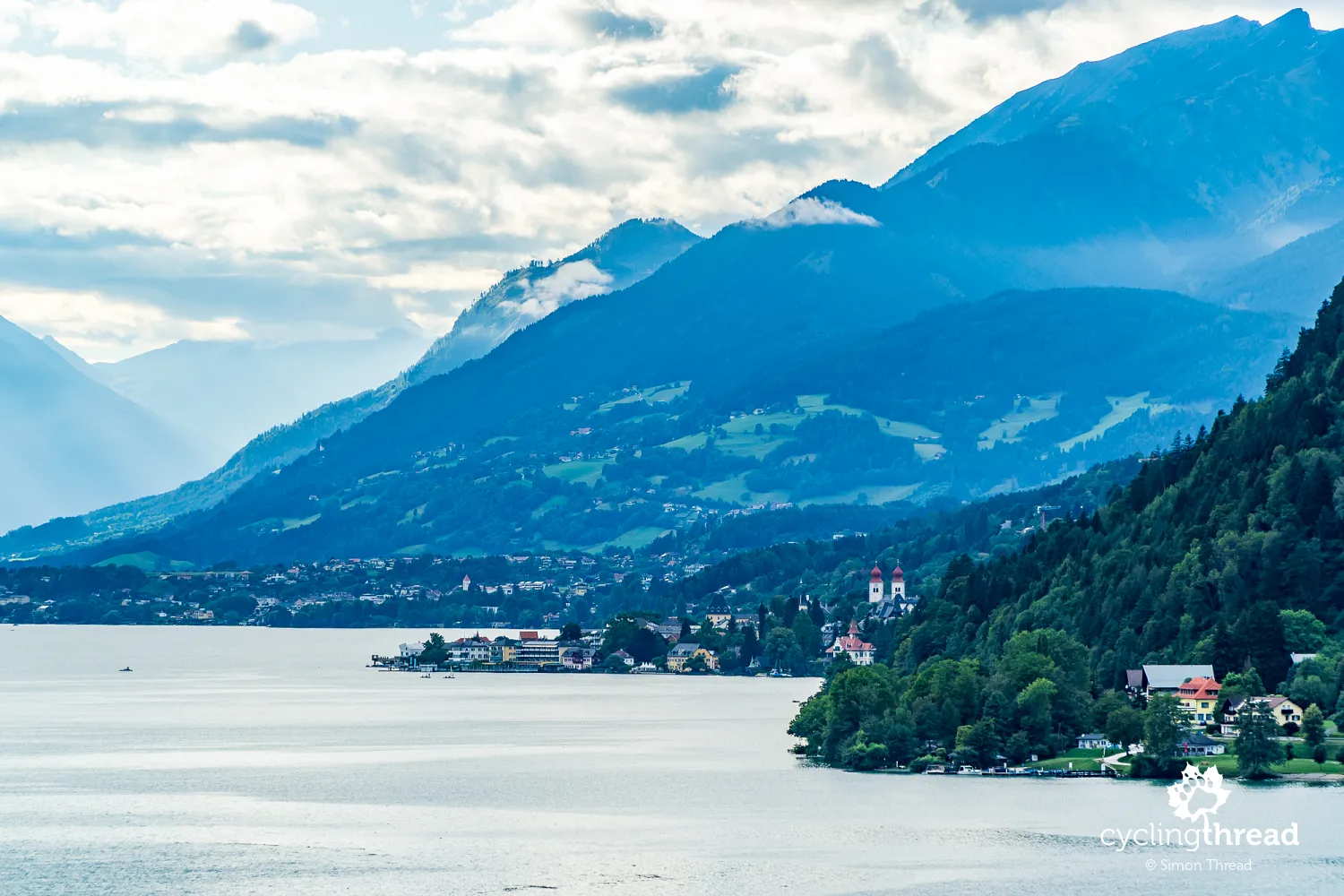
Overlooking the lower part of Millstatt is the Lindenhof - now a hotel and apartment complex, once part of the Benedictine abbey. The remaining monastery buildings are among the most important examples of Romanesque architecture in Carinthia. Although the weather was unsettled that day, the town was lively - many people were strolling through the streets, and restaurant gardens were packed. The same was true for the restaurant in the striking Kärnten Badehaus bathing complex, and even for the distinctive Kap 4613 café, shaped like a modern pyramid, located on the way out of Millstatt towards Spittal an der Drau.
A memory from a ride through the Eastern Alps
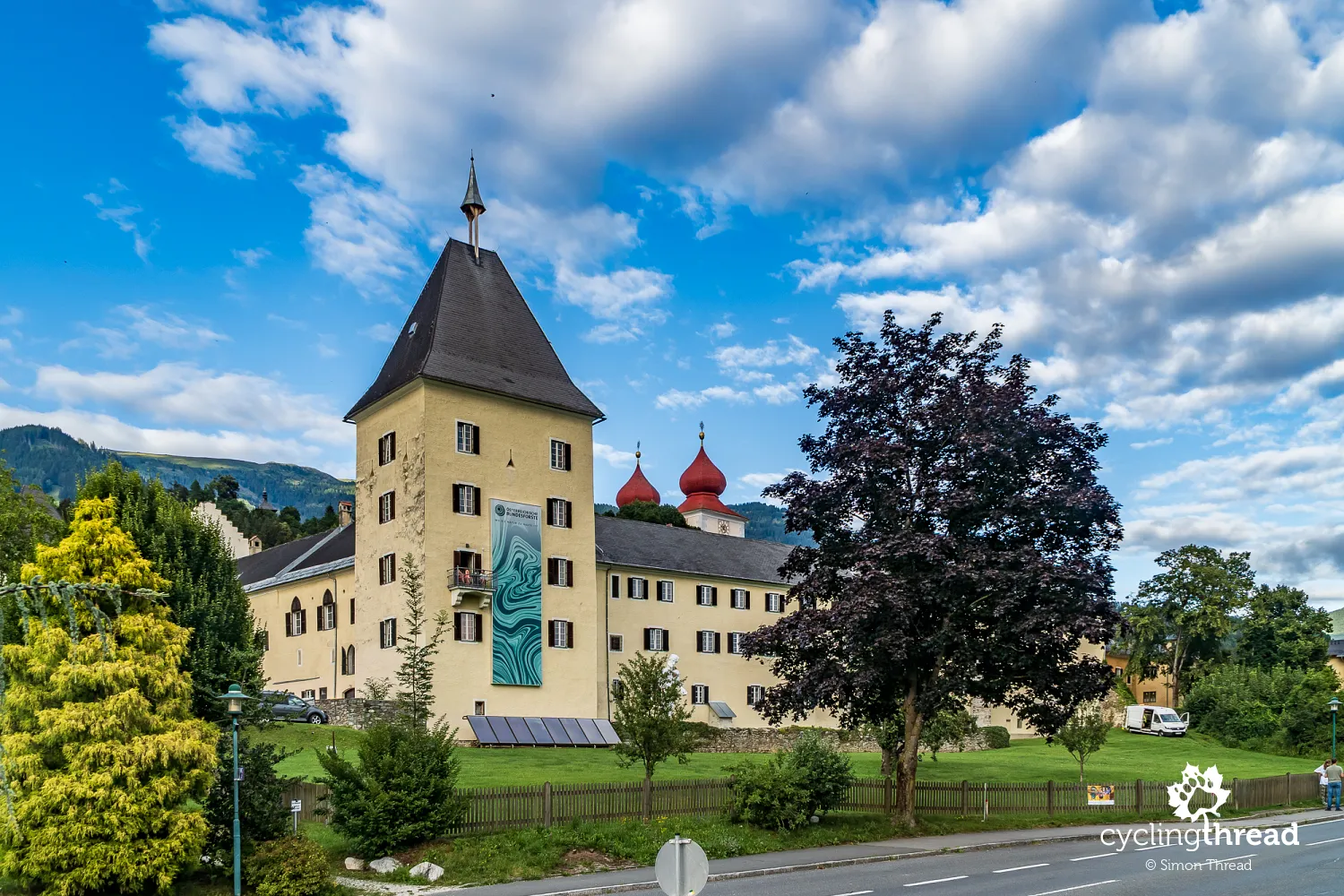
We remembered Spittal an der Drau from a trip a few years ago, when we ended our ride through the Eastern Alps in the Drava Valley, having cycled all the way to Villach from Bregenz. Back then, the town struck us as having a rather commercial and entertainment-oriented character. This time, however, our impression was warmed by the Renaissance Porcia Castle - considered by Austrians the finest example of Renaissance architecture north of Italy. It's hard to deny its charm, especially when, on a summer afternoon, the arcaded courtyard is bathed in sunlight and filled with the gentle murmur of visitors. Its elegant shape, open galleries and peaceful atmosphere make it appealing not only to history enthusiasts. Built in the 16th century as a Renaissance palace modelled on Italian designs, it was the residence of Gabriel von Salamanca, a Spanish advisor to Emperor Ferdinand I. Today it houses the regional museum, and in summer the courtyard becomes a stage for concerts and theatre performances.
A cycle route running across... a lake
Although this was the shortest day in terms of distance, it is the one we remember most fondly from our ride around the Carinthian Lake Loop. After a dozen or so kilometres on the well-known Drauradweg cycle route - running along the Drava River, which I write more about at the end of the article - we turned south and began a climb of several kilometres towards the village of Stockenboi, and then on to Lake Weißensee. Steep and demanding at first, it soon became gentler, and we quickly reached the lake's stunning turquoise waters. The views were truly breathtaking, made even better by the knowledge that our campsite on the opposite shore was only a short ride away. And almost half of that distance we would cover on board... a boat. It was the perfect opportunity to set the bikes aside for a while and enjoy the slow rhythm of Alpine nature from a different perspective.
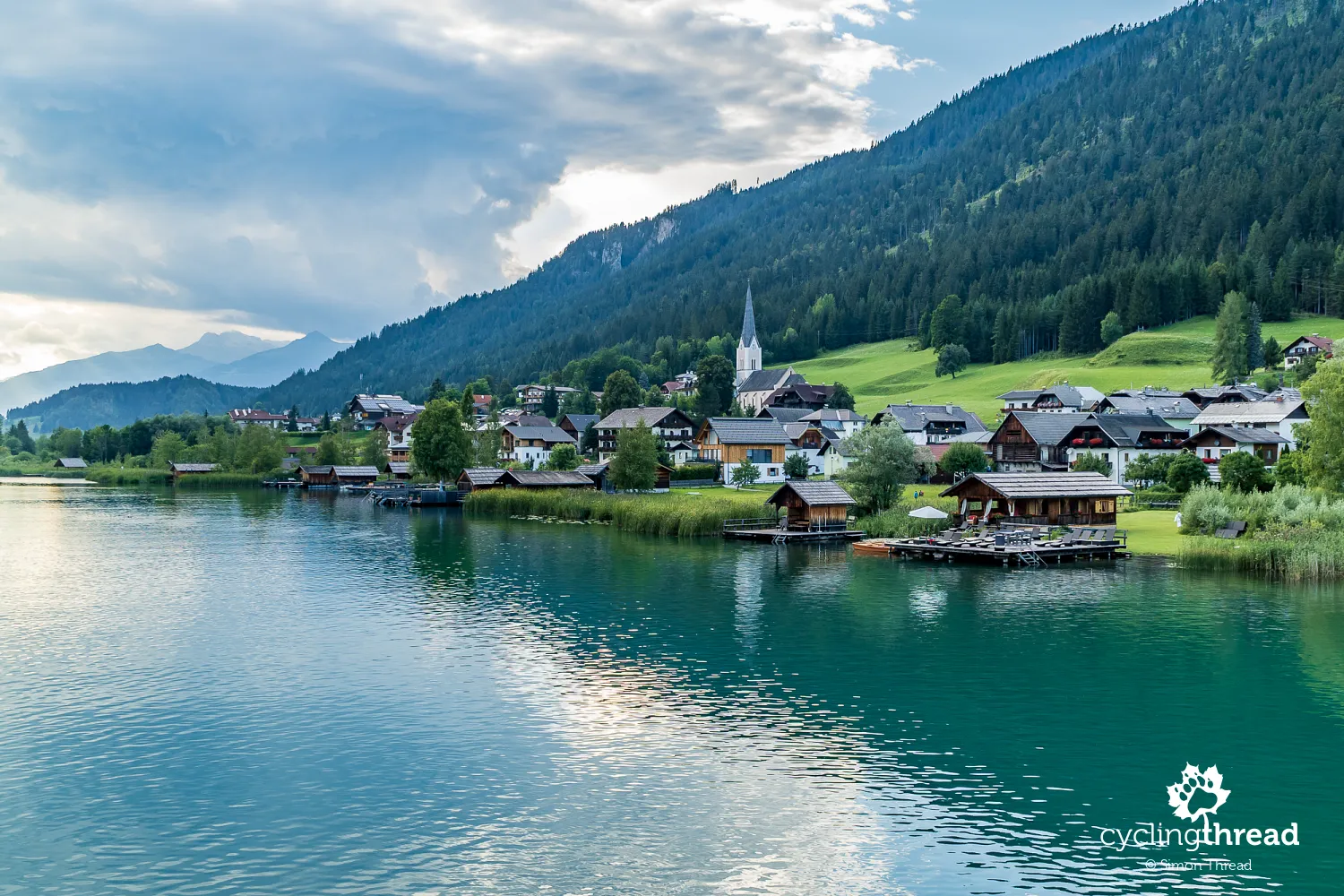
Weißensee is without a doubt one of the most remarkable lakes on the entire route. It is the highest bathing lake in Austria - in summer the water temperature can reach up to 24°C. Its crystal-clear water, with visibility of up to six metres, is almost as pure as drinking water. In winter, the lake turns into a natural ice rink and attracts the Dutch, who organise here an alternative edition of the famous Elfstedentocht - the Eleven Cities ice skating marathon, which can no longer be held on the frozen canals of Friesland due to climate change. It's easy to imagine Weißensee becoming a quiet, white paradise for ice skaters and cross-country skiers - completely different from summer, yet just as picturesque.
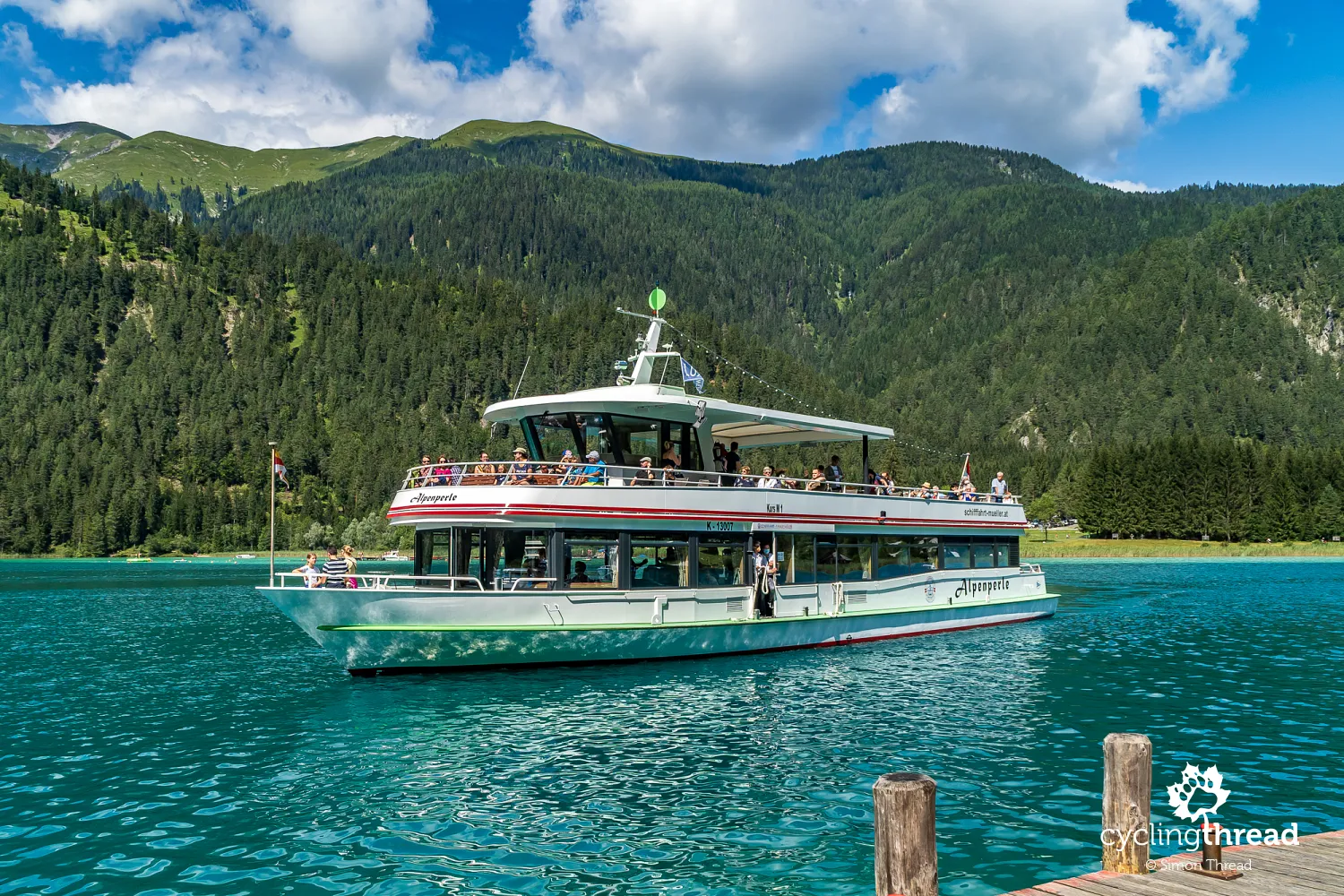
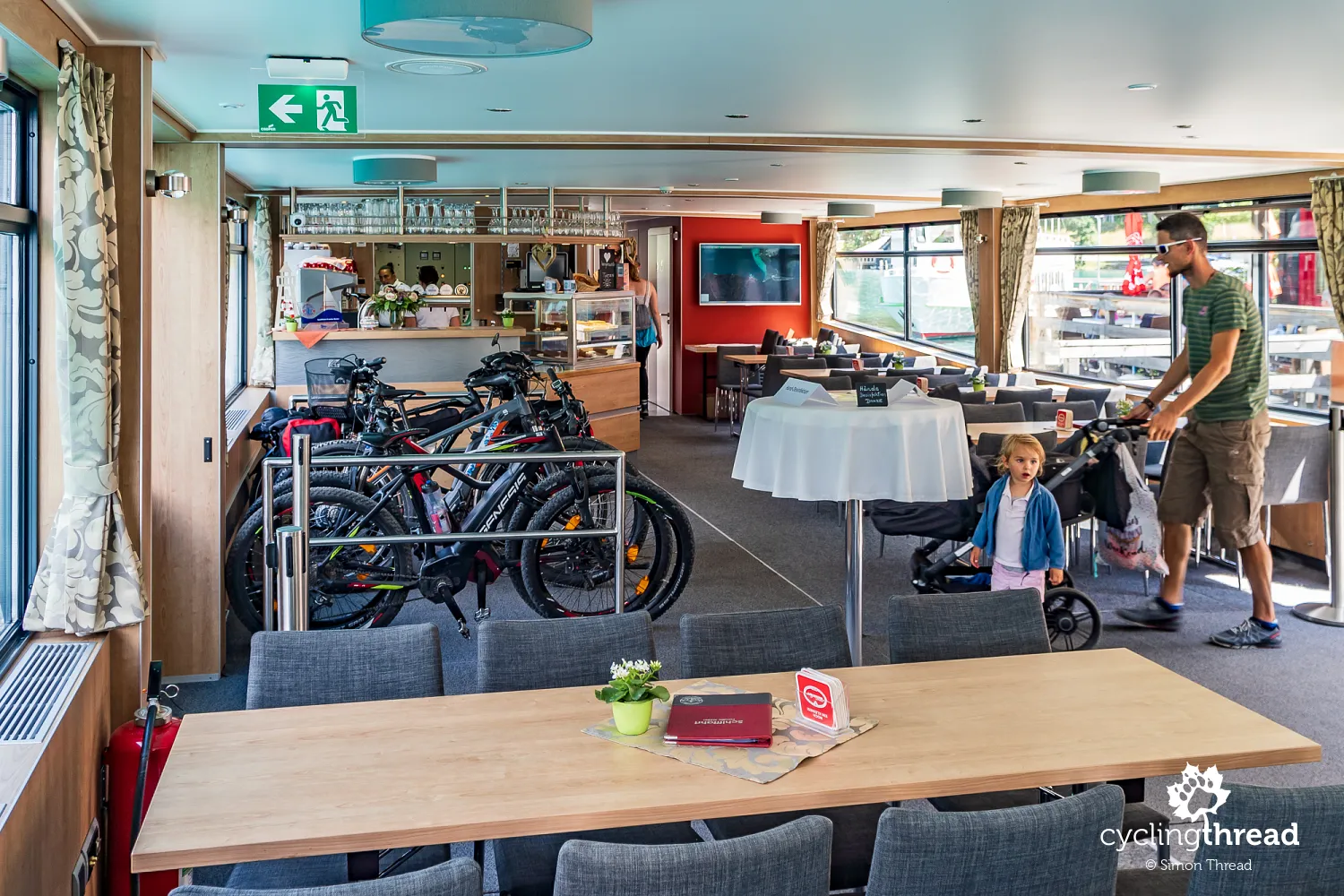
Crossing the lake is an adventure in itself. The only way to get across Weißensee is by water - the northern shore is protected and accessible only to walkers via the Slow Trails network, while the southern shore follows a challenging MTB route, unsuitable for pannier-laden bikes. At the pier, picturesquely suspended above the water, we wait for the hybrid Alpenperle boat. We even have a moment to celebrate our arrival with a small beer - in such a setting, it tastes especially good. After a few minutes, Alpenperle - Austria's first electric-hybrid boat - silently approaches the pier. It is one of the few vessels allowed to operate on Weißensee, exempt from the ban on motorised traffic. Cyclists are an everyday sight here - the water crossing is part of the official Carinthian Lake Loop route, and the lower deck of the boat has a special space prepared just for bikes.
A perfect spot for a family cycling holiday
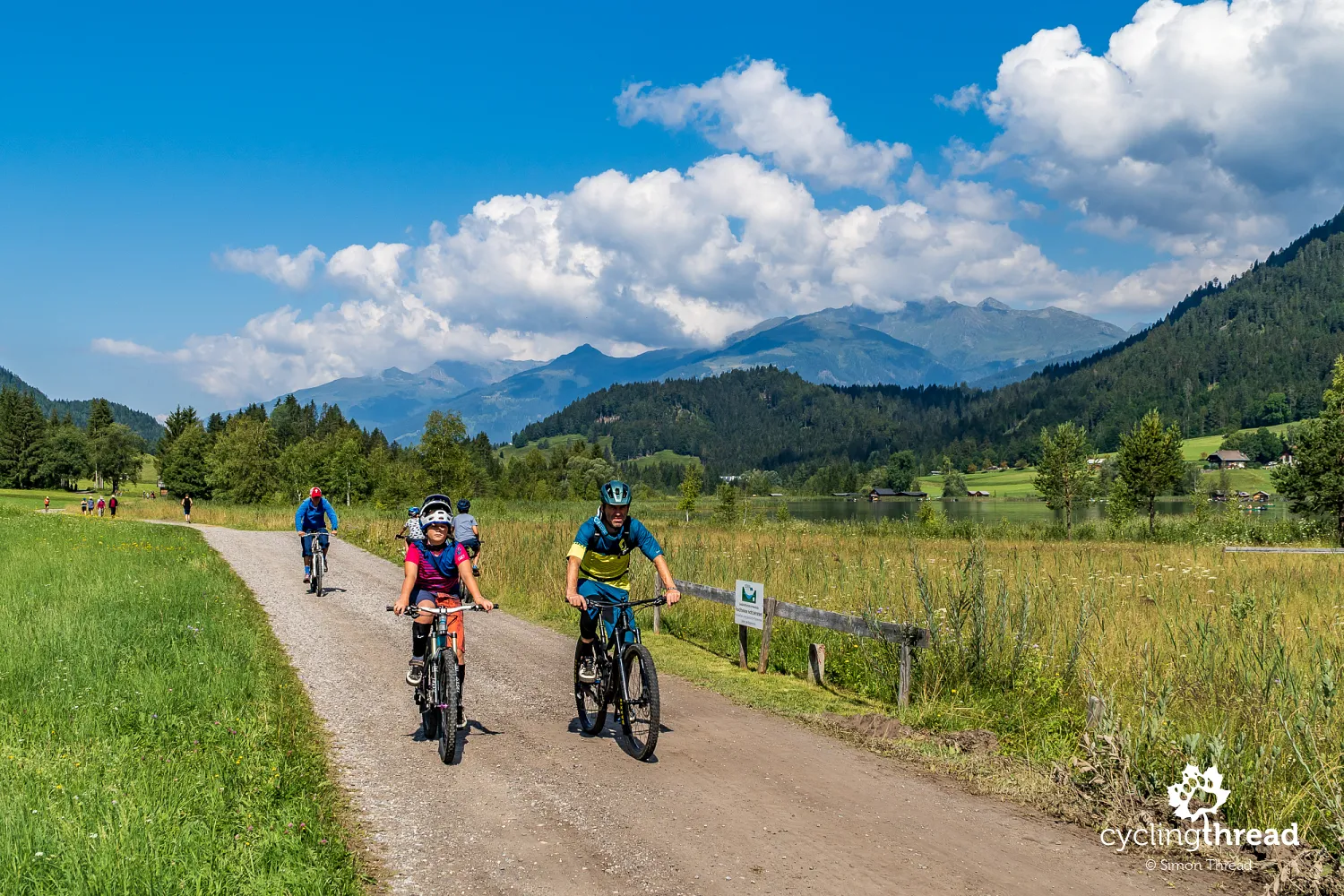
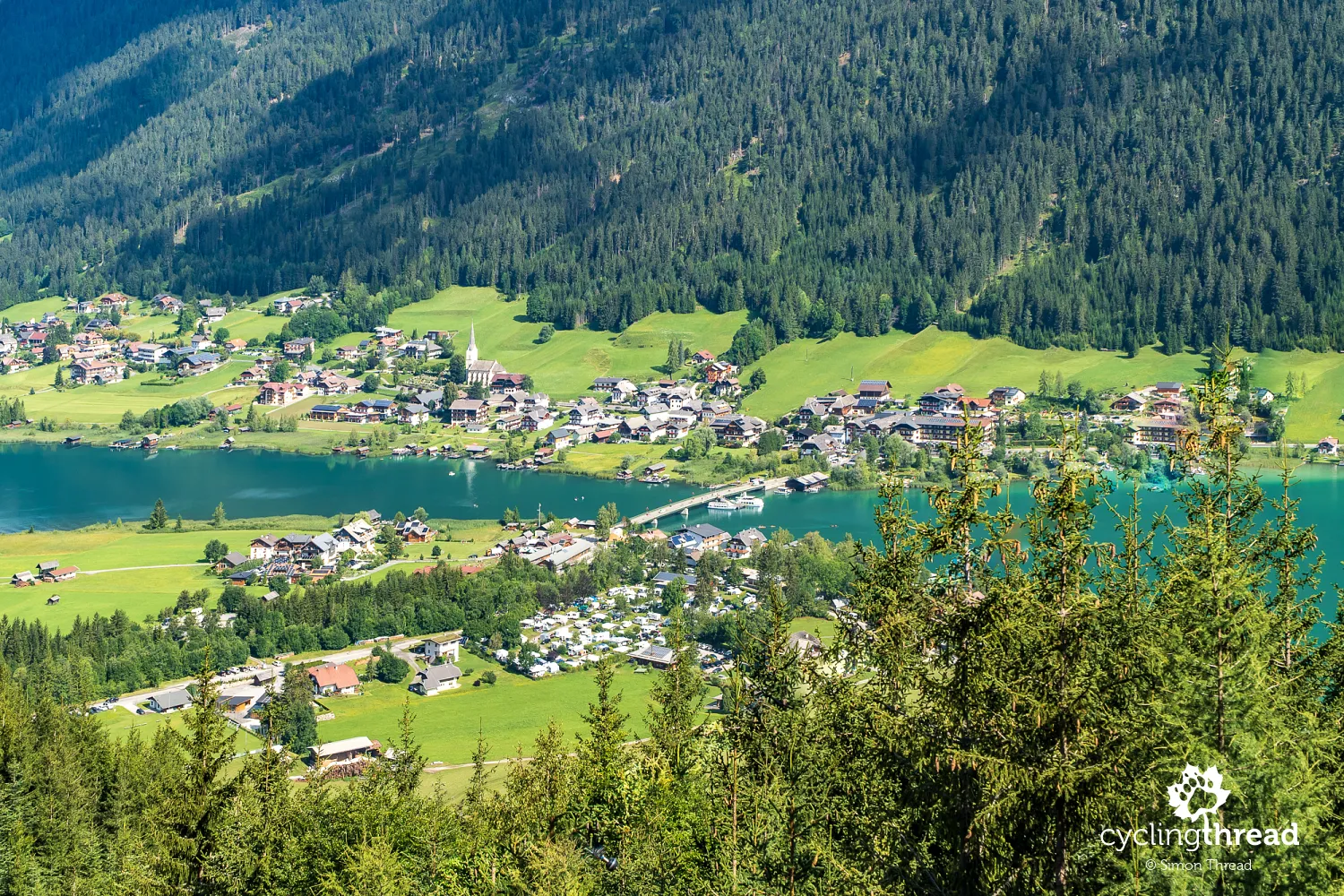
Picturesque Weißensee is a popular summer destination for many cyclists, and during our stay we saw plenty of families with children. Dozens of bikes stood parked outside local restaurants, and at the campsite on the western end of the lake it was hard to find a tent or camper without bicycles parked beside it. On the lake's northern shore lies Techendorf - the main hub of tourist life at Weißensee. Here you'll find shops, water sports and bike rentals, several hotels and guesthouses, as well as the pier for the boat that crosses the lake. Walking across the bridge that connects both shores is a must - it offers some of the most beautiful views of Weißensee. It's also worth stopping at one of the many cafés serving local pastries and Alpine specialities with a view over the water. The village retains a cosy, small-scale feel, yet has everything you need for an enjoyable and active day by the lake.
One more Kärnten Card attraction
Before setting off the next day towards the climb to Kreuzbergsattel Pass, which was part of our route through Carinthia, we decided to enjoy one more attraction included with the Kärnten Card. We took a chairlift up towards Naggler Alm, where there is a stunning view over Weißensee and the surrounding Alps. For us it was a short scenic break before continuing the ride, but most passengers set off on hikes or MTB routes laid out as mountain singletracks. A similar break can be planned in Spittal an der Drau - there, the local gondola takes you up to Goldeck peak in the Gailtal Alps. This attraction is also on the Kärnten Card list, making it even more worth considering for active travellers.
Riding through the picturesque Gail Valley
From Kreuzbergsattel Pass, near another viewpoint offering panoramic vistas over Weißensee, we began a several-kilometre descent through the Gitschtal Valley towards the small town of Hermagor, located in the Gail Valley. The first section is a series of steep switchbacks where it's easy to match the speed of cars - so extra caution is needed. Along the way, we pass a few tiny hamlets where life seems to move at a slower pace than in the tourist resorts. The descent then becomes gentler, but the road still leads steadily downhill, winding through picturesque meadows, forests and alpine pastures.
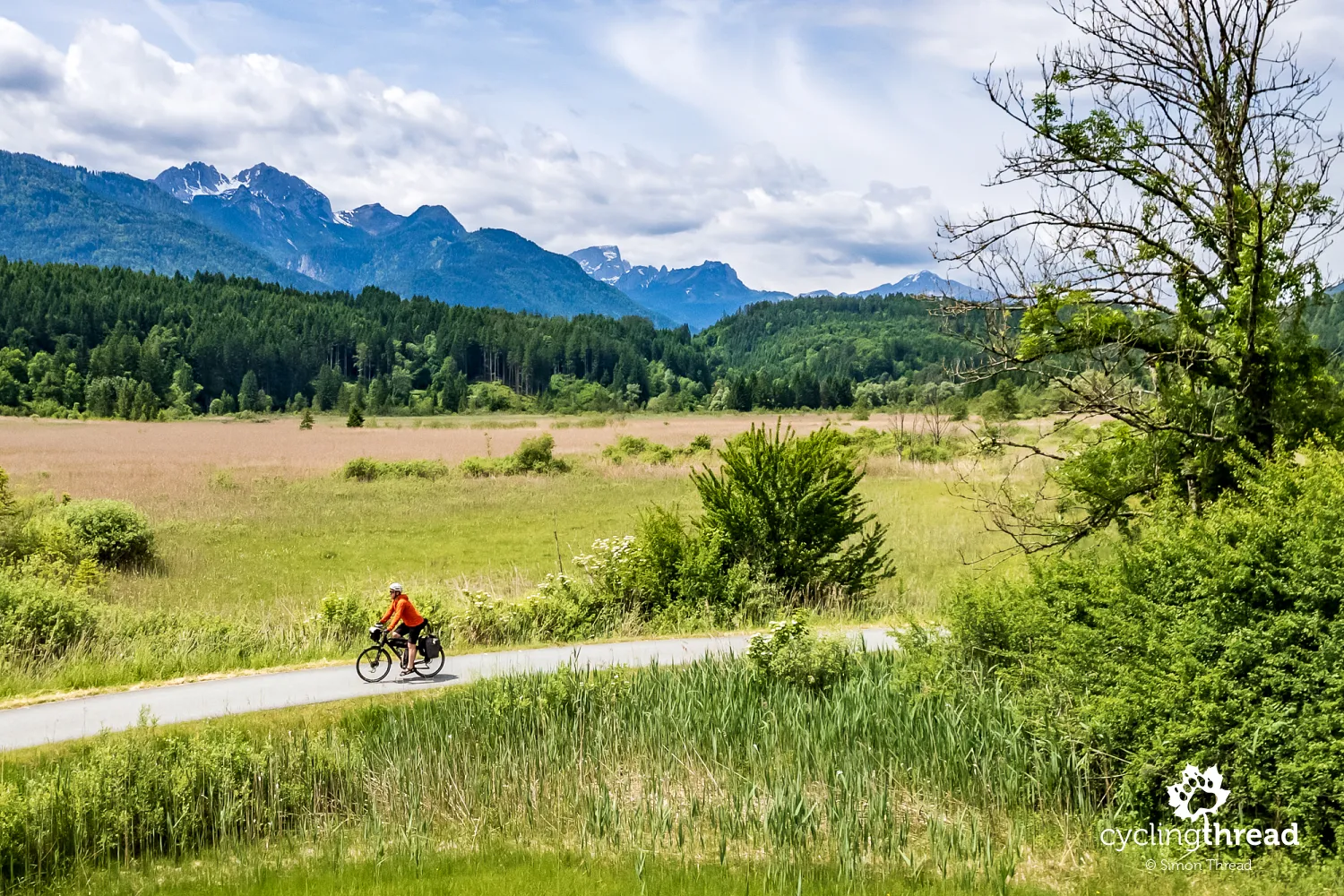
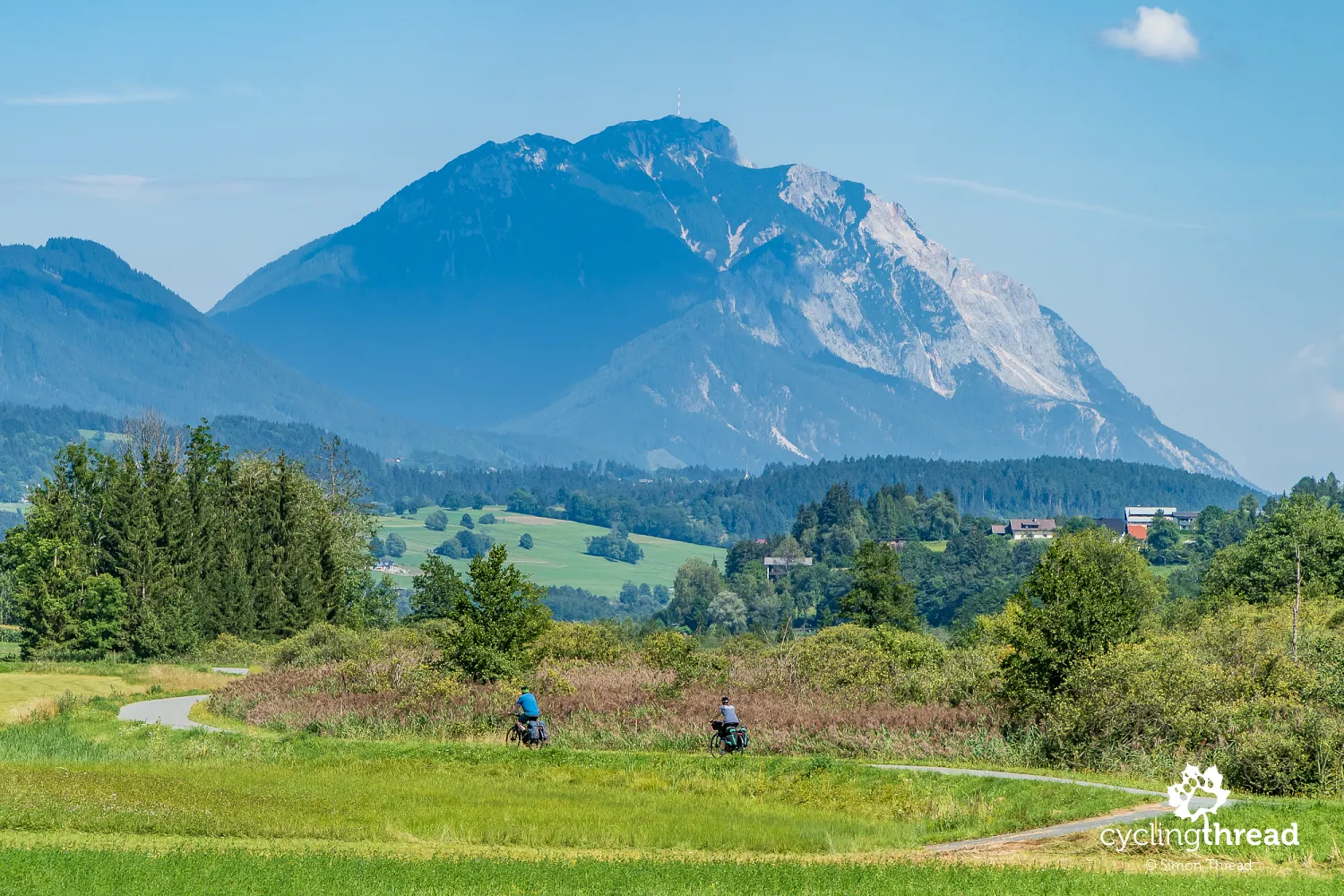
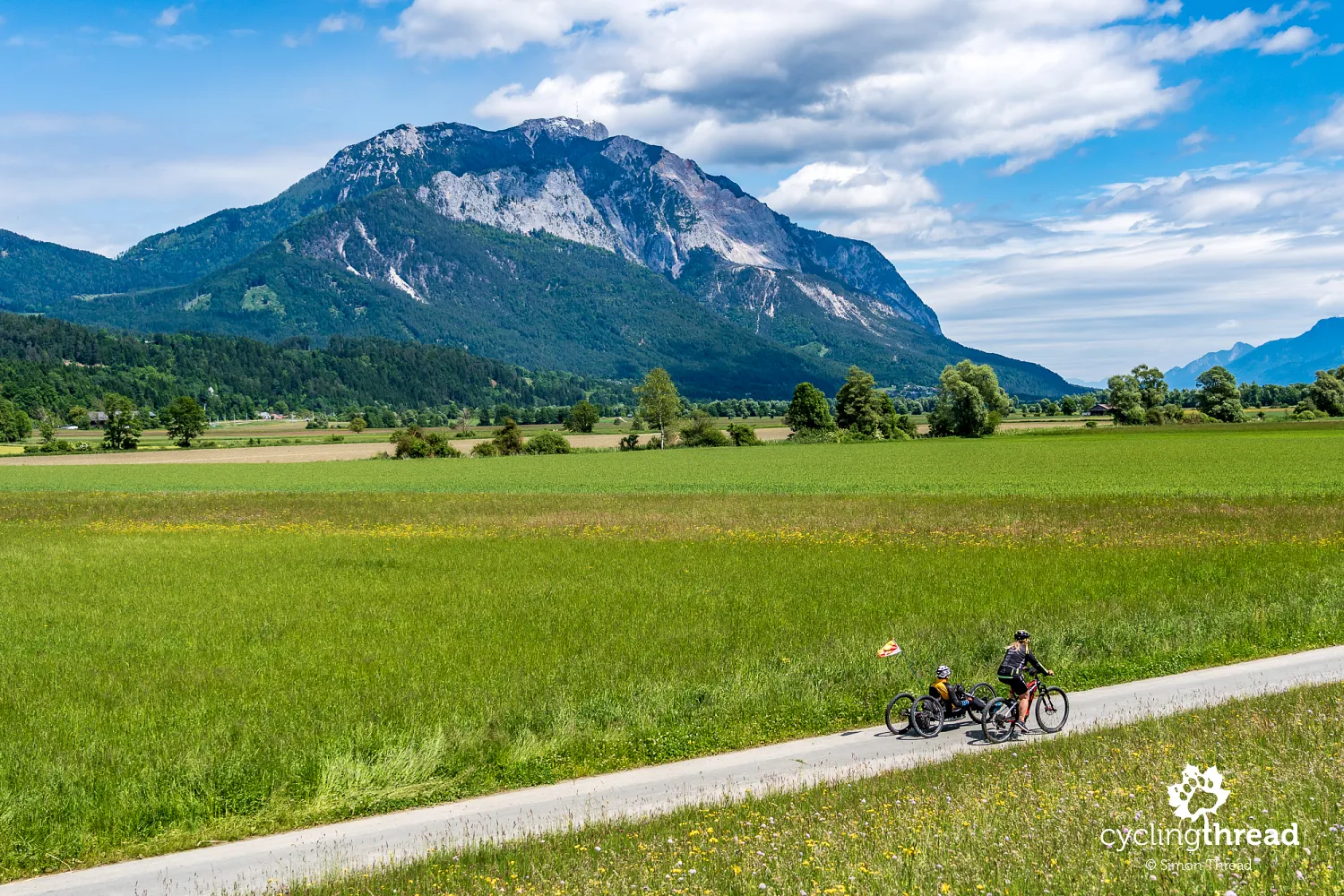
Along the River Gail, the Carinthian Lake Loop follows the route of the beautiful Gailtal Radweg - a cycle path running through the Gail Valley. For the most part, it's excellent asphalt cycling, with well-maintained gravel sections appearing closer to Villach. Along the way you can find small rest areas with benches and information boards about the region. Standing out in the valley landscape is the majestic silhouette of Mount Dobratsch - a solitary massif rising to 2,166 metres. This is Carinthia's first nature park, protected for its unique natural and geological features. Dobratsch is also known for its stunning views and network of hiking trails, while its steep slopes are a popular destination for climbers and mountain enthusiasts.
Delicious slow food in Carinthia
Many of the pastures and fields we passed belong to local farmers who are part of the unique Slow Food Villages project - the world's first network of villages working together to apply the principles of sustainable and responsible food production. It is a bold initiative that brings local producers together around the values of quality, freshness and respect for tradition. As a result, these villages preserve their unique character and attract travellers seeking authentic experiences. Here, farmers produce not only organic meats, dairy products, herbs, sweets and wines, but also safeguard the region's culinary heritage, creating a valuable and genuine tourism product.
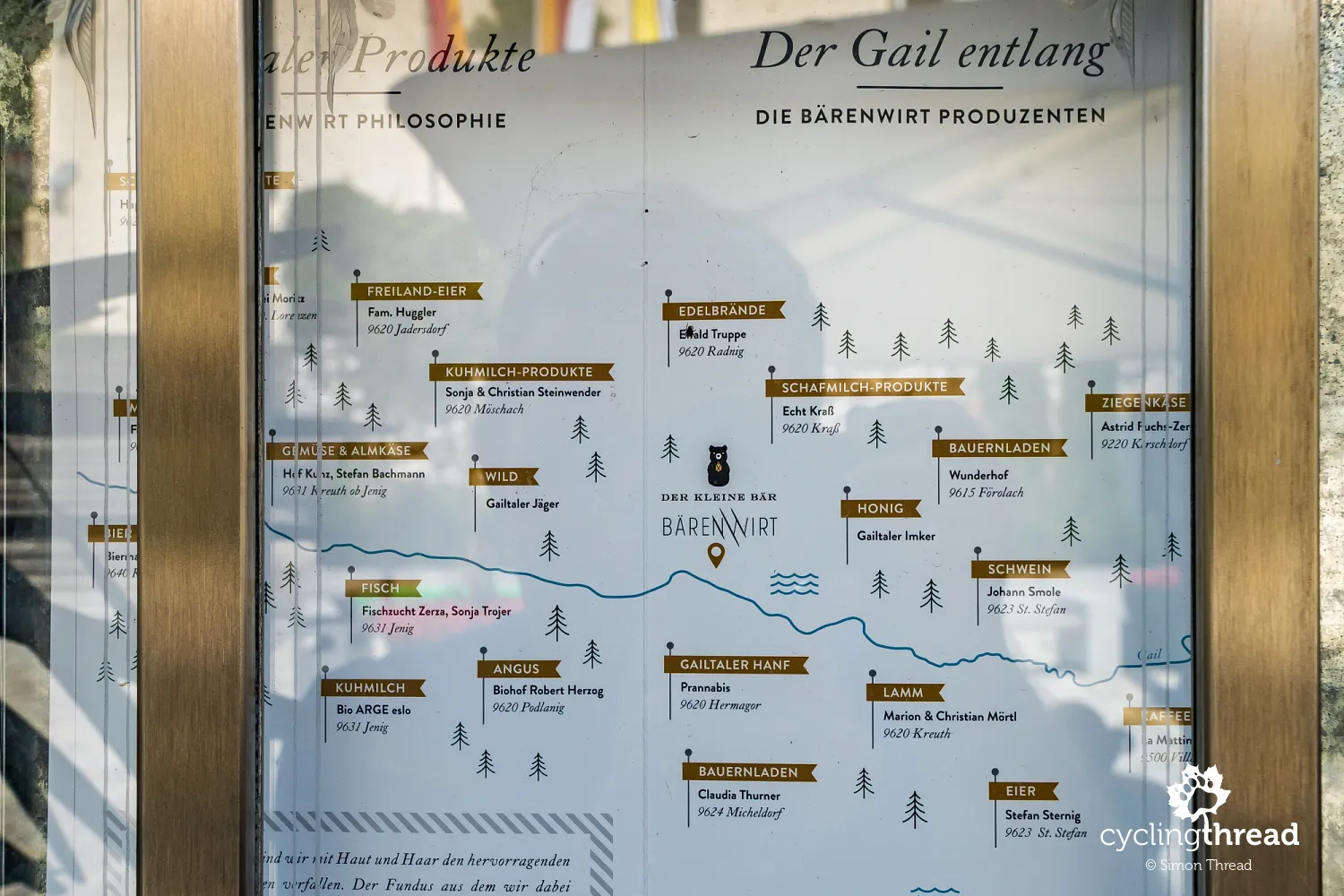
We experienced the results of Carinthian slow food in the family-run Bärenwirt restaurant in Hermagor. Located on the town's historic square, the restaurant uses only products from local producers, displayed on a map in a cabinet outside. The owners personally know all their suppliers, which allows them to maintain the highest quality of the dishes they serve. Eggs, cheeses, pork, beef, fruit, vegetables, honey and even beer all come from nearby farms and workshops, making the menu a true reflection of the region’s flavours. On my plate arrived delicious goat ribs with cabbage, honey, ginger and saffron oil.

A pleasant break in the shadow of Mount Dobratsch
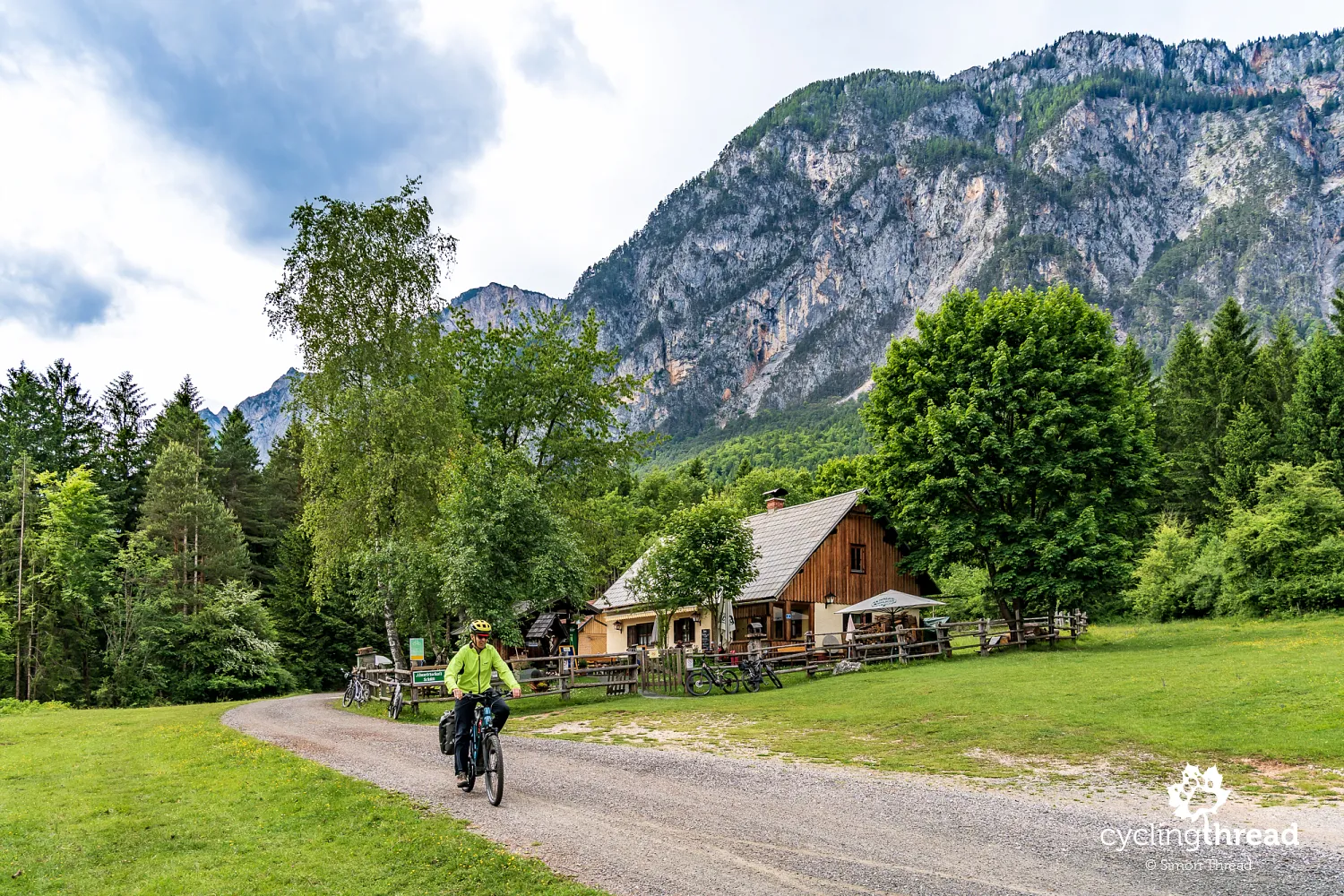
One more stop on the way tempted us - the homely Almwirtschaft Schütt restaurant, standing right by the cycle route near the Drava bridge. A wooden building with a shaded terrace, creaking benches, the scent of fresh herbs and a warm atmosphere make it an ideal spot for a peaceful rest, with views of alpine meadows and Mount Dobratsch in the background. Here you can try simple local dishes - fresh bread with herb butter, homemade cheeses or apple strudel made from apples grown in a nearby orchard. On my plate, however, there were once again Carinthian dumplings, this time with meat and fried cabbage.
From one side of the river to the other
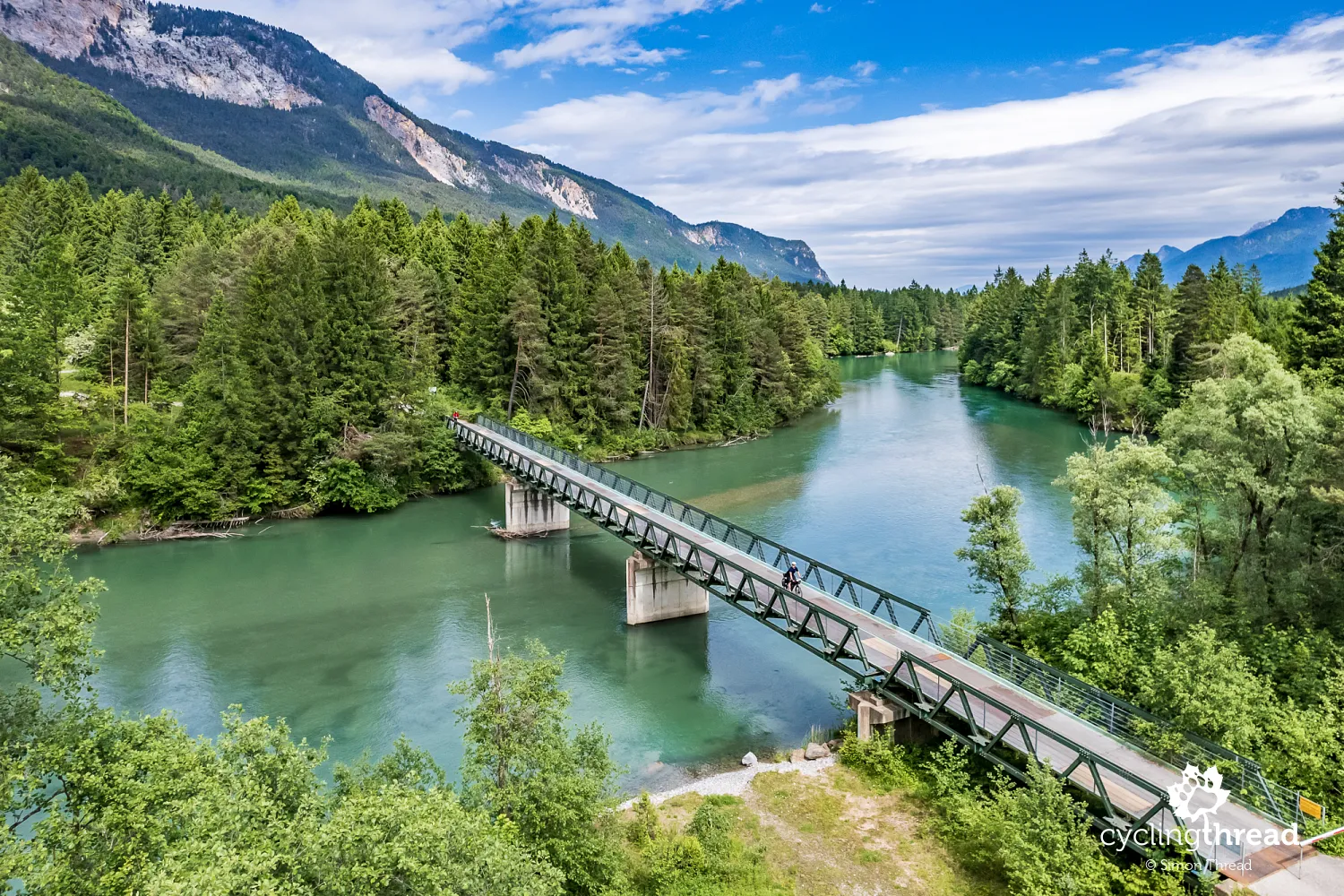
The Carinthian Lake Loop crosses the River Gail several times along its course. Sometimes it runs alongside car traffic, other times over narrow bridges in spots unreachable by vehicles. Perhaps the most striking - being the longest and set far from any buildings - is the Nepomuk Bridge, located just a few hundred metres from the Almwirtschaft Schütt mountain inn mentioned earlier. Here the river spreads wide, forming natural shallows and stony banks, with the mighty Dobratsch massif rising overhead, all surrounded by the Schütt Nature Reserve. It is one of those places where Carinthia's nature is at its most impressive - wild, rugged and authentic. And riding through this landscape by bike brings it almost within arm's reach.
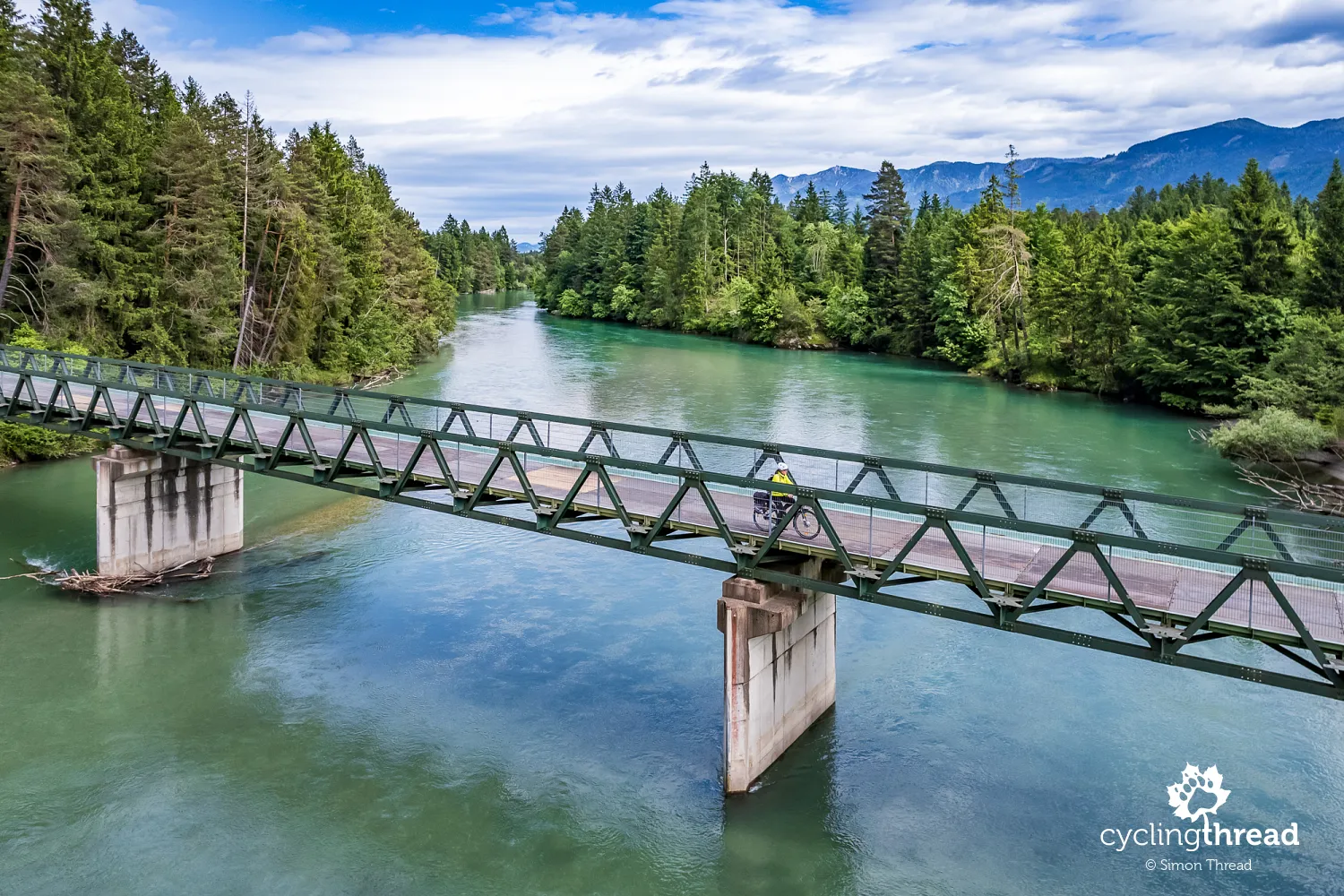
The Schütt Reserve is a unique protected area, valued both for its rare Alpine flora and for its unusual geological formation, created by massive landslides from the slopes of Dobratsch. This is where you find the largest landslide in the Alps - over 300 million cubic metres of rock that shaped today's irregular landscape of scree fields and sunlit dry meadows. These special conditions have created an ideal habitat for many rare species - including the Carpathian scorpion, a small and completely harmless relic of warmer eras. Numerous reptiles also live here, such as the Aesculapian snake, the common European adder and the green lizard, along with remarkable butterflies, beetles and wild orchids. Thanks to its warm microclimates and varied terrain, Schütt feels more like southern Europe than a typical Alpine environment, making it one of the most fascinating natural areas in all of Carinthia.
A beautiful memory from the Alpe-Adria
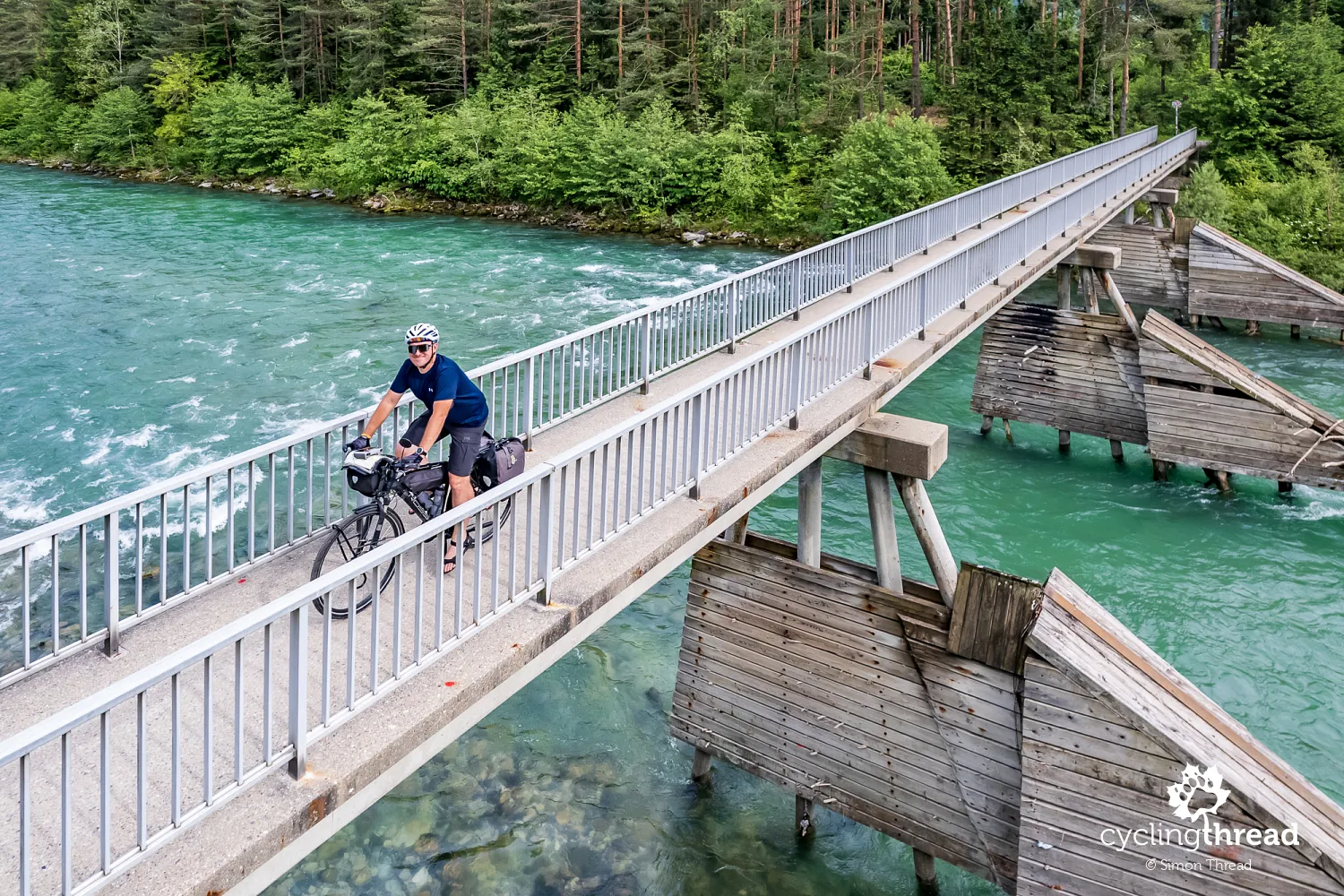
As the Gail cycle route approaches Villach, one more smile came from a memory of riding the Alpe-Adria Cycle Route. For about two kilometres, the two routes run together - over a narrow bicycle bridge above the Gail, then along a gravel stretch right by the river, shaded by trees and framed by mountain views. This brief meeting shows how well the two routes complement each other, even though the Carinthian Lake Loop and Alpe-Adria are quite different. The first passes through peaceful local landscapes and lakeside towns, while the second crosses the entire Alps and ends on the Adriatic coast. Both routes, however, share excellent infrastructure, stunning scenery and the pure joy of leisure cycling. And Carinthia still has a third outstanding route - the Drauradweg - which we were planning to follow to continue our cycling loop through southern Austria the next day.
Through Pressegger See to Faaker See
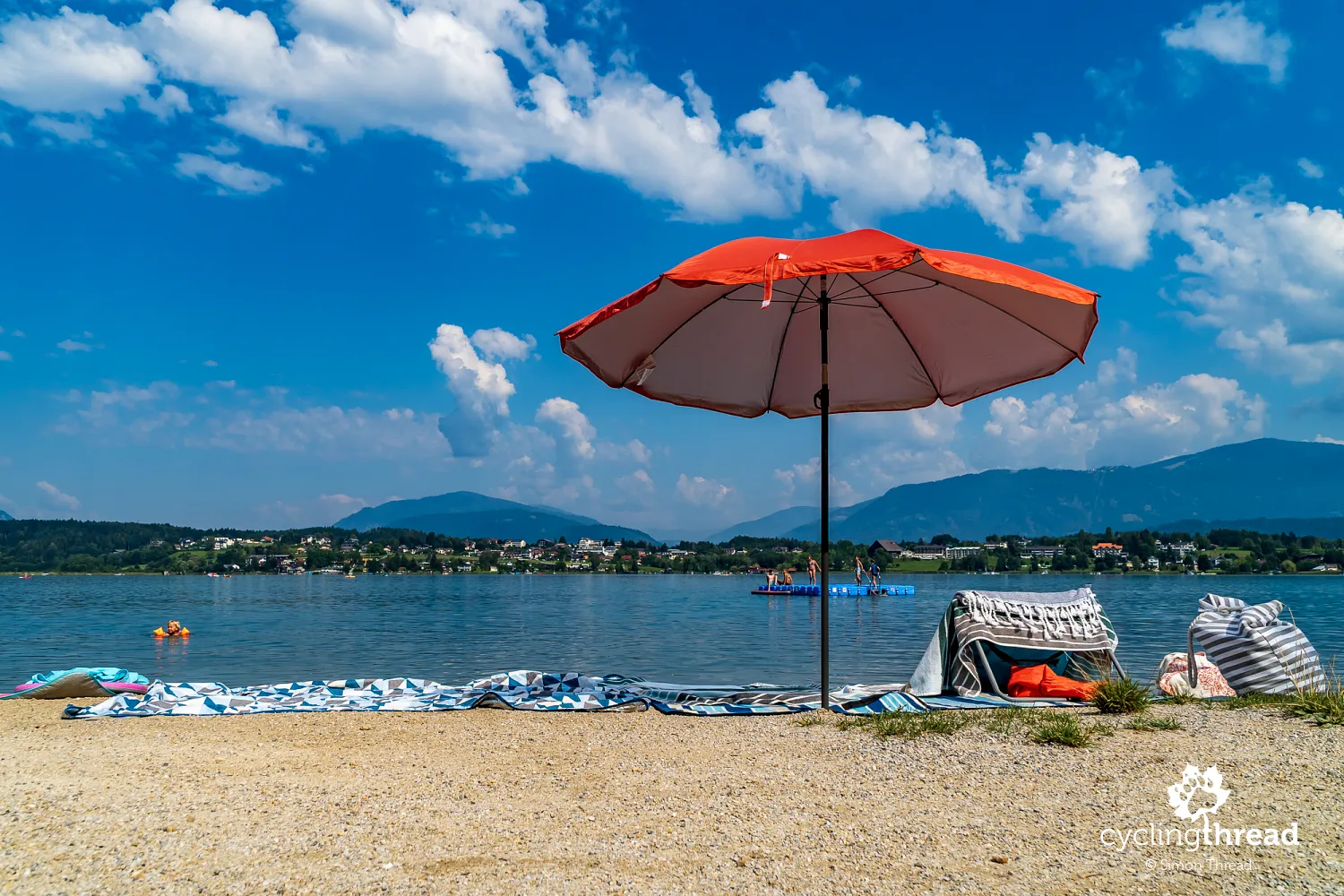
Along the Gail Valley, we passed Pressegger See - a small lake with a distinctly holiday feel, which, however, didn’t leave much of an impression on us. Although the crowded car park by the bathing area showed how popular it is with Austrians, we missed the charm that had enchanted us at the previous lakes. That day ended at Faaker See - Carinthia’s fifth-largest lake and one of the region’s most famous holiday spots. Its crystal-clear water, sandy beaches and Alpine mountain views create a unique atmosphere. The many campsites around the lake give it a laid-back summer rhythm and make it easy to linger for longer.
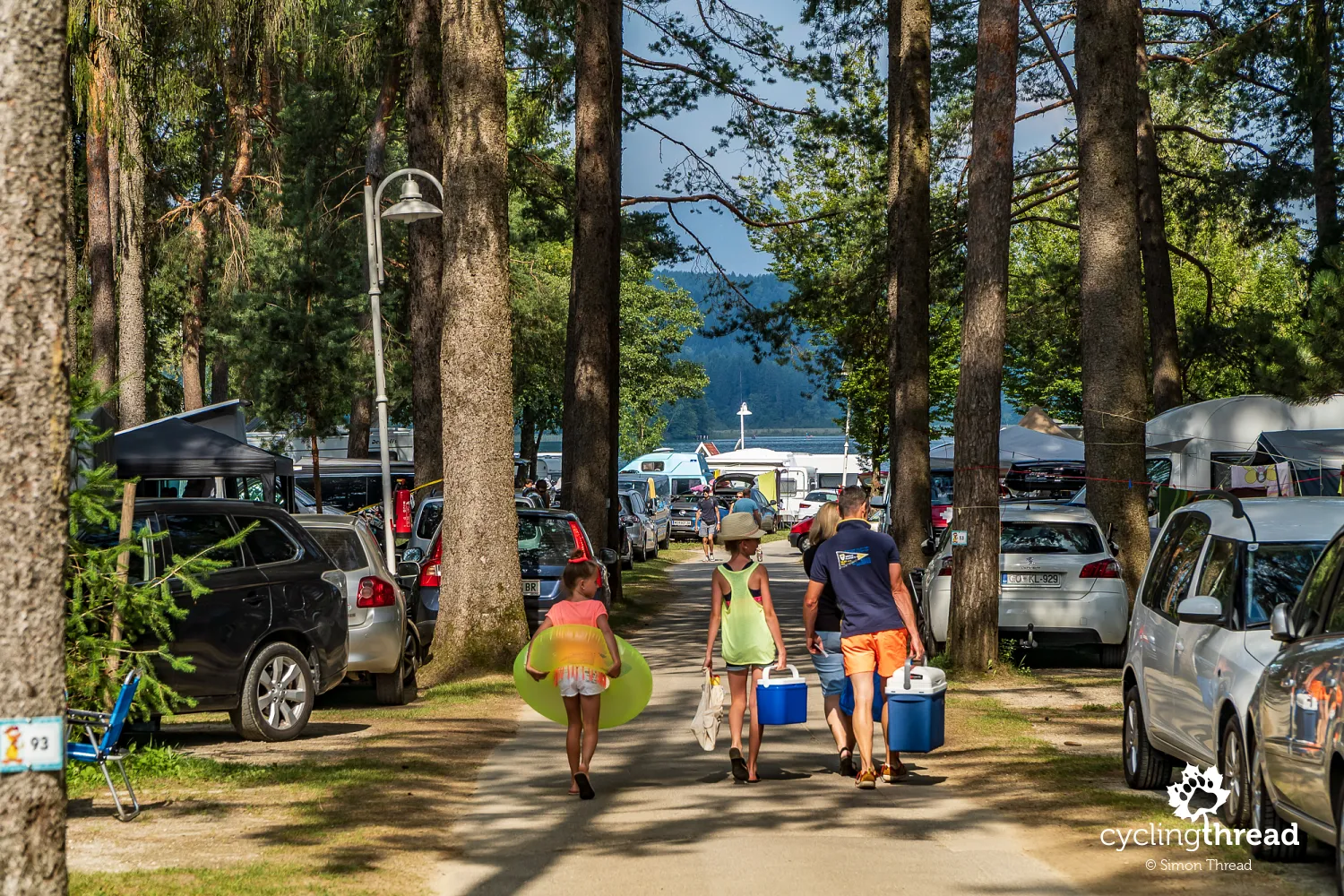
Carinthia’s network of campsites makes it possible to plan your route and overnight stays day by day. Although August is the peak of the tourist season in Austria - with many Austrians choosing to holiday at home - we never had any trouble getting into a campsite without a prior booking. After all, for two cyclists with a tent you don’t need much - just a flat piece of ground and access to a shower is all it takes after a full day of pedalling. And it’s worth noting that order and quiet hours are taken seriously here. By 10 p.m. conversations fade, lights go out, and the only movement on our campsite was around the impressive sanitary block - almost luxurious by camping standards.
A very pleasant 80 kilometres along Drava
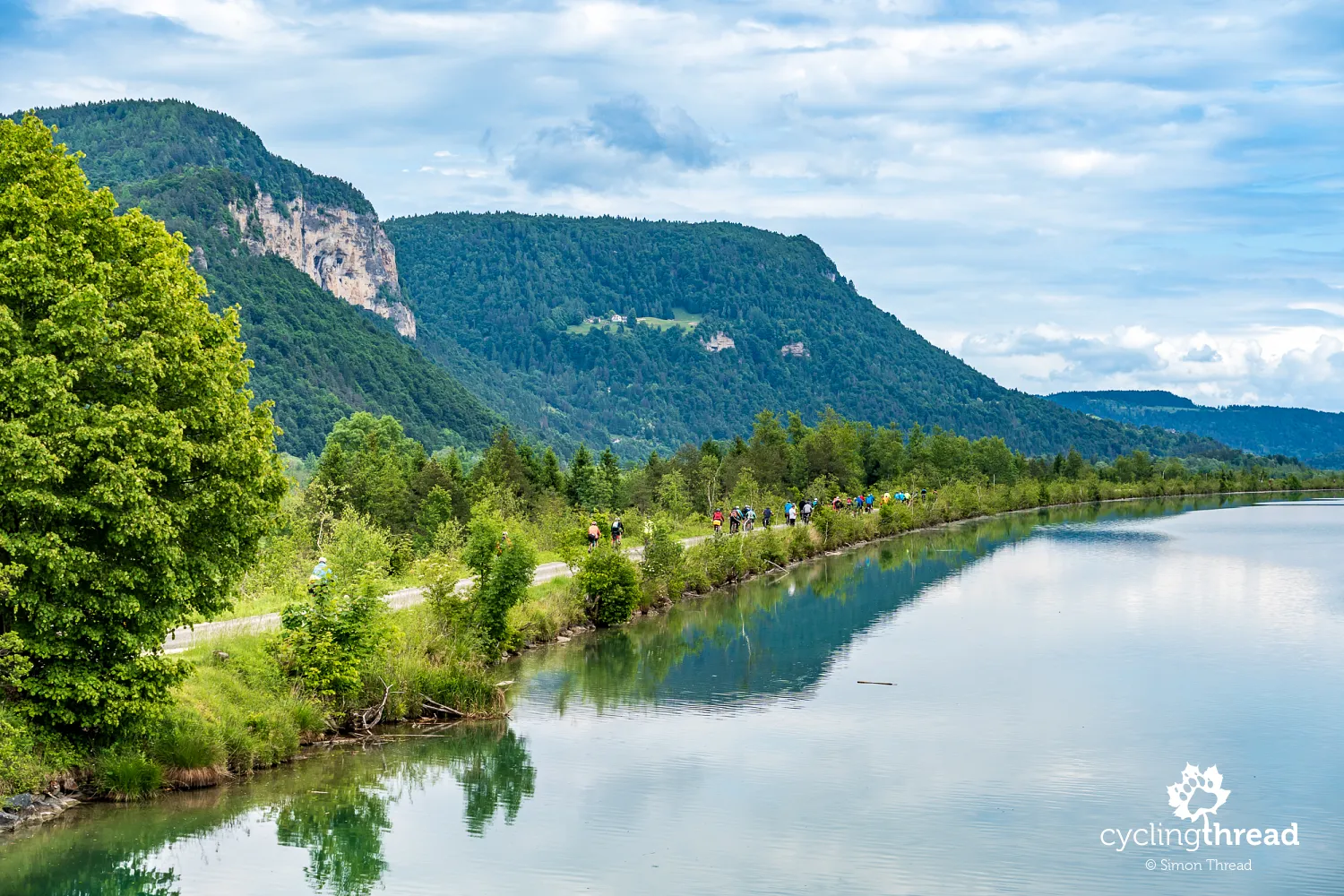
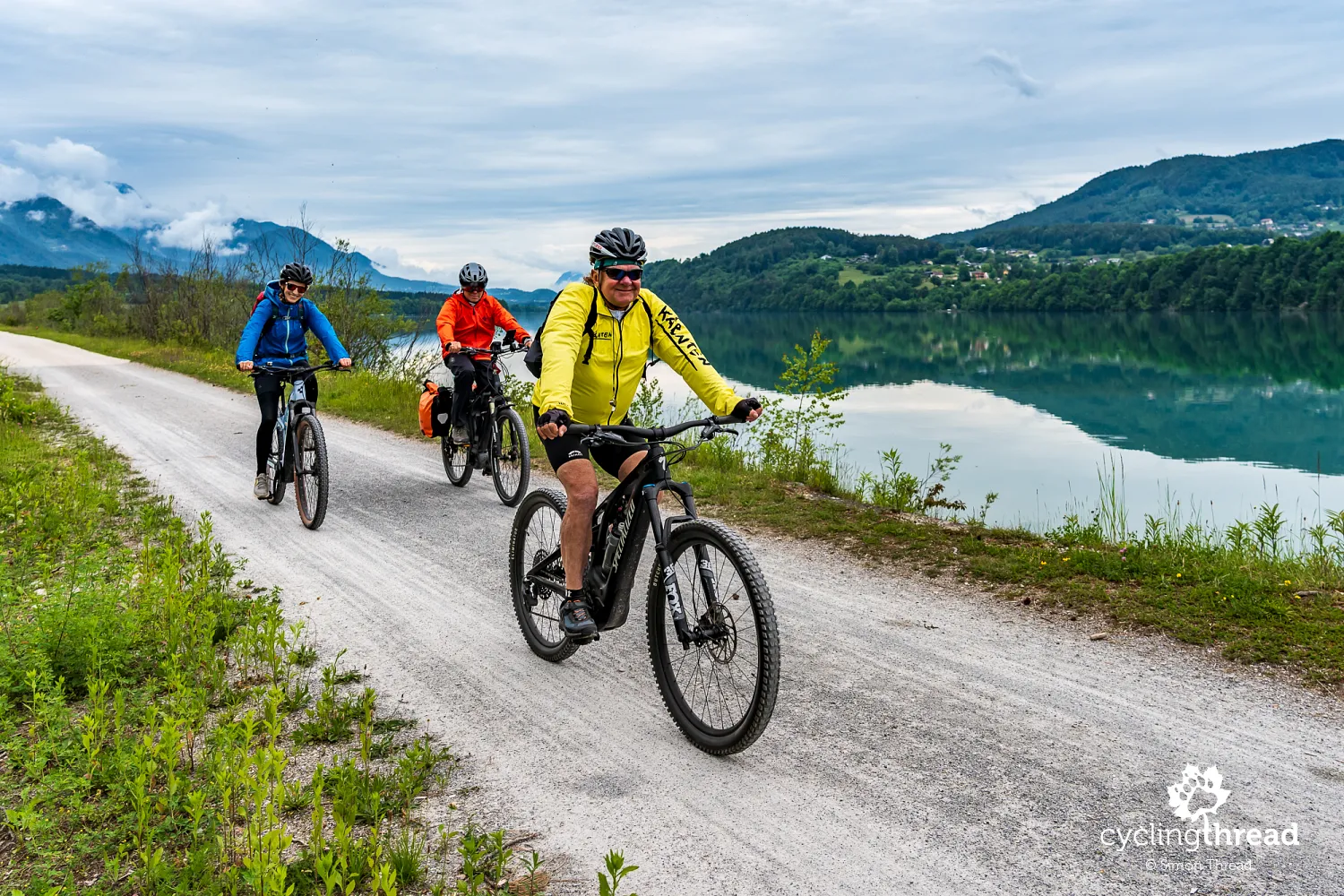
Back on the Drava, our spirits lifted again. After a rainy morning in southern Carinthia, the sun came out, and we enjoyed another attractive, well-prepared section of the Carinthian Lake Loop, which here followed the Drauradweg route. On the roughly 80-kilometre stretch from Villach towards Lake Klopeiner See there are no large or even medium-sized towns, and for most of the way the cycle path runs right beside the river. Along this section, the Drava is broken up by hydroelectric plants, which slow its flow and divide it into almost still reservoirs. It’s a peaceful, green route with frequent views of the distinctive Karawanks range on the right-hand side.
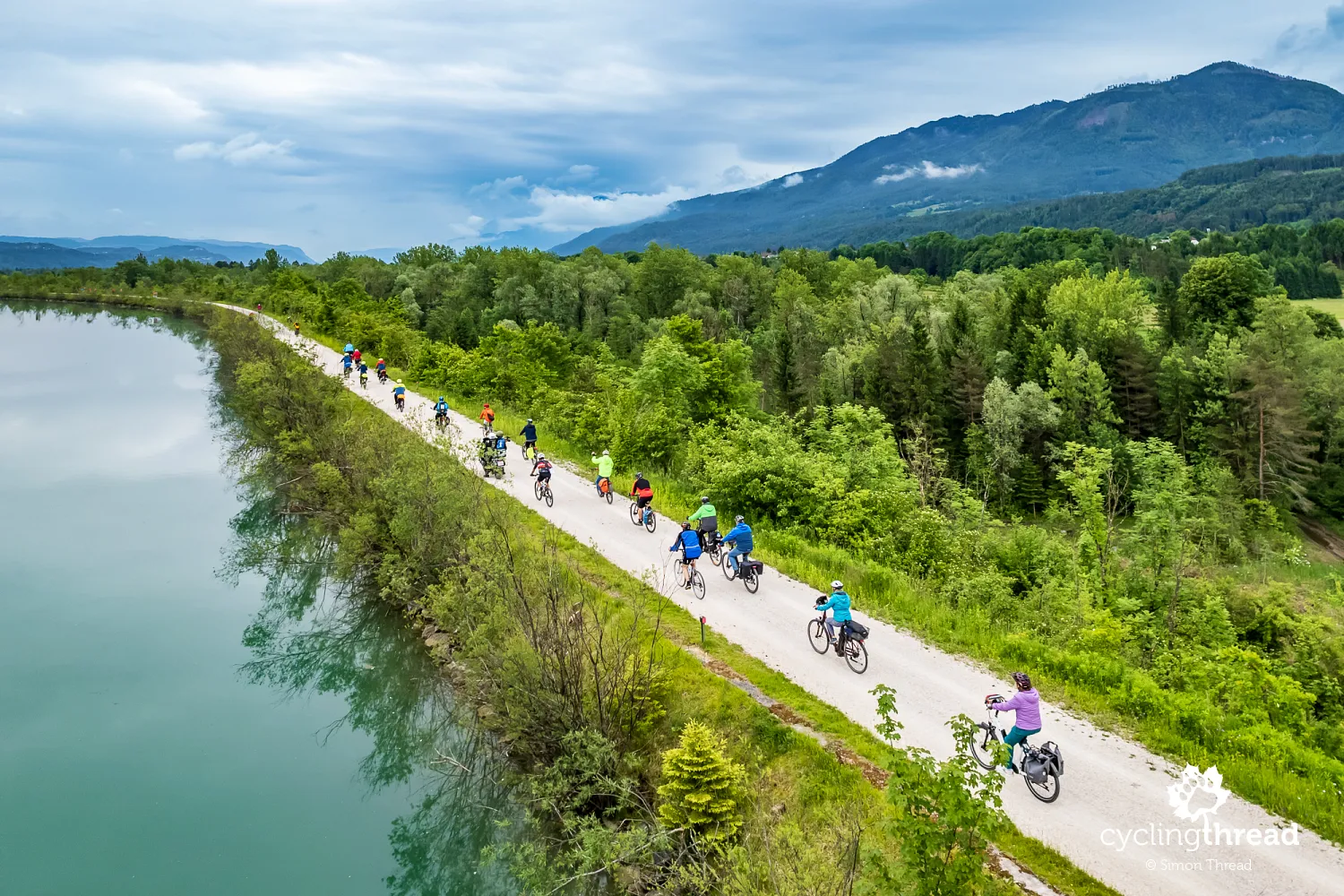
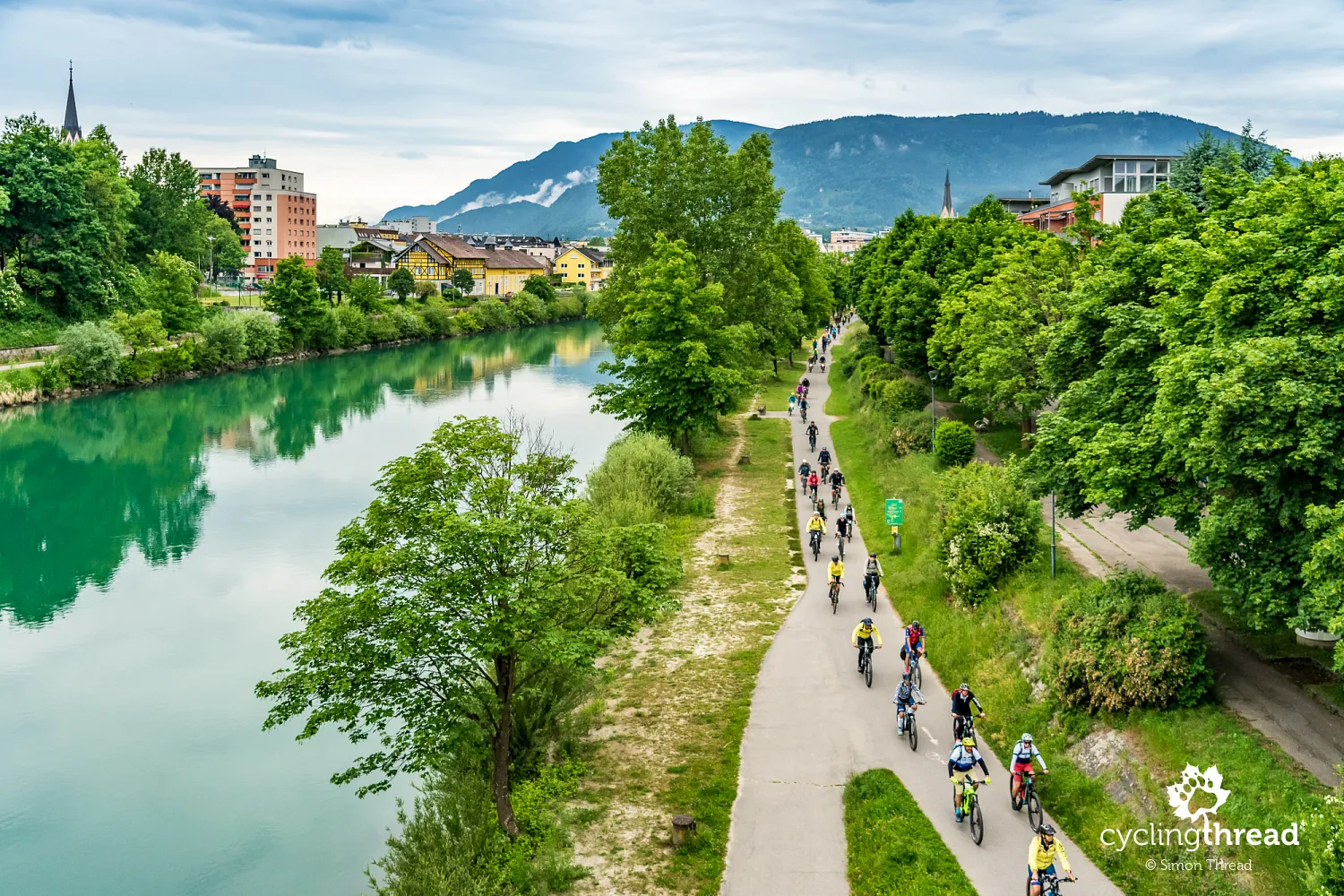
This section in the Drava Valley impressed us both when we rode it together on the Carinthian Lake Loop and when we followed the Drauradweg. The Velovista participants must have been just as delighted. The 400-strong peloton seemed endless, and riders kept smiling as I aimed my camera at them. The joy of cycling was contagious, and the enthusiasm was visible on every kilometre. Without a doubt, these few dozen kilometres along the Drava are among the most beautiful cycle route stretches in Europe. And even the slightly cloudy weather that day couldn’t take away the riders’ joy or the satisfaction of being part of such a special event.

Original information boards on the cycle route
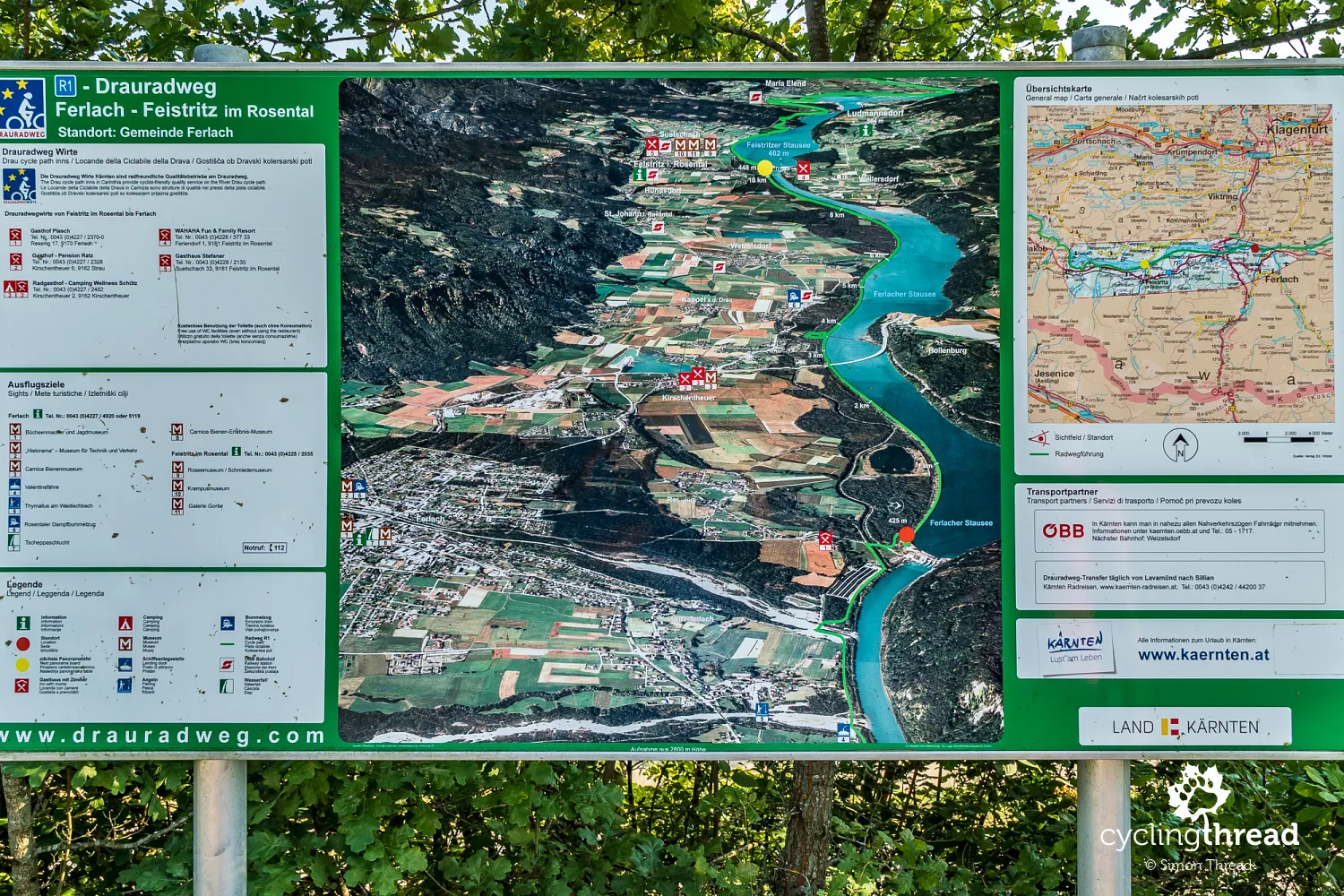
It was here that we noticed the unique information boards along the Drauradweg. Instead of a traditional topographic map, they use a satellite image that very clearly shows the route’s course. The cycle path along the river is marked in bright green, while white-and-red icons highlight places of interest for cycling tourists - from accommodation to attractions. On the left side of the board there is an organised list of these points, and the overall design makes it hard to imagine a clearer way to present the route. The only surprise was that the satellite images showed a section upstream, already covered by most cyclists who - in practice - tend to ride with the river’s flow.
Drava Cycle Route - five stars from the ADFC!
This is the perfect moment to recall that the Drava Cycle Route - Drauradweg - is one of the most popular cycle routes in Europe. Or even more - the German Cyclists’ Association (ADFC), which rates cycling routes across the continent, has awarded the Drauradweg the full five-star rating - the highest possible score, given to only four routes in all of Europe! So if you finish the Carinthian Lake Loop, the Drava would be an excellent next choice. The route begins beneath the Dolomites in Toblach (Dobbiaco) in South Tyrol, Italy, and ends near Varaždin in northern Croatia. In total it covers about 510 kilometres, most of it through the scenic valley framed by Austria’s Alpine landscapes.
Highly touristic scenery at Klopeiner See
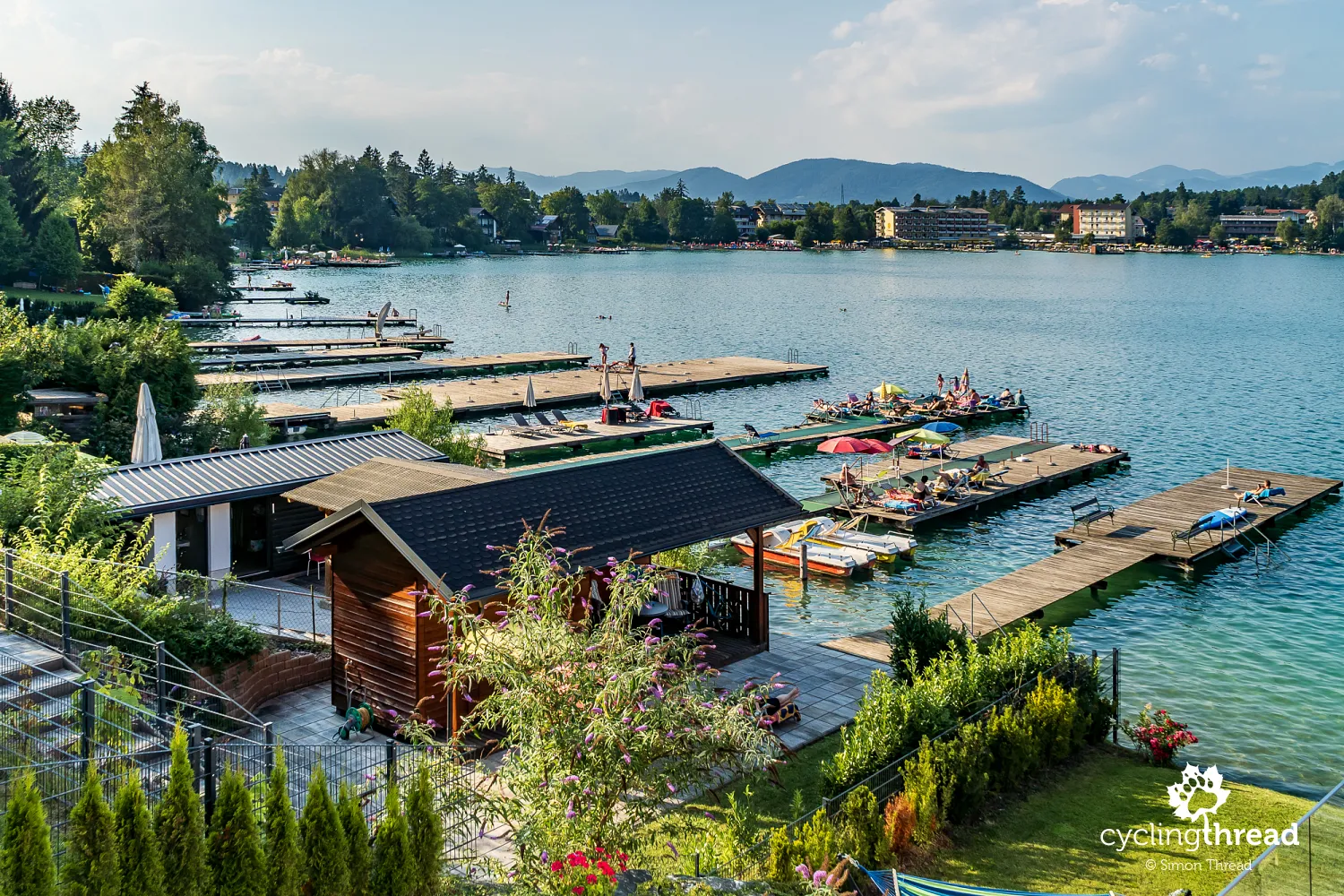
Klopeiner See is one of the warmest bathing lakes in Europe and a hub for water sports and summer recreation. The nearby town of Sankt Kanzian am Klopeiner See offers a wide range of activities: from stand-up paddleboarding, diving and windsurfing, to rowing, fitness classes, climbing, golf and thermal baths. What struck us most were the dozens of piers stretching into the lake's surface. It seems that almost every accommodation - from a small guesthouse to a large hotel - has its own bathing pier, creating a rather unusual and densely built-up shoreline. We have to admit this view didn’t entirely match our taste, although the cycle path encircling Klopeiner See was pleasant and well maintained.
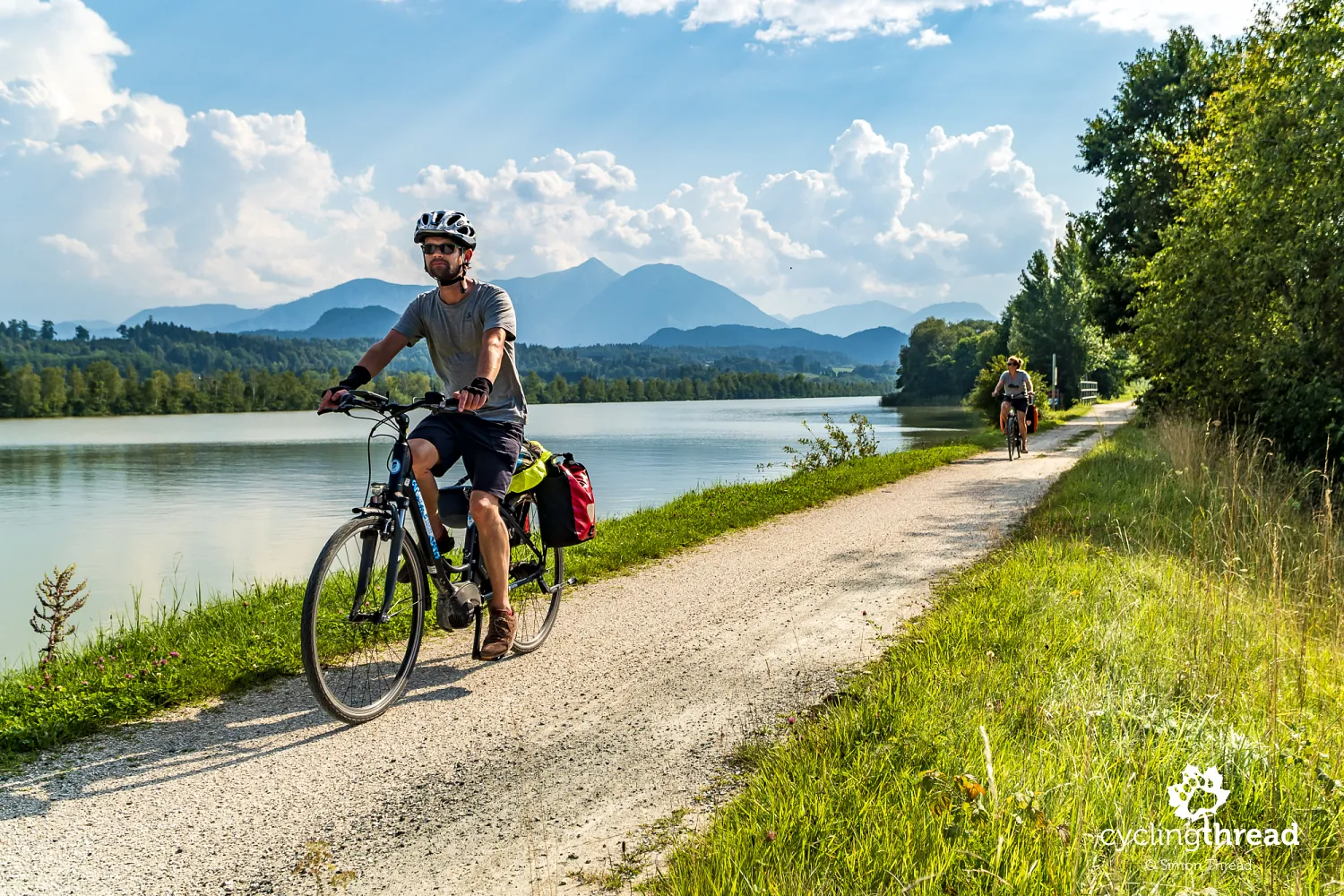
A long bridge takes us across the Völkermarkter Stausee - a reservoir created on the Drava by the construction of the Edling hydroelectric plant - whose calm waters spread picturesquely at the foot of the Saualpe hills, reflecting the silhouettes of forests and passing cyclists. This stage partly follows asphalt, partly gravel paths along the narrow crowns of flood embankments, passing quiet hamlets, fishing piers and small leisure marinas. After passing Grafenstein Castle, the route runs alongside the railway tracks for quite a while before finally bringing us into Klagenfurt.
Charming Alpine-Adriatic vibes in Klagenfurt
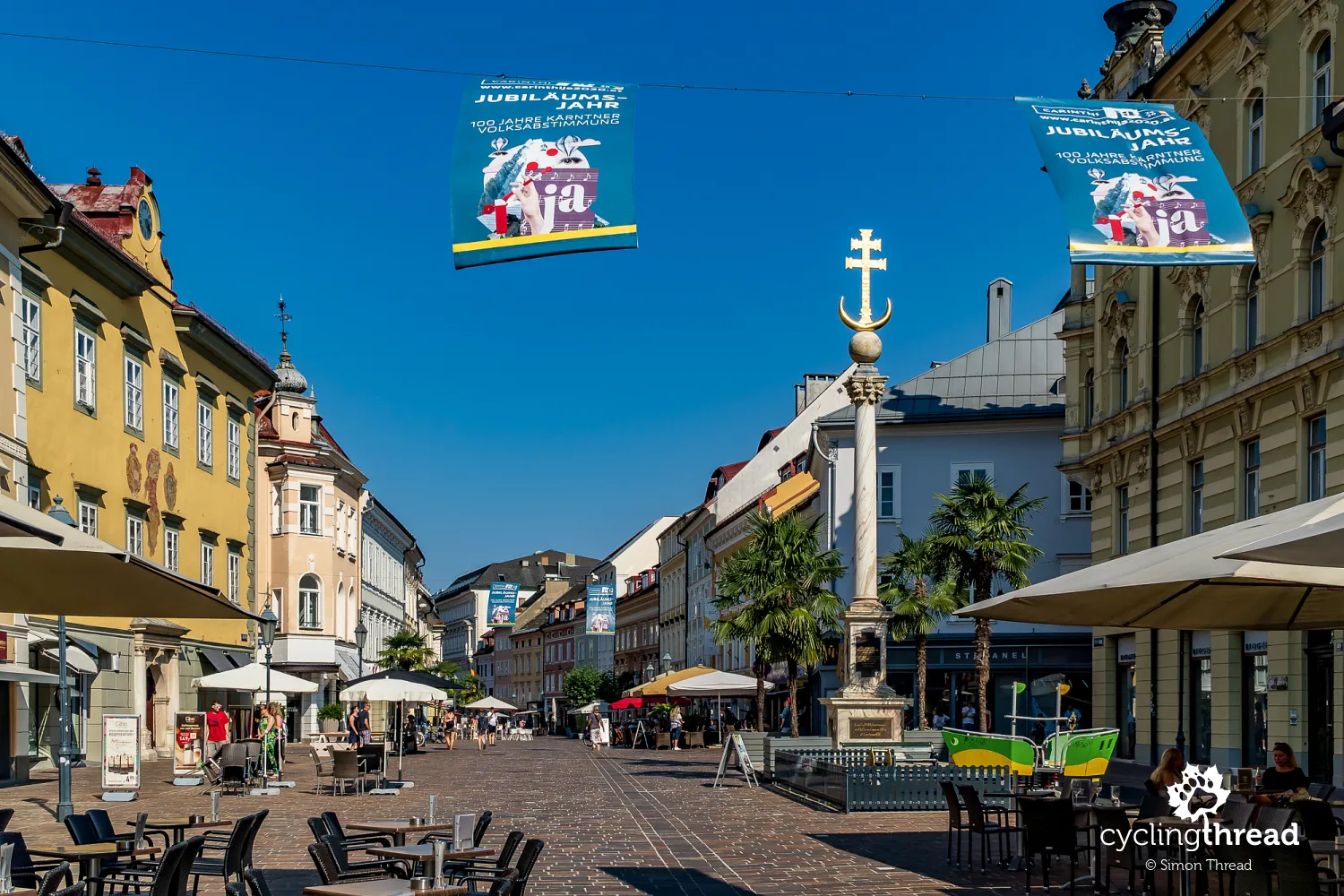
Klagenfurt am Wörthersee is the capital of Carinthia and the sixth largest city in Austria. It is known as a place where different cultures meet - you can hear the melodic dialect typical of the region, feel the southern atmosphere thanks to its proximity to Italy, and sense the love of celebration and openness influenced by neighbouring Slovenia. After the bustling promenades and bathing areas of Wörthersee, the city centre and Old Town welcome us with the pleasant hum of café terraces and strolling pedestrians. We leave the bikes at the hotel and wander through narrow streets, easily finding free tables in restaurants. Here we hope to experience the promised Alpine-Adriatic blend of flavours, combining Austrian, Italian and Slovenian cuisine into one herb-scented, sun-filled culinary adventure.
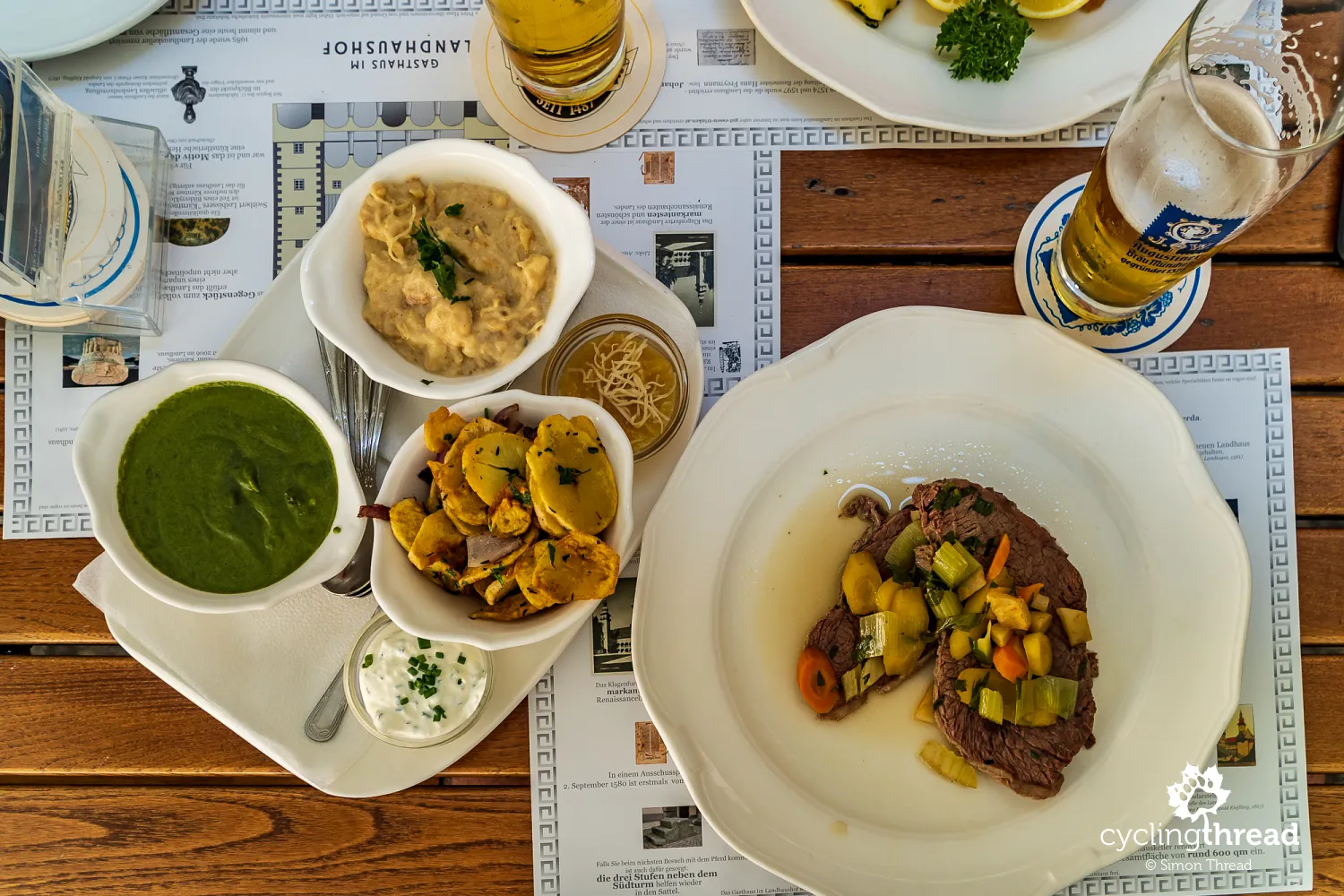
One of the restaurants we find is in the courtyard of the Landhaus - one of the city's most important buildings. This is the seat of the Landtag, the parliament of Carinthia, built in the 16th century as a fortified structure. We sit in a shaded garden protected by the Landhaus towers, and while waiting for the waiter, we take in the surroundings of a place where decisions about the entire region have been made for nearly 500 years. The Carinthian parliament passes regional laws, elects the governor and delegates to the Federal Council - Austria’s Bundesrat. We are sitting where Carinthian officials have rested for centuries, and just a few steps away you can see preserved stone steps that once helped riders mount their horses.
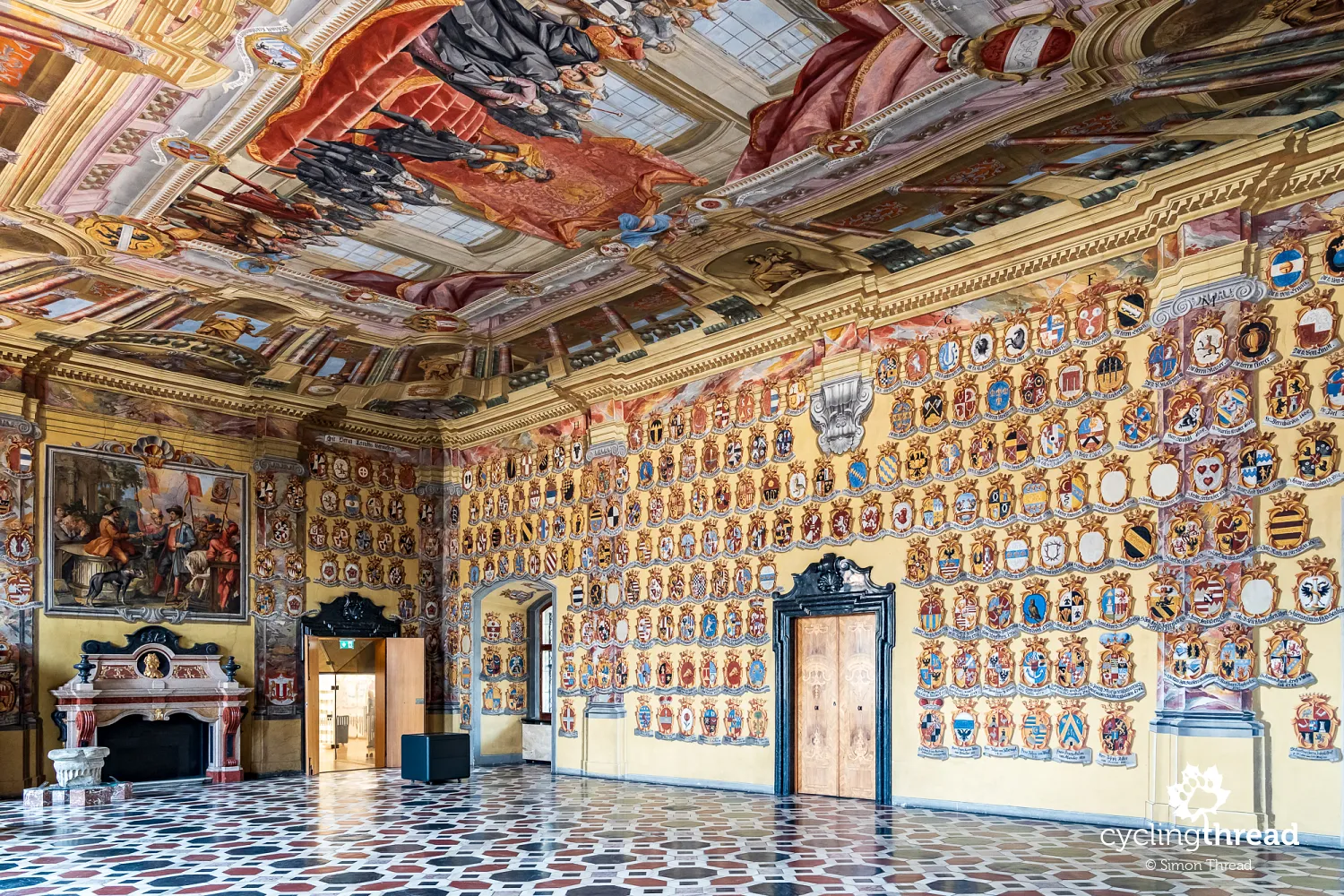
While waiting for our meal, it’s worth climbing the stone stairs to the first floor of the Landhaus to visit the Wappensaal. This is one of Carinthia’s most important ceremonial halls, famous for its richly decorated interior and exceptional heraldic display. On its walls are over 650 coats of arms of the region’s former noble families, forming an impressive painted chronicle of Carinthia’s history. Regarded as one of the most beautiful halls of its kind in Europe, it delights history lovers and captivates anyone who appreciates the craftsmanship of past masters. It’s also worth looking up: the ceiling is adorned with allegories of civic virtues that have shaped the idea of responsible community life for centuries.
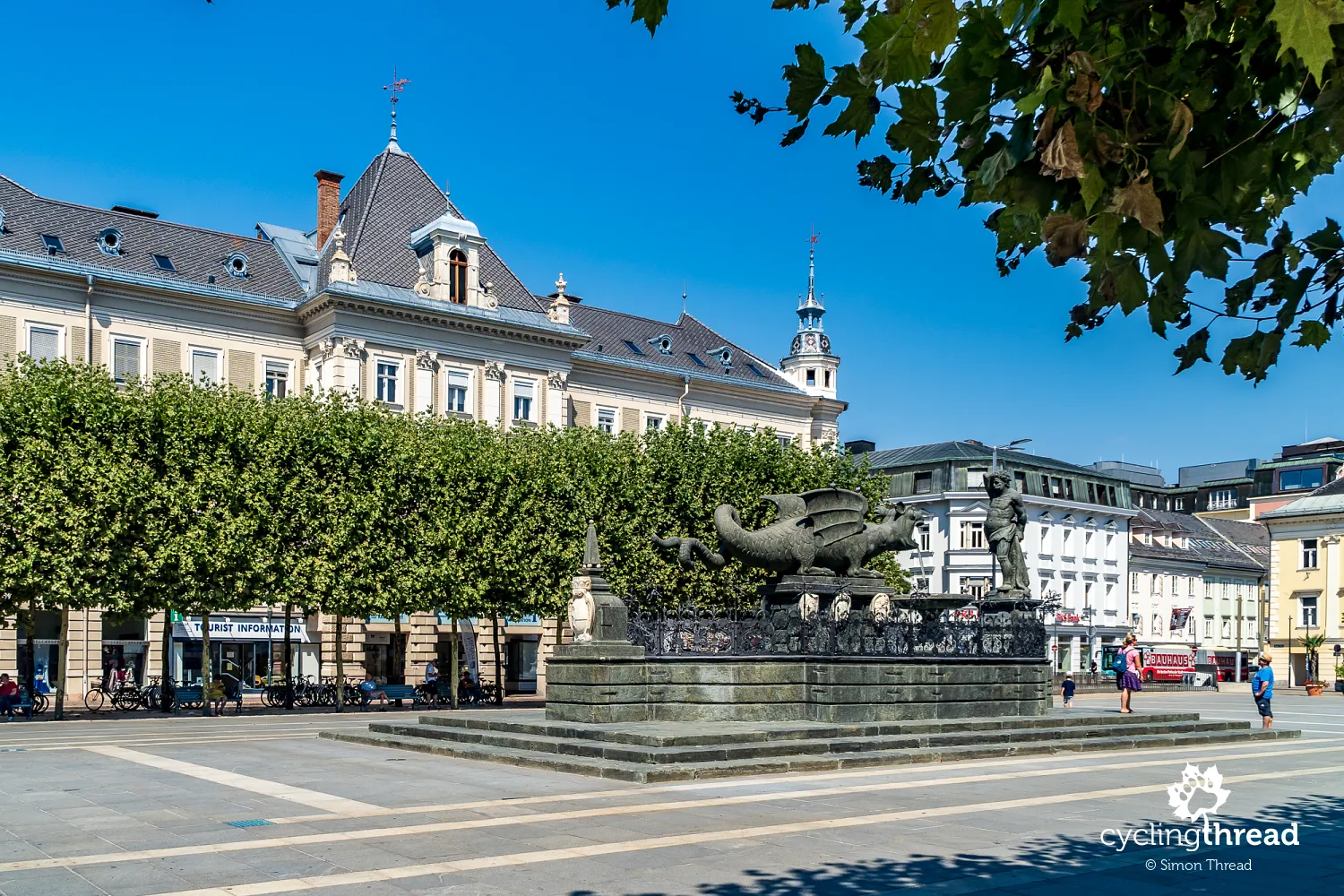
Klagenfurt is definitely not a city for just a short stop on your route. To leave with the feeling that you have truly experienced it, you should spend at least a full day here. Must-see highlights include the two main squares: Alter Platz with the Old Town Hall, and Neuer Platz, home to the New Town Hall and the famous Lindwurm Fountain - the mythical dragon that is the city’s symbol. The sculpture was created in the late 16th century, and in the following century was joined by a statue of Hercules holding a serpent - together they form Klagenfurt’s most recognisable monument. Another landmark worth visiting is the Cathedral of St Peter and St Paul, an impressive Baroque church that was once a Jesuit church and today serves as the main cathedral of the Diocese of Gurk-Klagenfurt.
Over 150 miniature buildings from around the world
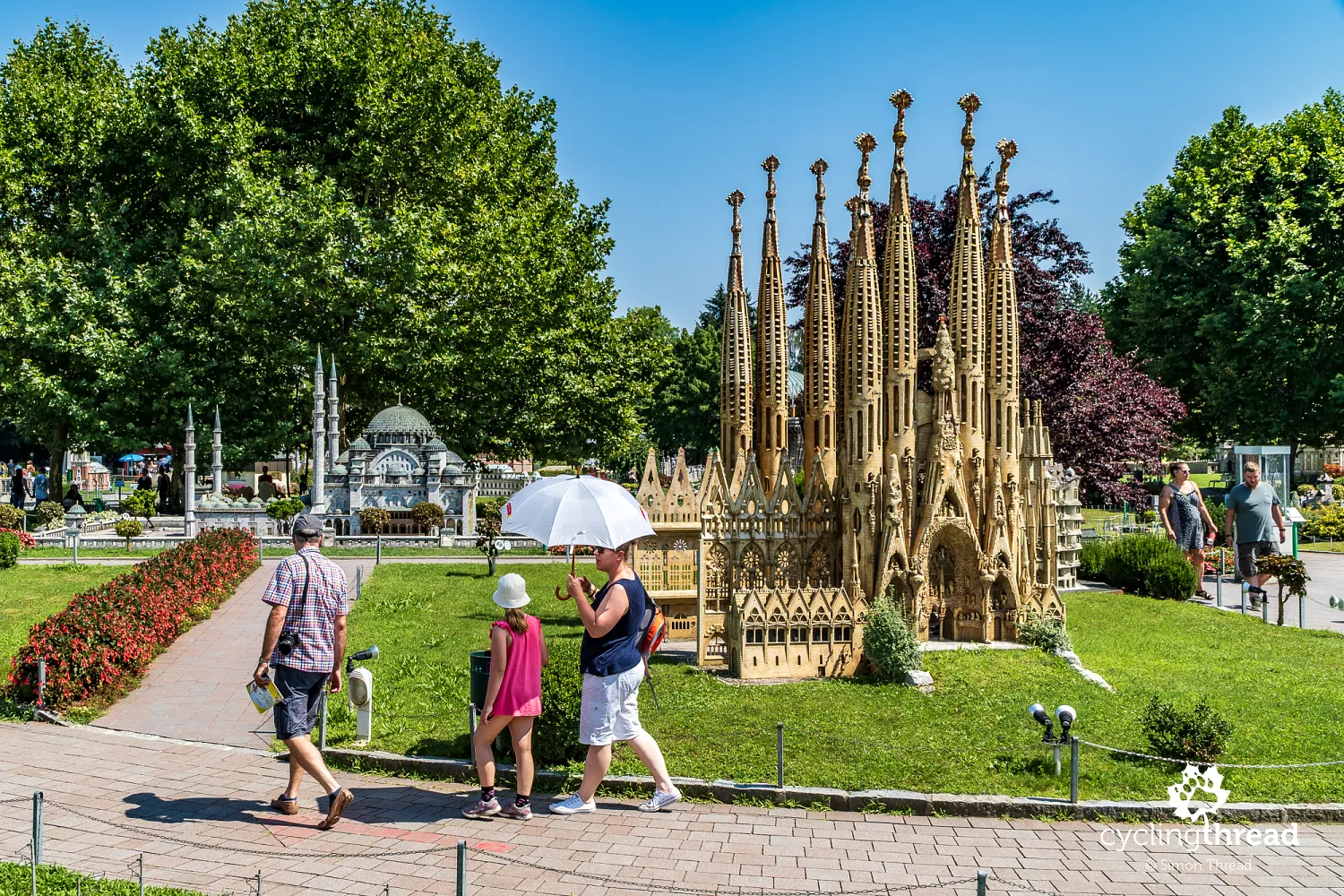
Visitors to Klagenfurt are also encouraged to explore attractions of a lighter, more entertaining nature. The most famous of these is Minimundus - a park of miniature buildings from around the globe. It’s worth noting that this is not just another of the many similar attractions you might find elsewhere. Minimundus is one of the pioneers of this kind of 'world tour' - it opened as early as 1959, and just eight years later had already welcomed its first million visitors. It began with 20 models, and today it showcases 159 buildings from 40 countries - all carefully crafted at a scale of 1:25, often using original materials. One example is the model of the space shuttle Atlantis from NASA’s Kennedy Space Center at Cape Canaveral, which at set times 'launches' to the sound of authentic mission audio.
After a day in Klagenfurt, the Carinthian Lake Loop takes us north into the valley of the River Glan - a section added to the route only recently. At first, the path runs along the valley floor, right by the river, using local asphalt cycle paths and gravel stretches. This part of the valley is quiet and less frequented, allowing you to fully enjoy the surrounding scenery. After reaching Hochosterwitz Castle and the town of Sankt Veit an der Glan, the route turns back towards Lake Wörthersee, leading through the hills that run parallel to the valley. At this stage, however, the standout feature is less the route itself and more the unique character of the places the Carinthian Lake Loop takes you to.
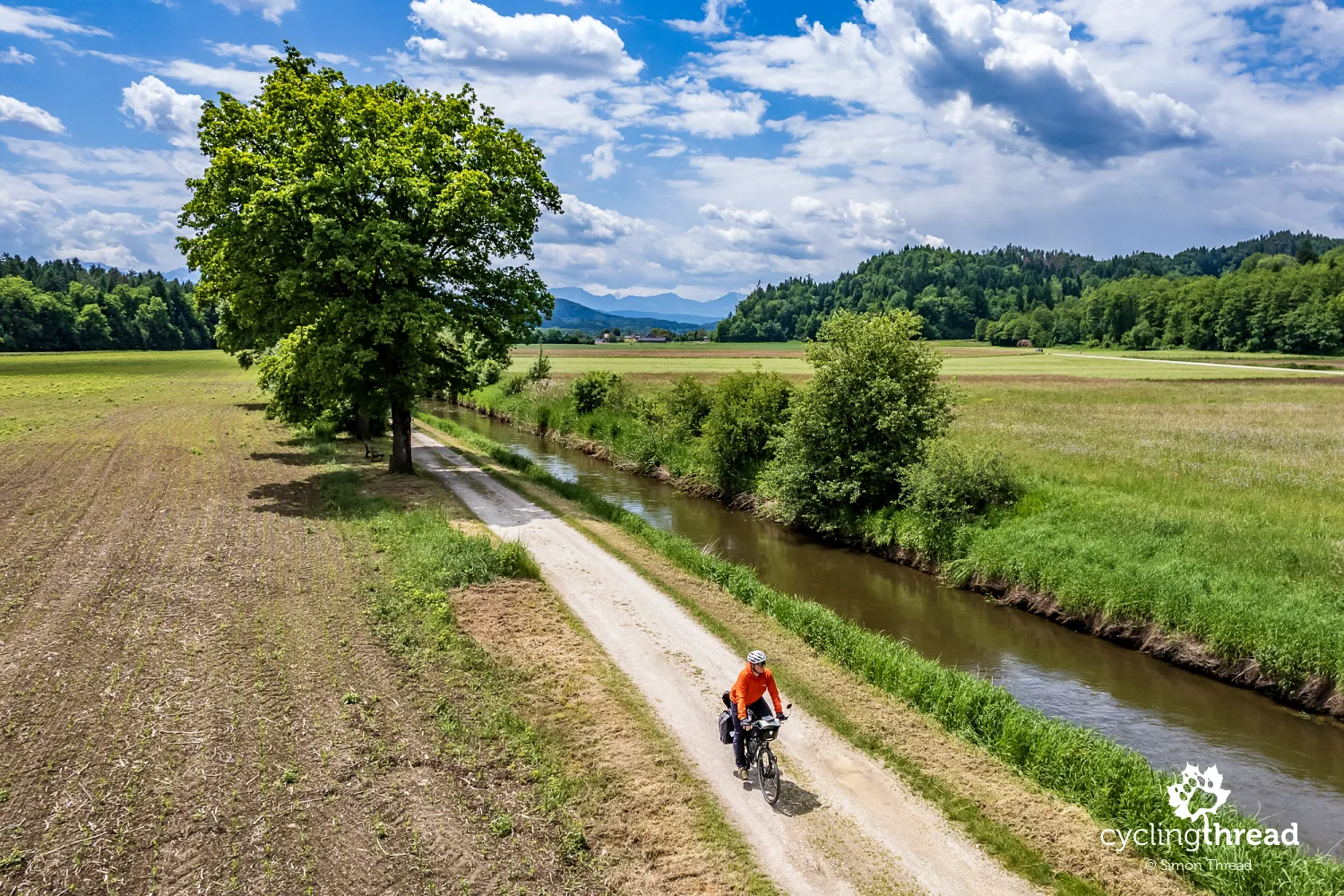
Maria Saal, an important pilgrimage site
First, about a kilometre off the route, you reach Maria Saal - a small village with an impressive collegiate church standing on a hill, visible from afar thanks to its two massive towers. This is one of the most important pilgrimage sites in Carinthia, and the silence around the church gives it the atmosphere of a true sanctuary. The stone tombstones surrounding it bear witness to the site’s centuries-old history and invite a moment of reflection. It’s also worth visiting the small parish museum, which houses historic liturgical vestments and sacred objects. Heading back down to the route in the Glan Valley, we pass an open-air museum - an ethnographic park with traditional buildings that transport visitors back to the days of rural life in the region.

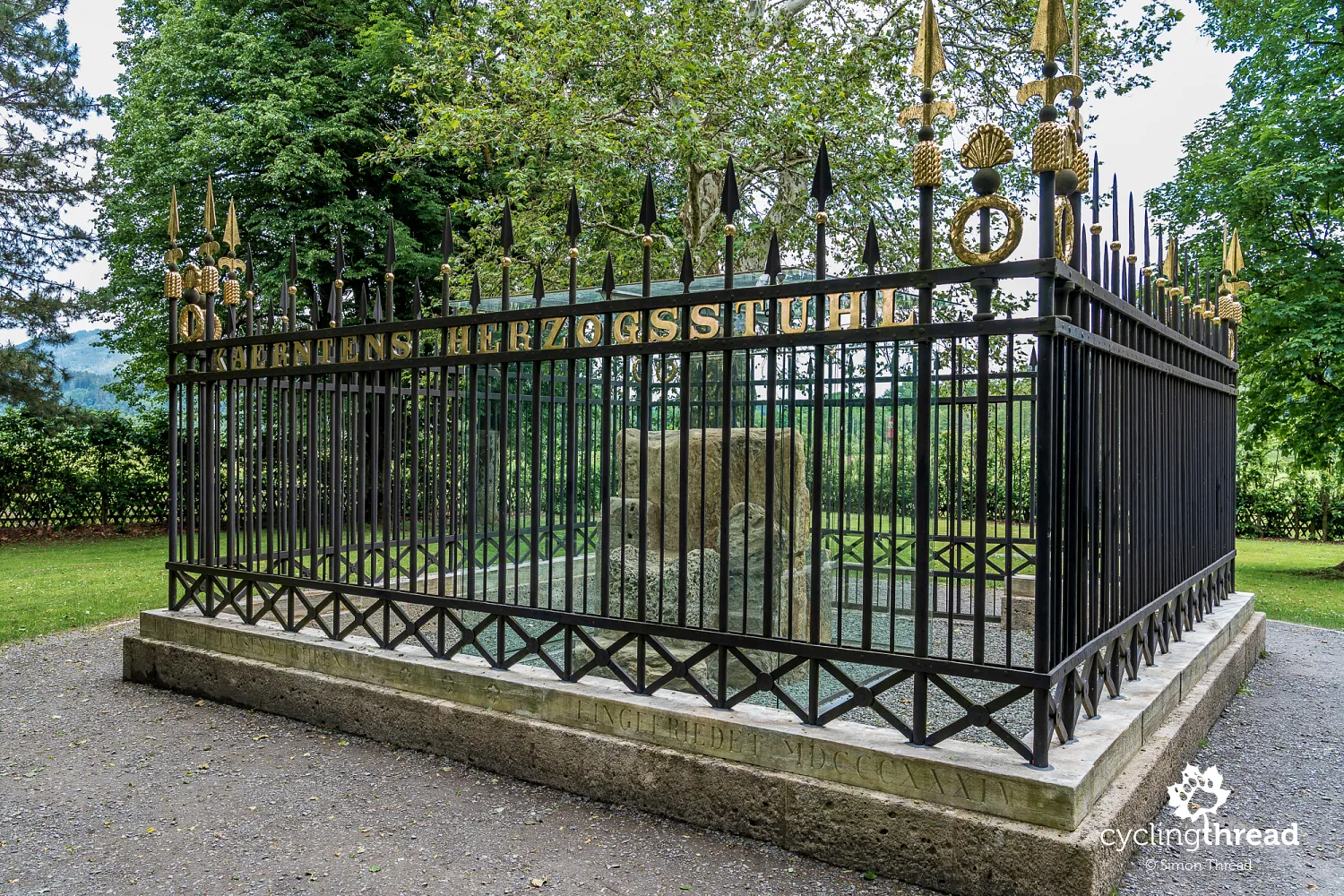
Duke's Chair - symbolic landmark of Carinthia
Just beyond Maria Saal, a few minutes' ride past the Carinthian Open-Air Museum in Maria Saal, you'll find one of Carinthia's most symbolic landmarks - the Duke's Chair. This centuries-old double throne, carved from stone, once played a central role in the installation of Carinthian dukes. The lower seat, made from ancient Roman stones, was used for the first part of the ceremony, conducted in the local Slovene dialect, while the upper seat marked the duke's official enthronement in German. Today, the chair stands quietly in a field right next to the route, with views over the surrounding hills, a reminder of the region's layered history where Roman heritage, medieval traditions and bilingual culture meet. It's an unassuming yet powerful spot - easy to reach by bike!
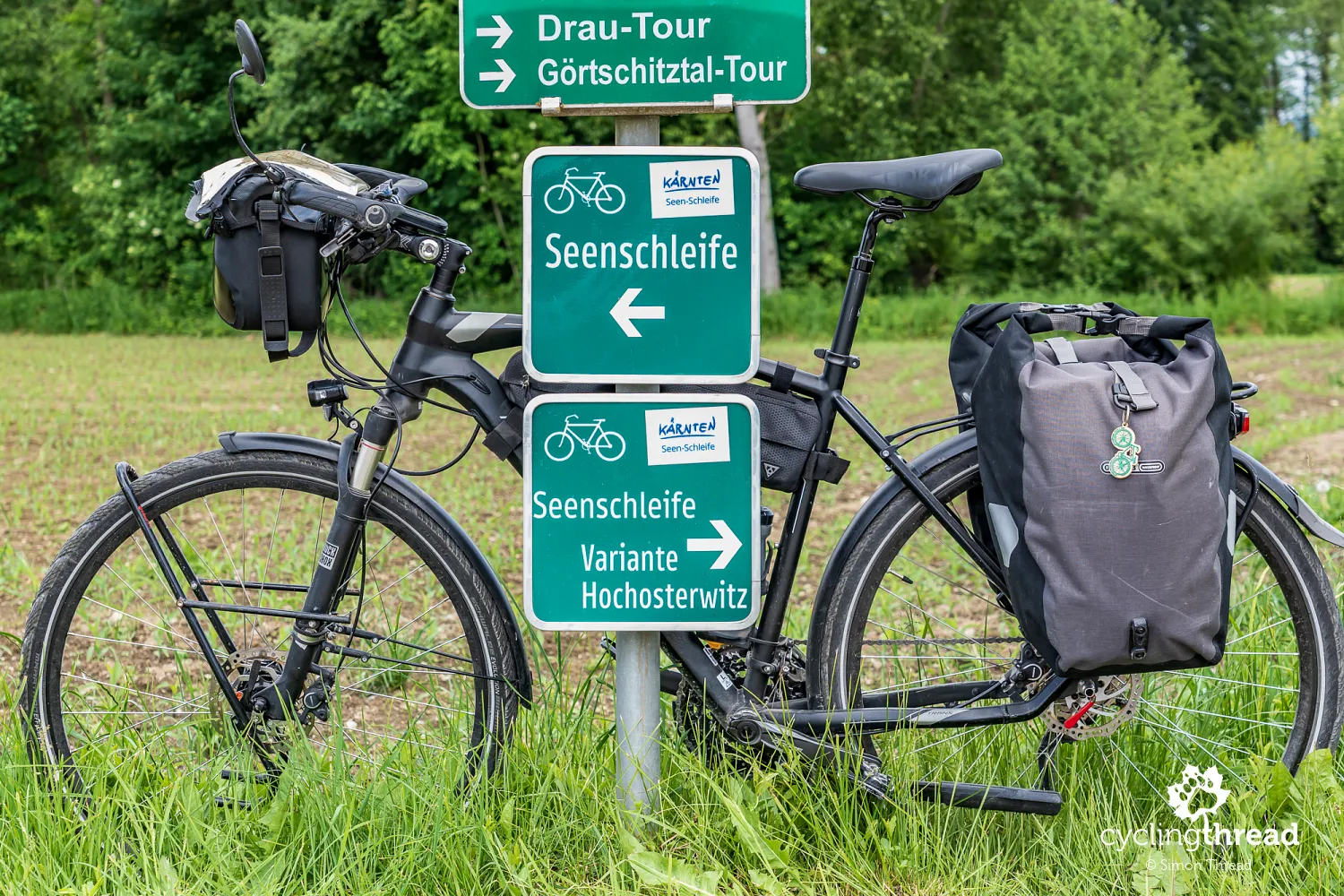
One of the most impressive fortresses
After another dozen or so kilometres, at the end of a long but gentle climb, it’s worth noticing a cycle sign pointing to an alternative variant of the Carinthian Lake Loop. The route turns right here, leading towards the remarkable Hochosterwitz Castle - without a doubt one of the most impressive medieval fortresses I have ever seen. Although the final stretch follows a fairly busy road, it’s less than a kilometre to reach a spot with an excellent view of the castle in its picturesque setting and to feel the atmosphere of history that still hangs over this place.
Hochosterwitz Castle stands on a solitary limestone hill that rises almost vertically above the valley, offering spectacular views over the entire area. From afar, the fortress’s silhouette resembles something out of a fairytale, while the winding road leading up to it passes through no fewer than fourteen successive defensive gates - each one a separate layer of medieval fortifications, designed to make the castle as hard to conquer as possible. The site’s origins date back to the 9th century, while its present appearance is the result of a Renaissance reconstruction in the 16th century by the Khevenhüllers - one of Carinthia’s most prominent aristocratic families. Even from a distance, Hochosterwitz radiates a sense of medieval romance - there is something about its outline that stirs the imagination and transports you into the world of knightly legends.
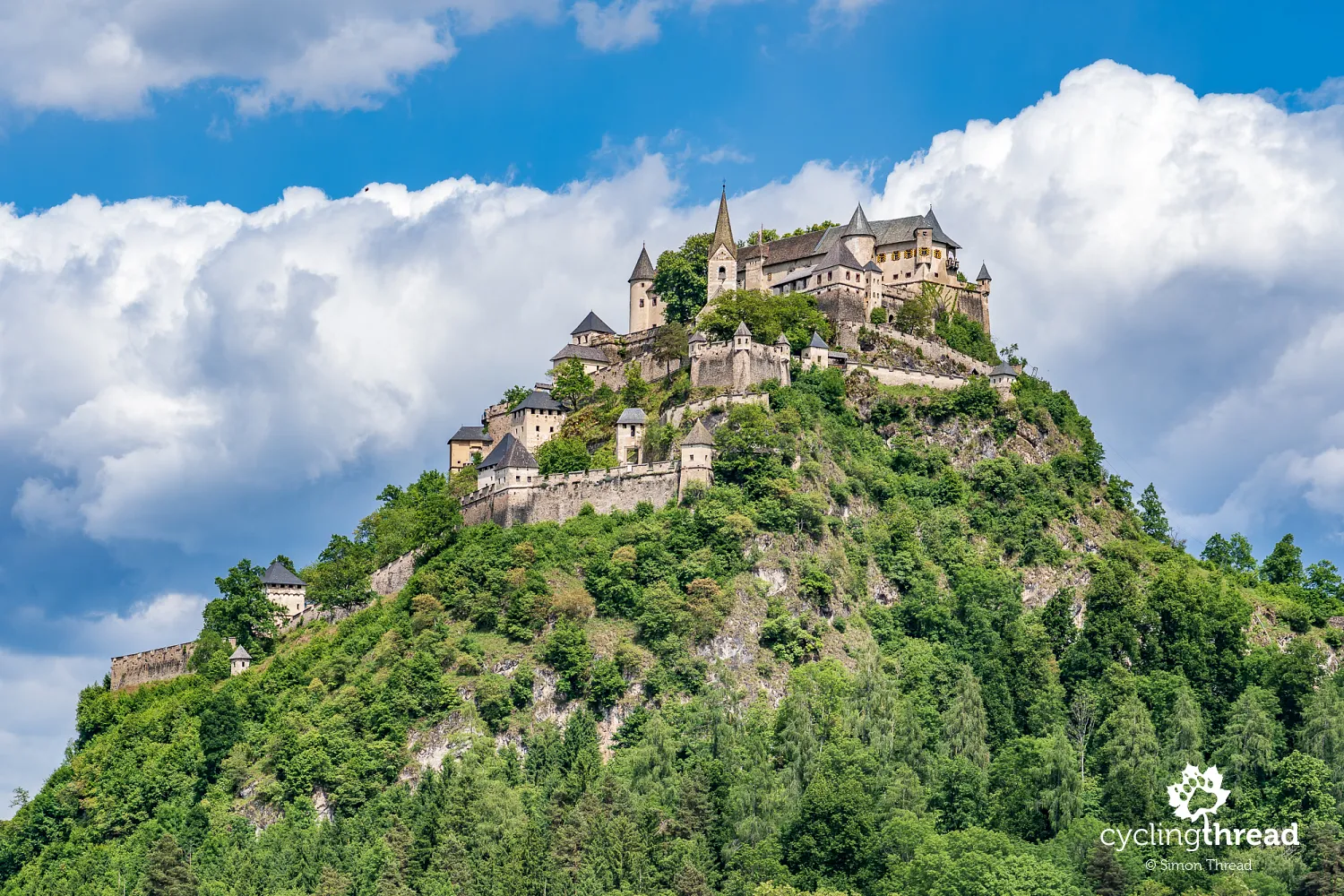
The castle is still owned by descendants of the Khevenhüller family and is one of the few private fortresses in Austria open to visitors. Inside, there is a small museum with a collection of old armour, weapons and everyday objects that help you better understand life in the castle in past centuries. According to legend, the fortress was never captured, and its system of fourteen gates was enough to deter invaders - though in practice, it was never put to the test. Hochosterwitz continues to inspire artists and filmmakers, and its distinctive silhouette often appears on paintings, postcards and promotional material for Carinthia. It is one of the most beautiful sights along the entire Carinthian Lake Loop.
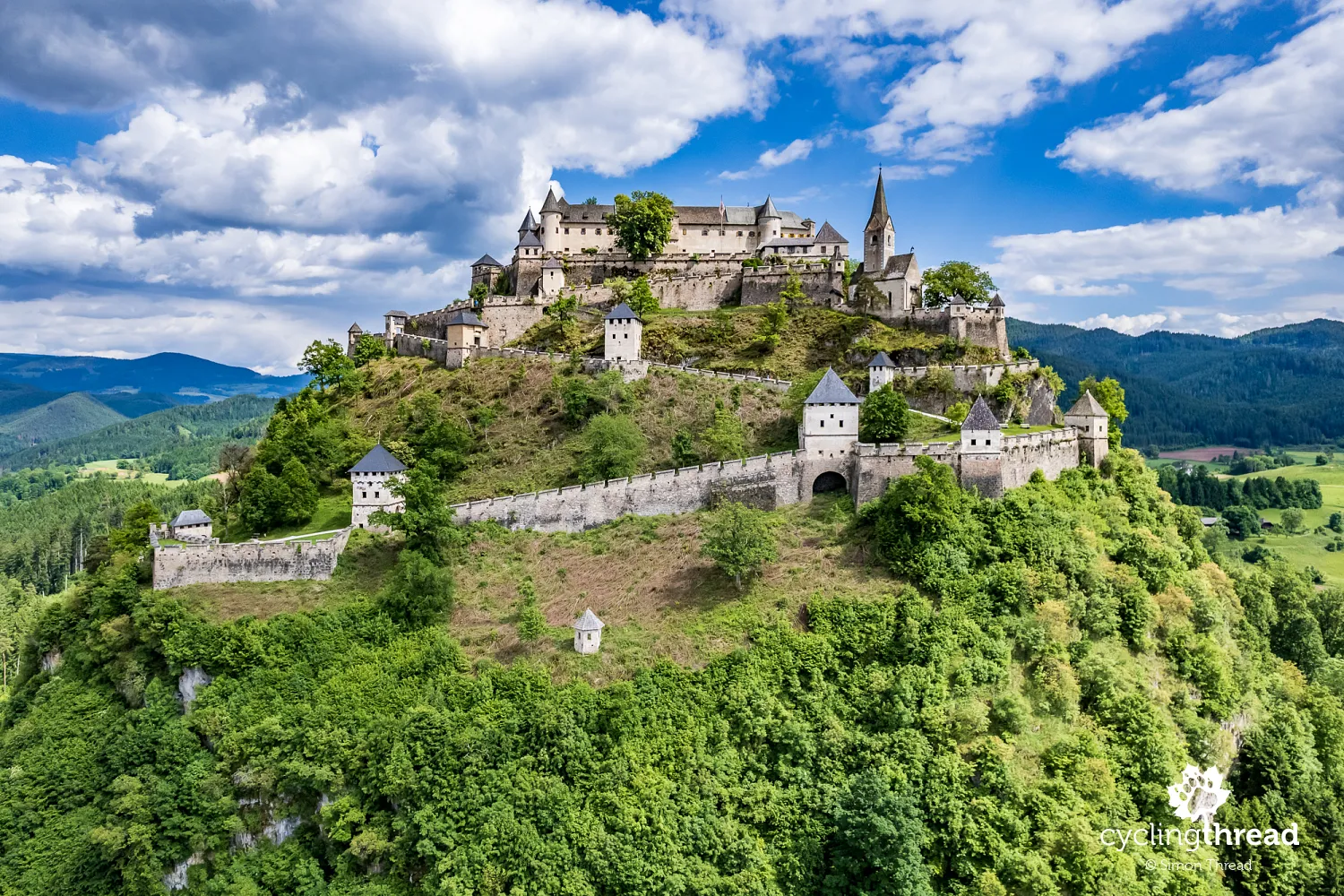
Another beautiful sight in Carinthia
But the Glan Valley has more to impress than just its medieval castles. After a few kilometres of riding and circling another Carinthian lake, Längsee, I arrive at a place that immediately makes it onto my personal list of the most beautiful - this time in the “vineyards” category. It’s Taggenbrunn - a vineyard set on gentle, south-facing slopes in Sankt Veit an der Glan, framed by a panoramic view of the valley and surrounding mountains. Rows of vines stretch around the ruins of Taggenbrunn Castle, and the lively complex combines a boutique hotel, an elegant restaurant, an exhibition space and a modern winery. It’s a very original stop on the Carinthian Lake Loop - a place where nature meets art in a deeply sensory way.
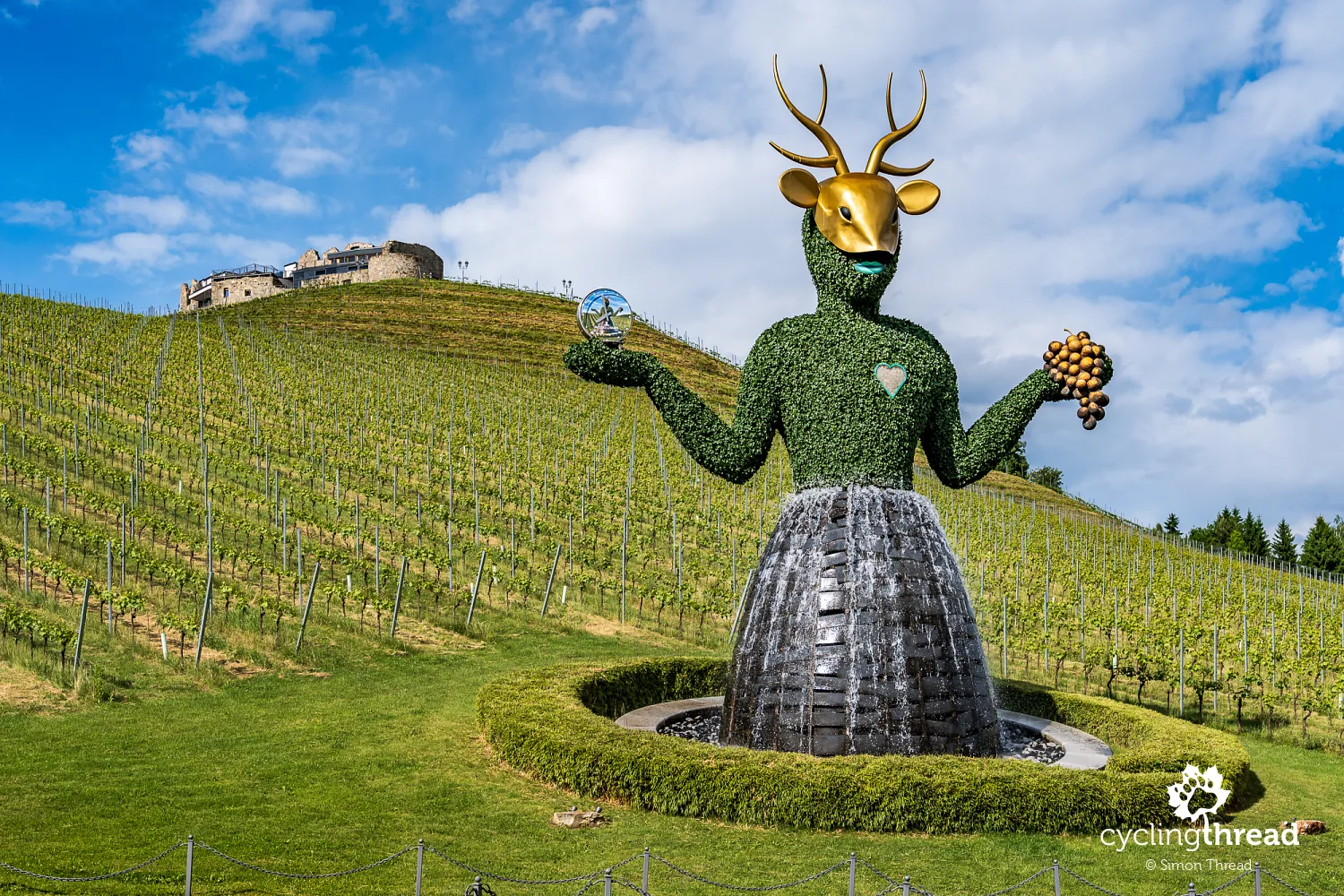
The vineyard covers around 45 hectares and has undergone an impressive transformation since being taken over by the Riedl family - owners of the Jacques Lemans watch brand. The castle and its surroundings have been turned into a space where sustainable farming, culture and design form a harmonious whole. The vines grow on terraced slopes, giving them ideal sun exposure and access to minerals. One striking feature is a monumental sculpture - a several-metre-high figure with raw, natural shapes, reminiscent of an ancient totem or a guardian of time. Created by Austrian artist André Heller, it not only adorns the landscape but also symbolically underlines the connection between the place, the passage of time, the cycles of nature and culture. The statue towers over the rows of vines like a silent observer of the changes unfolding in both the land and the people.
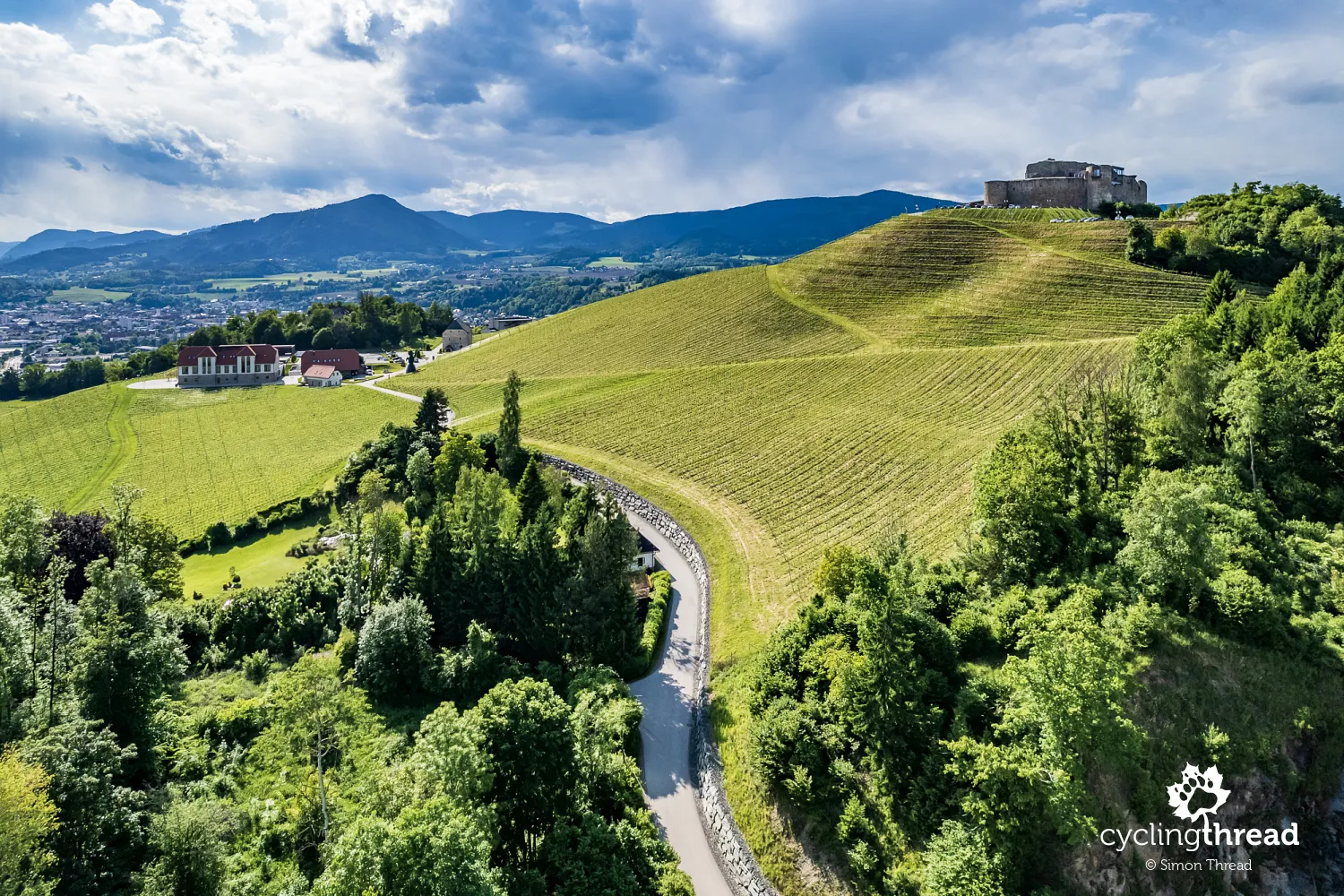
Sankt Veit an der Glan as a turning point
After a quick descent on a narrow road, the Carinthian Lake Loop enters Sankt Veit an der Glan - the main town in this part of the valley and one of the oldest in Carinthia. As early as the Middle Ages, it served as the seat of the Carinthian dukes, and its long, rich history is still visible in the historic buildings of the centre. The charming main square is framed by pastel-coloured townhouses and elegant arcades, with its heart being the magnificent Baroque town hall, which still hosts much of the city’s cultural life. Sankt Veit invites you to stop for a while - for a meal, a stroll, or simply to soak up its calm, welcoming atmosphere.
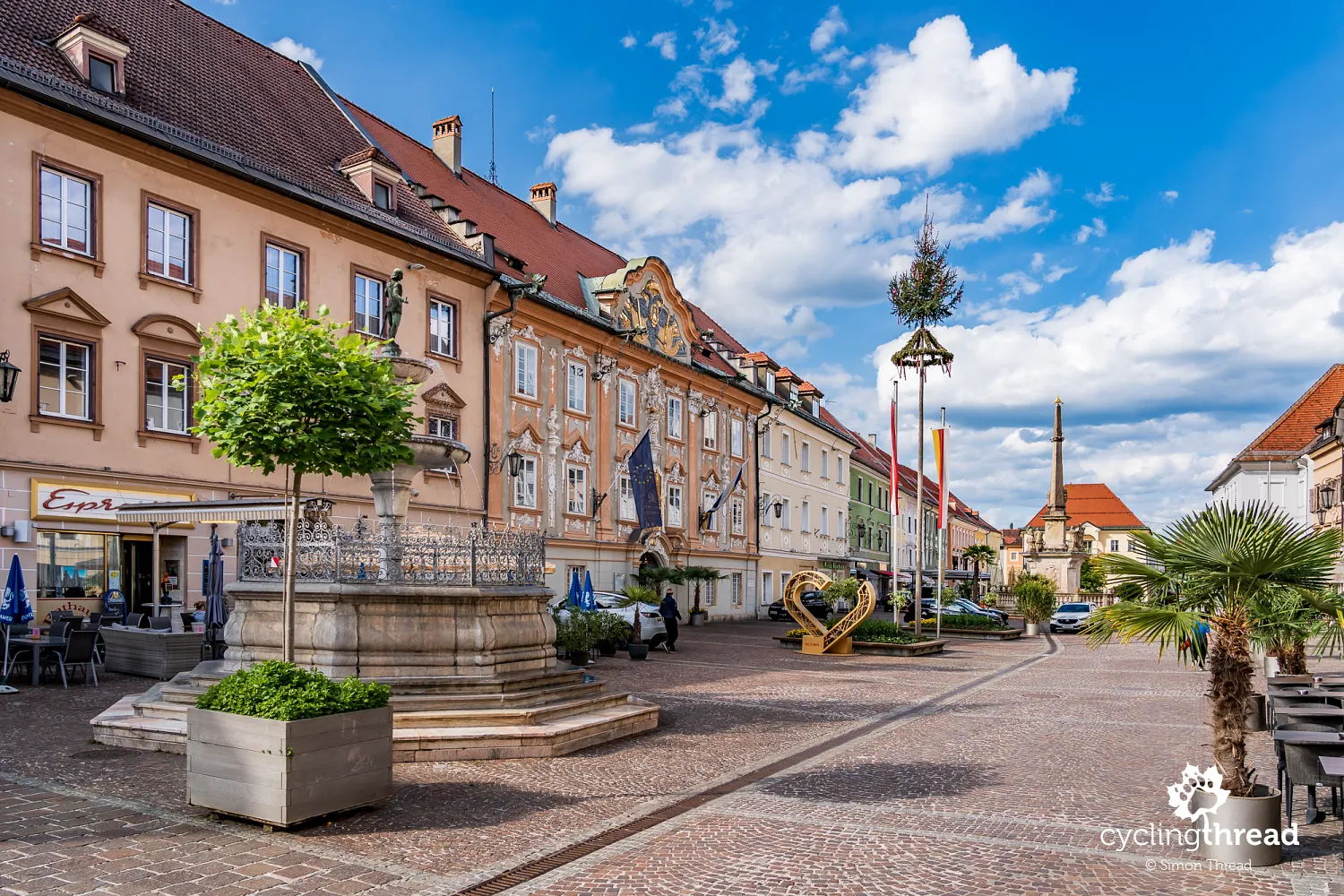
And if you’re lucky enough to catch a rehearsal of the town choir in one of the ceremonial halls of the town hall - as happened to me - your day of cycling will end on a truly magical note. The sound of Carinthian singing filling the historic interior created an unforgettable atmosphere. The town hall, with its intricately decorated façade and elegant period interior, impresses not only with its architecture but also with the fact that it still pulses with life - as a venue for meetings, concerts and city events. It was hard to leave - the place, and the moment.

Wörthersee - a surprisingly less enjoyable ride
The next lake in Carinthia - Wörthersee, the largest body of water in the region - left us with mixed feelings, as its attractiveness and popularity don’t necessarily match its appeal for cyclists. Riding along Wörthersee reminded us of Switzerland and cycling the southern shore of Lake Constance on the Rhine Route. As there, we enjoyed the beautiful weather, the lake’s scenic location and a few interesting spots along the way, yet the cycling experience around Wörthersee couldn’t compare to the almost perfect Weißensee. Towns along the shoreline form an almost unbroken stretch of buildings, and the accompanying cycling infrastructure was rather average - sometimes running alongside a busy road, at other times right next to the railway, and elsewhere through built-up urban areas.
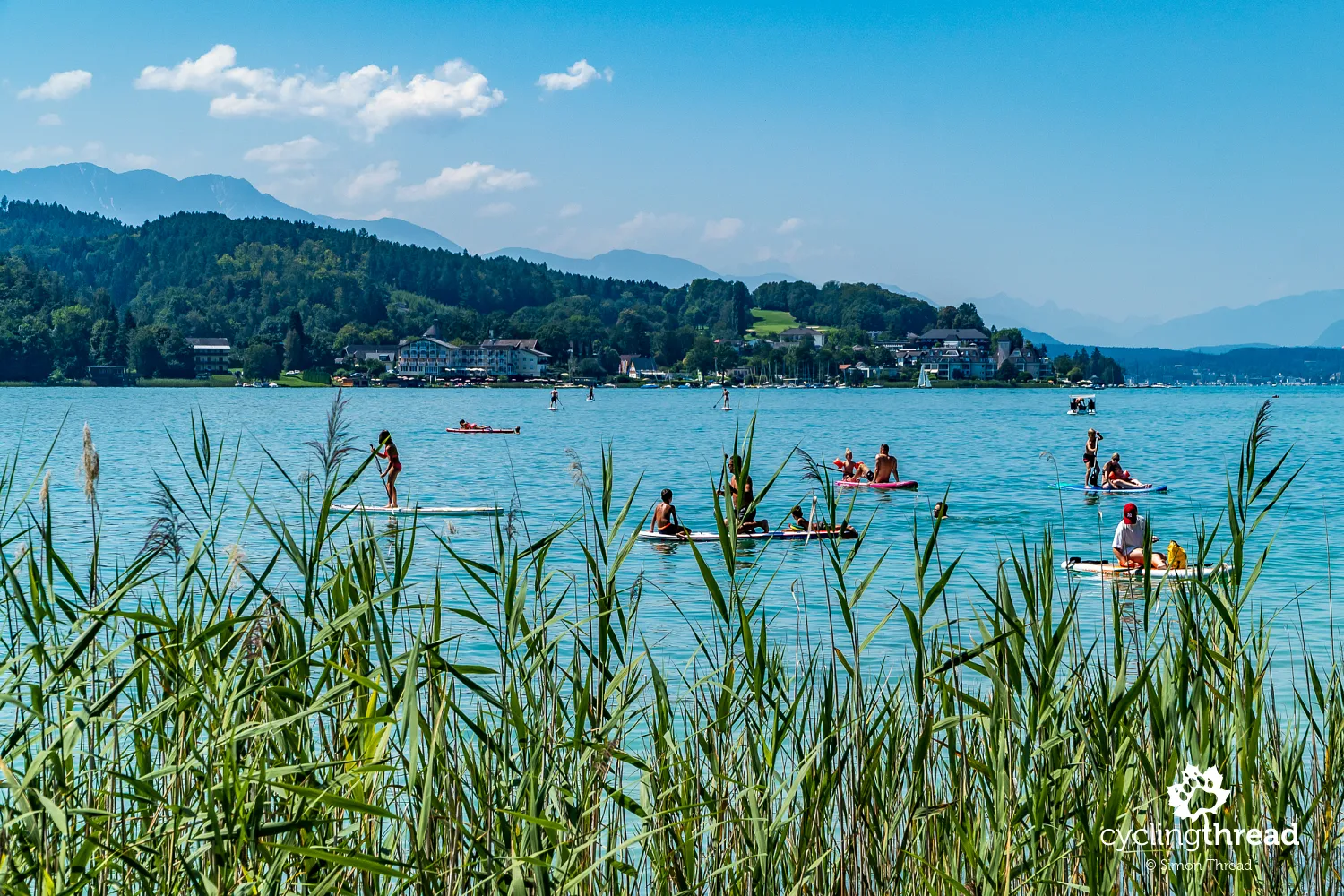
The atmosphere around the lake - intensified by the heat and blazing sun - brought to mind the south of Europe. We immediately recalled sweltering Emilia-Romagna, which we cycled through a few years earlier. Pörtschach fit perfectly into this mood - a small town with charming lakeside villas and little castles, and even a pier for the lake’s paddle steamer. Velden am Wörthersee had a similar feel - an elegant spa town at the western end of Wörthersee. It’s worth heading into its centre to see Velden Castle - one of the most recognisable landmarks on the lake, beautifully set close to the water’s edge.

Welcoming Villach ends the cycling journey
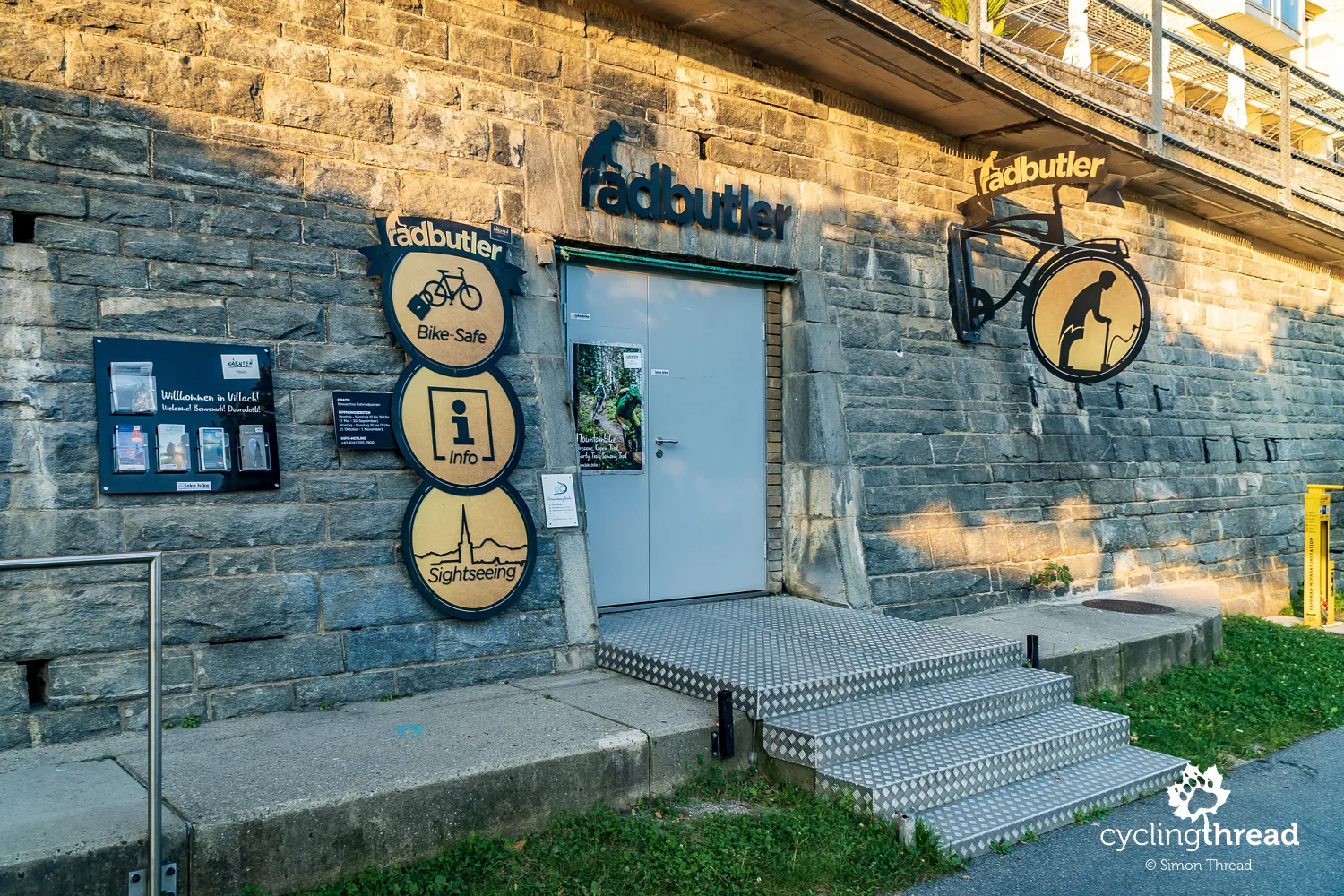
Charming Villach both started and finished our latest cycling trip along Austria’s cycle routes. One of the city’s most telling signs of its warm attitude towards cyclists is the Radbutler - the ‘bike butler’, a spot by the Drava where you can leave your bike and luggage for free while you explore the city or stay overnight. Facilities like this help build the image of a truly cycle-friendly city - and Villach seems to play that role perfectly. We remembered Bahnhofstraße, which turns into the friendly, wide pedestrian Hauptplatz stretching from the Drava bridge all the way to the town hall and St James parish church, from our ride across the Alps eight years ago. After arriving in the city, we took a short spin around the centre, found our hotel, and the next day set off on our journey home.
A farewell view over favourite Carinthia
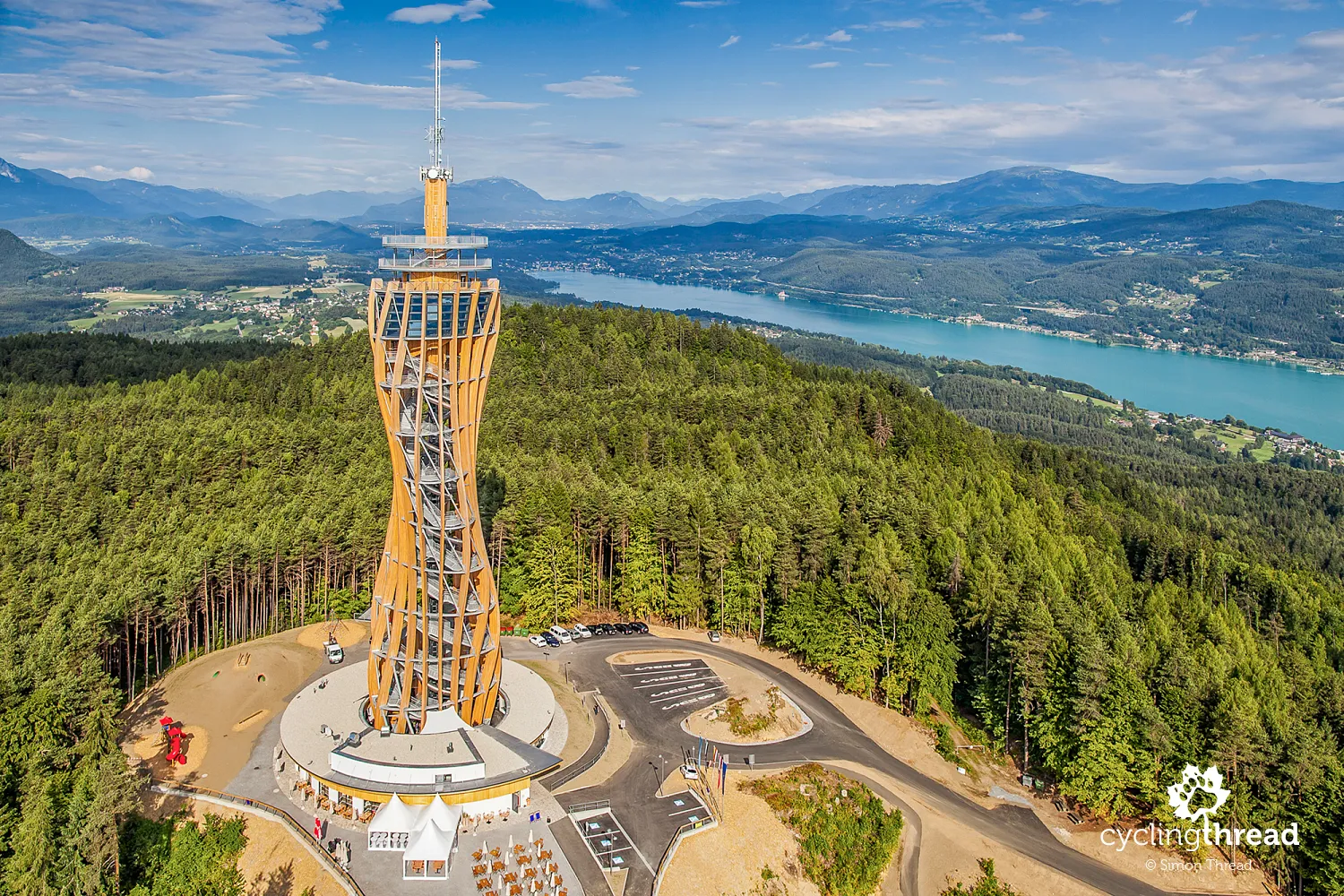
Just before leaving Carinthia, we made a stop at the Pyramidenkogel observation tower, beautifully located between Villach and Klagenfurt. Visiting Pyramidenkogel is a great idea both for starting a cycling adventure in Carinthia and for giving it a spectacular finale. From the 100-metre-high structure - the tallest wooden observation tower in the world - you get breathtaking views of the region: the entire Wörthersee with Velden and Klagenfurt, Villach and Gerlitzen Alpe, which we had earlier reached by cable car. Looking south, you can spot the distinctive cone of Mittagskogel, considered a symbol of Carinthia, and in good weather, even Triglav, the highest peak of the Julian Alps. Along with its views, Pyramidenkogel also offers thrills - the brave can ride down the longest enclosed slide in Europe. And all of it, of course, is free with the Kärnten Card.
High service standards and environmental responsibility
Alongside Carinthia’s undeniably beautiful landscapes, we also remember the region for its exceptional sense of environmental responsibility, something we’ve always noticed in Austria. It’s one of the few countries where a high standard of tourist services goes hand in hand with genuine care for the environment. Here you can truly feel that sustainable development is more than just a trendy slogan. Even the bag in which I received my press materials from the local tourism organisation was sewn from a billboard advertising Carinthian cycling tourism that had hung in the centre of Budapest all summer the previous year. Small gestures, but ones that make a big impression - and make you all the more convinced to plan your next cycling holiday right here in Carinthia.
Carinthia - top European cycling region
We always return to Carinthia with real pleasure - it's a part of Europe that always delivers for cyclists. Safe, well-signposted routes make riding here stress-free, while the landscapes range from alpine valleys to warm, inviting lakes. The mix of scenic beauty, friendly towns and excellent infrastructure means you can focus entirely on enjoying the ride. Off the bike, there's no shortage of things to see - from medieval castles and open-air museums to quiet swimming spots and local markets. It's the kind of region where every turn of the pedals brings a new view, a new story and another reason to come back. I'm already wondering what will bring me back to Carinthia next time... :-)
Back to topHave a safe ride! 💚
Simon Thread
(Szymon Nitka)
I'm a passionate cycling traveler and the voice behind Cycling Thread. I explore Europe on two wheels, documenting the most scenic routes, inspiring places, and cyclist-friendly practices. My writing blends personal experience with practical insights and a deep love of travel. I'm also a contributor to National Geographic Traveler magazine.
Nearby cycling routes
More cycle routes to explore
Routes you might like
Bicycle inspirations
Find us on Bikemap, Komoot, Outdooractive, Ride with GPS and Veloplanner!