Cycling Loire Valley - Loire à Vélo, castles and wine
Our experience of cycling the Loire à Vélo, the famous bike route in the Loire Valley in France, was quite different from what we first imagined. We expected long stretches of smooth asphalt paths, but instead we often found ourselves riding on gravel tracks along the river. We hoped for spectacular landscapes, yet what we mostly encountered were simple riverside views. What truly stood out, however, were the castles and palaces along the way. Their number, variety and beauty quickly overshadowed our first impressions. In the end, the Loire Valley is not only about cycling. It is also about French history, culture, art and architecture - elements that give the region its unique character and make the Loire one of the most attractive rivers in Europe to explore by bike.
Join us on our new 🟢 Komoot account!
Cycling Partners



Route on the map
GPX file (GPS track): cyclingthread.com-loire-valley-2022.gpx
Loire by Bike - table of contents
- Loire by bike: what is the Loire à Vélo
- The Loire on UNESCO's World Heritage List
- Castles and palaces along the Loire à Vélo route
- The Loire cycle route among the best in Europe
- Quaint Sully-sur-Loire as a starting point
- Cyclist-friendly places - where to stay
- Old railway bridge for cyclists
- Pleasant gravel roads instead of asphalt
- Clear detour as good practice in tourism
- Orleans: Joan of Arc and Ukraine
- Fascinating interiors of the Meung-sur-Loire castle
- Beaugency: lunch and a digital art center
- Atomic views on the Loire Route
- The most famous castle in the Loire Valley
- No need to know French to enjoy France
- Blois - our favorite castle in the Loire Valley
- Excellent organization of cycle tourism in France
- Garden festival more attractive than the castle
- How to prepare a room for bicycles?
- Foie gras - unethical but delicious
- Two beautiful châteaux and Leonardo da Vinci
- One of France's most important wine regions
- Tours - another highlight of our cycling trip
- Four garden sectors at Villandry castle
- Cycle path on the crown of the flood embankment
- The Duchy of Brittany becomes part of the Kingdom of France
- Good website for the Loire Route
- Joan of Arc arrives at the Chinon fortress
- Fouée, foie gras, tarte tatin and rillettes
- Troglodytes, the cave dwellers of the Loire Valley
- Broad panorama from the Saumur castle
- Cycling tour operators in the Loire
- Seventeen towers of the Angers fortress as a grand finale
- Cycling information point in Angers
- Special train for cyclists in the Loire
- To the Loire on a well-organized route

Loire by bike: what is the Loire à Vélo
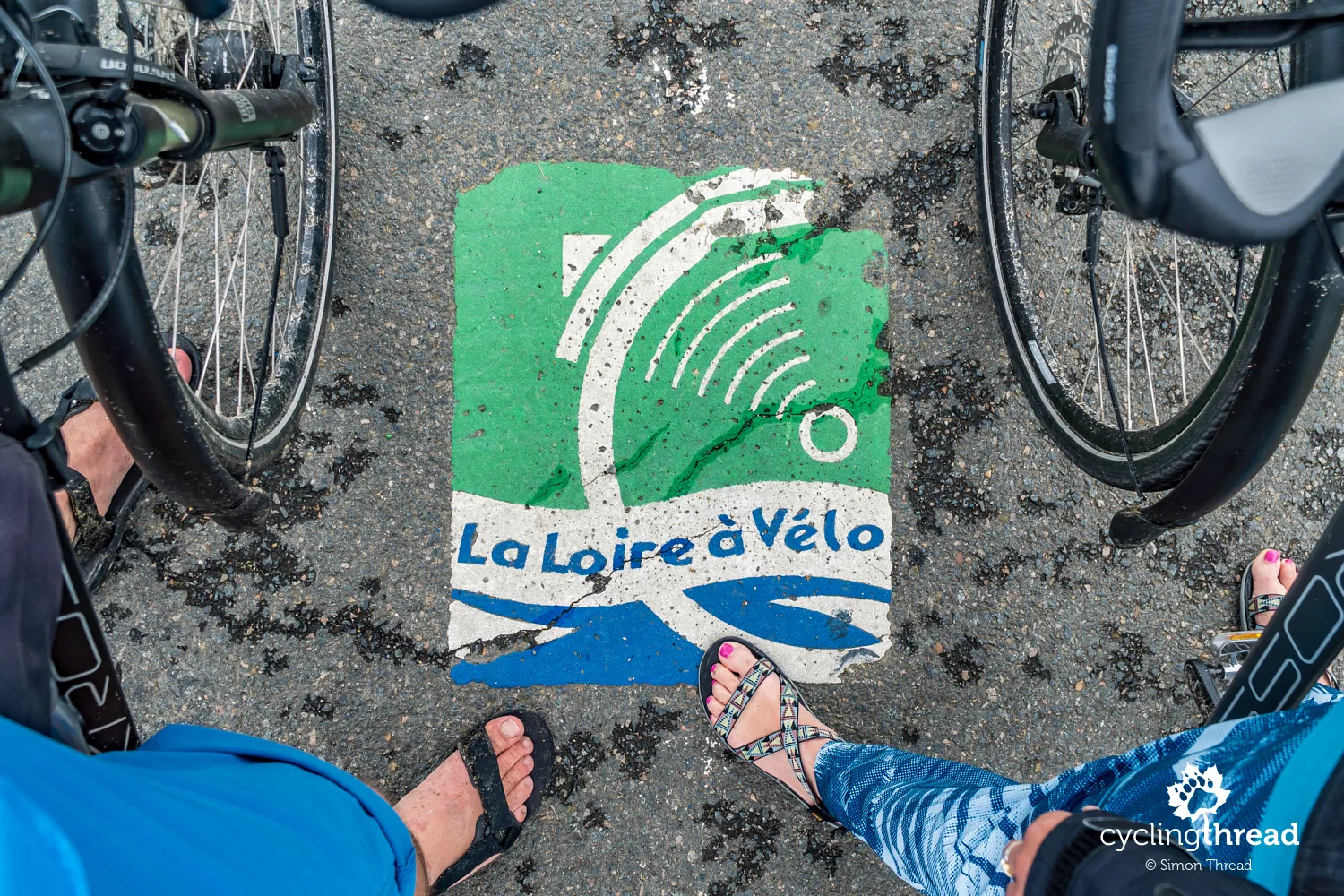
During our stay in France, we cycled a central section of the Loire, recognized as a UNESCO World Heritage Site since 2000. This most valued part of the Loire Valley stretches from Sully-sur-Loire near Orleans to Chalonnes-sur-Loire near Angers. To follow this 280-kilometer stretch of the river, we covered about 380 kilometers of the Loire à Vélo route, which simply means "Loire by Bike". We started in Sully-sur-Loire and passed through Orleans, Chambord, Blois, Amboise, Tours, Chinon and Saumur, before reaching Angers. On the way back, we used a special train designed for cyclists, which I describe in more detail later in this article.
The Loire on UNESCO's World Heritage List
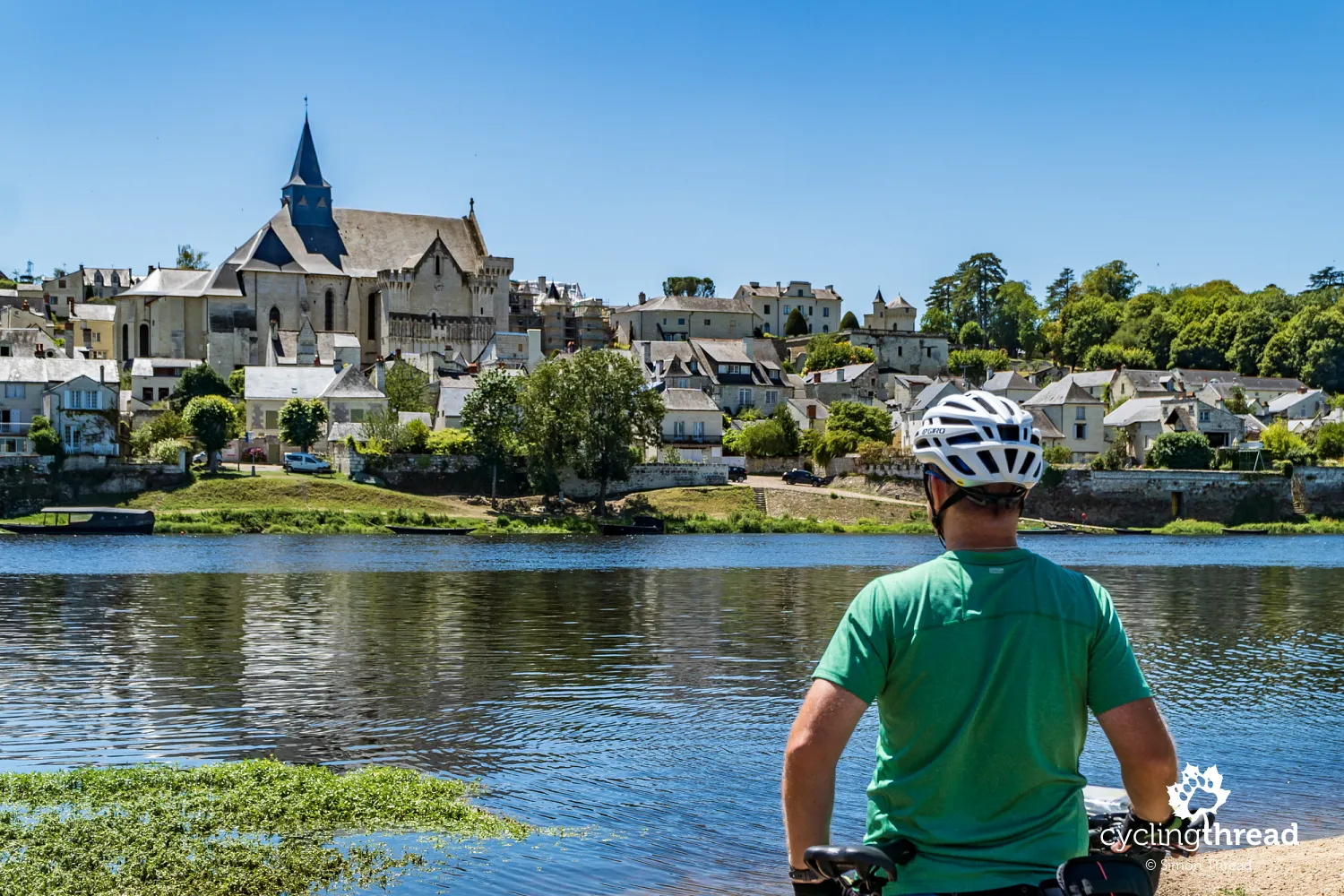
The reasons why the Loire Valley was listed by UNESCO go beyond its remarkable architecture. The recognition also covers its preserved cultural landscape, shaped over centuries through the interaction between the river's natural environment and human activity. The Loire Valley has long been an important axis of communication and trade in France, deeply influencing the nation's history, culture and science. Kings, artists, philosophers and scientists once lived and worked here, leaving ideas and achievements that shaped literature, painting, architecture and other fields. The landscape still reflects this connection, with visible traditions such as farming, viticulture, gardening and artisanal crafts continuing to this day.
Castles and palaces along the Loire à Vélo route
While cycling, we often wondered how to describe the many "structures" along the Loire. The Loire Valley is often called the "land of castles" or even the "Loire castle route", but in fact many of these places are closer to palaces, as they were not built with defensive functions. The French solve this more easily - they use one word, "château" (plural "châteaux"), to describe castles, palaces, manors and residences. Besides these grand buildings, visitors to the Loire Valley can also admire impressive medieval churches, including the cathedrals in Orleans, Tours and Angers.
The Loire cycle route among the best in Europe
I do not want the introduction of this article to suggest that we were disappointed with our stay in the Loire Valley. Far from it. The rather modest riverside landscapes were easily outweighed by the impressive palaces and castles we explored, as well as by the excellent cuisine served by local restaurateurs along the Loire. More than the surface of the cycling paths, I often appreciated the facilities of the Loire à Vélo route, such as the French network of cyclist-friendly places, clear signposting and the special train supporting the route. Our week-long journey through the Loire Valley offered many enjoyable surprises for cycle tourists, adding to its charm and securing its place on our list of the best cycling routes in Europe.
Quaint Sully-sur-Loire as a starting point
As the starting point of our cycling trip in the Loire Valley, we chose the charming town of Sully-sur-Loire. Its highlight is the Château de Sully, a fine example of military-residential architecture. This 13th-century moated castle impresses with both its history and beauty. In the town center, a historic bridge over the Loire links the two sides of Sully, adding character to the scenery. The narrow streets, stone houses and small passageways around the castle invite visitors to wander and explore. Our evening walk through the historic part of Sully-sur-Loire was a symbolic and memorable first step on our journey back in time through the old Loire Valley.
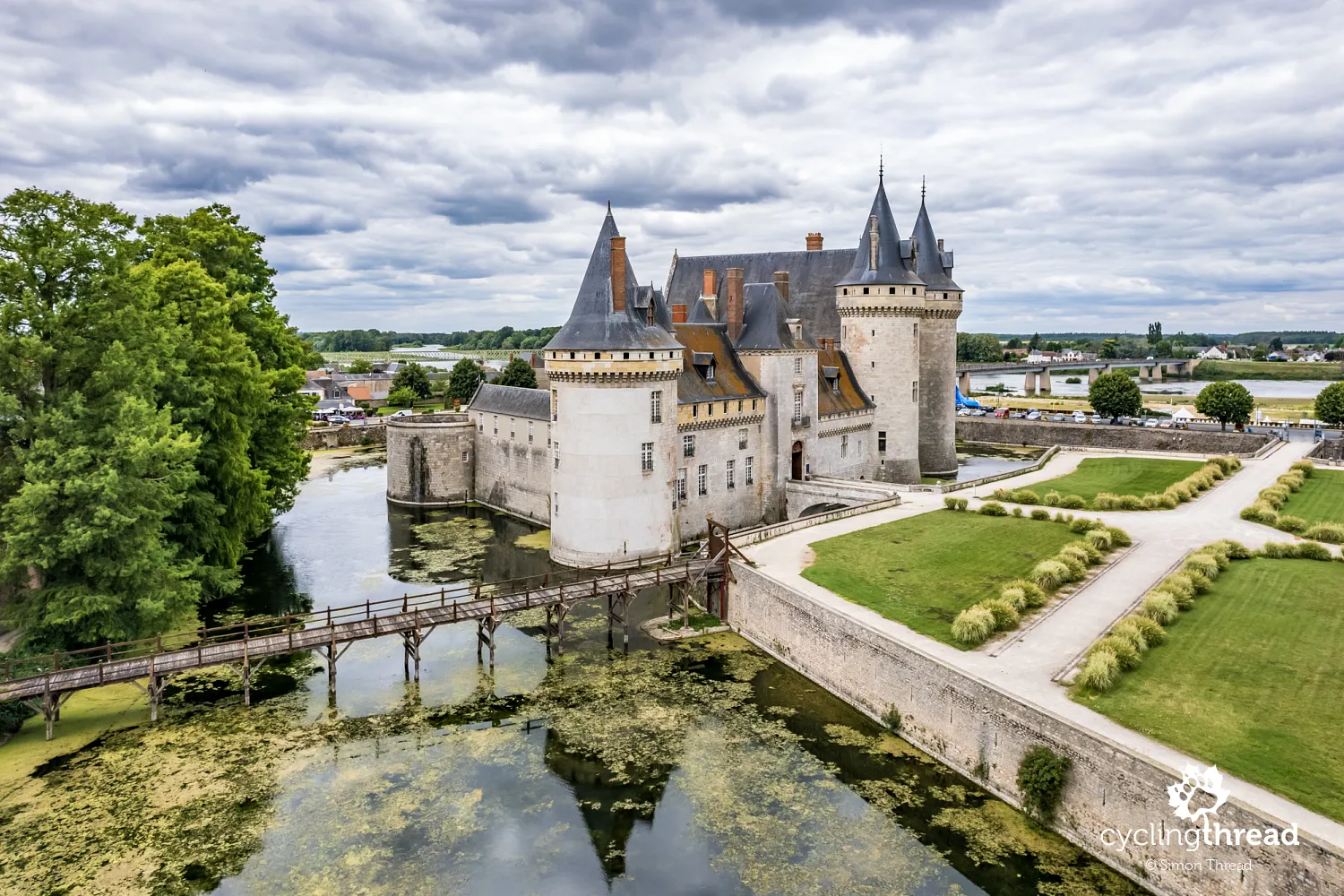
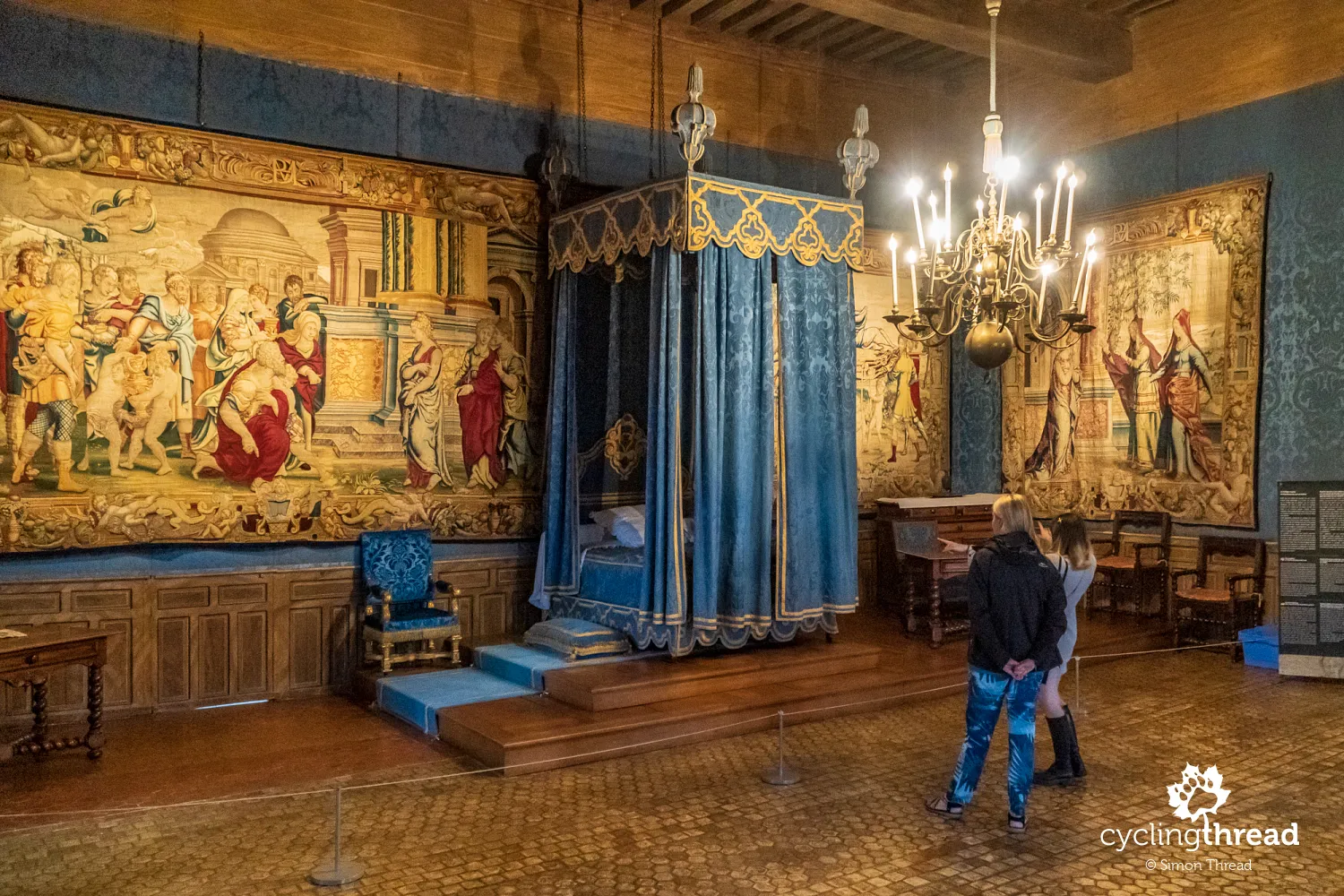
At the Château de Sully, we joined a tour led by a young guide, who told us about the castle in English for the very first time. During the hour-long visit, one story stayed with us in particular: some of the towers were "cut" and stripped of their pointed roofs by the 9th Duke of Sully, Maximilien Gabriel. In doing so, he symbolically echoed the execution of Louis XVI and expressed his support for the ideas of the French Revolution. Thanks to our blogger-journalist privileges, we were also able to see the original wooden vault of the main castle building - and even catch its scent - a detail that highlighted the authentic, historical atmosphere of this remarkable place.
Cyclist-friendly places - where to stay
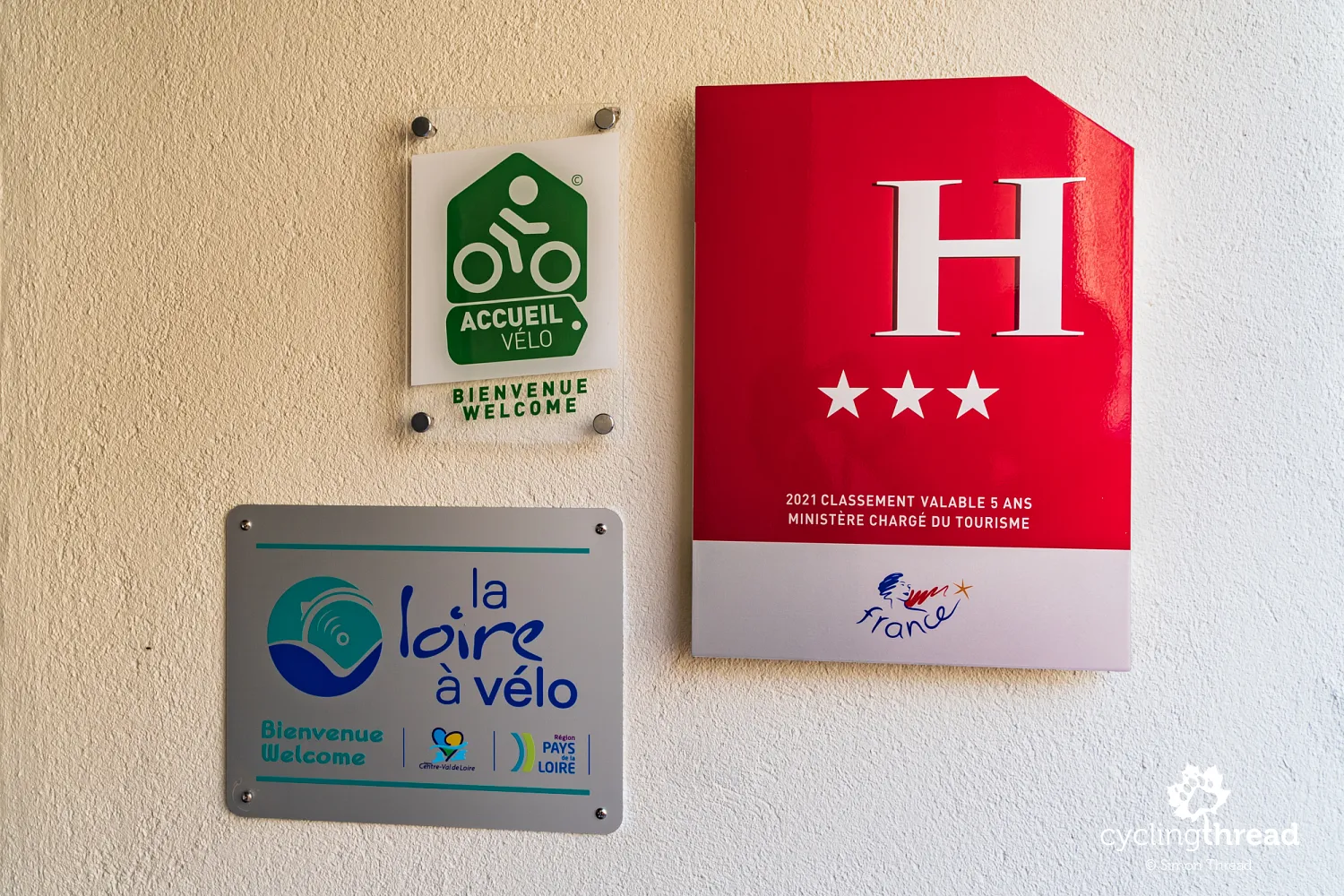
In Sully-sur-Loire, we first came across the French network of cyclist-friendly places known as Accueil Vélo. This label can be granted to accommodation, restaurants, bike rentals, repair services, travel agencies and tourist attractions - provided they meet certain standards. For hotels and guesthouses, the key requirement is a secure storage area for bikes. Restaurants promise free drinking water for cyclists, while bike services guarantee quick repairs. On the Accueil Vélo website, facilities can be filtered by category or by cycle route, such as the Loire. According to system statistics, Accueil Vélo now includes more than 7,000 certified facilities across France, and almost all the guesthouses and hotels we stayed in were part of this network.
By choosing cyclist-friendly locations in the Loire Valley, we could be sure that asking about a place for our bikes would not be met with surprise at the reception desk. On top of that, the overall quality of our hotels and guesthouses was excellent. In Orléans, we stayed at a designer hotel in the city center. Near Château de Chambord, we spent the night in a family-run guesthouse in Saint-Dyé-sur-Loire with views of the Loire River. In Amboise, our hotel offered an excellent bike storage room, and in Tours, we stayed at a modern hotel near the Old Town with a dedicated garage for cyclists.
Old railway bridge for cyclists
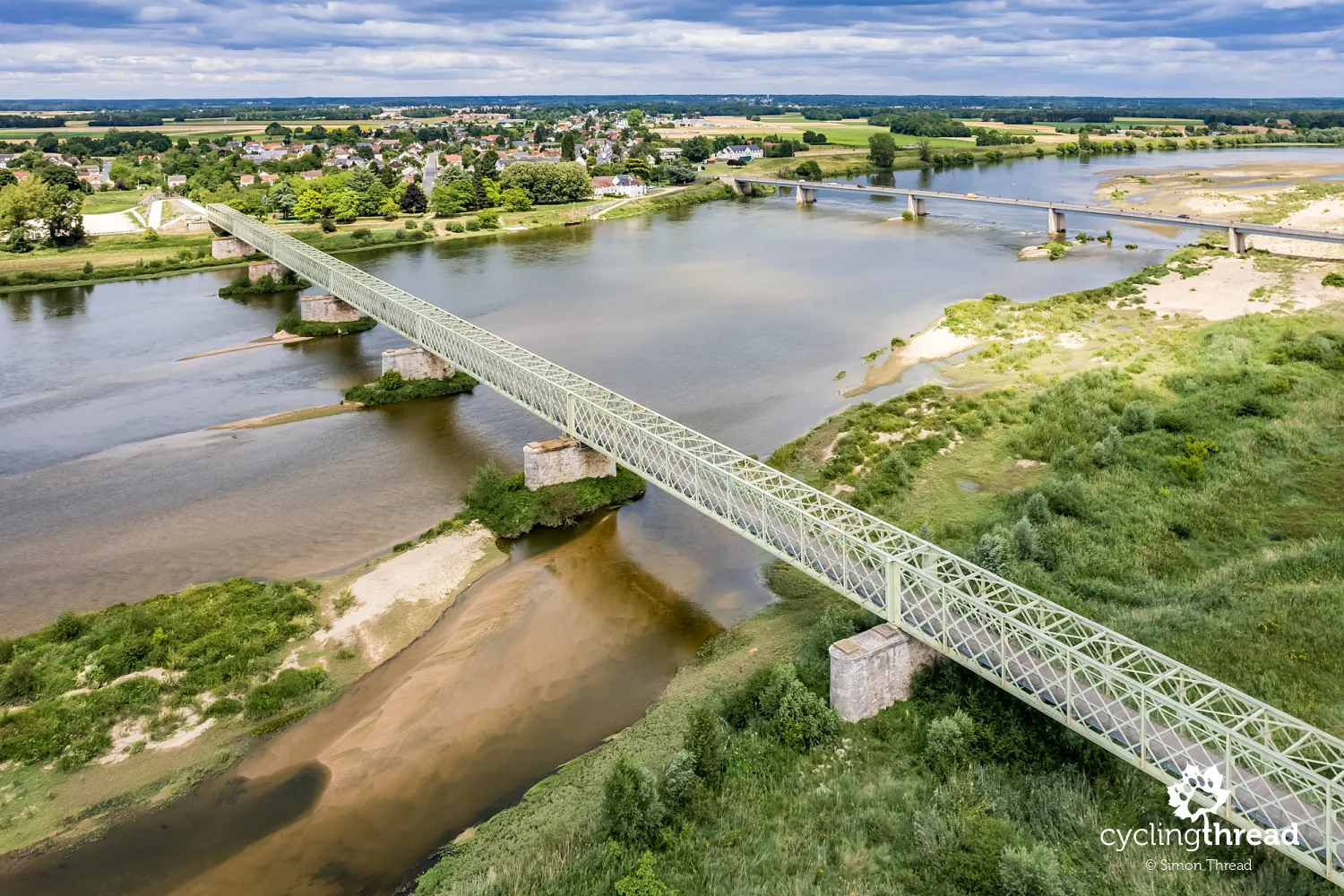
Just a few hundred meters from the town center, we found a striking example of good practice in cycling tourism, which I often mention during my lectures. It is a railway bridge from 1880 that, after the line was closed in 2011, was renovated and reopened for cyclists on the Loire route in 2020. The bridge is over 400 meters long, and its wide pillars were originally designed to support a second, parallel structure that was never built. Today, it serves not only as a convenient river crossing but also as an excellent viewpoint, offering unique perspectives of the Loire and Sully-sur-Loire.
Pleasant gravel roads instead of asphalt
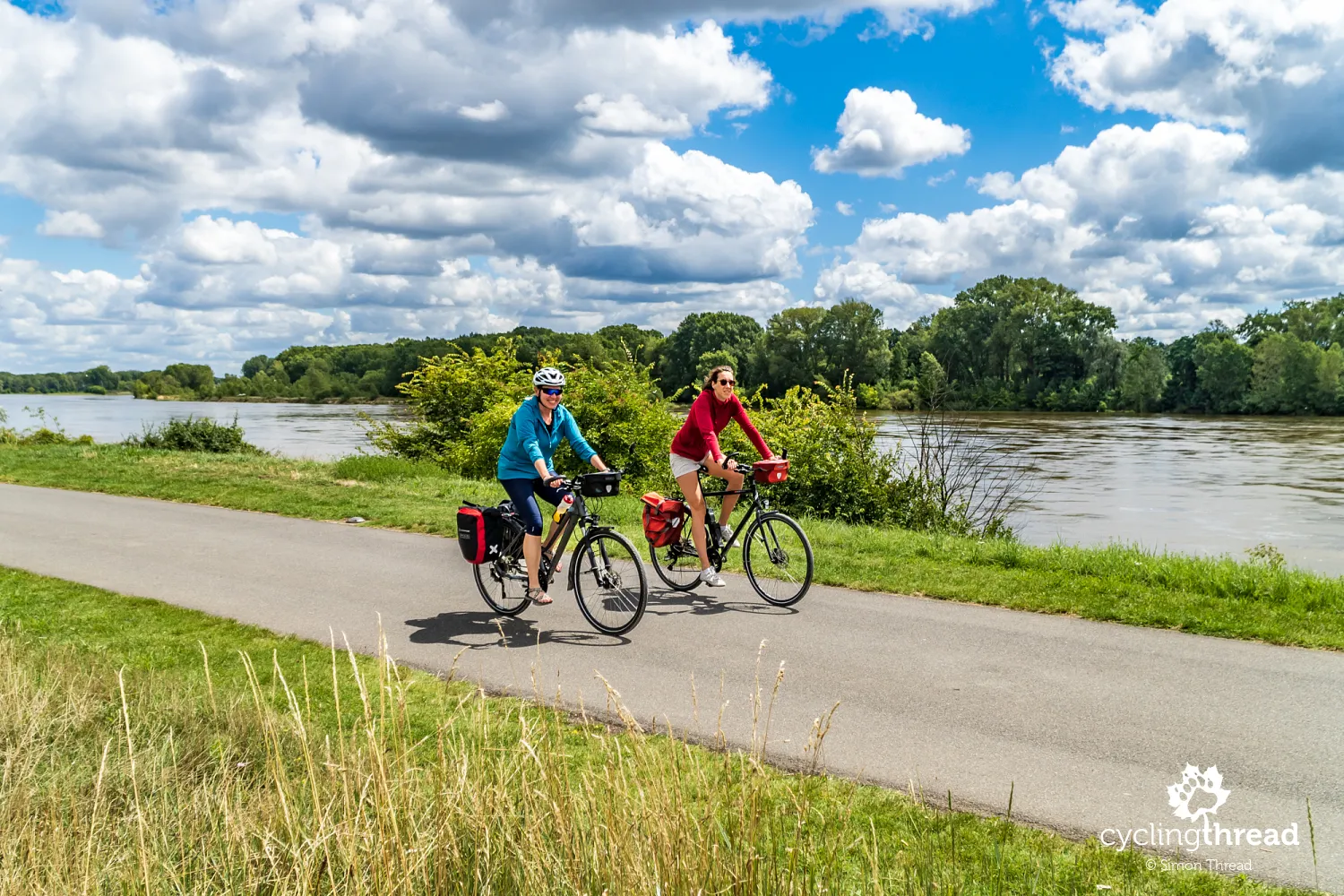
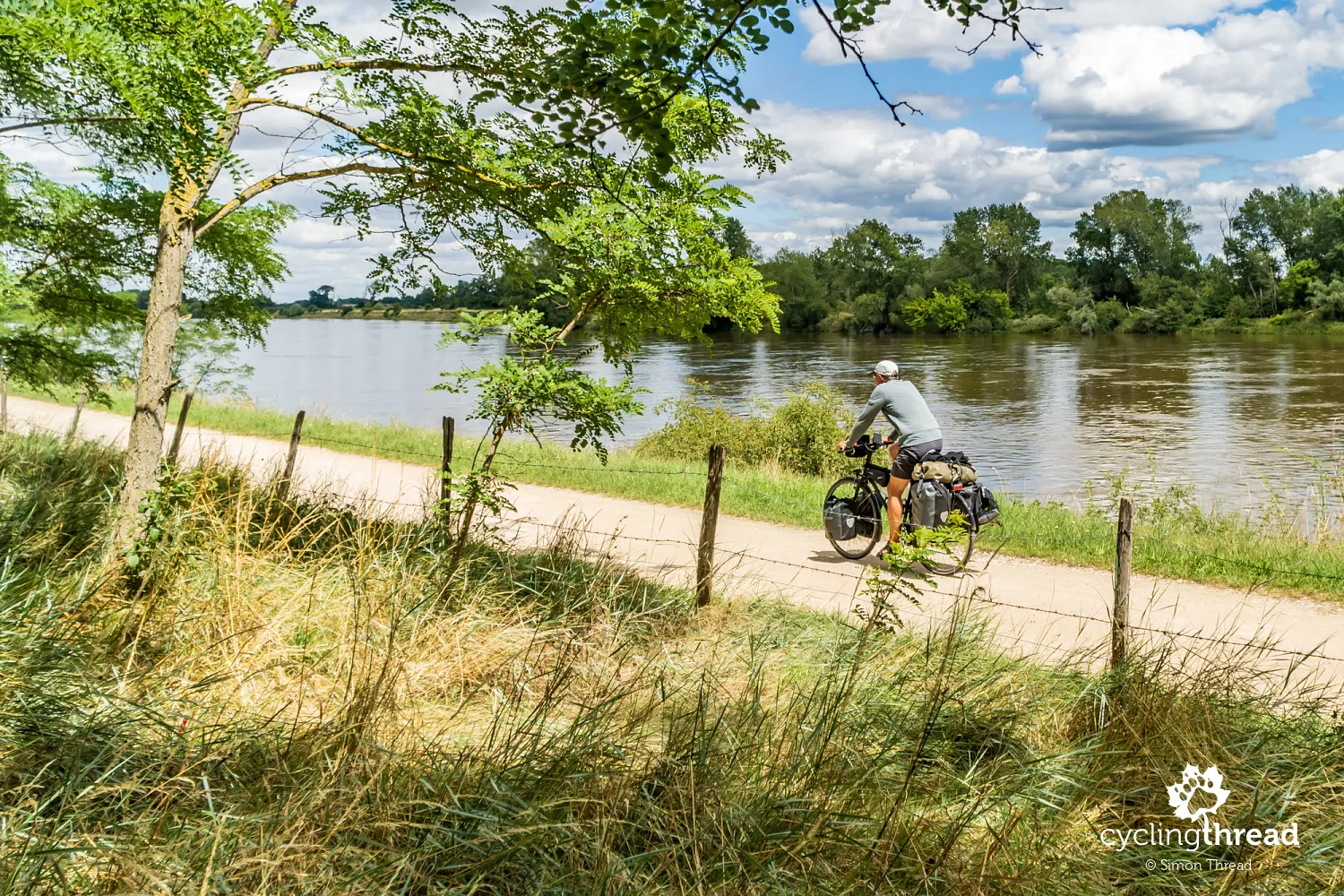
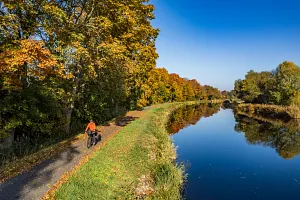
The first kilometers of our ride brought one of the surprises I mentioned earlier. We quickly realized that the Loire à Vélo route is not a continuous asphalt path, but instead includes many sections on natural surfaces. Fortunately, these non-asphalt stretches were well maintained, usually smooth gravel, which did not reduce the pleasure of cycling and often added to the charm of the journey. Riding along the river on these gravel roads, with access limited to bicycles and pedestrians, gave us both a peaceful experience and the assurance that the route was protected from damage by cars.
Clear detour as good practice in tourism
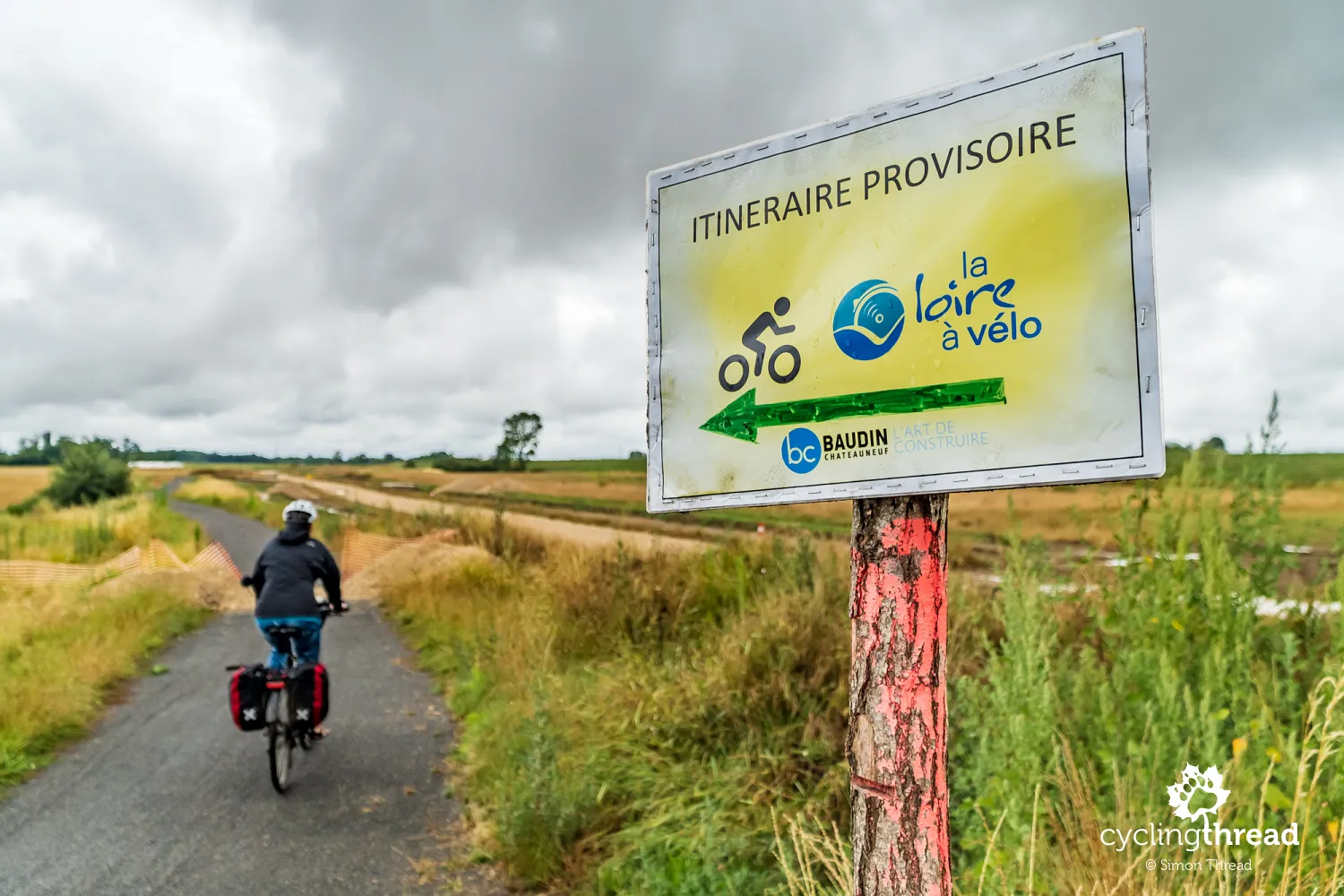
A few kilometers before Orleans, on our first and very rainy day on the route, we came across another pro-cycling solution: clear information about short detours caused by road works. The French showed that with minimal effort - just a laminated sign - it is possible to mark a temporary detour and reduce inconvenience for cyclists. Sometimes it takes very little to make riders feel expected and welcome.
Orleans: Joan of Arc and Ukraine
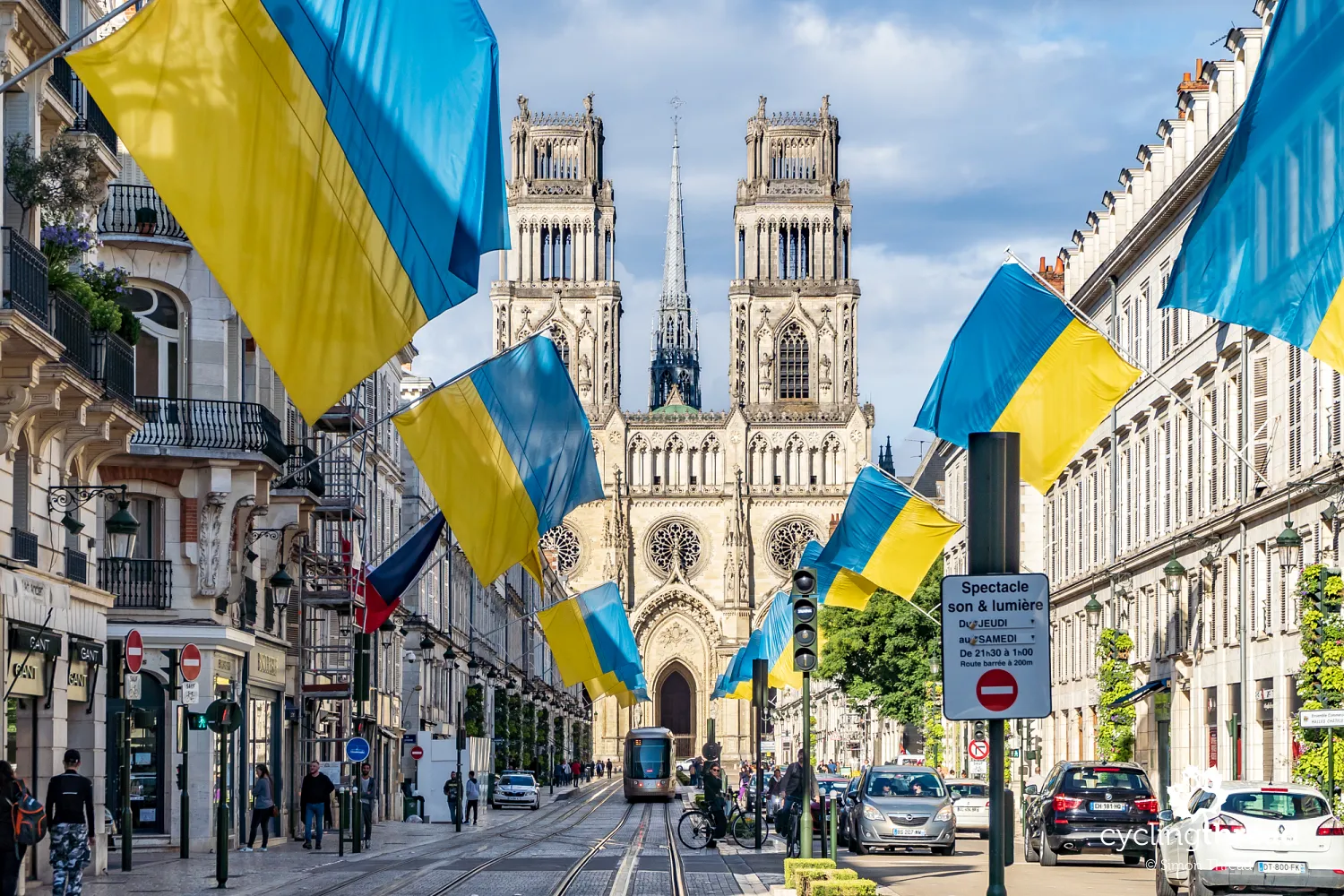
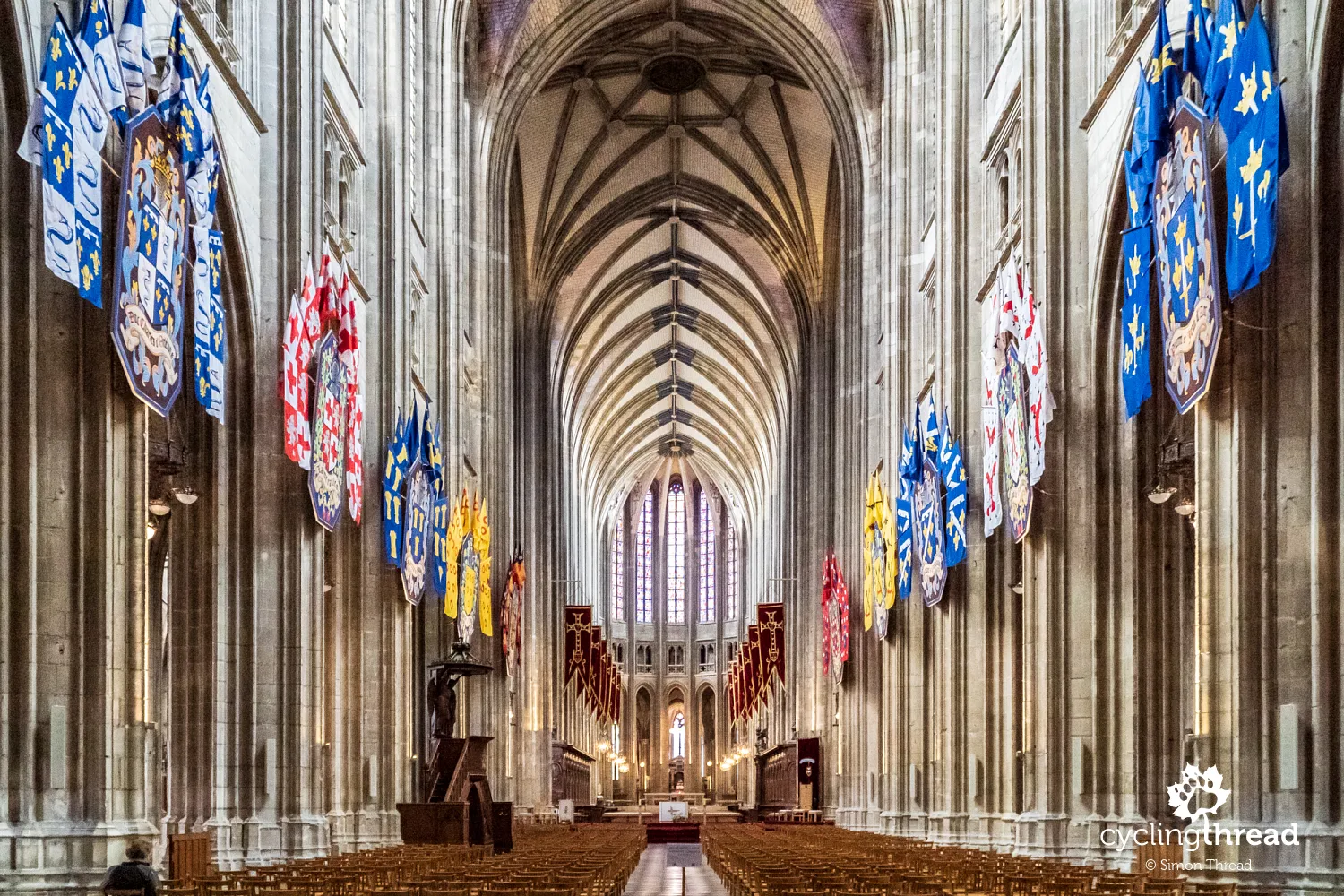
In the center of Orleans, we were welcomed by large yellow-blue Ukrainian flags waving along Joan of Arc Avenue. Here I captured one of my favorite photos of the trip: just after the rain, the sun broke through the clouds and lit up the majestic Sainte-Croix Cathedral, which dominates the eastern end of the city’s most famous street. The cathedral’s twin towers rise 88 meters high, making it one of the five largest in France. The building is linked to the legend of a triumphant mass held in 1429 with Joan of Arc after the English were repelled from Orleans. In reality, construction of the current cathedral began only in 1601, so the story must have referred to the earlier Romanesque church that once stood here. The present Sainte-Croix Cathedral was inaugurated in 1829, exactly 400 years after the Siege of Orleans. An interesting detail is that since the end of World War II, neither of its two towers has been renovated, and they remain closed to visitors.
The name of Joan of Arc appeared many times during our journey through the Loire Valley. This was due to the events of the 15th century, when France was fighting the Hundred Years' War against England, and the teenage Joan of Arc played a decisive role in turning the conflict in favor of her country. At that time, France was formally ruled by Isabella of Bavaria, the wife of King Charles VI. The king suffered from schizophrenia and was unable to govern independently. Before his death, Isabella signed over the rights to the French crown to the English King Henry V, plunging the kingdom into crisis. Restoring French authority required not only defeating the English but also ensuring the coronation of Charles VI’s rightful heir, his son Charles VII.
Historical records say that it was at this time that the twelve-year-old Joan of Arc experienced a divine revelation, which later became one of the most extraordinary episodes in French history. Two years later, at the fortress of Chinon - which we also visited - she met the future King Charles VII and convinced him to support her plan to lead the defense of Orleans, then under siege by English troops. She succeeded: dressed in white armor and riding a white horse, she entered Orleans, and her strategy saved the city. Under her leadership, the French launched a counteroffensive and won a series of victories. Captured by the English after one of the battles, Joan was put on trial and burned at the stake just two years after the Siege of Orleans. Yet she only became a true symbol of the struggle for French independence in the early 19th century, after the French Revolution and the Napoleonic Wars.
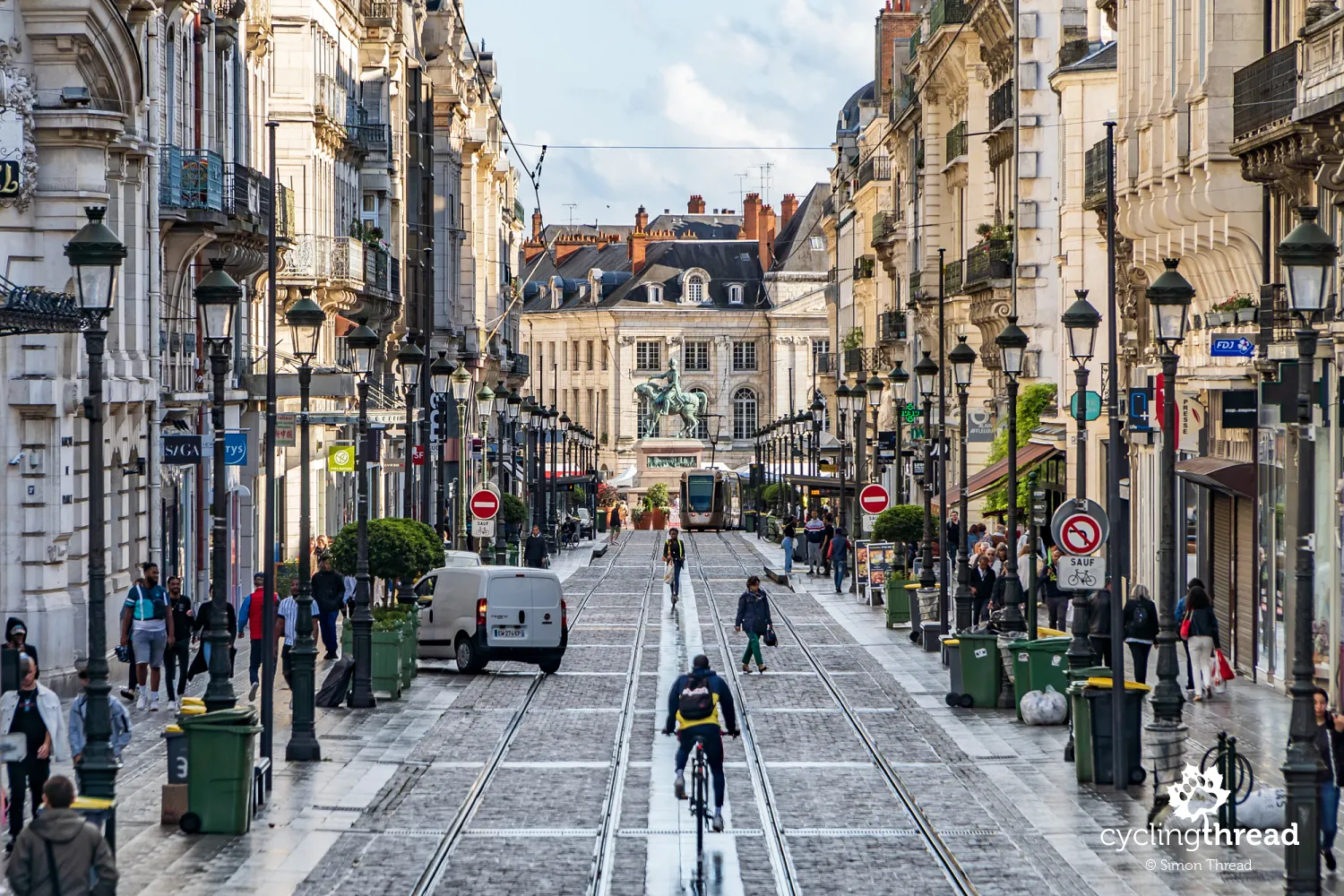
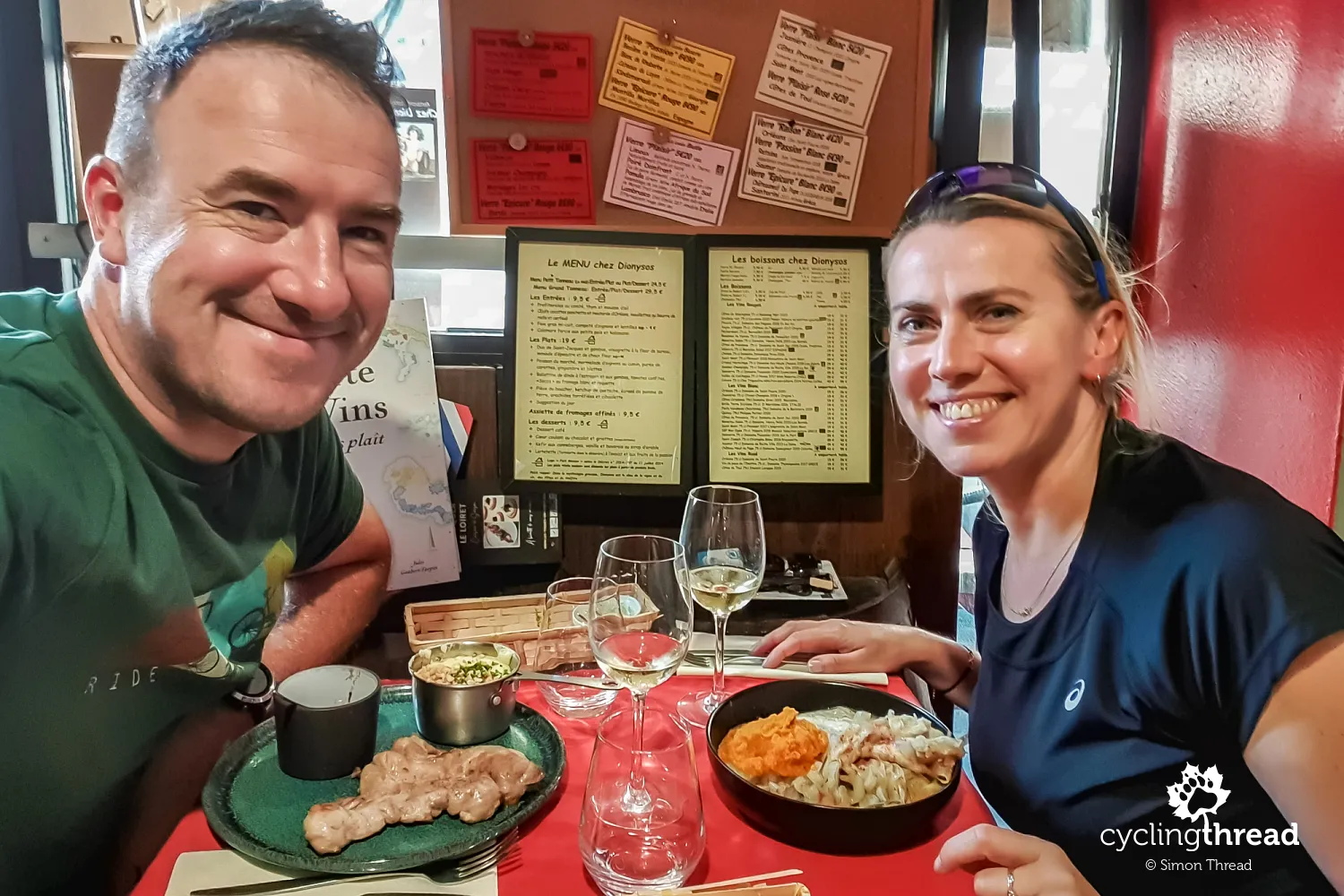
Orleans is a city where it is worth planning a longer stop, even if it means ending your ride at midday. It offers many examples of cycling solutions introduced during and after the pandemic to support urban cycling in France. At the same time, Orleans is a great place to continue the journey through French cuisine. We enjoyed dinner at a small, homely bistro called At Dionysus. The host, whom we first assumed to be Greek, greeted us as a waiter, patiently helping us with the language barrier, and then disappeared into the kitchen, where he turned out to be the chef himself.
Fascinating interiors of the Meung-sur-Loire castle
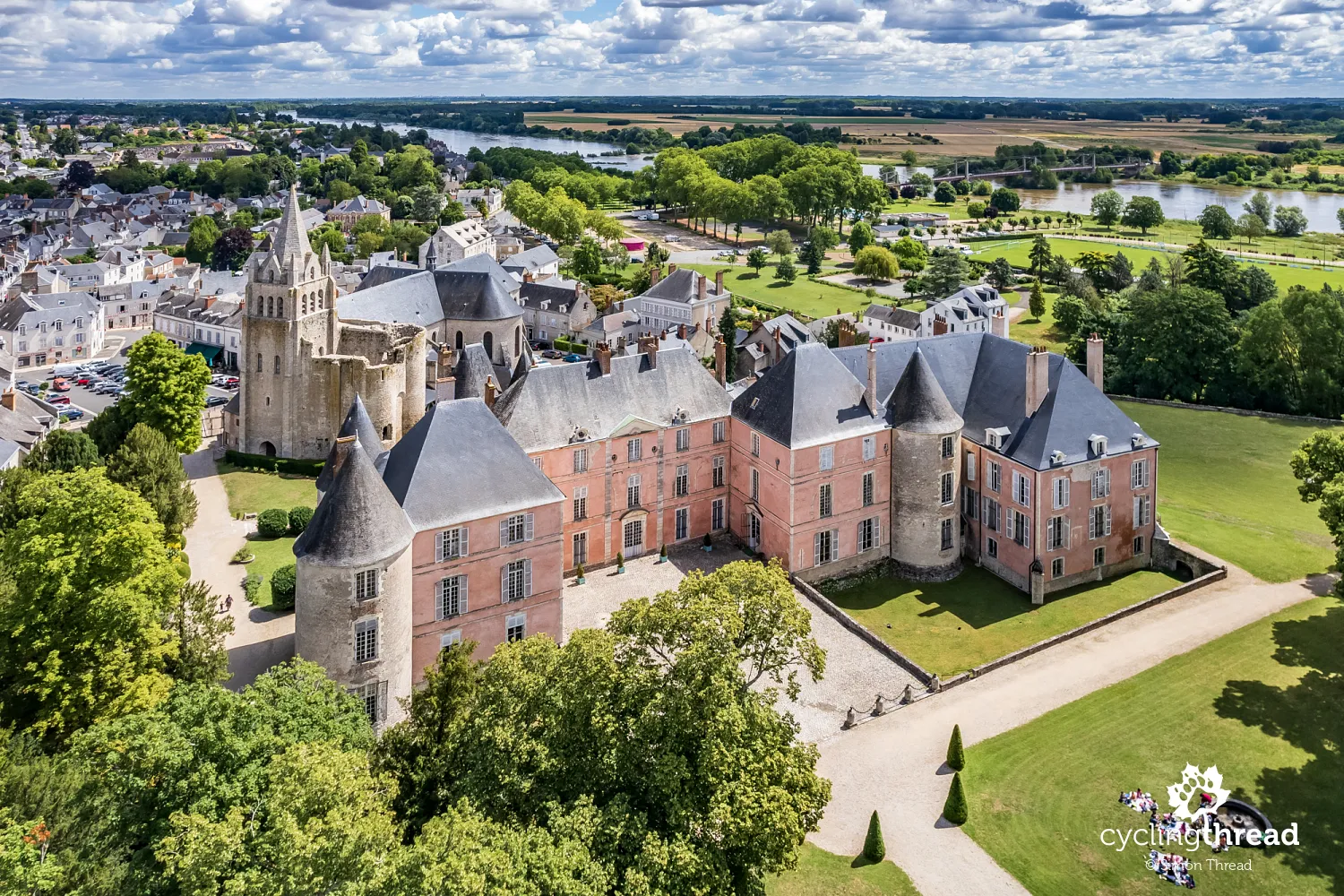
Just 20 kilometers from Orleans lies the town of Meung-sur-Loire, home to a castle whose origins go back to the 12th century. Over the centuries it was rebuilt several times, and today the Meung-sur-Loire Castle reflects a mix of styles from Gothic to Renaissance. Because of its two very different facades, it is often called "the castle with two faces". A visit here is engaging: you can walk through carefully arranged halls, see the old castle kitchen, and descend into the dungeons that once served as a prison, where the poet François Villon was held. Formerly the residence of the bishops of Orleans, the castle is now privately managed and often visited by school groups. Special events, including historical reenactments and knightly displays, bring the history of the Loire Valley vividly to life.
Beaugency: lunch and a digital art center
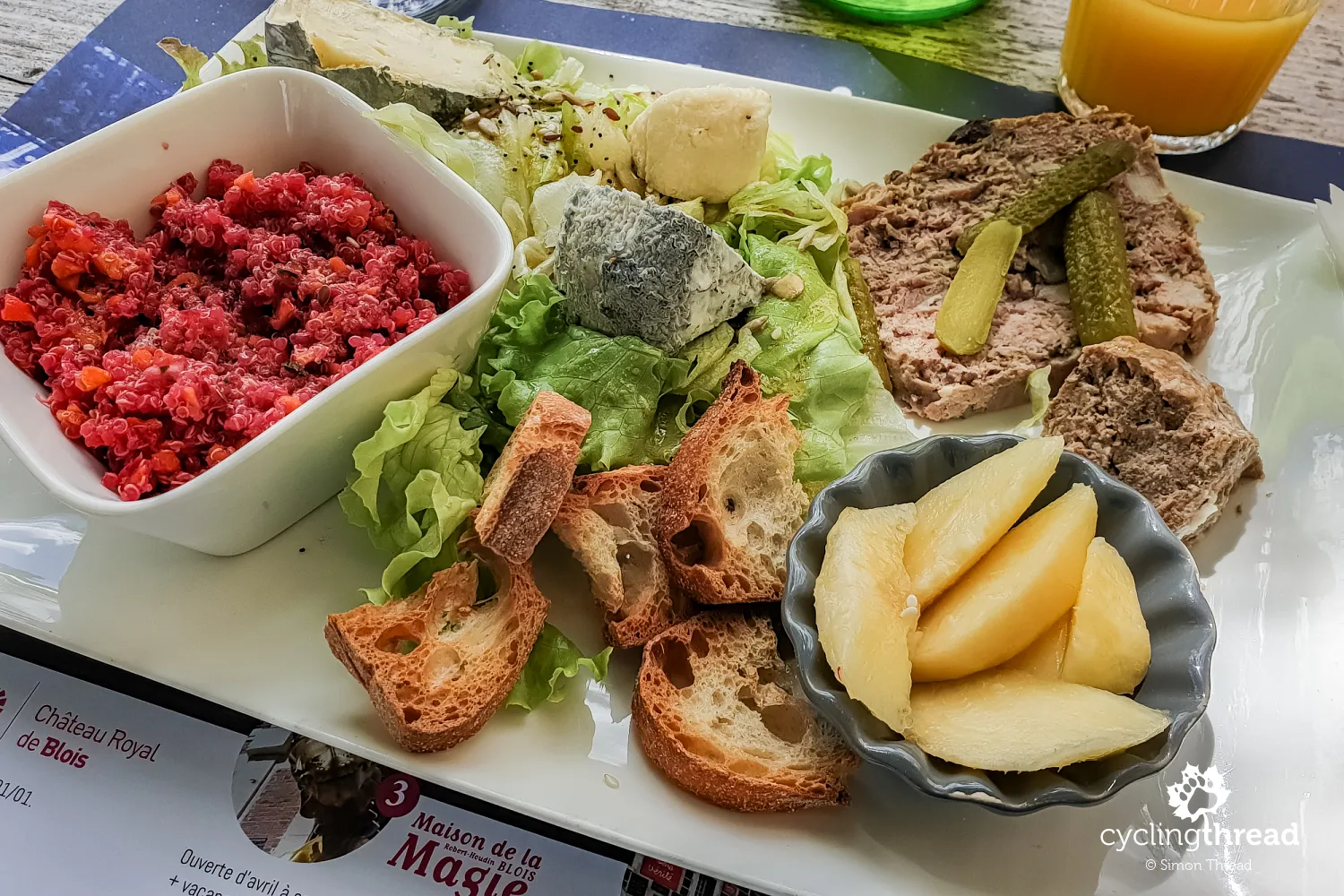
In the next town, Beaugency, we passed the site of the former Loire river port, marked by a replica of an old boat on the shore, and then crossed the elegant Pont de Beaugency bridge. Here we spotted another Accueil Vélo sign, this time on the door of a small bistro. It was the perfect moment for a break, and soon plates with cold appetizers were served. Nearby stands the château of Beaugency, a medieval castle that today houses one of France's best-known modern art museums. Dedicated to digital art, it uses multimedia techniques to present historical shows and creative exhibitions.
Atomic views on the Loire Route
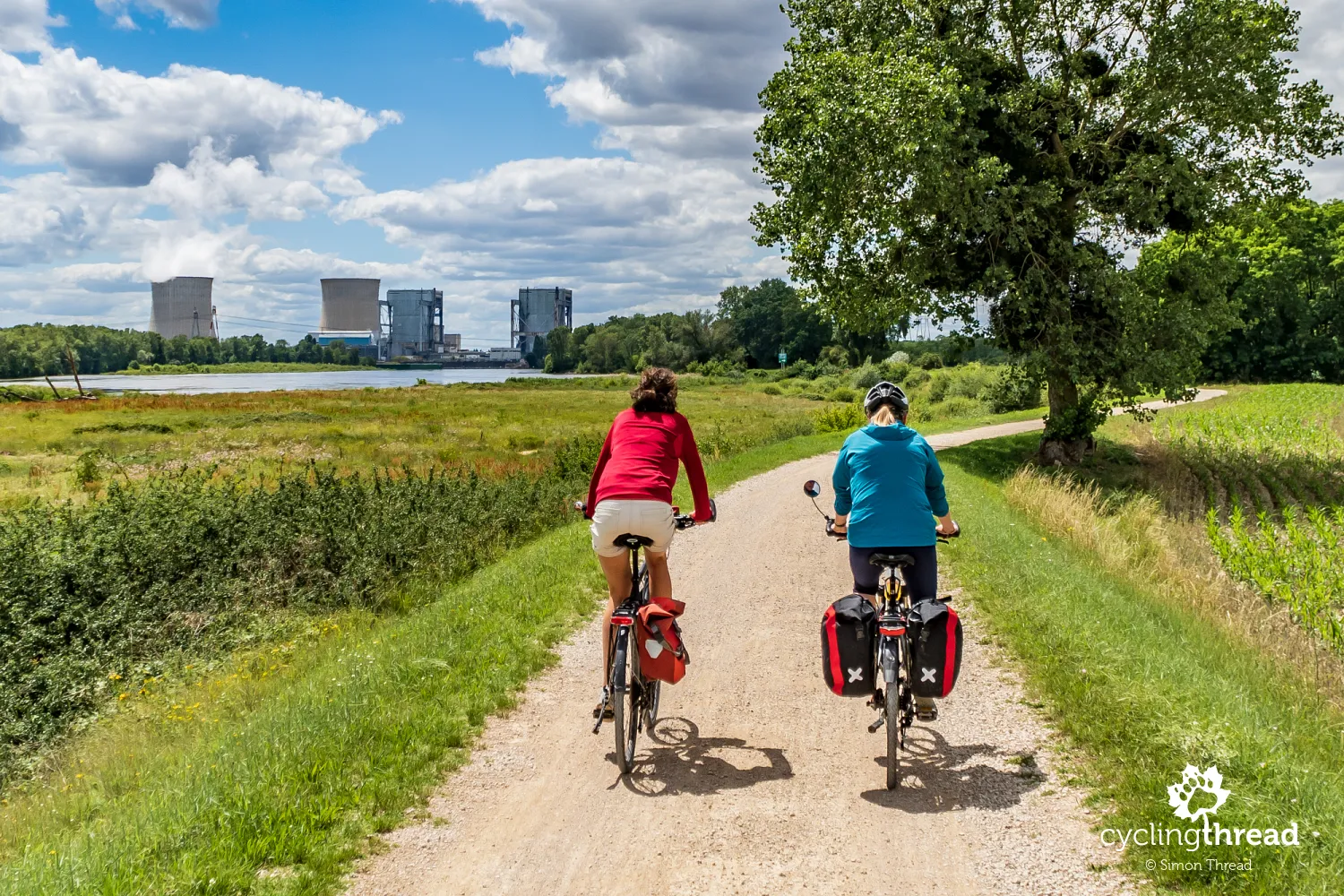
Much of the stretch between Meung-sur-Loire and Saint-Dyé-sur-Loire follows gravel paths along the river and flood embankments, sometimes running very close to the water. After Beaugency, on the left bank of the Loire, the tall cooling towers of the Saint-Laurent-des-Eaux nuclear power plant come into view. While this sight still feels unusual to us, it is a normal part of the French landscape - the country operates 56 nuclear reactors, though only about half were active at the end of 2022. Interestingly, during construction of the Saint-Laurent-des-Eaux plant, the planned height of the cooling towers was reduced from 160 to 120 meters. The reason was concern that they would spoil the view of the Loire Valley from the terraces of the nearby Chambord Castle. Today, the plant runs two active reactors, supplying around 2% of France’s total electricity.
The most famous castle in the Loire Valley
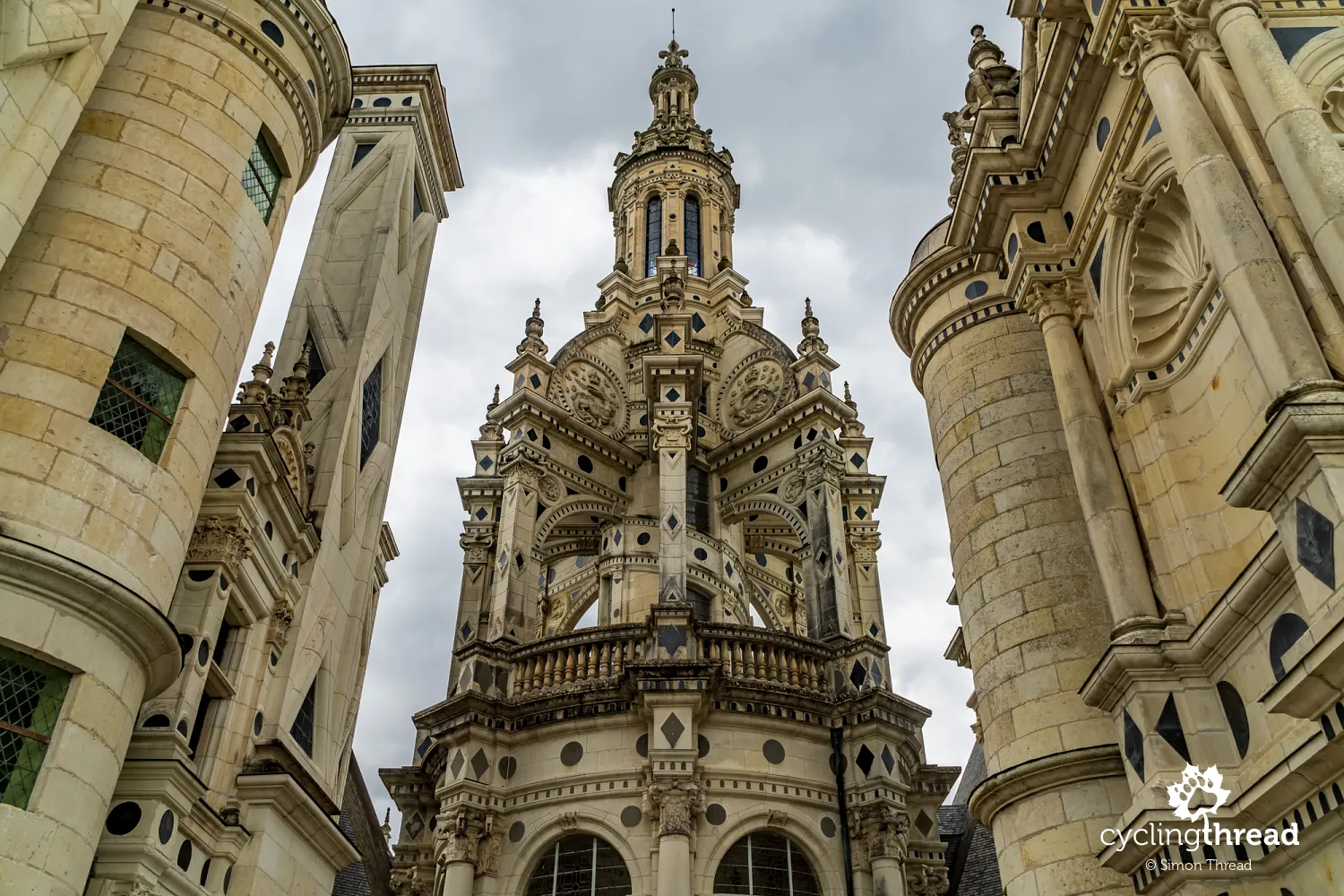
That day we finished our ride a bit earlier, left our panniers at a guesthouse in Saint-Dyé-sur-Loire, and continued "light" to the Château de Chambord - one of the most famous landmarks of the Loire Valley. A branch of the Loire à Vélo route leads several kilometers through quiet forest and park paths directly to the estate. During our visit, however, the palace was under major renovation, and the impressive towers of the Chambord complex were hidden behind scaffolding. I could not help but wonder whether Sting, who had performed there just two days earlier, felt the same disappointment.
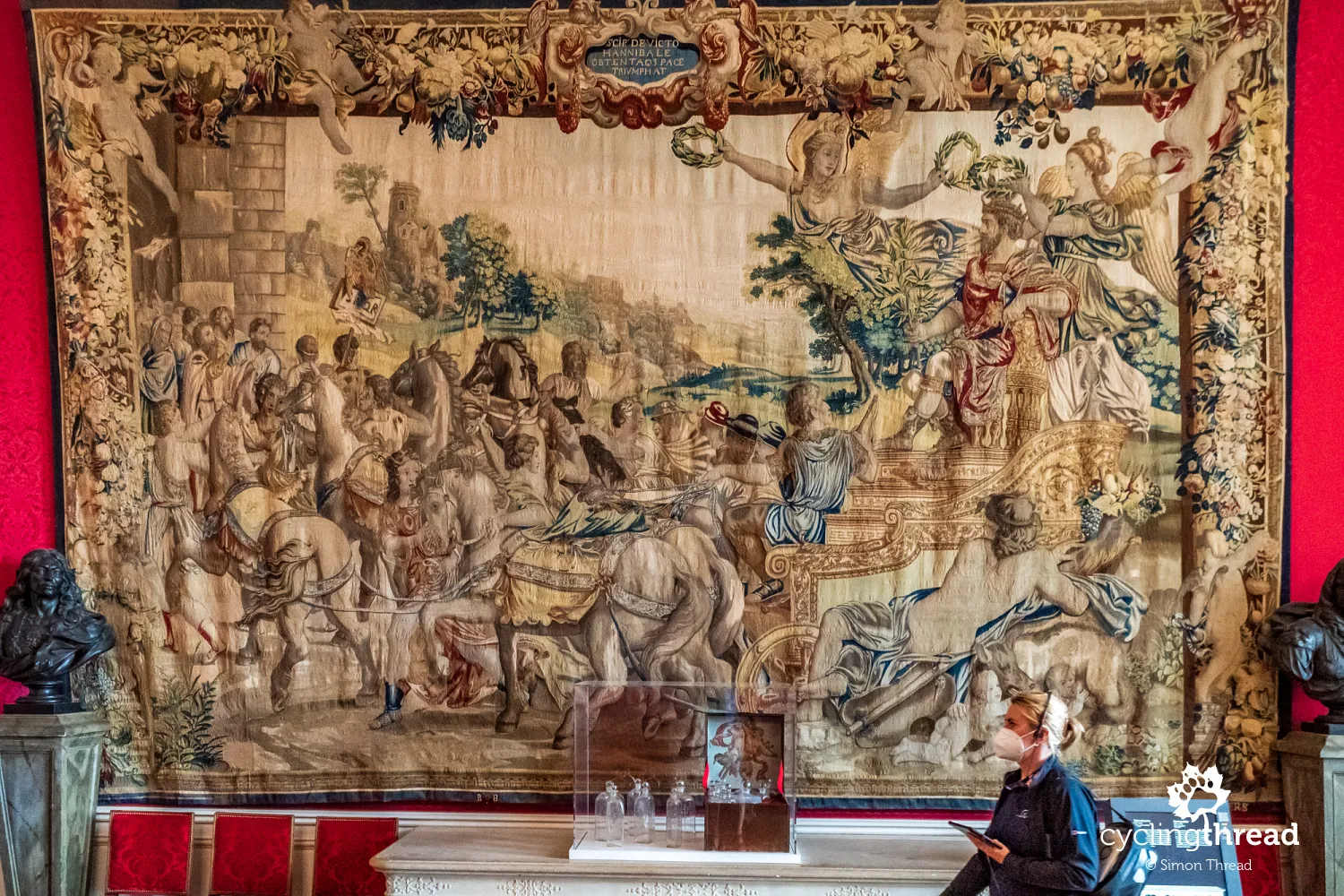
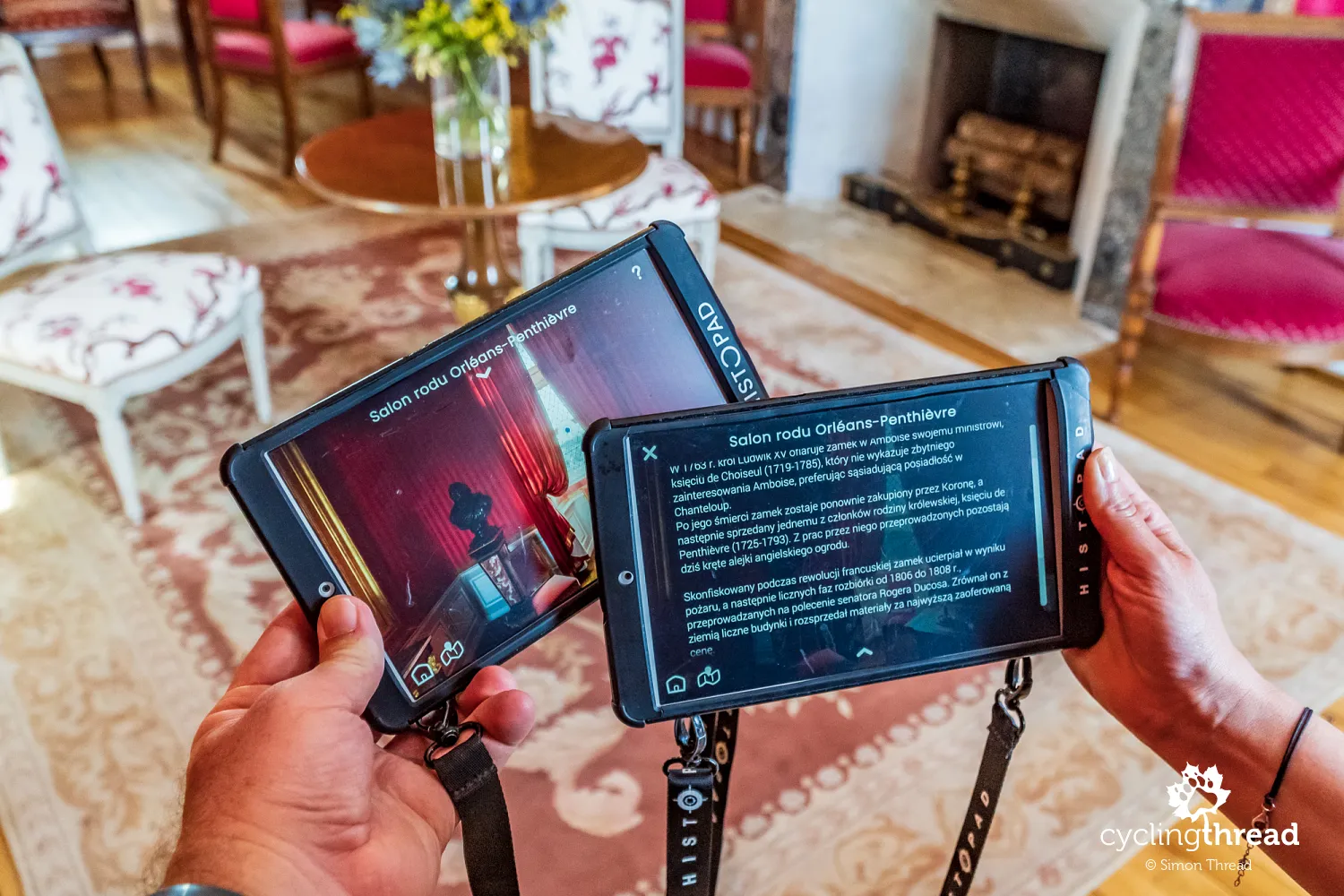
The Château de Chambord is the largest palace-castle complex in the Loire Valley and one of the most distinctive landmarks of its kind in the world. Its Renaissance interiors are so vast that even the crowds of visitors seem to disappear inside. The scale of Chambord is best shown by the numbers often cited: a main facade 128 meters long topped by six towers, 440 rooms, 84 staircases, 365 fireplaces and 800 sculpted capitals. The museum at Chambord is also one of several in the Loire Valley that can be explored with the help of an interactive tablet. It provides detailed descriptions of rooms and exhibits, is easy to use, and is even available in our language. We encountered the same system later in Blois and Amboise.
No need to know French to enjoy France
Should a lack of French language skills be a barrier to traveling in France? Absolutely not. It is often said that the French are very attached to their language and reluctant to use others, but in practice staff in the tourism industry can usually communicate with guests in English. And in casual encounters, when someone truly does not know English, gestures are almost always enough to create a friendly atmosphere. Visiting French museums is also easier thanks to excellent histopads, which guided us through several castles in our language, including Amboise and Chambord.
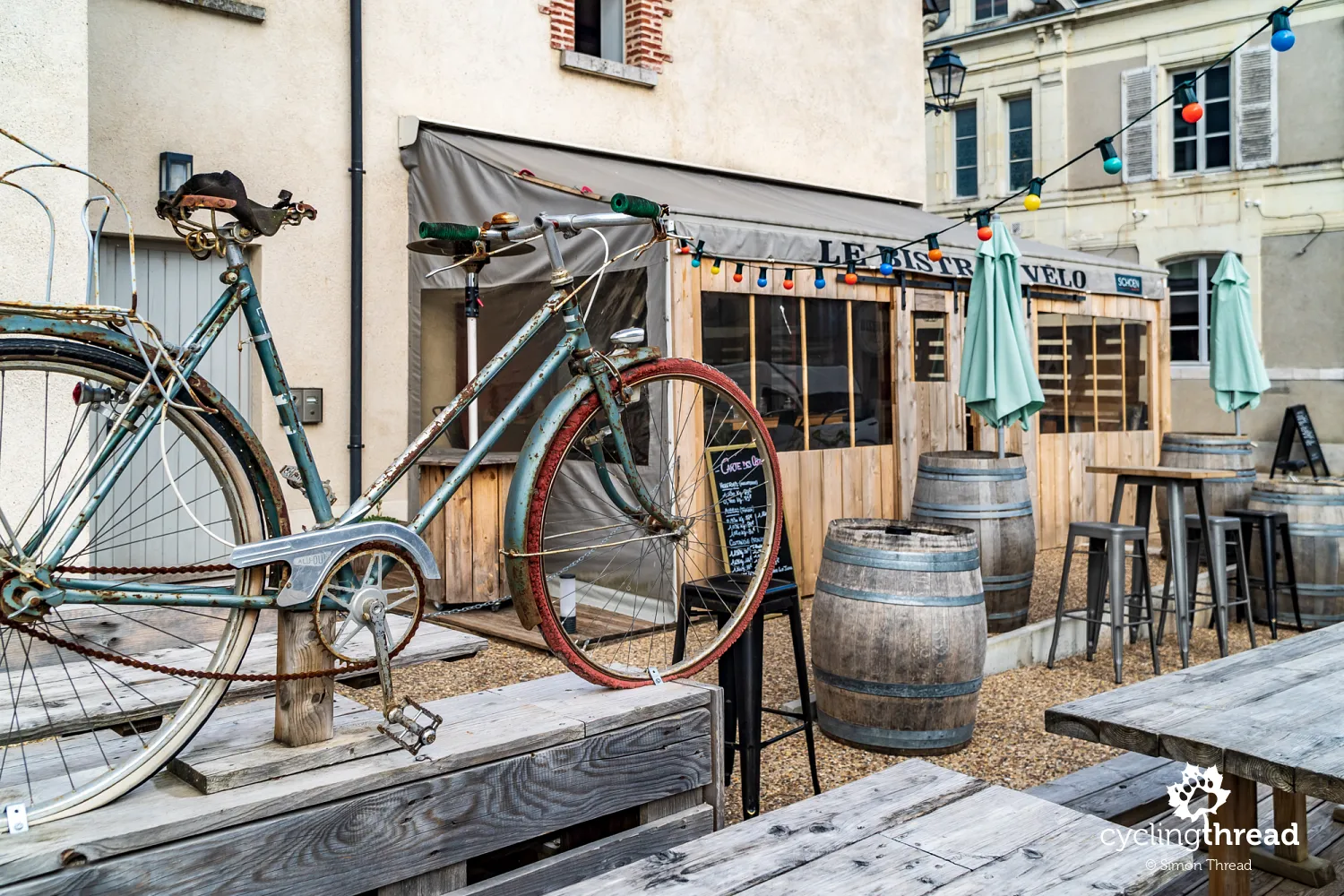
We returned to Saint-Dyé-sur-Loire for dinner and an overnight stay in this picturesque village in the heart of the Loire Valley. For centuries it served as an important timber port, a history now commemorated in the Maison de la Loire museum. The town is full of narrow lanes and historic houses. Among them are two neighboring restaurants: Bistrot Velo, easy to spot thanks to its terrace decorated with old bike parts, and Chez Walter, a family-run place known for traditional French cuisine. In a warm, friendly atmosphere, with plates of local specialties, we ended another day of cycling before settling into a cozy attic room in a small guesthouse. From its window, we watched the sun set over the Loire.
Blois - our favorite castle in the Loire Valley
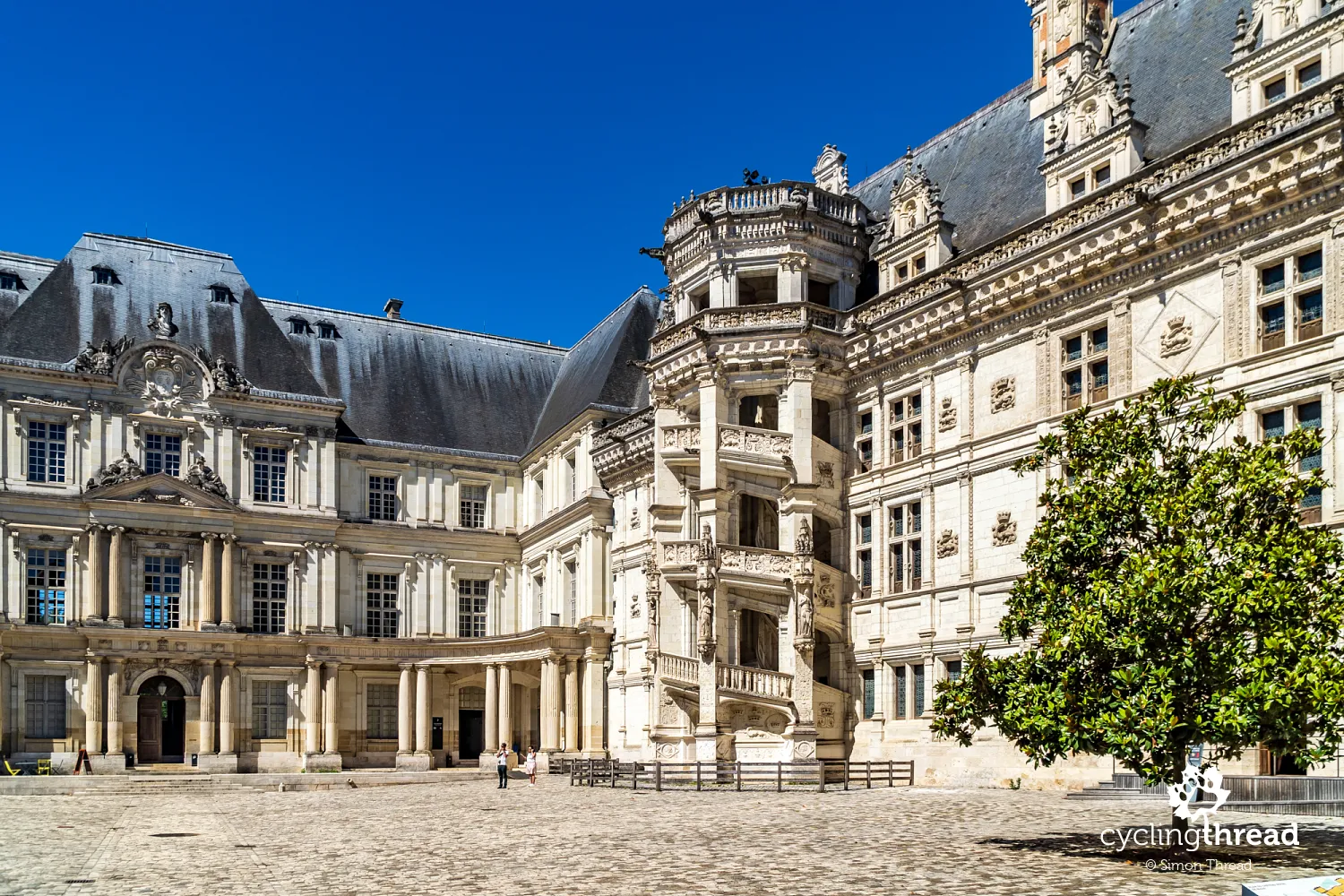
The next day began with a 15-kilometer sprint to reach our scheduled tour of Blois Castle. Looking back, it was probably the most fascinating day of the trip, thanks in large part to this extraordinary site - one of the most important historical landmarks in the Loire Valley in France - brought to life by our witty and engaging guide. The castle is a striking complex of three wings, each built in a different architectural style by rulers eager to leave their mark on French history. Inside, visitors can still see elements of the original 13th-century structure that later expansions were built upon. If I had to choose a favorite among the castles and palaces of the Loire Valley, Blois Castle would certainly take the prize.
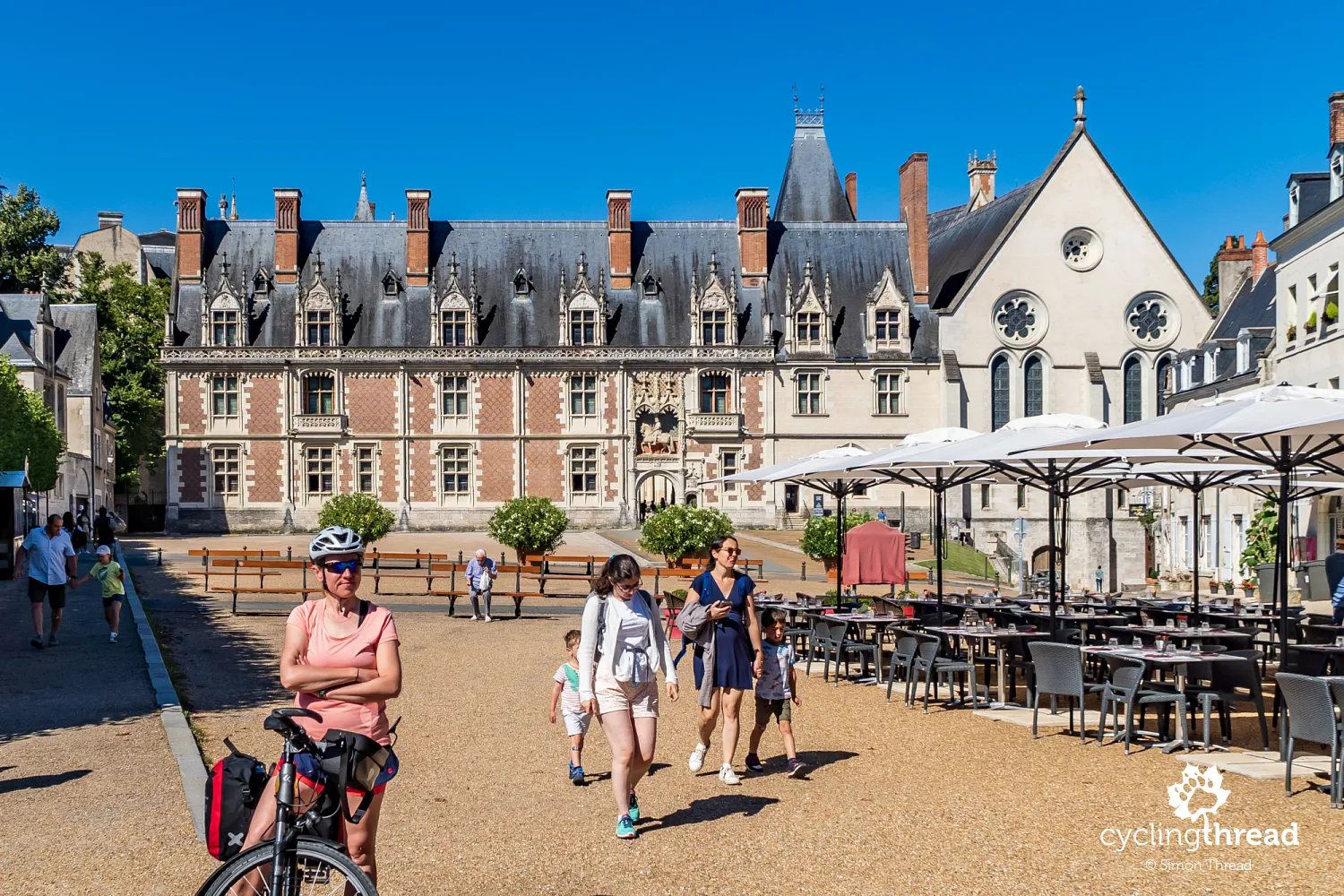
A visit to Blois Castle is a journey through centuries of French history. Each hall and chamber reveals new stories, biographies and remarkable artistic details. The castle radiates historical elegance, and moments like these make me sometimes question the active rhythm of cycle touring. In Blois, I could easily spend an entire day exploring, enjoying the atmosphere rather than treating it as just another stop on a ride of several dozen kilometers. It is worth keeping this in mind when planning your own trip.
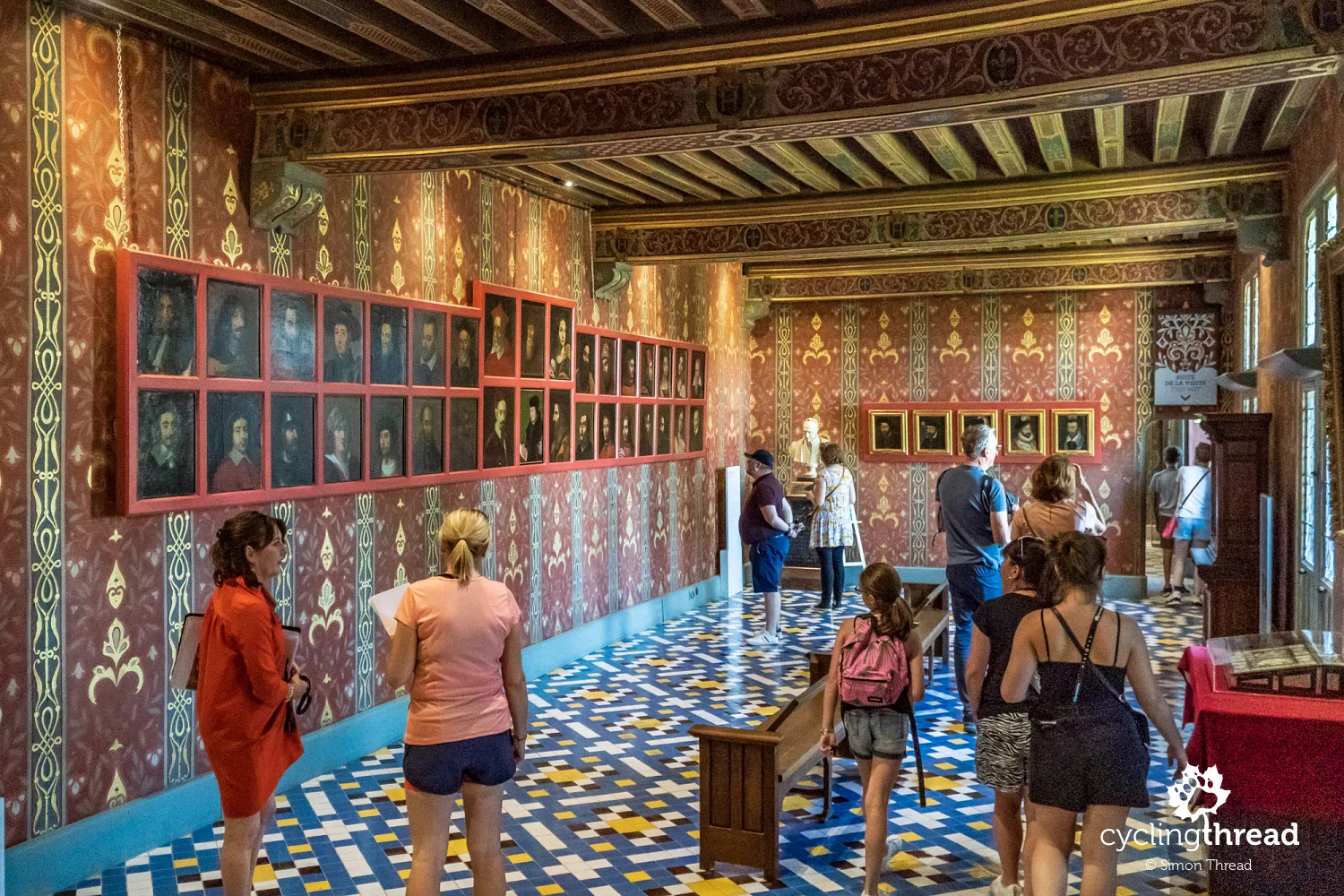
It is difficult to decide what to describe first at Blois Castle. Should it be the distinctive sculptures on the main facade, the elegant spiral staircase that inspired the one we saw earlier in Chambord, or the Estates-General Hall - the oldest ceremonial hall in France? There is also the lapidary with original pinnacles, gargoyles and sculptures, as well as fireplaces and artworks filled with hidden symbols. Among them are the porcupine from the coat of arms of Louis XII, the salamander of Francis I and the ermine of Claude of France. And then there are the views - not only of the Loire Valley, but even of the rows of preserved gargoyles jutting out from the castle walls.
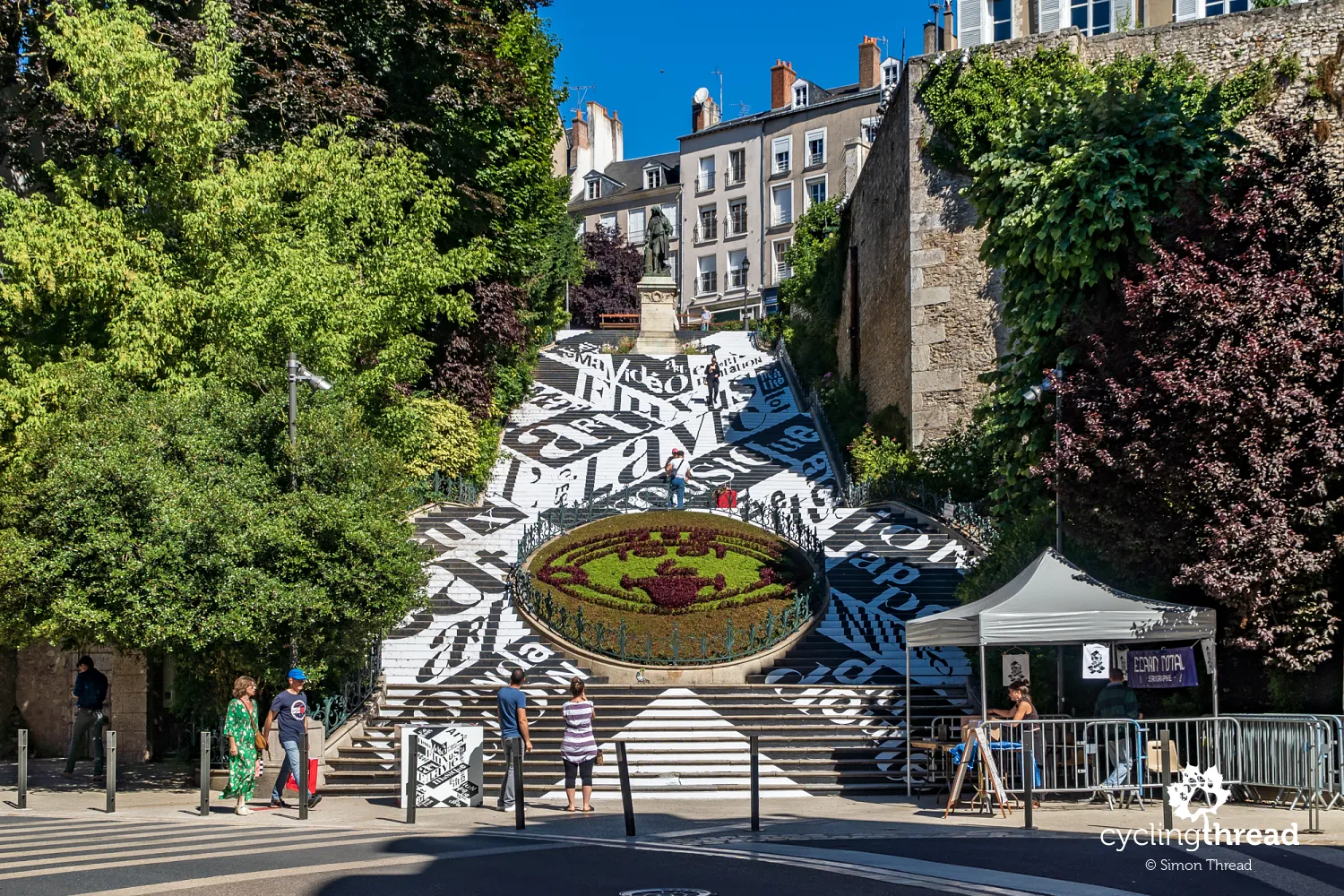
Yet Blois is not only about its castle. The Denis Papin stairs, named after the inventor who helped develop the steam engine, are an impressive sight. Repainted every year, they take on new patterns and associations, adding a unique charm to the street that leads cyclists into the city from the Loire route. Blois is also home to two remarkable churches: Saint Louis Cathedral and, below the castle, Saint Nicholas Church - one of the finest examples of French Gothic, visible from the castle terraces and surrounded by the narrow lanes of the artists’ district. And when riding up the castle hill or preparing to leave it, do not miss the House of Magic, where a six-headed dragon appears from the windows every 30 minutes, directly opposite the castle courtyard.
Excellent organization of cycle tourism in France
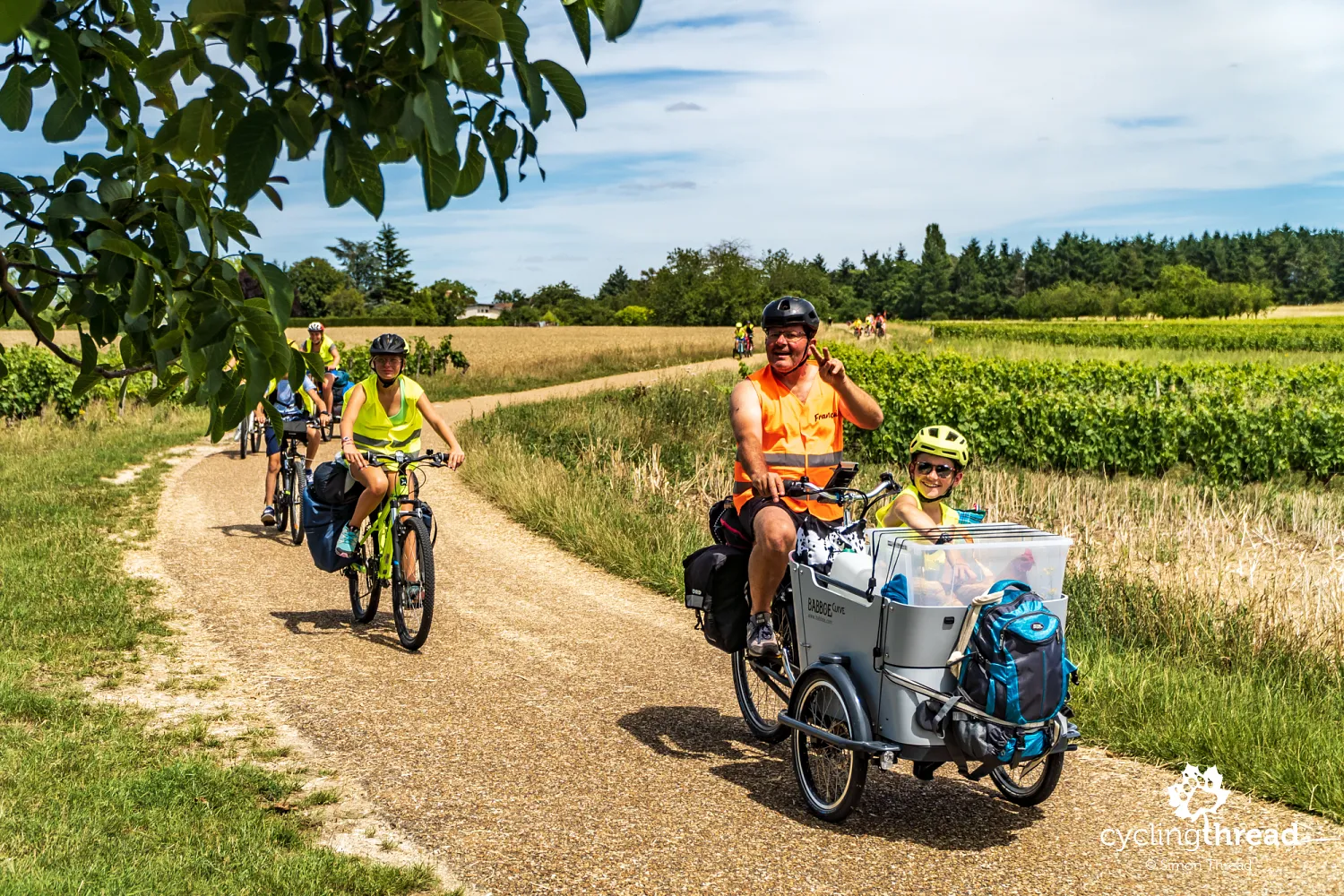
Around this part of the route we met a remarkable French cycling family: eight children and three adults, including only one man. For several years they had been traveling this way, choosing a different long-distance cycling route in France each year and taking children from their family and close friends on these adventures. Since we were riding at a similar, unhurried pace - they often stopped for the children while we paused for photos and sightseeing - we crossed paths with them several times. Each encounter reminded me how safe and well-organized cycle tourism in France must be to make such family expeditions possible. What struck me most was the cargo bike, in which the leader of the group carried a boy with cerebral palsy, giving him the chance to experience the journey with his family. And in the same basket rode a chicken, brought from their farm, which quickly became the unexpected mascot of this cheerful cycling caravan.
Garden festival more attractive than the castle
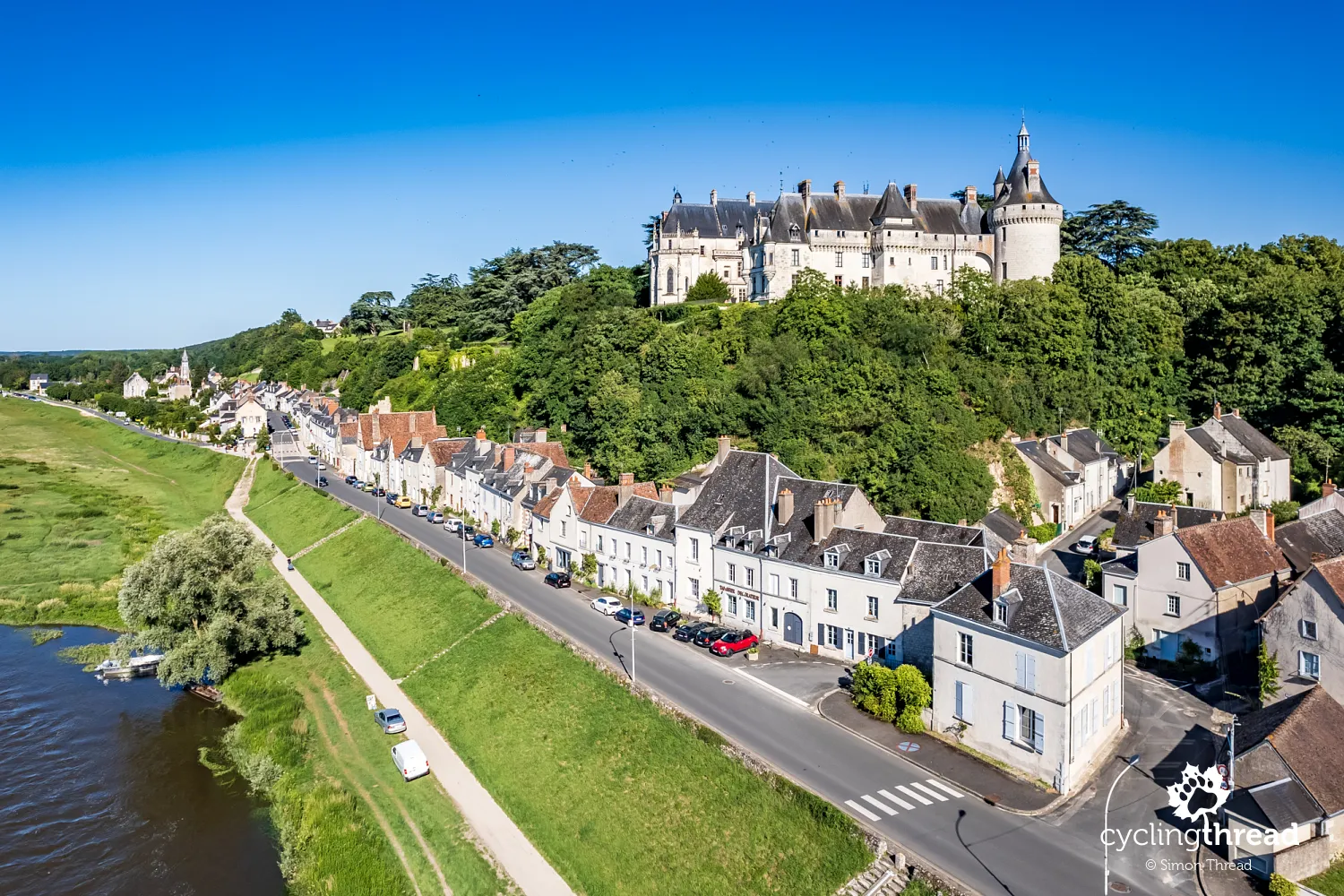
Riding together with the cycling family, we arrived at the Chaumont-sur-Loire Castle, one of the most famous landmarks along the Loire and a majestic example of Renaissance architecture. The castle is surrounded by vast gardens that rival the building itself in beauty. Every year, the grounds host the International Garden Festival, which attracts visitors from around the world. This renowned event is a platform for artists, gardeners and landscape architects to showcase their creative concepts in specially designed gardens. During the festival, the park of Chaumont-sur-Loire turns into a living art gallery, offering a unique experience that blends the beauty of nature with innovative artistic ideas.
How to prepare a room for bicycles?
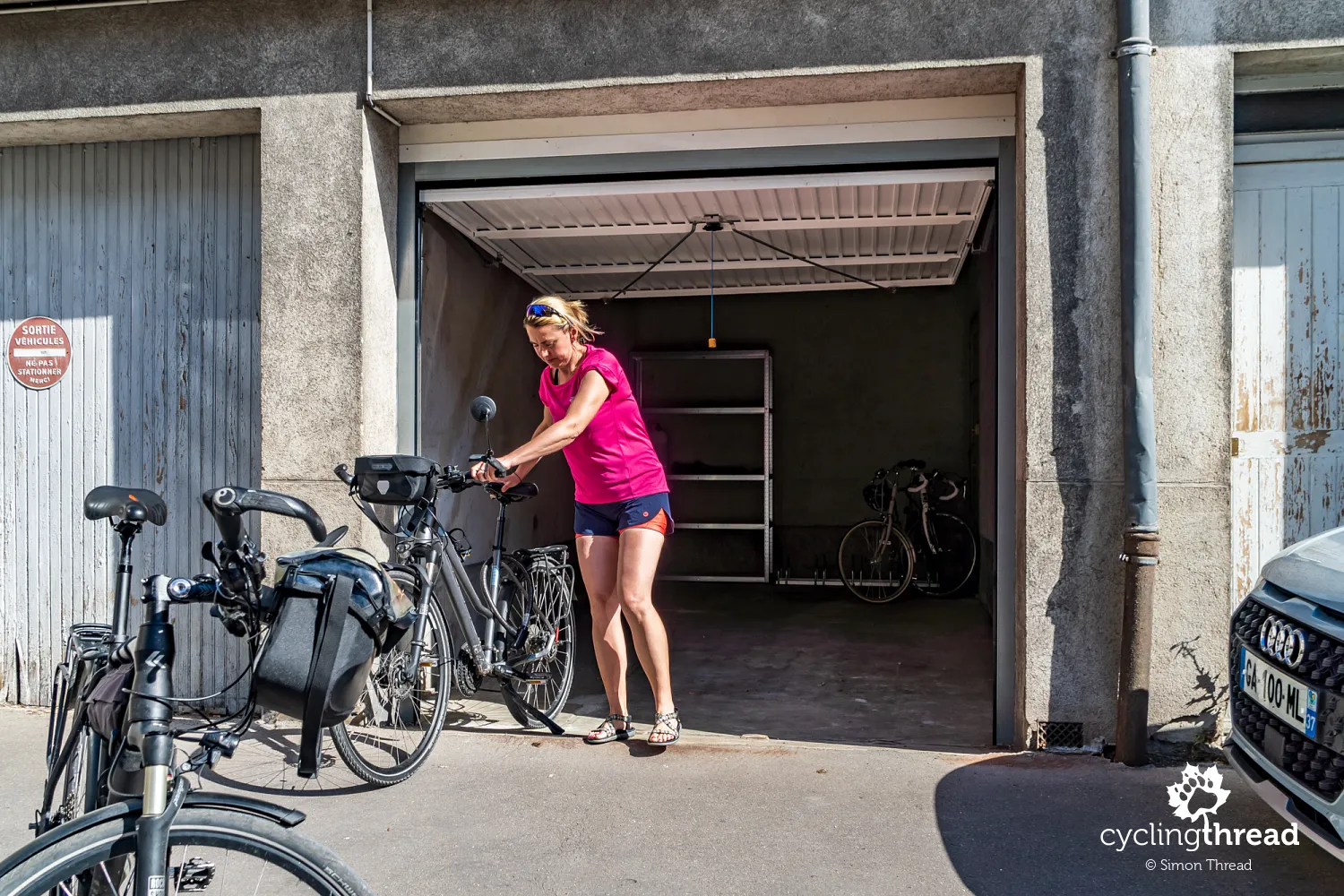
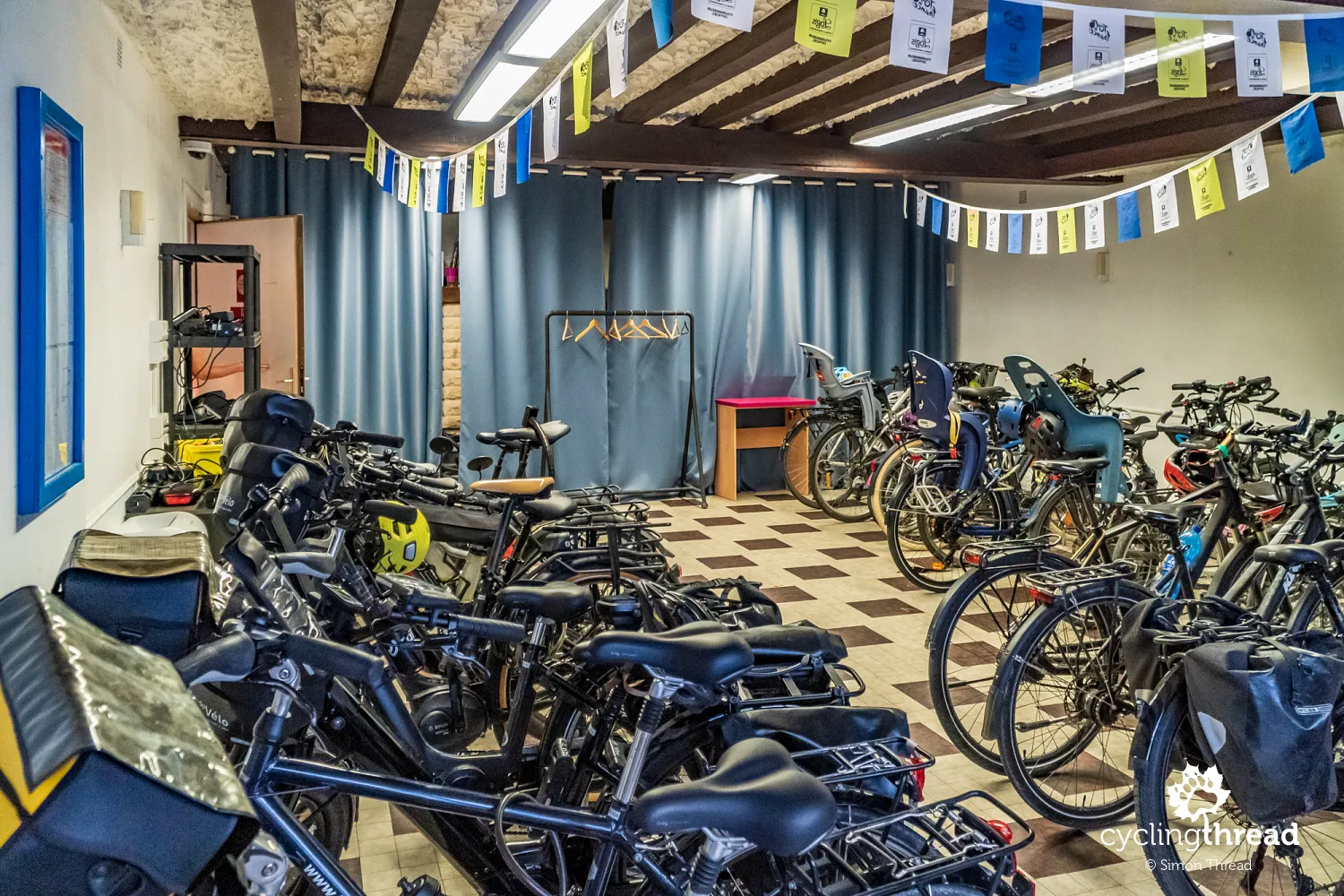
That evening we arrived at the cozy Chaptal Hotel in Amboise, which quickly turned out to be one of the most cycle-friendly places we have stayed at during all our trips across Europe. The highlight was the excellently organized bike room - a facility that combines secure storage with a small workshop, charging points for e-bikes and even a changing area with a rack for wet clothes. The room is accessible directly from the street through a separate entrance and ramp, making it especially convenient for cyclists. Naturally, the hotel is part of the Accueil Vélo network, proudly marked by a plaque placed just below the official state sign with the number of hotel stars.
Foie gras - unethical but delicious
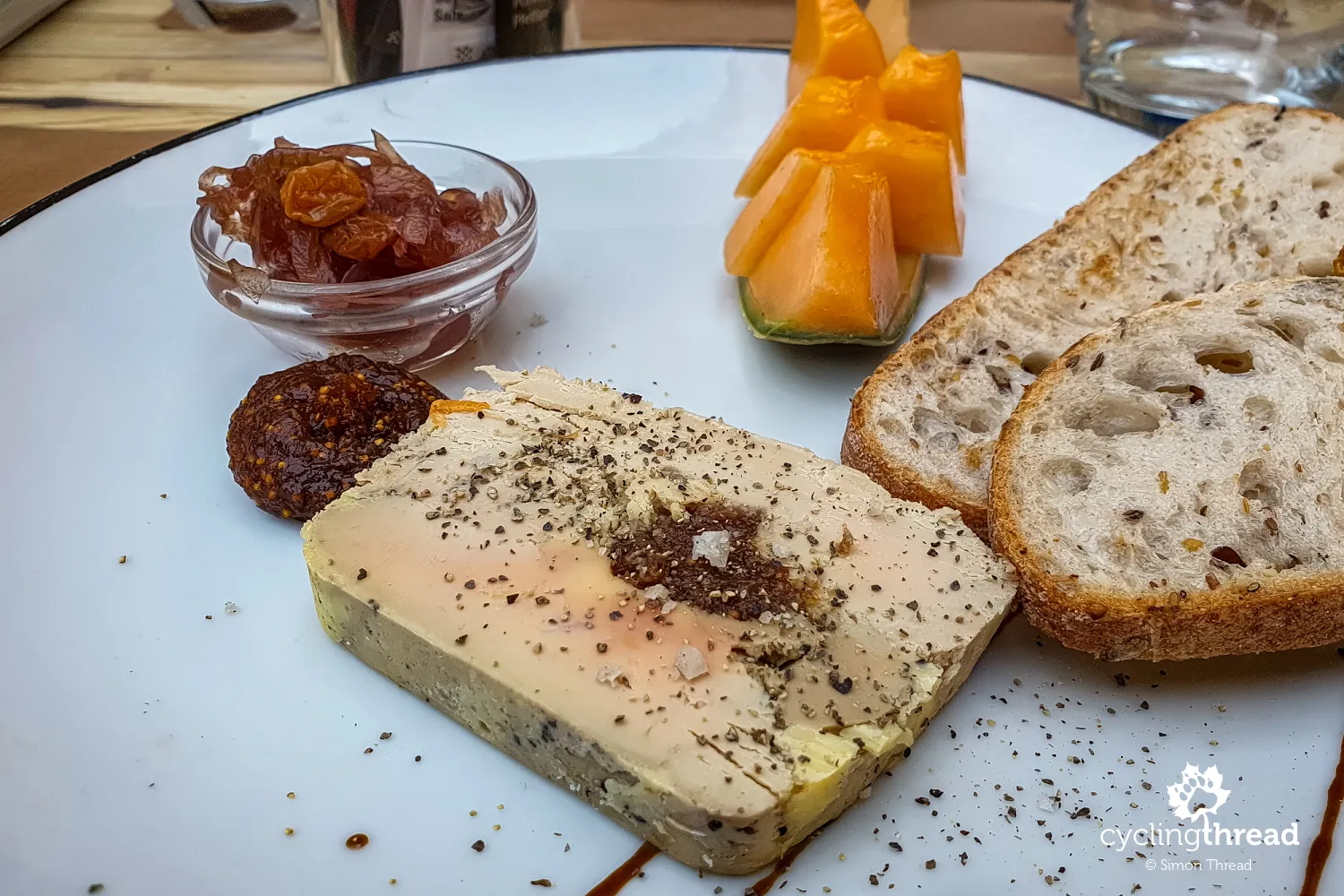
In Amboise, we saw foie gras on the menu of a local restaurant - a pâté made from fattened duck or goose livers. Foie gras is one of the most famous delicacies of French cuisine, but also one of the most controversial. Its production involves force-feeding, known as gavage, where birds are fed through a tube to enlarge their liver, a process criticized as cruel and inhumane. For many, foie gras represents the tension between culinary tradition and animal welfare. Putting these concerns aside for a moment, we tasted foie gras as an appetizer in Amboise, and found it surprisingly delicate, with a smooth texture and a slightly nutty flavor reminiscent of fine liver pâté.
Two beautiful châteaux and Leonardo da Vinci
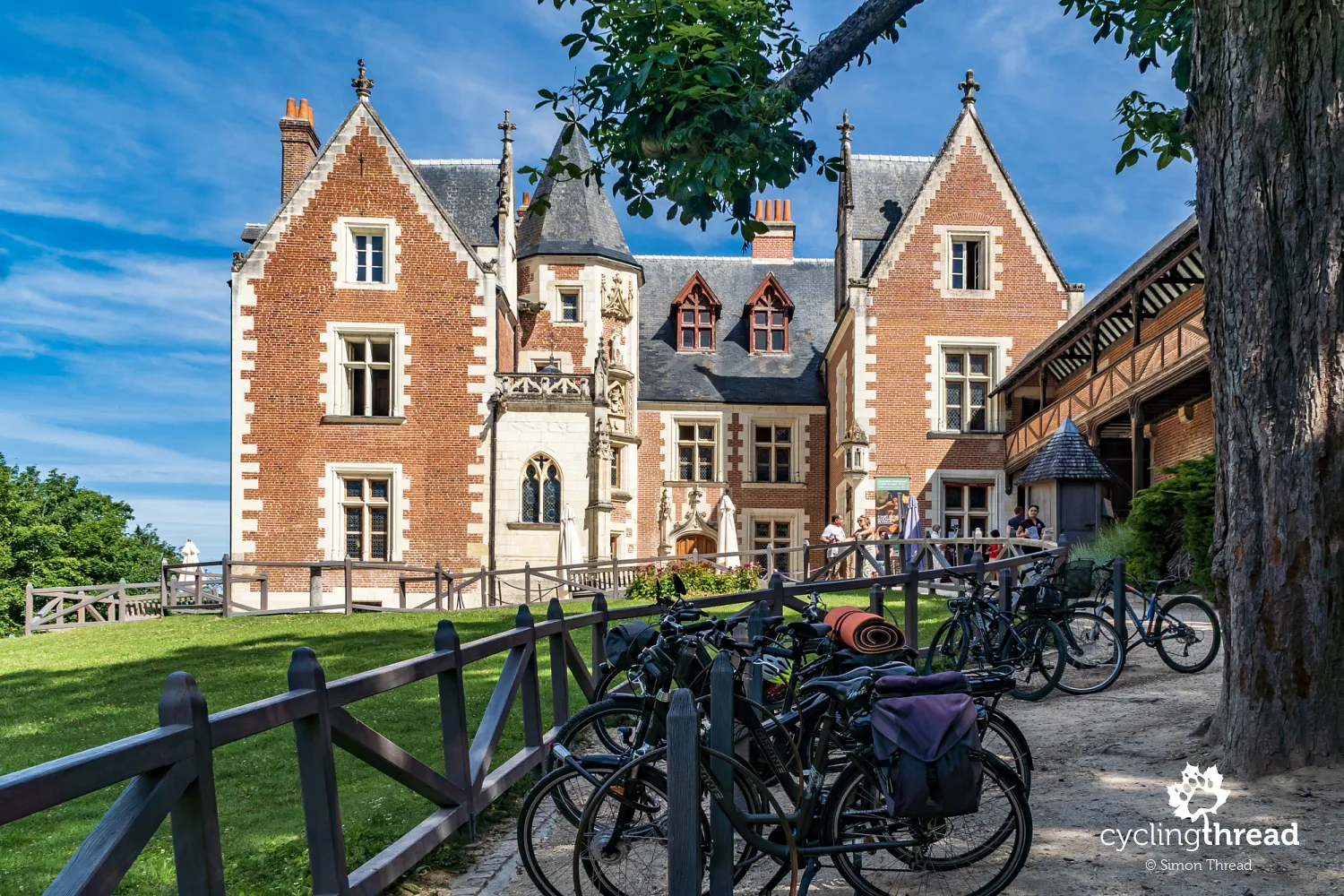
Yet Amboise is best known for two remarkable châteaux linked to Leonardo da Vinci. The first we visited, the Clos Lucé Palace, is where Leonardo spent the final years of his life. Invited by King Francis I, he lived here from 1516 until his death in 1519. The elegant Renaissance residence now houses a museum dedicated to the scholar, with replicas of his inventions and copies of his artworks. Visitors can also see the room where Leonardo passed away. Even the gardens are filled with models of his machines, turning Clos Lucé into both a historic monument and an inspiring place of discovery.
The Château d'Amboise was once a majestic royal residence, standing on a rocky promontory above the Loire and serving as home to the kings of France for centuries. Originally a vast complex of forty buildings, only two wings remain today - the Gothic wing and the Louis XII wing. Many of the other structures were lost over time through wars, confiscations and revolutions. Inside the preserved parts, visitors can explore impressive halls and visit the Chapel of Saint Hubert, where Leonardo da Vinci is buried. Although the castle has lost much of its original grandeur, the Château d'Amboise still captivates with its history and architecture. For us, the sight of its silhouette glowing in the orange light of the setting sun was unforgettable.
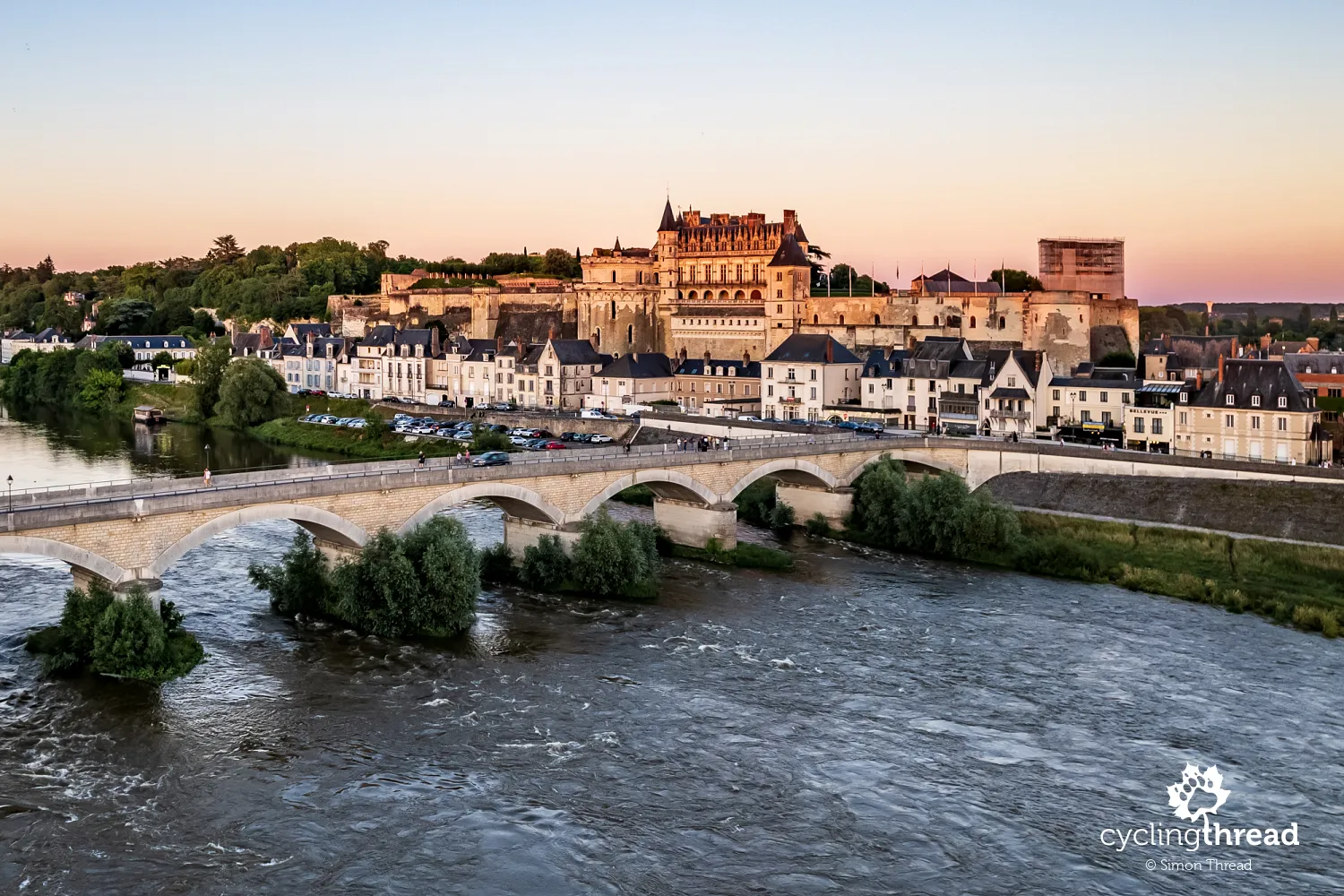
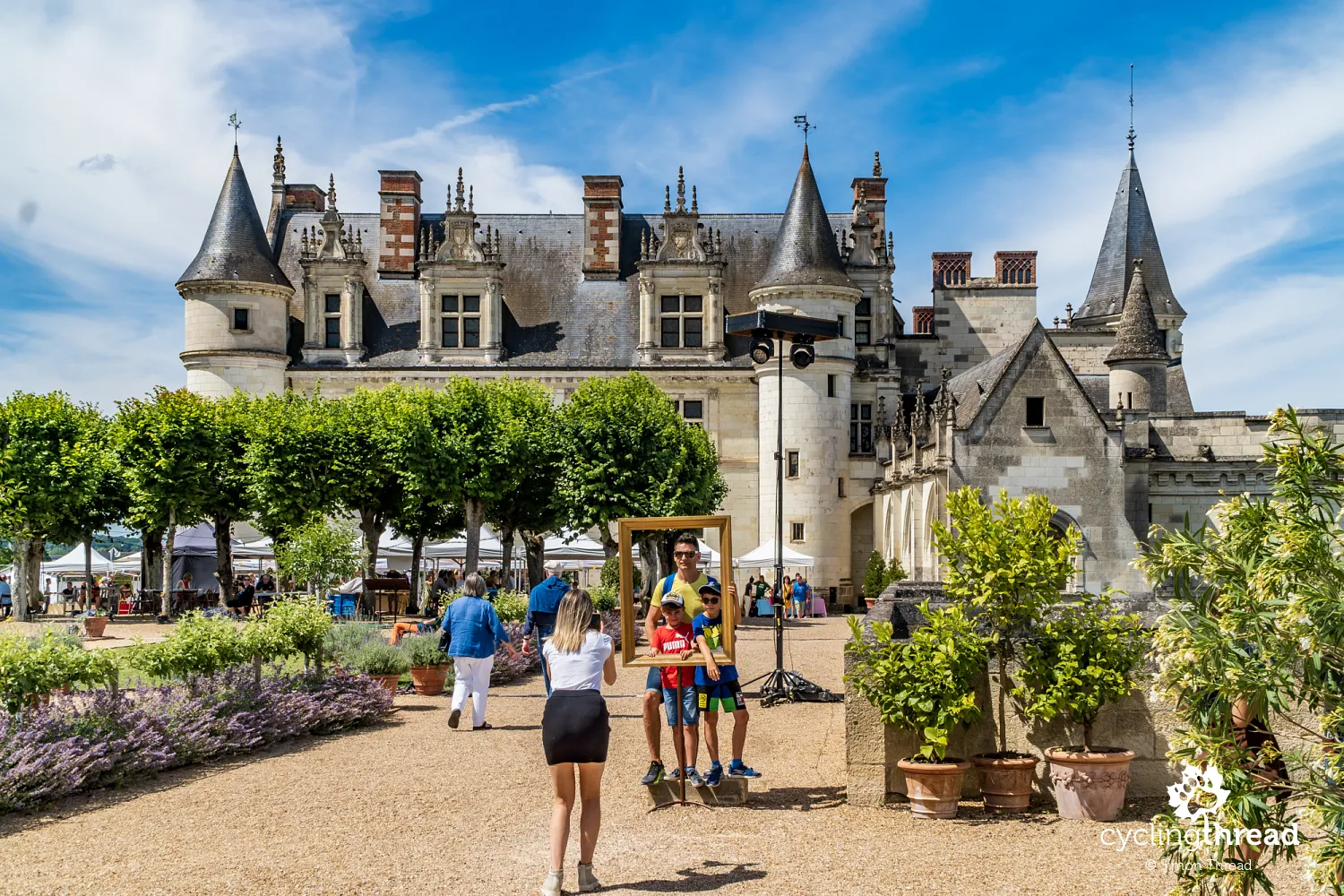
Amboise Castle is worth a visit for its spectacular views of the city and river, as well as for a short walk in its small but beautifully maintained gardens. Our memories of Amboise also include a local market held in the castle courtyard, where regional producers offered jams, liqueurs, wines and sweets, and even an interview we gave for French television, which was filming a segment about the revival of tourism after the pandemic. We also recall the charm of an evening walk through the town’s narrow streets and along the riverside promenade at sunset. Altogether, Amboise has everything needed to be remembered as one of the most distinctive towns along the Loire.
One of France's most important wine regions
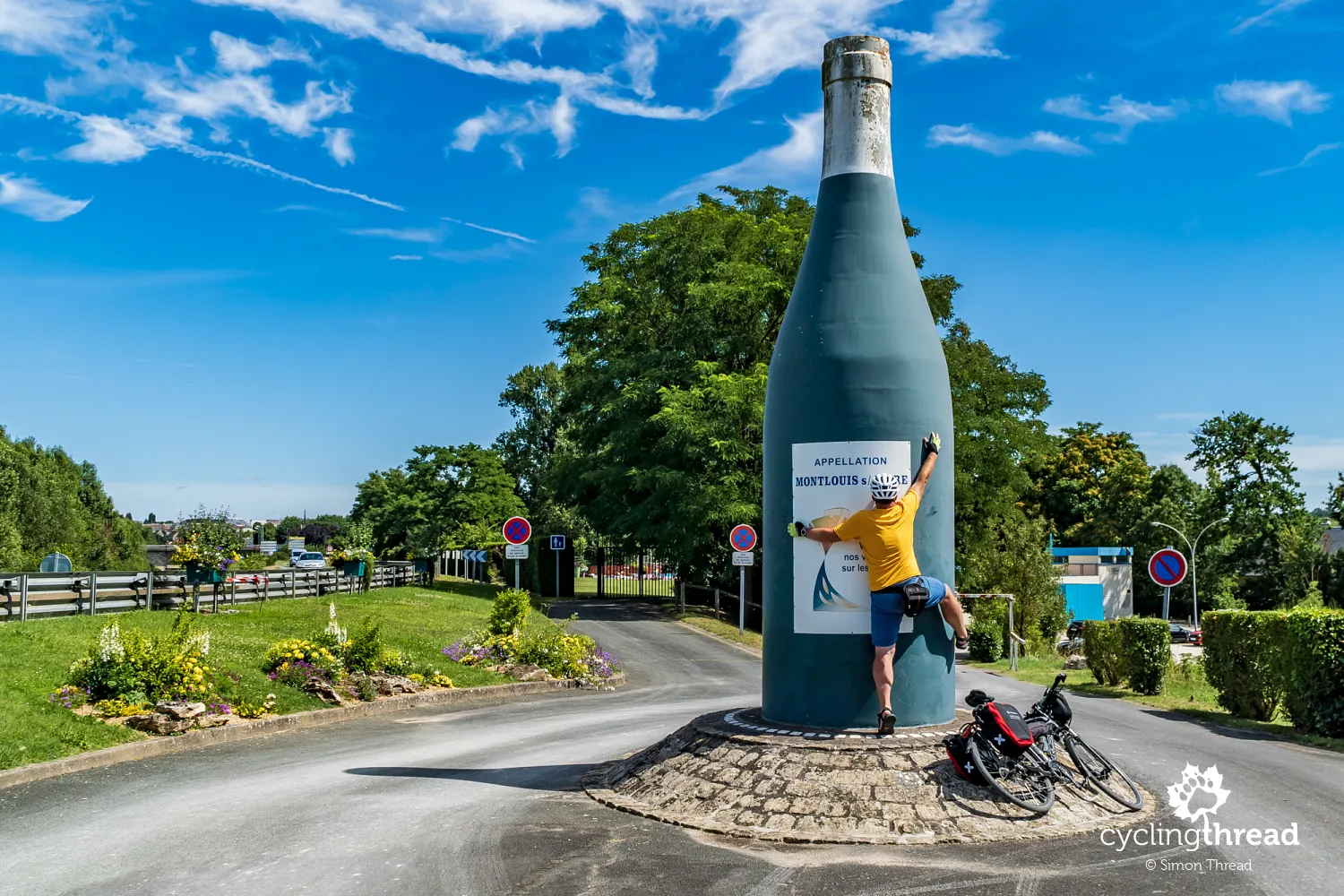
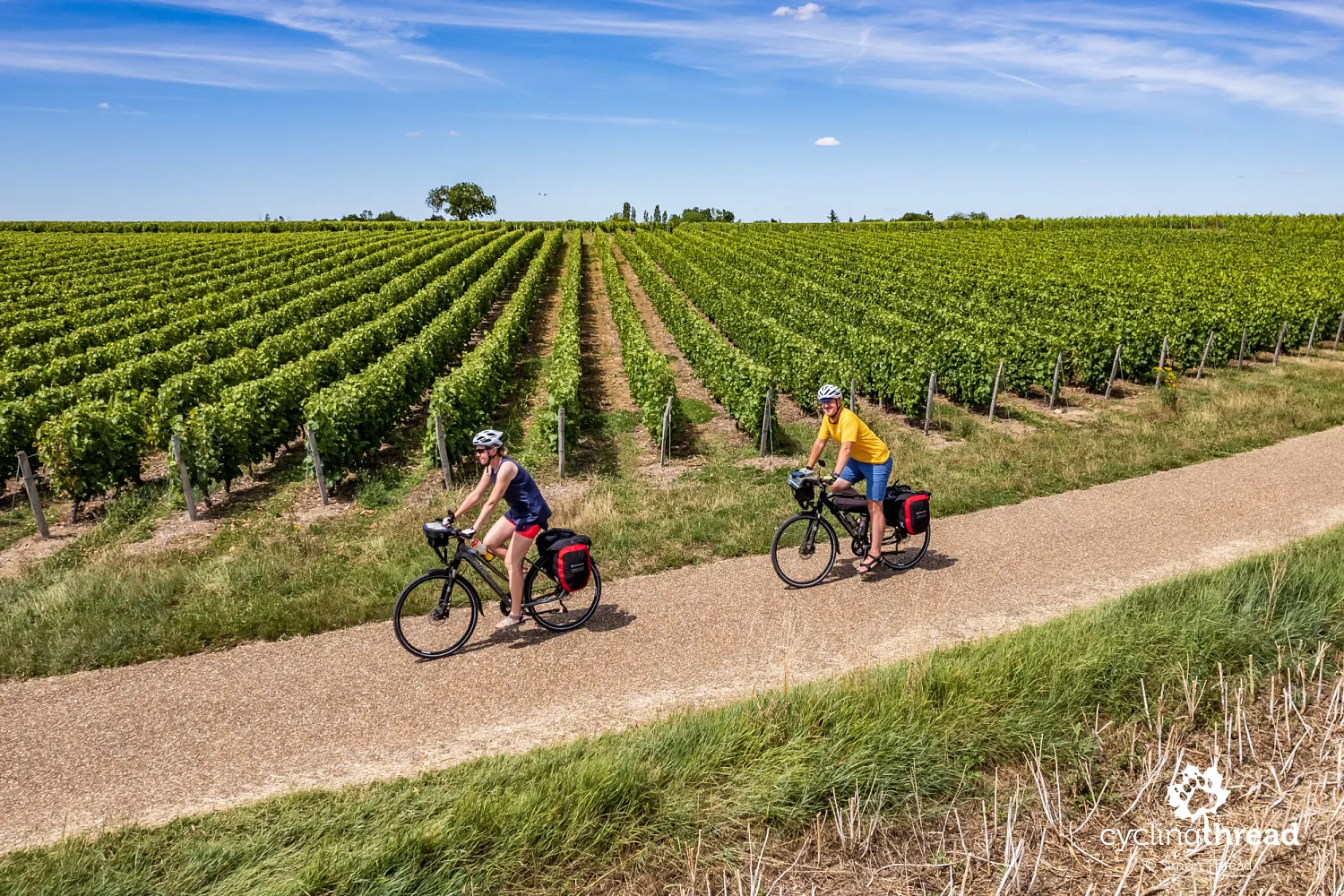
The area around Amboise shows clearly how important the wine industry is here - the Loire Valley is one of France’s key wine regions, alongside Bordeaux, Burgundy and Champagne. The valley is divided into several well-known appellations, including Muscadet, Anjou, Saumur, Bourgueil, Chinon and Vouvray, each producing distinctive wines. Vineyards spread across gentle, south-facing slopes that provide excellent conditions for grape growing - shelter from strong winds, good sunlight and proper drainage. Among the many grape varieties cultivated are Chenin Blanc, Cabernet Franc and Sauvignon Blanc. Sustainable and organic farming practices are common, and grapes are often harvested by hand to maintain quality. From harvesting through fermentation, aging and bottling, every step of the process shapes the unique character of Loire Valley wines.
Tours - another highlight of our cycling trip
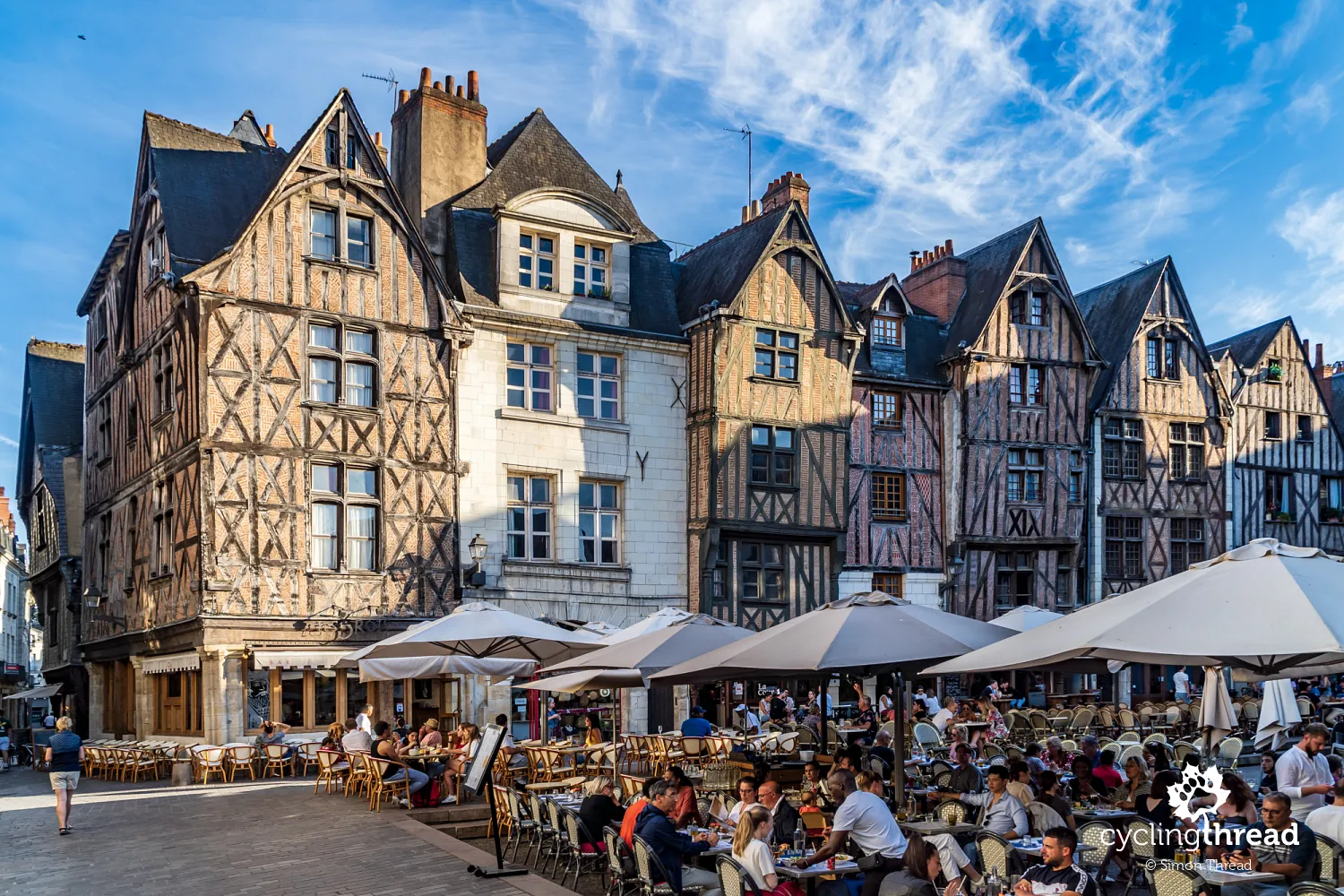
The highlight of the next day was Tours, a city that truly captivated us with the lively atmosphere of Place Plumereau, its central square. The cobbled streets of the old town, sometimes called "little Paris," are lined with medieval houses now serving as cafes, restaurants and boutiques. Place Plumereau was buzzing with students and tourists, all admiring the extraordinary timber-framed houses. Just a few hundred meters away, the monumental Gothic Saint-Gatien Cathedral rises above the city. Our guide reminded us that Tours is closely linked to the cult of Saint Martin, who served here as bishop. This tradition is one reason why Tours is such an important stop on the EuroVelo cycle route from Trondheim to Santiago de Compostela. EuroVelo 3, also known as the Pilgrims' Route, follows the same course as our Loire route between Orleans and Tours.
Four garden sectors at Villandry castle
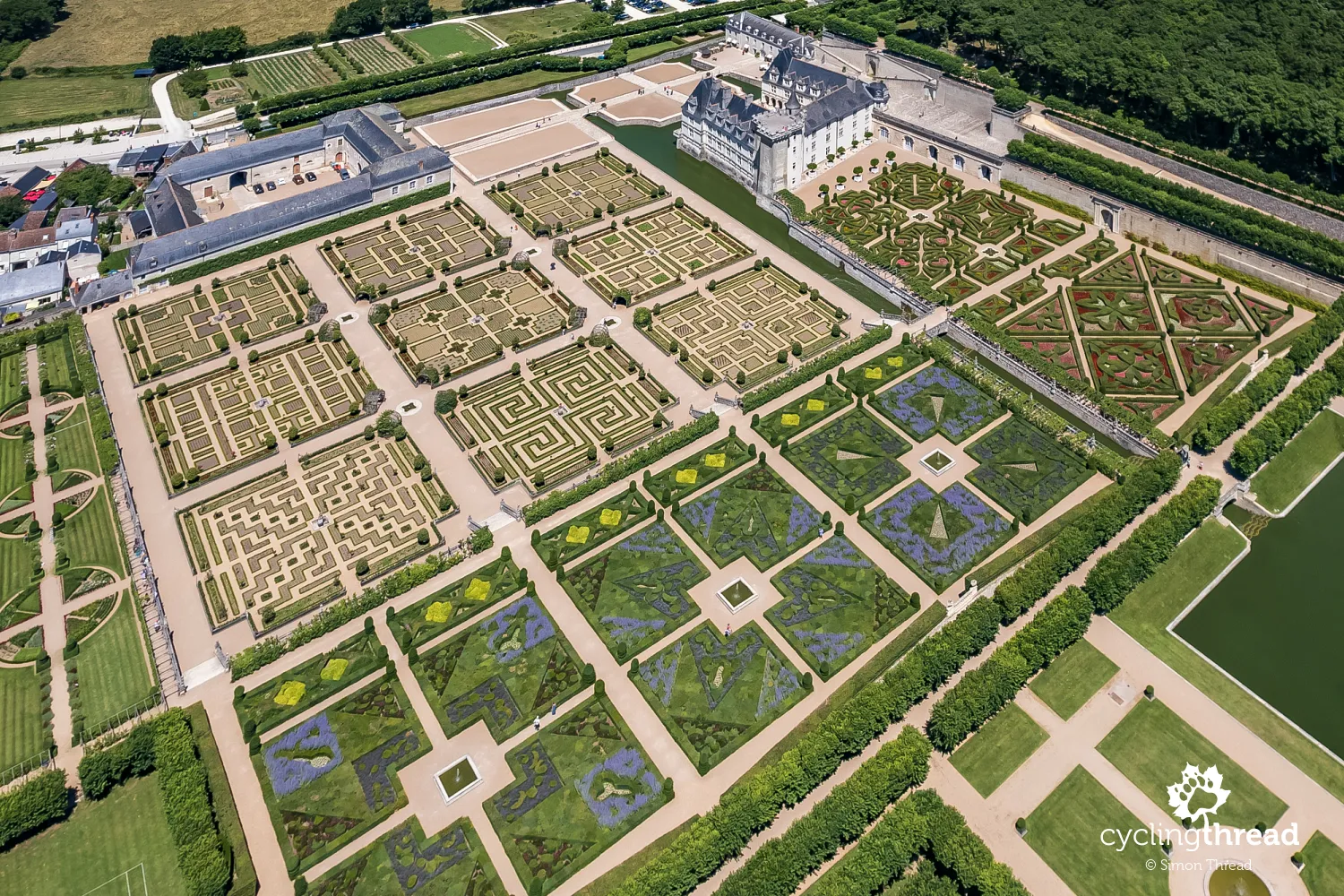
The Loire cycle route takes cyclists out of central Tours through parks and green recreational areas before reaching the next highlight of the Loire Valley. This is the Renaissance Château de Villandry, standing on the Cher River, a left tributary of the Loire, and surrounded by its world-famous gardens. Built relatively late, in the early 16th century, the castle is often described as the last of the great châteaux of the Loire. The gardens are an outstanding example of the French formal style, divided into four themed sections: the vegetable garden, the water garden, the ornamental garden and the sun garden. Each has its own design, plant composition and purpose. Château de Villandry is open to the public and is especially appealing to visitors looking for aesthetic inspiration and harmony with nature.
Cycle path on the crown of the flood embankment
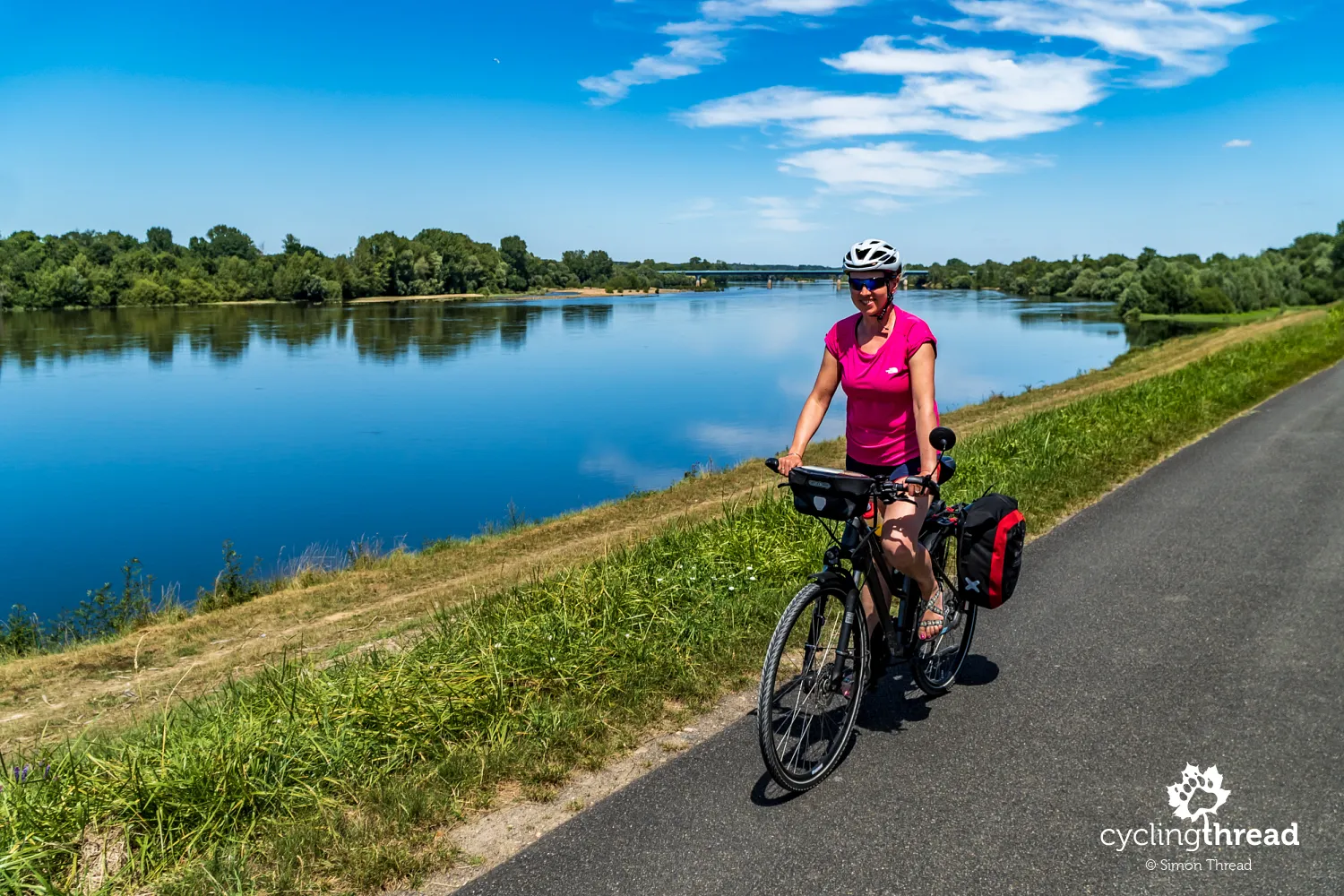
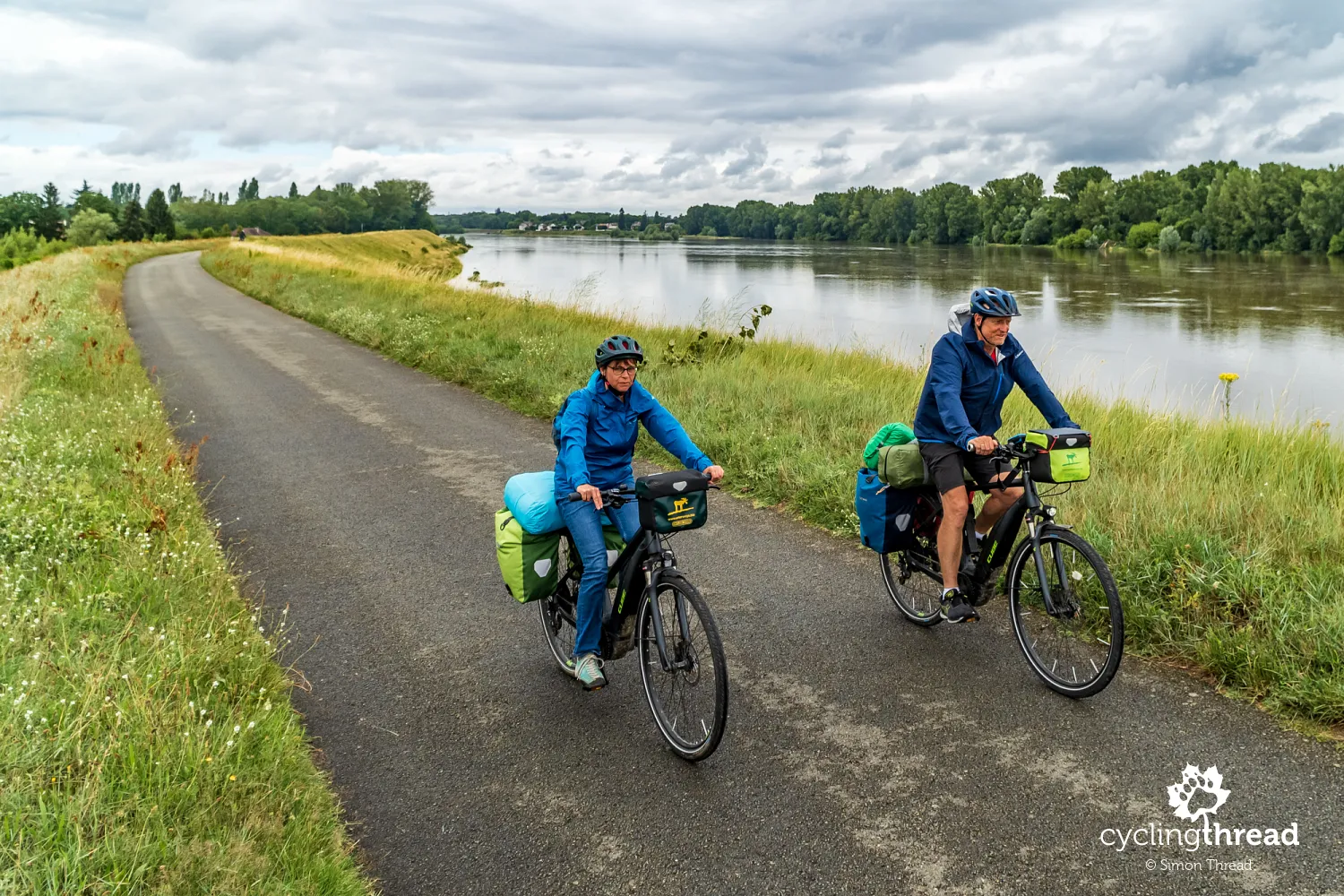
The next stretch of the Loire route, beyond Villandry and heading towards Chinon with its impressive fortress ruins, was a slight disappointment. For nearly 20 kilometers the path follows a road with a 70 km/h speed limit. This is probably reduced because of cyclists, but it still feels too fast to be fully comfortable. We never felt unsafe, yet compared to the more cyclist-friendly sections before, this part seemed more like regular road traffic. Fortunately, it does not last long, and the ride is at least rewarded with beautiful views of the river from the crown of the flood embankment.
The Duchy of Brittany becomes part of the Kingdom of France
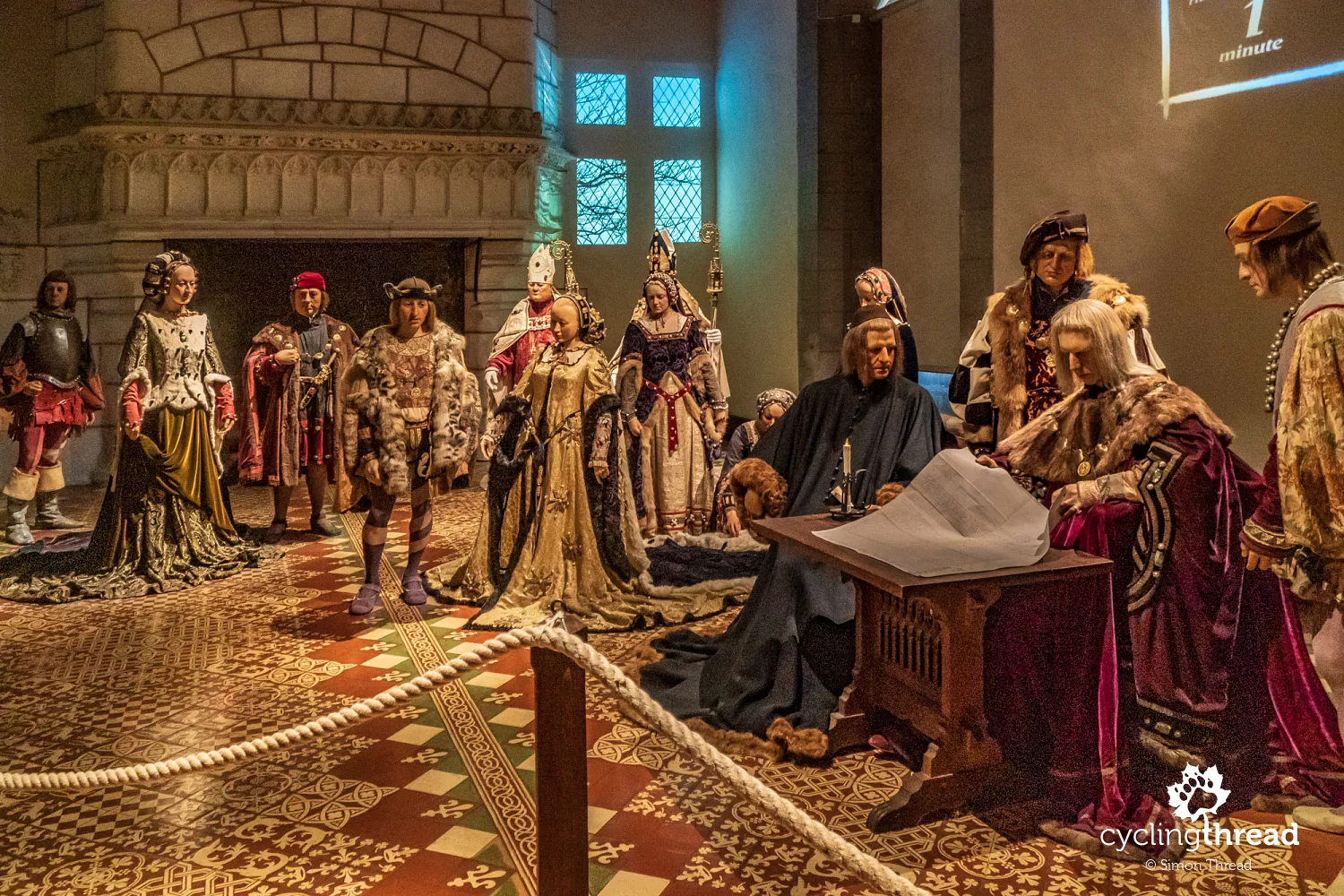
In the middle of this road section, on the opposite bank of the river, lies the small town of Langeais with yet another castle. During our visit we saw a short "light and sound" show that illustrated the most important event in its history: the royal wedding of Charles VIII to 14-year-old Anne of Brittany. In just fifteen minutes, the multimedia performance turned us into virtual witnesses of the moment when the once independent Duchy of Brittany was incorporated into the Kingdom of France. Langeais Castle is also renowned for its collection of original 16th-century tapestries.
Good website for the Loire Route
On the way to Chinon, we left the main trail that continued straight along the Loire and followed one of the alternative routes. This is a good moment to mention the clear and useful map available on the official website of the Loire à Vélo. It shows in detail which sections have dedicated cycling infrastructure (marked in green) and which follow regular roads (marked in red). A quick comparison, however, reveals that even quiet asphalt service roads on the Loire embankments between Sully and Orleans are marked in red. In practice, the overall comfort of riding is often more "green" than the map suggests. The website also includes a practical route planner that can quickly generate a track between two points on the trail.
Joan of Arc arrives at the Chinon fortress
The fortress of Chinon, which we reached via a side variant of the Loire à Vélo route, stands high on a steep hill above the Vienne River. It is one of the most important historic sites in the Loire Valley, best known as the place where Joan of Arc met the future King Charles VII in 1429 - a moment highlighted throughout the site. Inside, a museum presents the history of Chinon and the story of Joan of Arc. The fortified complex is made up of three separate structures, all surrounded by defensive walls and moats. From nearly every corner of the fortress, there are sweeping views over the town of Chinon and the surrounding vineyards.
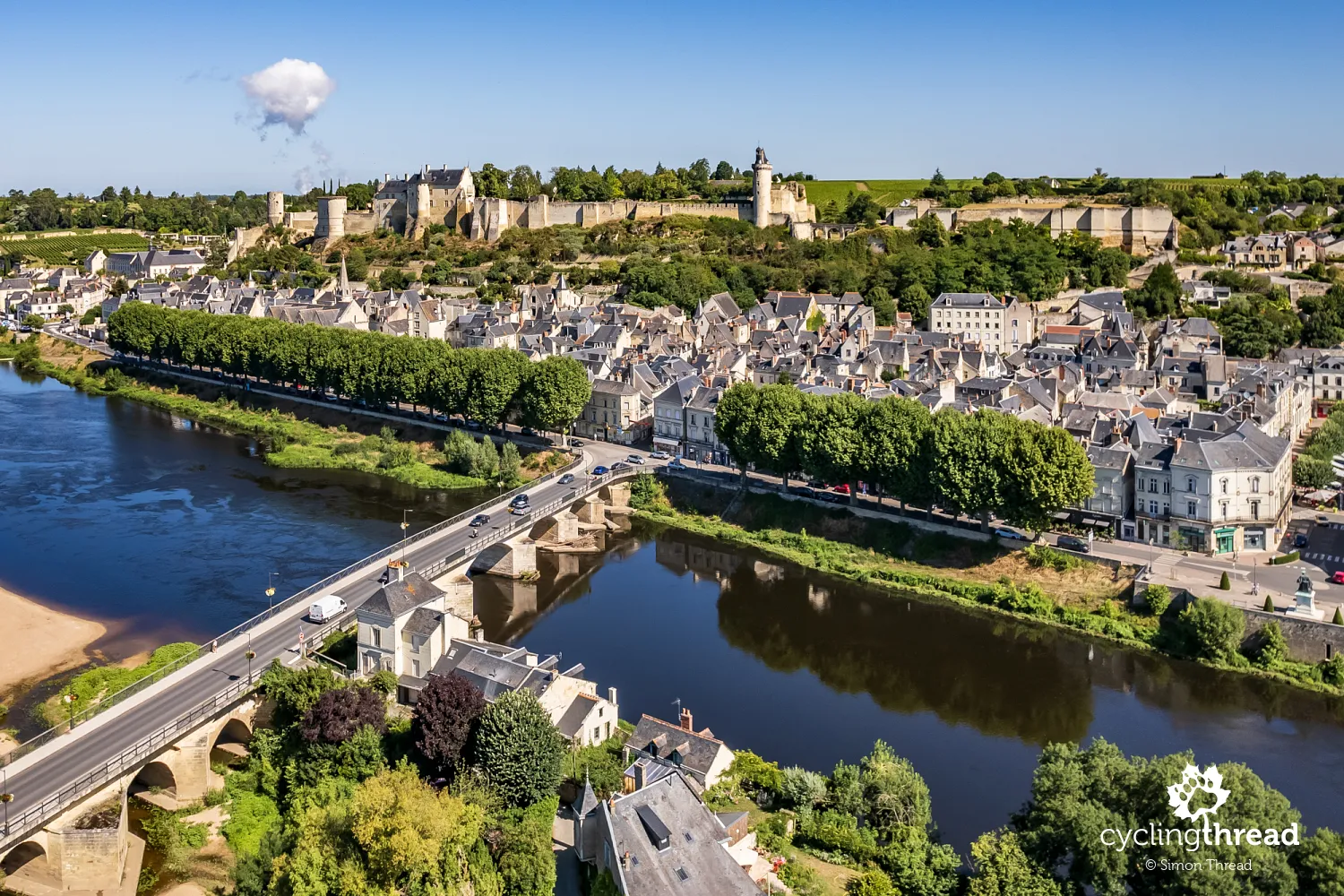
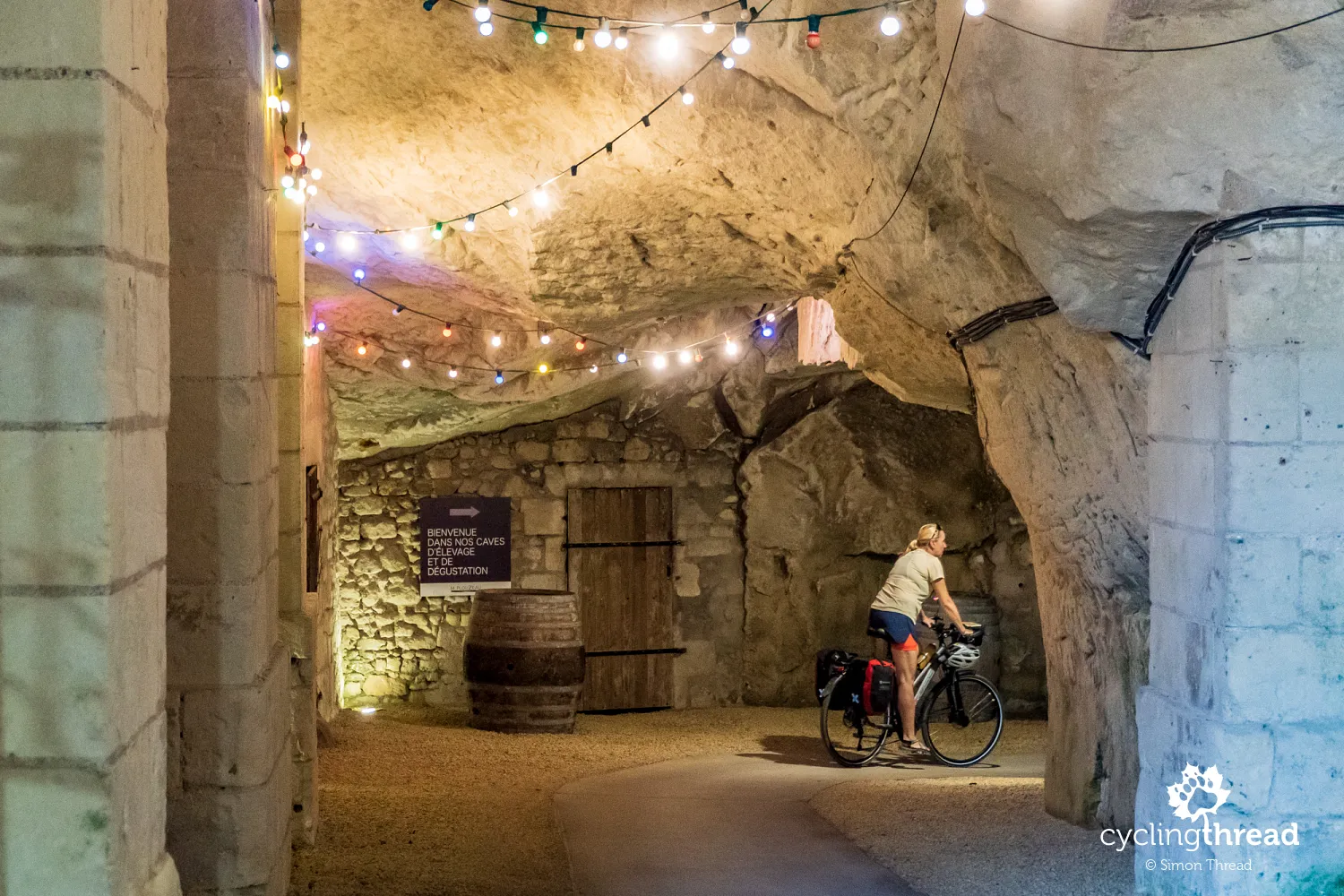
Just below the fortress lies the old town of Chinon, a charming maze of historic streets and houses through which we rode to our cycling hotel. In the center of the town, a grotto carved into the rock beneath the fortress serves as a wine cellar, where regional vintages from the Chinon appellation are aged and offered for tasting. Walking through the short corridors, it is worth looking up - the Plouzeau winery is connected to the fortress by a deep well cut through the rock. Cyclists can stop here for a guided tour of the cellars and a symbolic tasting, as the winery is part of the Accueil Vélo network.
Fouée, foie gras, tarte tatin and rillettes
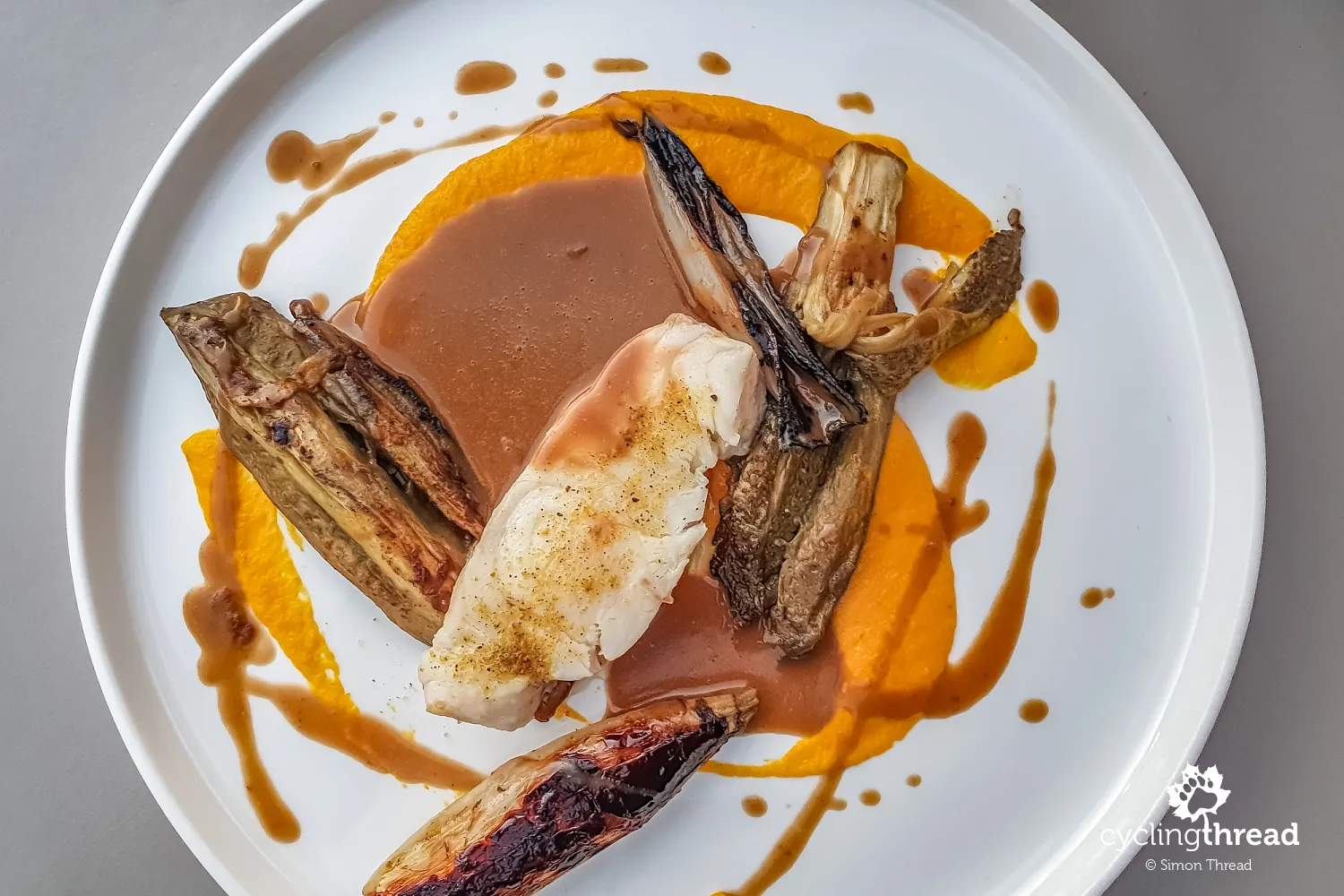
One of the Loire wines accompanied us during a memorable dinner at the Au Local restaurant in Chinon, right beside the castle tower. The setting sun, tired legs after a day of cycling and quiet conversations on the terrace were punctuated by sighs of delight with every bite. The official website of the route also highlights the region’s culinary treasures: the traditional almond cake with rum from Nantes, fouée - small breads filled with pork pâté, nougat cake from Tours, goat cheeses from the Loire Valley, tarte tatin - the famous upside-down apple tart, and even the renowned mustards from Orleans. France is undeniably a paradise for gourmets, and tasting these specialties should be part of any trip to the Loire Valley, even if it means trading a few kilometers for calories.
Troglodytes, the cave dwellers of the Loire Valley
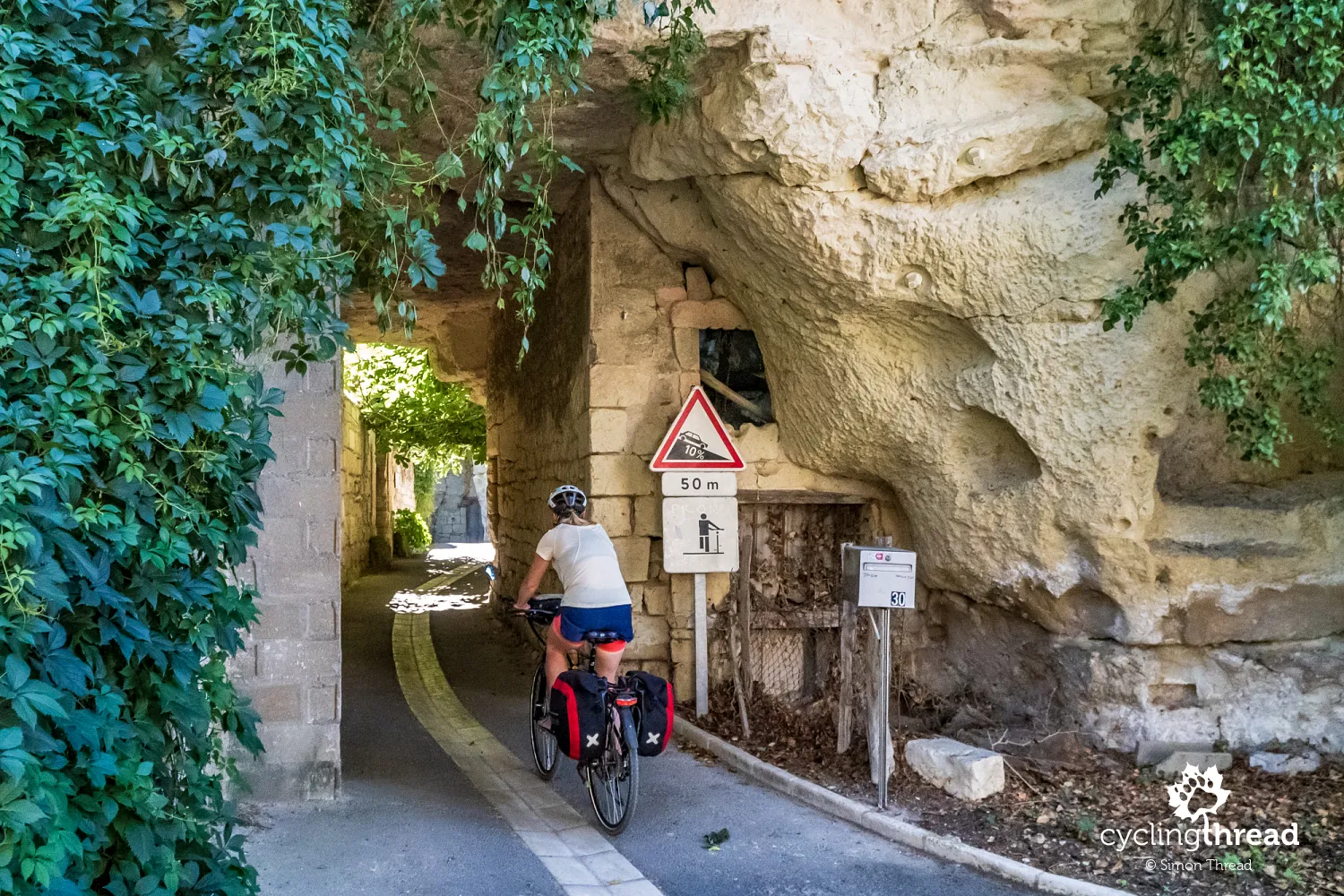
One fascinating chapter of early history, still visible in many places across the Loire Valley, is the legacy of the troglodytes and the caves they created 25-35 thousand years ago. Carved into the region’s soft limestone and other sedimentary rocks, dozens - perhaps even hundreds - of these caves have survived to the present day. While Louresse-Rochemenier, located a little further away, is often cited as the best-preserved troglodytic town in the Loire Valley, travelers along the Loire route will also encounter many examples of these ancient settlements, including near Saumur, which we were heading towards on the penultimate day of our journey.
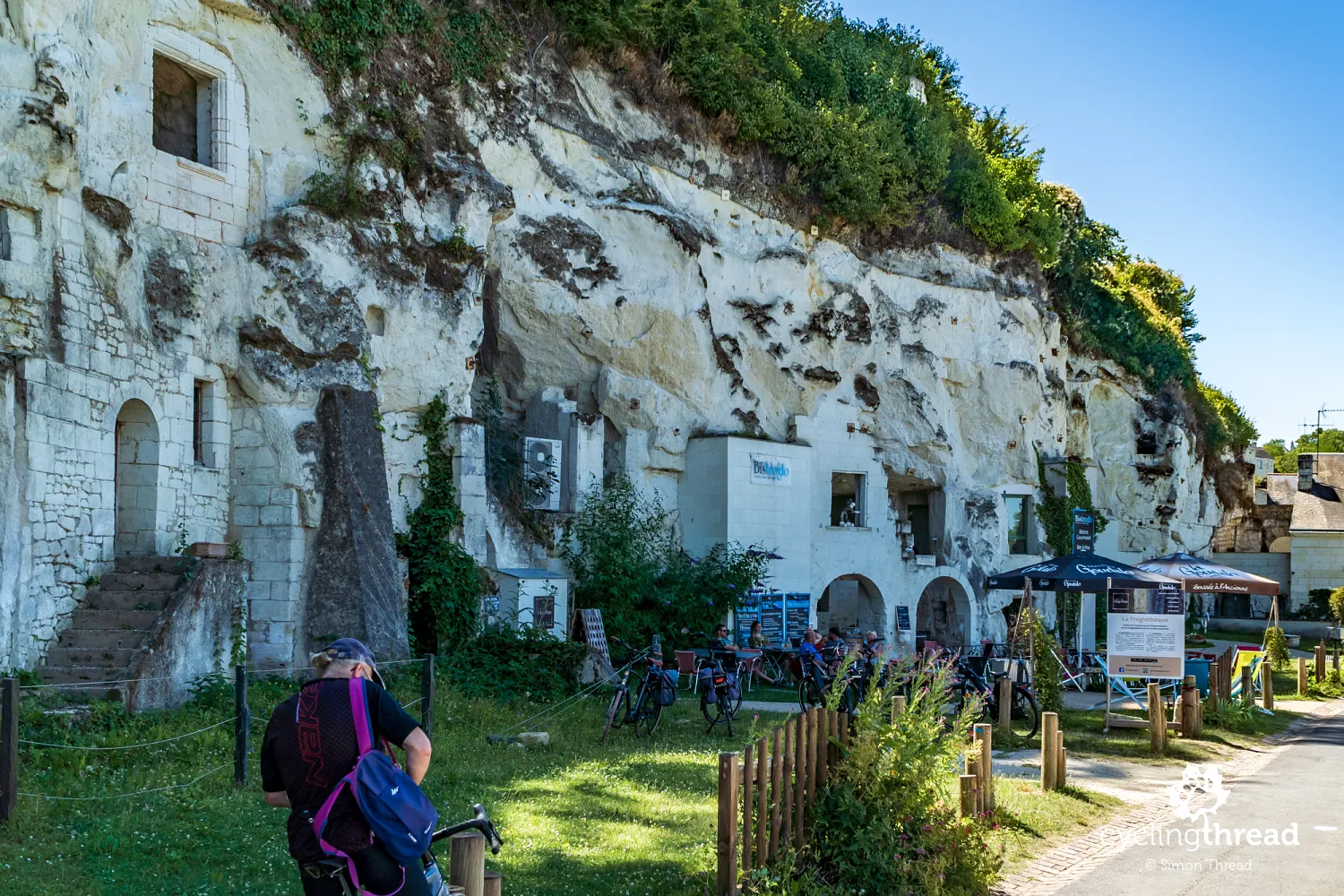
Over the centuries, the troglodytic caves served many purposes: they were used as homes, provided defensive shelter and functioned as storage spaces for food and goods. Today, some of them have been transformed into cafes, wineries, shops and artisan workshops. Many now feature built facades, turning the caves into enclosed residential or service spaces. Interestingly, French law is still being developed to regulate the use and adaptation of former troglodytic dwellings. Even so, a simple bike ride through Turquant and its surroundings, along narrow rocky passages, offers a unique and memorable experience.
Broad panorama from the Saumur castle
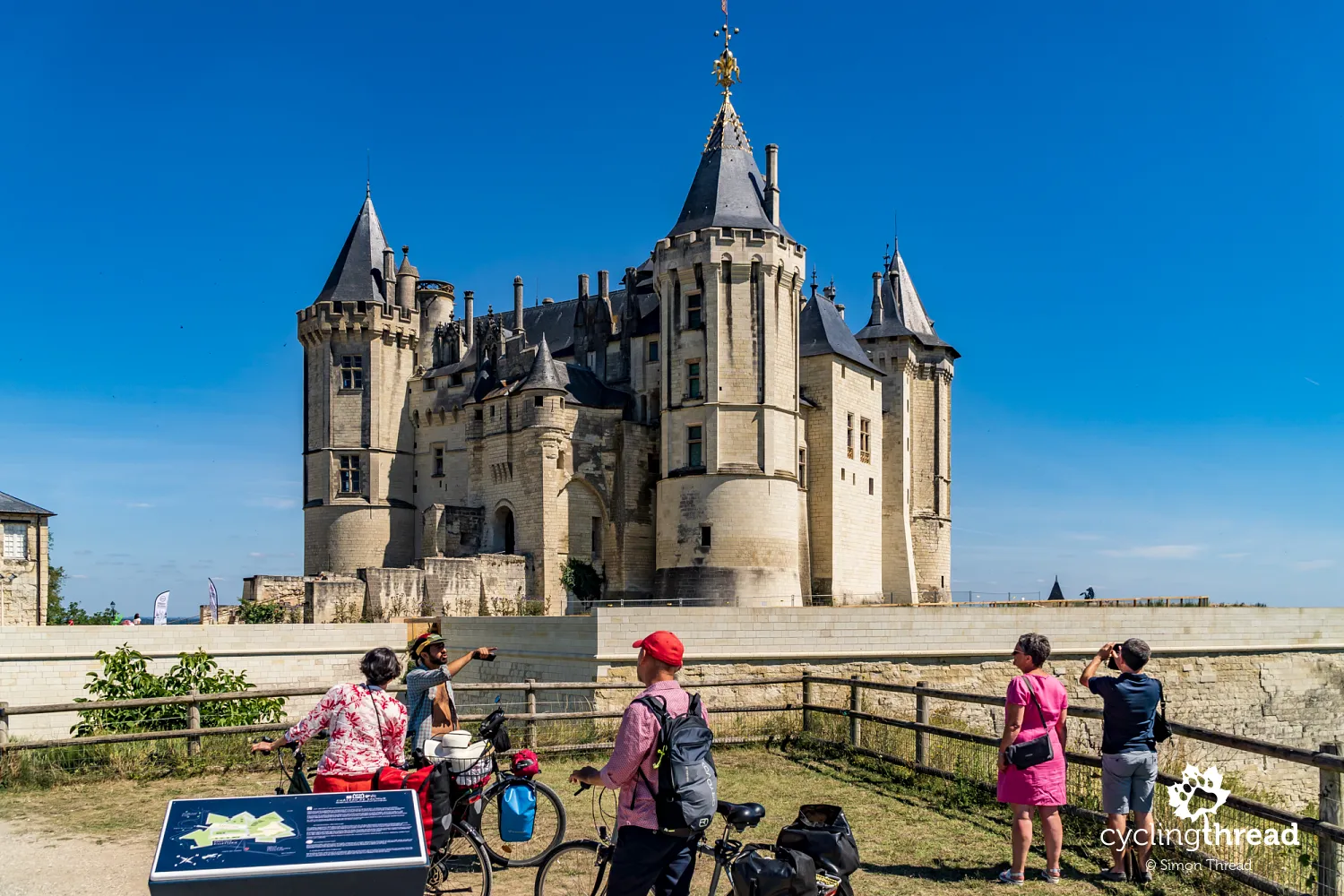
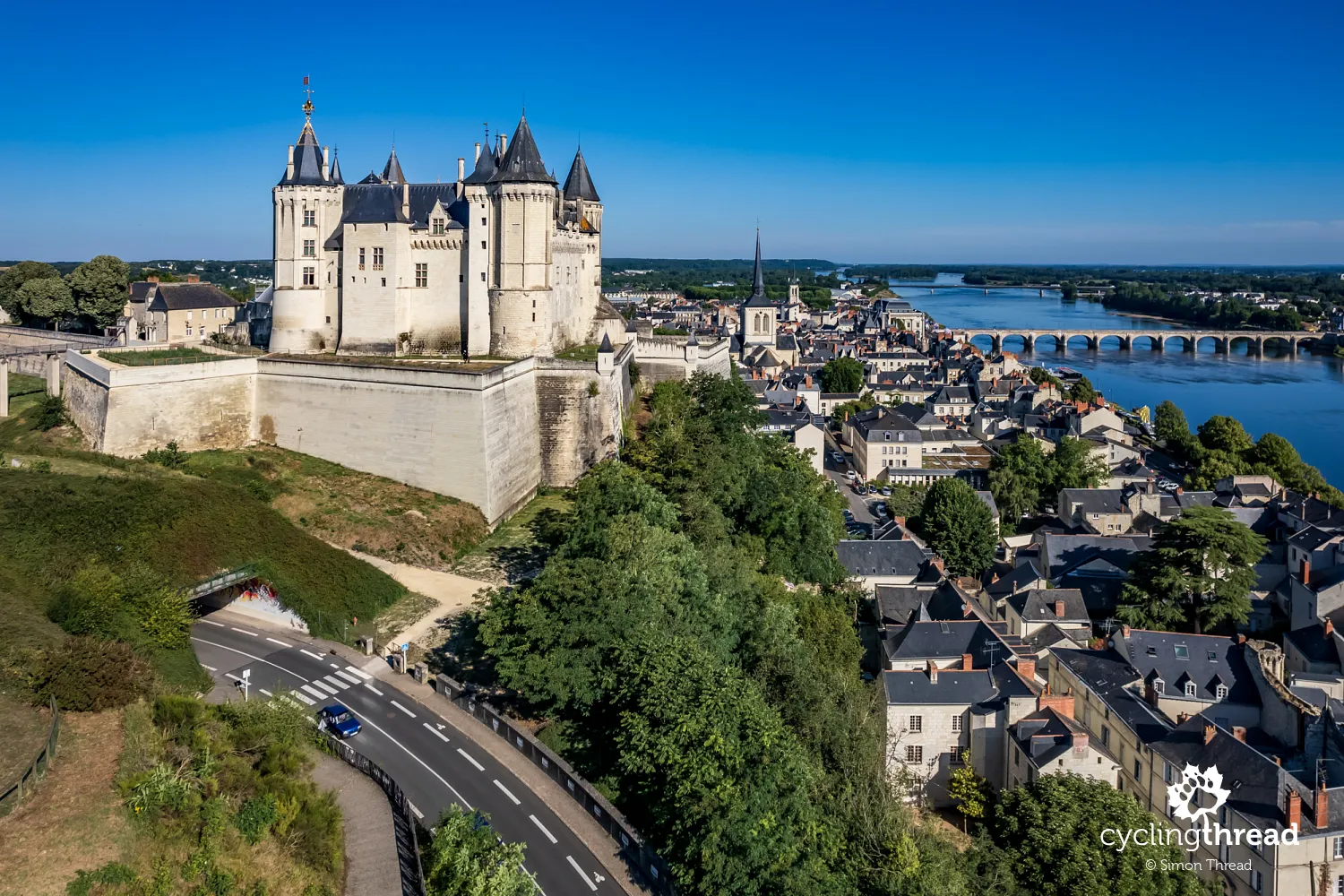
Soon after our encounter with the troglodytes, we reached Saumur, where once again we were reminded that the castles and palaces of the Loire Valley never fail to impress. This time it was the Saumur Castle, standing on one of the highest points of the valley and offering sweeping panoramas from its windows and terraces. The origins of the fortress go back to the 10th century, making it an outstanding example of early Gothic architecture. Inside, visitors will find the Horse Museum, which presents the long history of horsemanship. Today, Saumur Castle is not only a majestic landmark but also a lively cultural site, combining history with nature and leaving visitors with lasting memories.
Cycling tour operators in the Loire
On the final day of our journey, we met a group of Polish cyclists from Warsaw, traveling with a tour operator. They were riding in the opposite direction, just beginning their adventure, and we could not help but envy them for all the beautiful places still ahead. While writing this article, I checked the website of Bird Service, our partner cycling holiday agency, and noticed that they offer Loire tours in two versions - a lighter option, perhaps with more focus on culinary experiences, and a more "intensive" program covering the stretch from Orleans to Saumur. Their itineraries even include the stunning Chenonceau, which we skipped. I especially liked the planned short distances of about 50 kilometers per day - the perfect balance for sightseeing and enjoying the region’s culture.
Seventeen towers of the Angers fortress as a grand finale
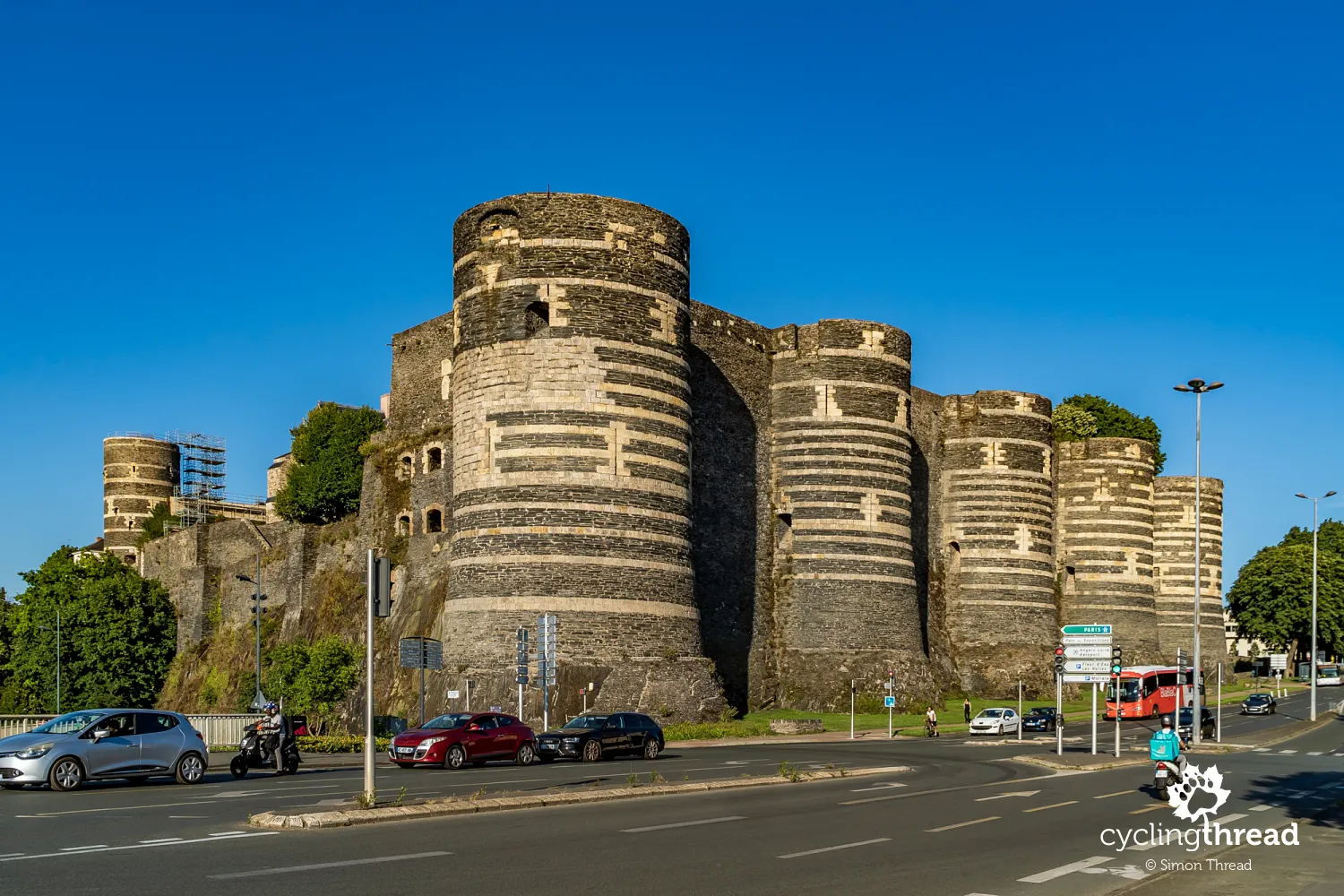
The Castle of Angers, or Château d'Angers, is a striking medieval fortress in the heart of the city. Surrounded by massive stone walls and 17 towers, it dominates the urban landscape with its imposing presence. Inside, the fortress opens to a courtyard with elegant gardens, but its true highlight is the Chapel of Saint John and the castle’s greatest treasure - the "Apocalypse Tapestry" of Angers, the largest surviving medieval tapestry in the world. Sadly, because of the late hour and our early departure the next day, we missed the chance to see this masterpiece in person.
Cycling information point in Angers
During our evening walk in Angers, we came across a tourist information point near the fortress - another facility in the French network of cyclist-friendly places, Accueil Vélo. Called La Conciergerie Vélo, it works like a "cycling porter’s lodge," similar to the Radbutler - the "cycling valet" we saw in Carinthia on the Alpe-Adria and Drava cycle routes. Its purpose is to provide safe storage for bicycles while cyclists explore the city or stay overnight. This solution not only supports visitors but also relieves hotels and guesthouses from the need to offer secure bike rooms. Similar storage boxes for cycling tourists can also be found in Frankfurt (Oder) on the Oder-Neisse cycle route.

Special train for cyclists in the Loire
One of the most exceptional cyclist-friendly experiences came at the very end of our French journey, when we headed to the railway station to take the train back to our car in Orleans. A young SNCF employee stepped off a train, asked us to remove our panniers and then personally wheeled our bikes to the lower deck, placing them in the special racks in the correct order for our destination. She then directed us to the upper level, reserved for cyclists, where we could travel comfortably while our bicycles were securely stored below. Later, in Orleans, we collected them exactly as arranged. Only as we disembarked did I notice the inscription La Loire à Vélo on the train, and later I looked up the rest of the information about this special service.

The Train Vélo Loire runs from mid-June to mid-September along the railway line that follows the river - from Orleans through Blois, Saint-Pierre-des-Corps (near Tours), Saumur, Angers and Nantes, all the way to Le Croisic, a small town on the Bay of Biscay near Saint-Nazaire. Bicycle transport is free of charge, as on all TER regional trains in France, and no reservation is required. But the most impressive detail is the capacity: each train carries at least 33 bicycles, and during peak season a set can take up to 83. On all our cycling trips, we have never seen a train able to handle more bikes at once. For us, this makes it the number one train journey with a bike!
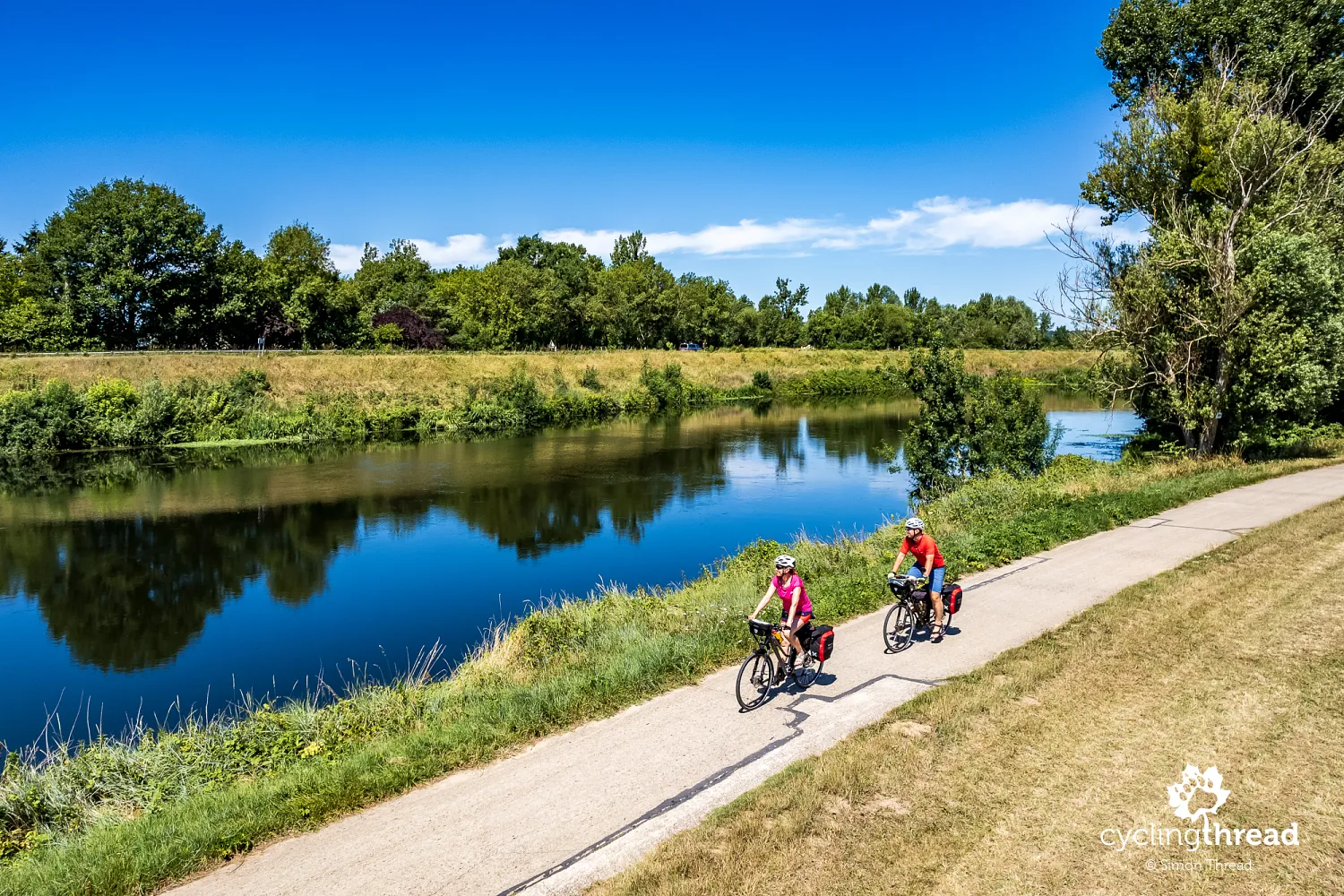
To the Loire on a well-organized route
If you want to experience what it truly means to be welcomed as a cycling tourist, and if you want the certainty that the money you invest in your holiday will bring a full and rewarding experience, then choose regions like the Loire Valley in France for your next adventure. Here, cycling is not just an activity but part of a culture, supported by people who work to make every journey smoother and more enjoyable. May your summer rides be filled with discoveries, good food, and safe travels on two wheels :-)
Back to topHave a safe ride! 💚
Simon Thread
(Szymon Nitka)
I'm a passionate cycling traveler and the voice behind Cycling Thread. I explore Europe on two wheels, documenting the most scenic routes, inspiring places, and cyclist-friendly practices. My writing blends personal experience with practical insights and a deep love of travel. I'm also a contributor to National Geographic Traveler magazine.
Nearby cycling routes
More cycle routes to explore
Routes you might like
Bicycle inspirations
Find us on Bikemap, Komoot, Outdooractive, Ride with GPS and Veloplanner!