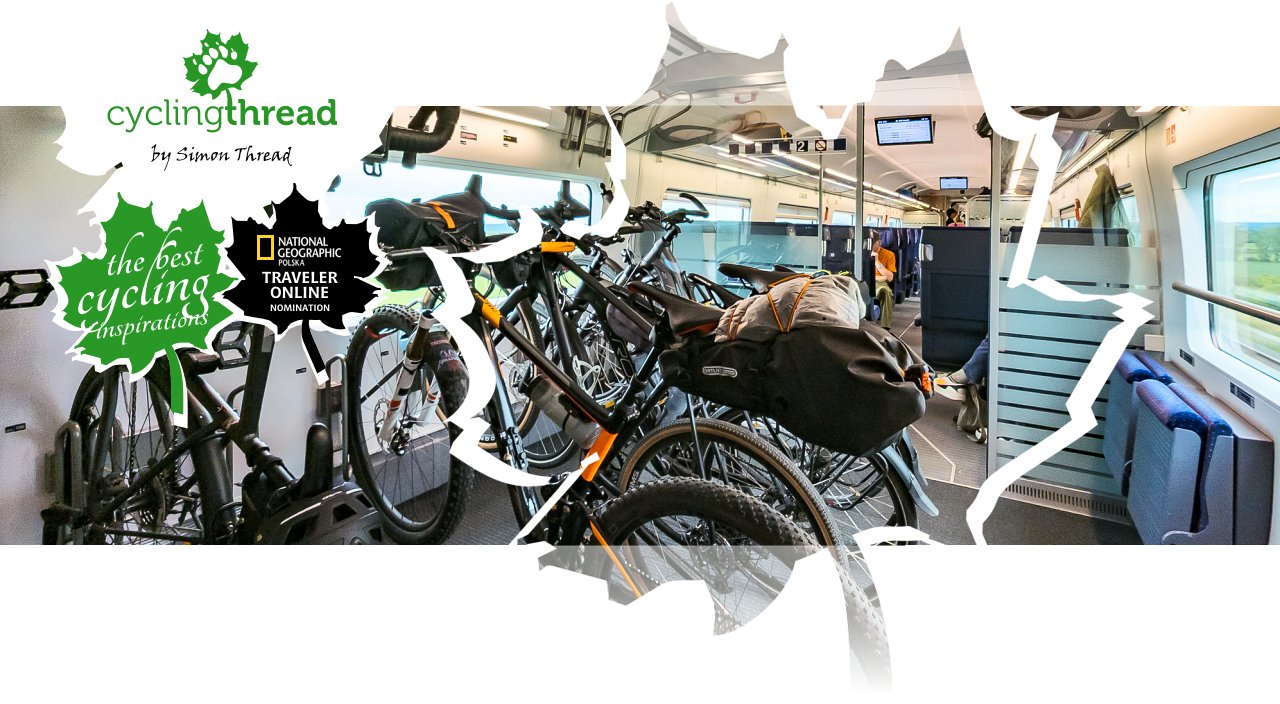
Top 11 bicycle-friendly trains - best practices in cycling tourism [2025]
A comfortable train ride is one of the best ways to start a cycling trip. When taking your bike on board is simple, the whole journey begins with less stress and more joy. For many cyclists - including us - the train is not just a way to get from one place to another, but part of the cycling adventure itself. Good bike-and-train long-distance connections make it easier to reach cycling routes, discover new regions and travel in a more eco-friendly way. They also encourage more people to choose cycling as a form of tourism. In this article we present the best train services we've used - each one especially friendly to cyclists.
Join us on our new 🟢 Komoot account!
Cycling Partners



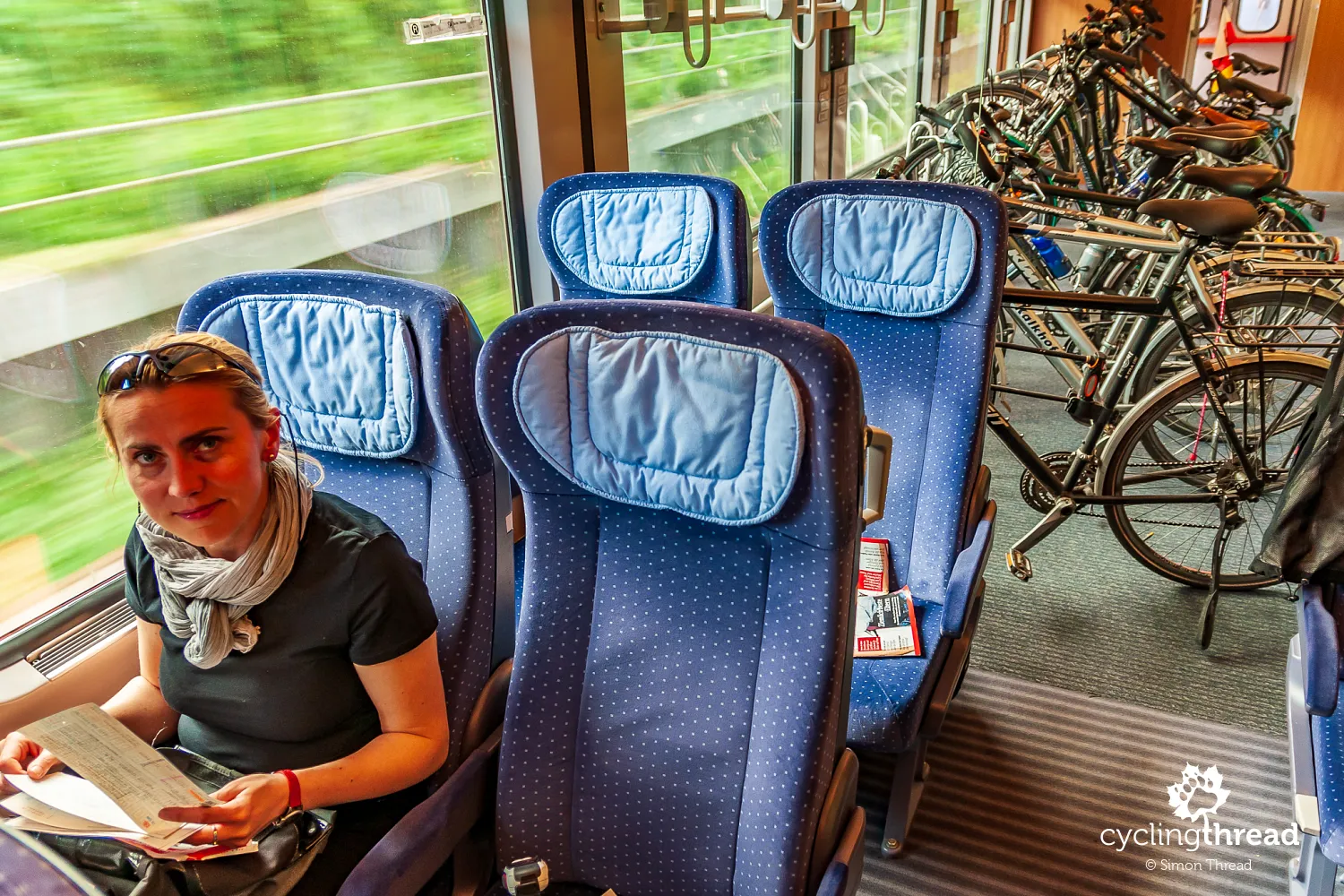
What matters to a cyclist on a train? It all starts with a wide entrance - big enough for a touring cyclist to easily board the train with panniers still attached. Stairs should be kept to a minimum - the ideal setup is a level entry from the platform straight into the carriage. Inside, a wide corridor and a dedicated bicycle space as close to the door as possible make a big difference. And finally - proper bike mounting. That means either secure straps or horizontally mounted hooks.
The best trains we’ve traveled on with bicycles:
Don’t forget to follow us on Facebook and Instagram!
All photos by Simon Thread, Cycling Thread.
SNCF Train Loire à Vélo - France
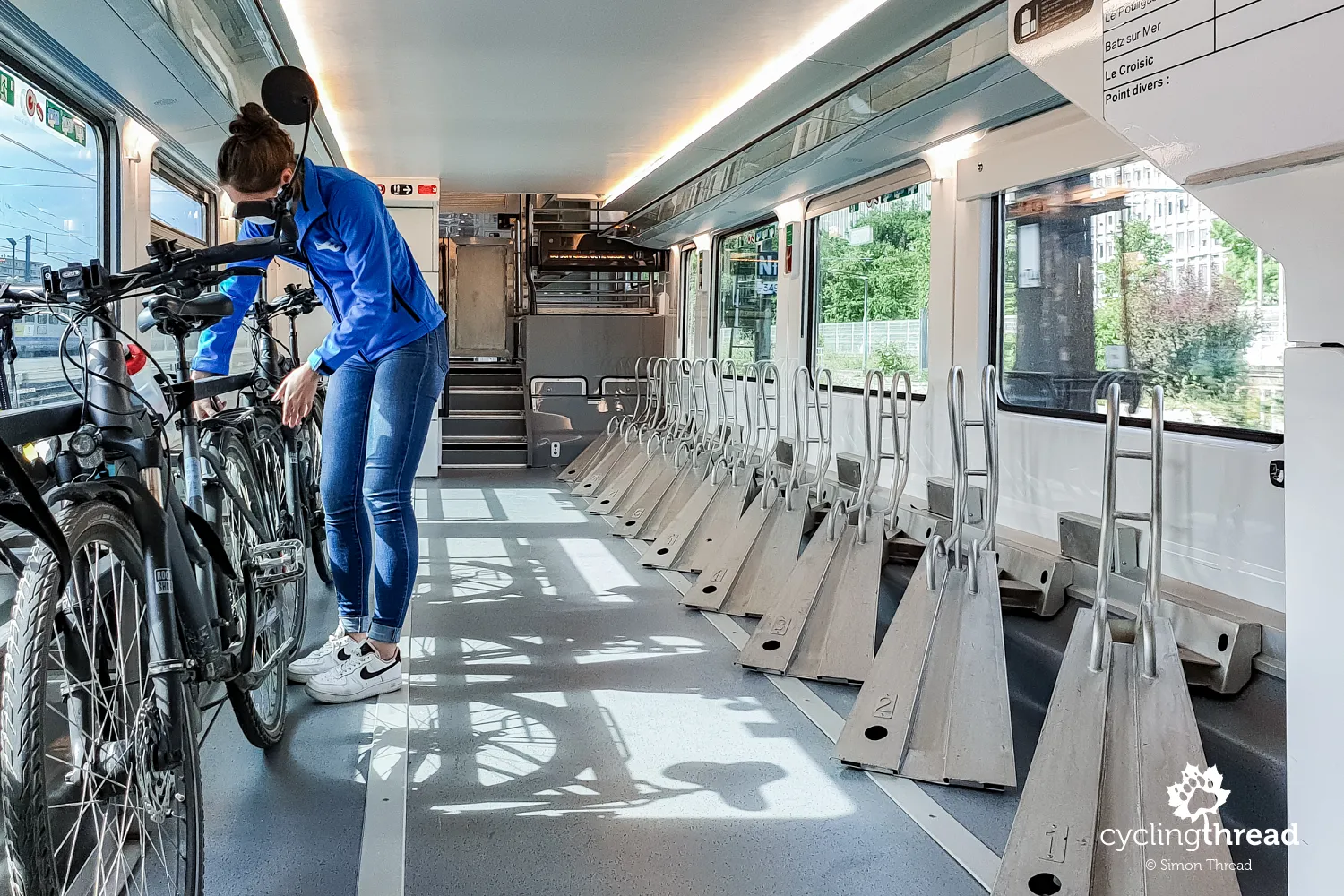
The Vélo Loire train, running through the Loire Valley from Orléans to Le Croisic, offers space for up to 83 bicycles during the summer season. This impressive capacity includes different types of bike spaces, among them a dedicated compartment for 17 bikes, managed by a special onboard bike steward and not accessible to passengers. It remains, without a doubt, the best bicycle transport solution we've come across on our cycling travels. The service is operated by Bombardier OMNEO Regio 2N trains - double-decker electric multiple units.
The Train Loire à Vélo is one of the cyclist-friendly services along the Loire à Vélo route.

ÖBB Tauernbahn - Austria
A special train operated by the Austrian Federal Railways (ÖBB) runs a short, 15-minute route beneath the main ridge of the High Tauern mountains, along the Alpe-Adria Cycle Route, often called the best cycling route in Europe. Connecting the Salzburg region with Carinthia, it runs between the stations of Mallnitz and Böckstein. One of the train's carriages is dedicated entirely to bicycle transport and features easy-to-use bike hooks that make loading and securing bikes simple and efficient.
Find out more about the Ciclovia Alpe-Adria Radweg.
DB ICE - Germany
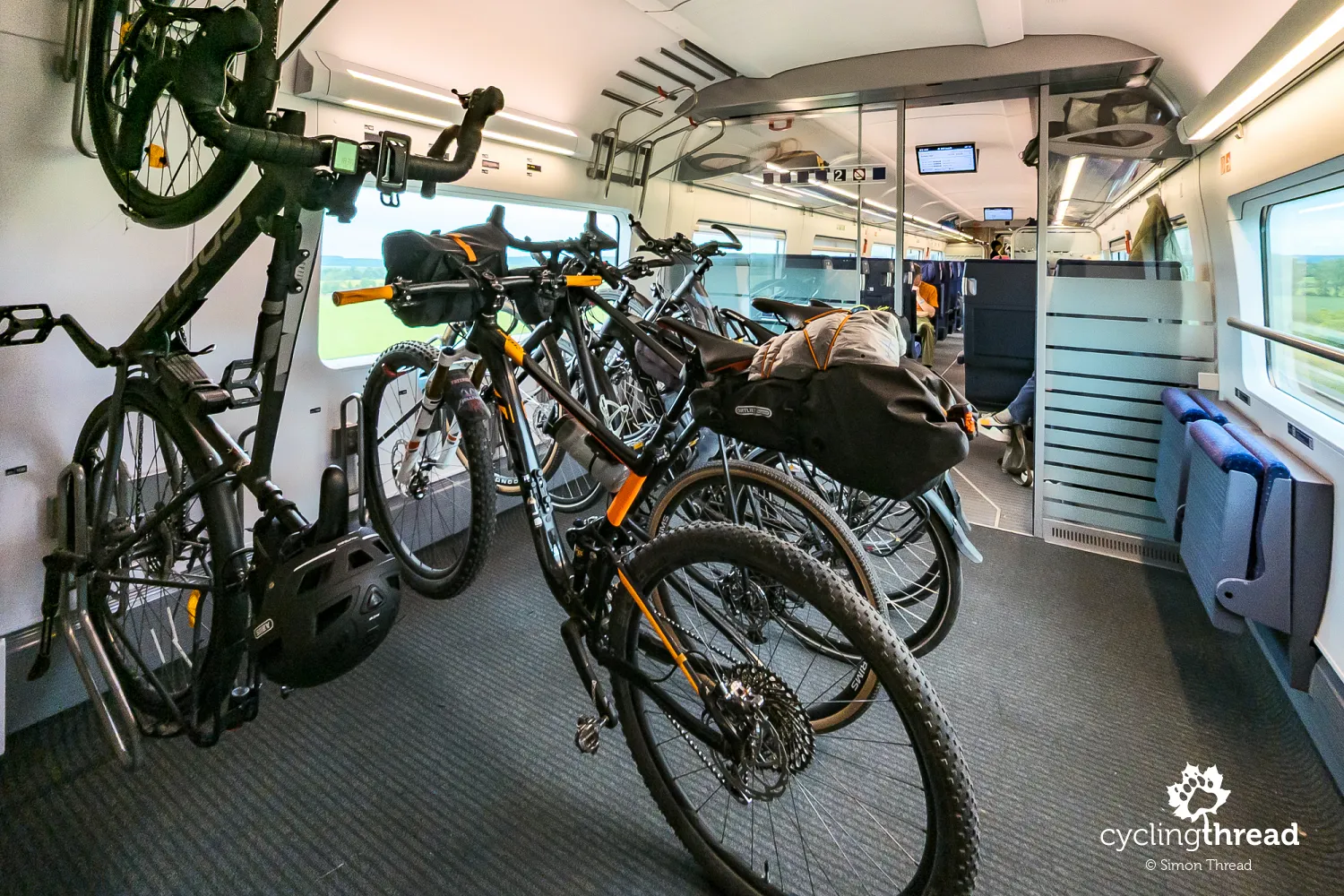
Fourth-generation ICE trains (ICE 4), part of the Siemens Velaro family, offer a more comfortable and improved experience for cyclists. One highlight is the wide entrance doors, which make it easier to board with a fully loaded touring bike. Each train has space for up to eight bicycles - four mounted horizontally and four vertically along the sides. Due to high demand from long-distance cyclists across Germany, bike spaces on ICE services should be reserved in advance.
ICE trains of various generations can be found all across Germany, and our ICE 4 took us to the Tauber-Altmühl Radweg in Franconia.

DB Intercity - Germany
Deutsche Bahn's Intercity trains connecting Berlin and Amsterdam offer cyclists a dedicated carriage designed specifically for bicycle transport. These carriages typically hold up to 16 bicycles, most of them mounted on convenient horizontal racks. Half of the carriage is reserved for bicycles, while the other half provides seating for their owners. This passenger area often becomes a friendly meeting spot where touring cyclists share stories from the road. DB plans to replace the current rolling stock on this route with modern ICE L trains from Talgo.
We returned in these carriages from our cycling trip in Friesland.
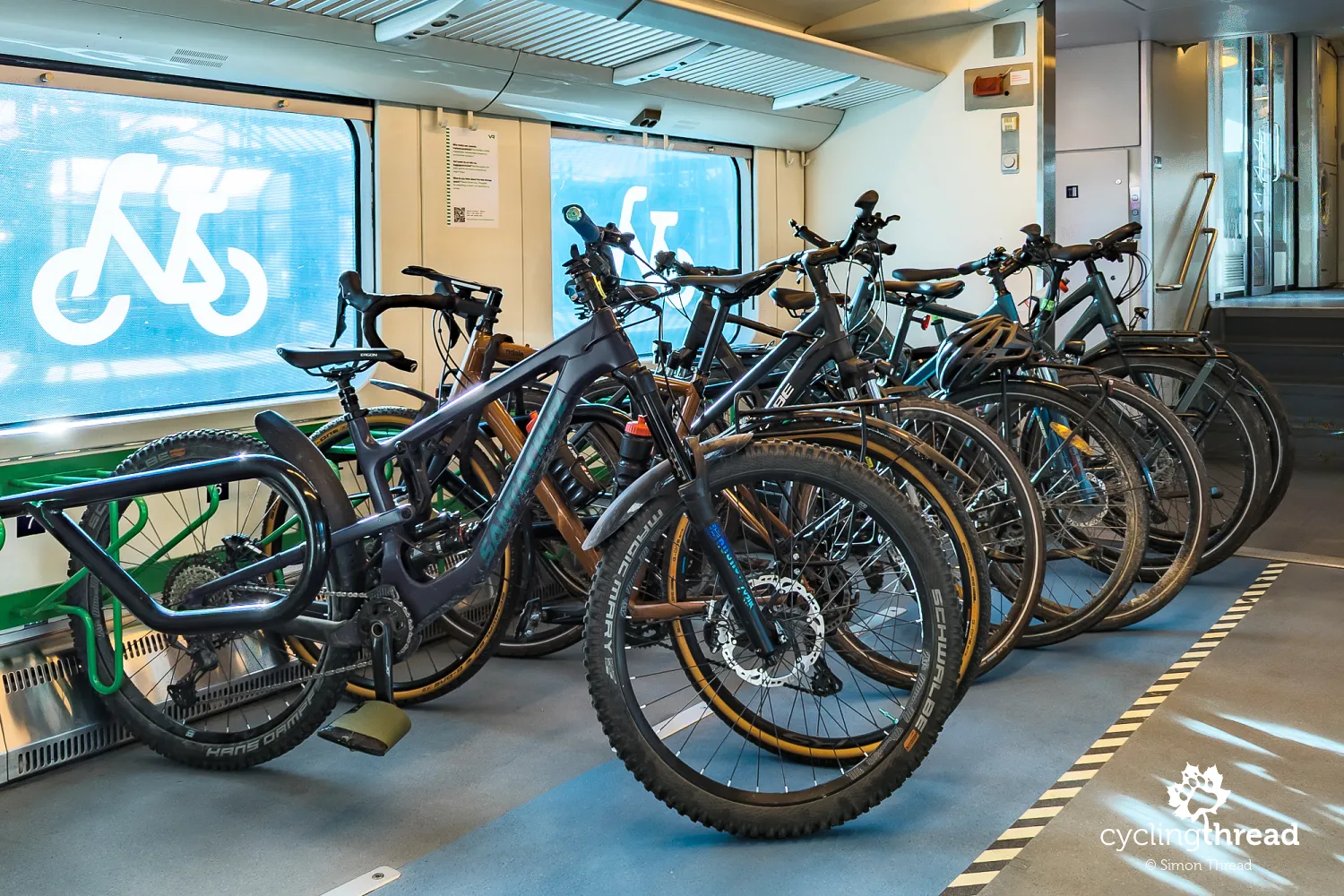
VR Santa Claus Express - Finland
The Santa Claus Express is an overnight train operated by VR, connecting Helsinki with Rovaniemi and other northern destinations, offering a scenic and comfortable ride through Finland. It features modern double-decker sleeping cars built by Transtech, recognized for their smooth design and passenger comfort. Cyclists enjoy a spacious bike compartment equipped with clever, movable racks that make loading and securing bicycles simple and safe. This modern train can accommodate up to 8 bicycles in total.
The Santa Claus Express took us to the Central Lapland Gravel Loop (coming soon) 👇
Follow us on Facebook and Instagram to be notified!
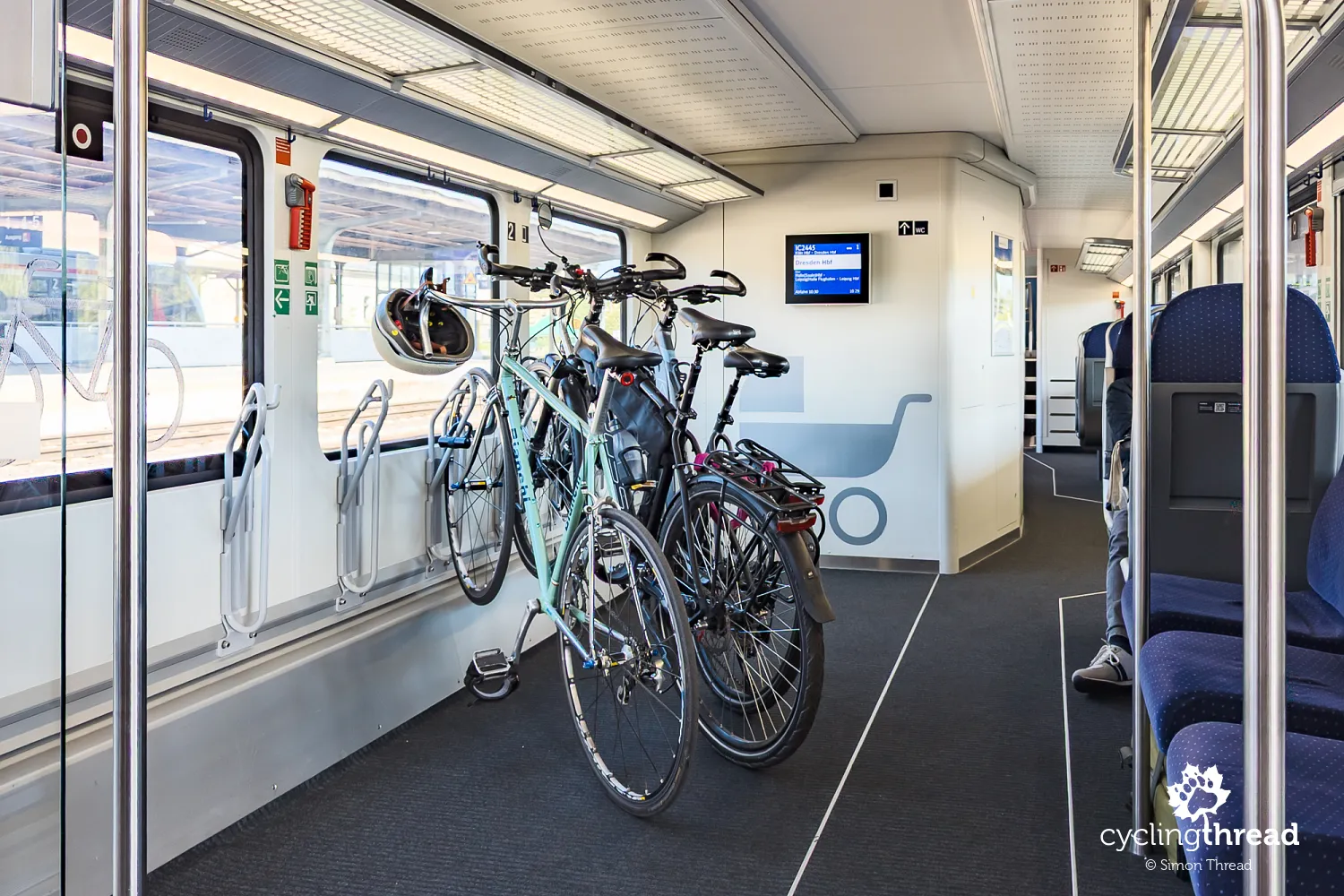
DB Intercity 2 - Germany
DB Intercity 2 trains are a refreshed generation of long-distance trains in Germany, based on the modern Bombardier Twindexx double-decker units. Designed as an updated version of the classic InterCity service, they combine comfort with a contemporary and traveler-friendly layout. The trains have spacious and well-designed interiors, with comfortable seating and clear signage. Cyclists will appreciate the big bicycle area located near the wide entrance doors, making boarding with fully loaded bikes easy.
DB Intercity 2 trains operate along the Elbe Cycle Route between Dresden and Magdeburg.
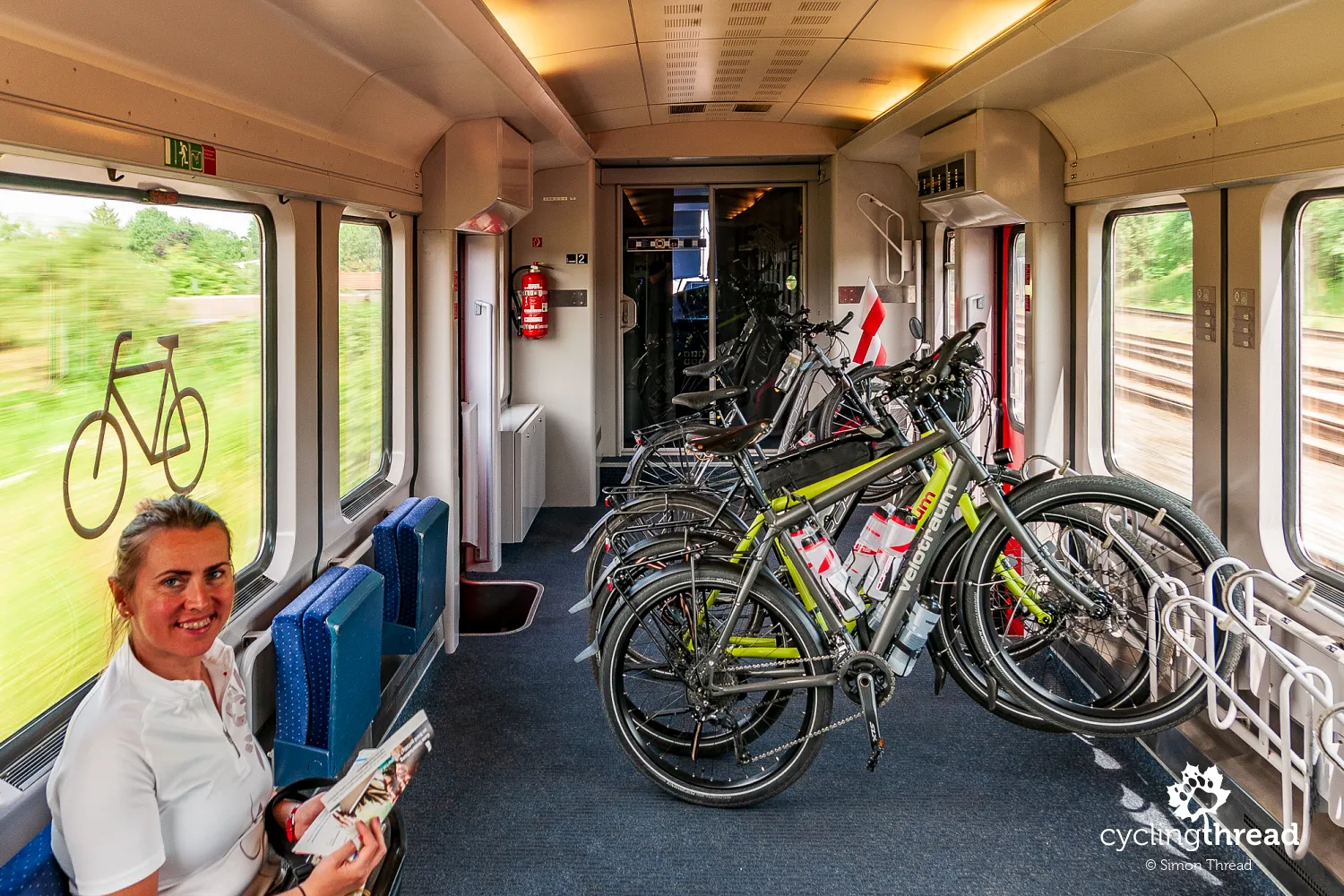
DB EuroCity - Germany
On the EuroCity train EC 217 running between Munich and Graz, we found a large and comfortable bicycle compartment. Most of the bike spaces were equipped with convenient horizontal hooks for securing bicycles, and the entire area was carpeted for added comfort. Unfortunately, the train is not adapted to low platforms like the one in Radstadt.
We took this train on our way to the Ennsradweg (coming soon) 👇
Follow us on Facebook and Instagram to be notified!

SBB InterCity - Switzerland
We took the IC 2000 train of the Swiss SBB along Lake Geneva in Switzerland. In the double-deck train, we found a spacious area for bicycles with unique horizontal bike racks. The IC 2000 train is manufactured by Schindler Waggon and later modernized by Bombardier. The large windows of the upper deck offered stunning views of the lake and the surrounding vineyards of Lavaux, making the journey as enjoyable as the ride itself.
We took this train after our journey along the Lakes Route.

SBB InterCity - Switzerland
Swiss Federal Railways (SBB) InterCity trains serve routes such as Basel to Lugano, making them an excellent choice for a cycling trip across Switzerland. The Stadler Smile train (SBB RABe 501), nicknamed Giruno ("Buzzard"), features 8 bicycle spaces spread across two compartments in different parts of the train. The interior design combines sleek glass and aluminum elements, creating a modern and spacious atmosphere. It is important to remember to reserve a bicycle space in advance.
We took this train during our journey along the North-South Route.
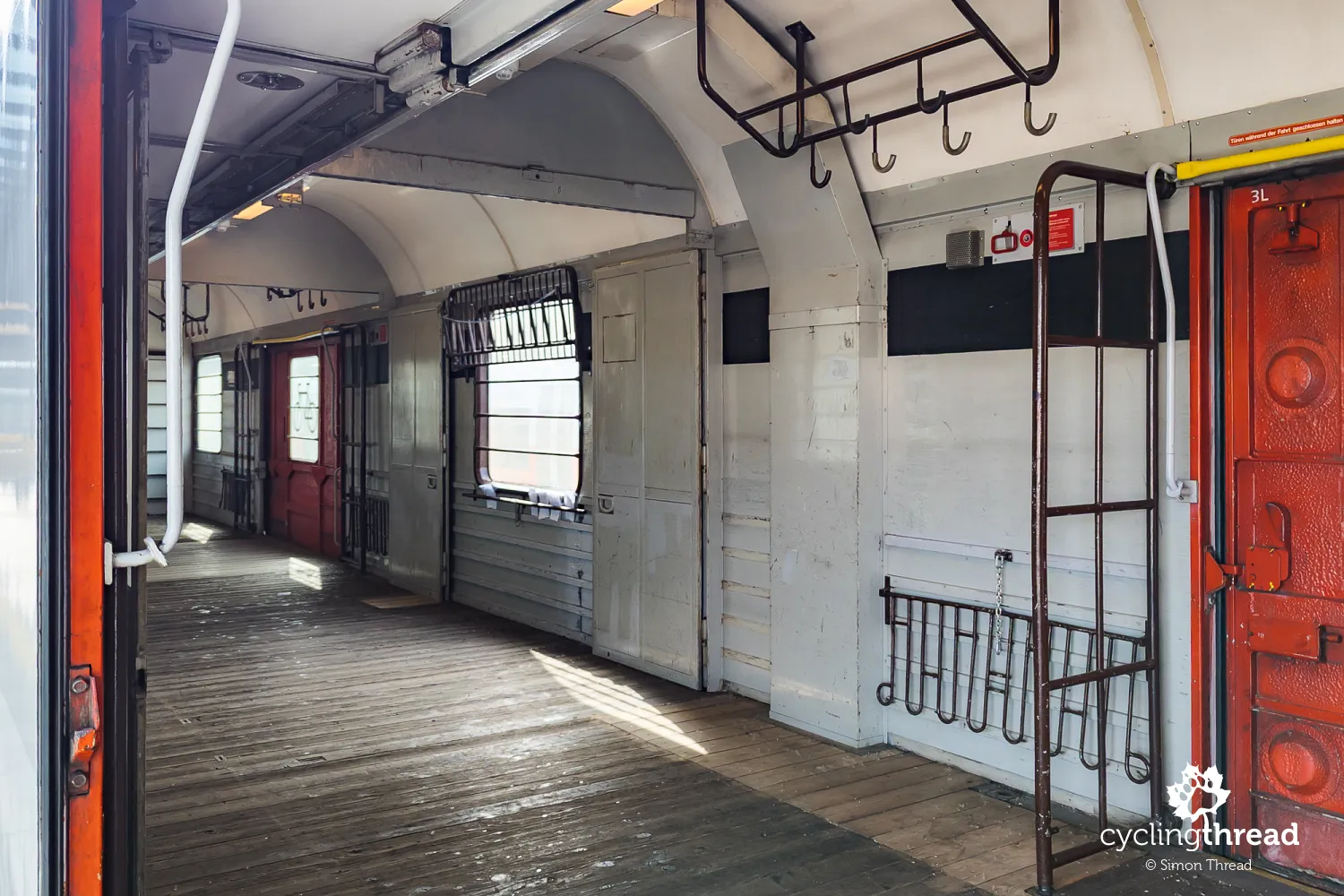
ÖBB/FUC Micotra - Austria & Italy
Another unique train that supports cyclists on a specific cycle route is the service jointly operated by Österreichische Bundesbahnen (ÖBB) and Ferrovie Udine‑Cividale (FUC). This train, called Micotra (MI.CO.TRA), runs twice daily between Udine and Villach. On weekends, it even extends to Trieste! One dedicated carriage is available for transporting bicycles. Although it’s an older type of carriage, it plays an important role in serving a key cycling route like the Alpe-Adria route.
Find out more about the Alpe-Adria Cycle Route.

ÖBB Nightjet - Austria
We came across an interesting and rarely used solution on the Nightjet overnight train operated by Austria’s ÖBB from Innsbruck to Düsseldorf. One of the seating compartments was removed and replaced with a dedicated cyclists' space featuring vertical hooks for bike storage. This is one of the few examples where overnight trains allow bicycle transport, making it a unique and cyclist-friendly option for long-distance travel. In this case, we were willing to accept the need to hang our bikes on vertical hooks.
We took this train on our way back after cycling in South Tyrol (coming soon) 👇
Follow us on Facebook and Instagram to be notified!
Back to top
Have a safe ride! 💚
Simon Thread
(Szymon Nitka)
I'm a passionate cycling traveler and the voice behind Cycling Thread. I explore Europe on two wheels, documenting the most scenic routes, inspiring places, and cyclist-friendly practices. My writing blends personal experience with practical insights and a deep love of travel. I'm also a contributor to National Geographic Traveler magazine.
Bicycle inspirations
Find us on Bikemap, Komoot, Outdooractive, Ride with GPS and Veloplanner!